

How to shop an outdoor furniture sale and choose pieces that last
Key Takeaways
A good outdoor furniture sale can make a lasting improvement to your home when you shop for the space, climate, and way you actually live.
- Measure the area, access points, and walking clearances before choosing a set.
- Compare frames, fabrics, foam, joints, and drainage—not just the finish.
- Judge the discount against normal pricing and the number of seasons you expect to use the furniture.
- Test comfort and confirm delivery, assembly, warranty, and return details.
- Use covers, sensible cleaning, and seasonal care to extend the life of every piece.
Define your outdoor space and furniture needs
Before you browse an outdoor furniture sale, decide what the space needs to do. A compact balcony has different demands from a large deck, and a dining area needs a different layout from a quiet corner for reading. Sun, wind, rain, and nearby salt air also affect the choices that will remain practical. A little planning helps you buy fewer, better-suited pieces.
Measure the area and plan the layout
Measure the usable floor area, then mark doors, steps, railings, drains, and fixed planters. Leave enough room to pull out dining chairs and walk around a coffee table without turning every gathering into an obstacle course. Check the height of balcony rails and any overhead cover too.
It can help to sketch the layout with tape or cardboard on the ground. For more guidance on sizing, clearances, and practical outdoor planning, see this outdoor space planning guide. Bring those measurements with you when you shop, since a product’s overall width can be quite different from the space you imagine around its cushions.
Match furniture to how you use the space
Think through a normal week rather than an imaginary one. If you eat outside often, prioritise a stable table and chairs with an easy-to-clean surface; if you mostly relax, a deep sofa or pair of loungers may earn its footprint more often. Consider whether children, pets, guests, or strong afternoon sun will change how the furniture is used.
You may also want flexible pieces that can move between conversation, dining, and entertaining. A modular arrangement can be useful on a changing deck, while a fixed setting may feel calmer and require less rearranging. The right choice is the one that makes the space easier to use, not simply fuller.
Choose seating, dining, and shade essentials
Start with the main activity, then add supporting pieces. A dining set needs comfortable seat-to-table proportions, while lounge furniture needs supportive backs, useful side tables, and enough space to stretch out. Shade can be just as valuable as seating, particularly in bright areas where people avoid sitting during the middle of the day.
Plan the sequence of purchases if your budget is limited. Buy the pieces that make the area functional first, then add occasional chairs, umbrellas, side tables, or outdoor heating as the space proves its value. This approach also leaves room to choose finishes that work together rather than settling for a rushed mix.
Account for storage and seasonal changes
Outdoor furniture may be designed for exposure, but storage still matters. Measure where cushions, covers, umbrellas, and smaller accessories will live when rain is persistent or severe weather is forecast. If you have no dedicated storage, choose lighter pieces that can be moved under cover and cushions that are easy to lift and dry.
Look at airflow around the furniture as well. Trapped moisture beneath covers or cushions can encourage mildew, while furniture pushed tightly against a wall may dry slowly. Planning for these small routines before you buy will make year-round use much less demanding.
Compare outdoor furniture materials and construction
Material choice is only one part of outdoor durability. The frame, joinery, fabric, foam, drainage, and finish all work together, and a weakness in one area can shorten the useful life of the whole piece. New Zealand conditions can bring intense UV, heavy rain, coastal salt, and wind, so match construction to your particular setting. For a broader climate-focused reference, explore this guide to durable outdoor furniture.
Understand the differences between wood, metal, and synthetic materials
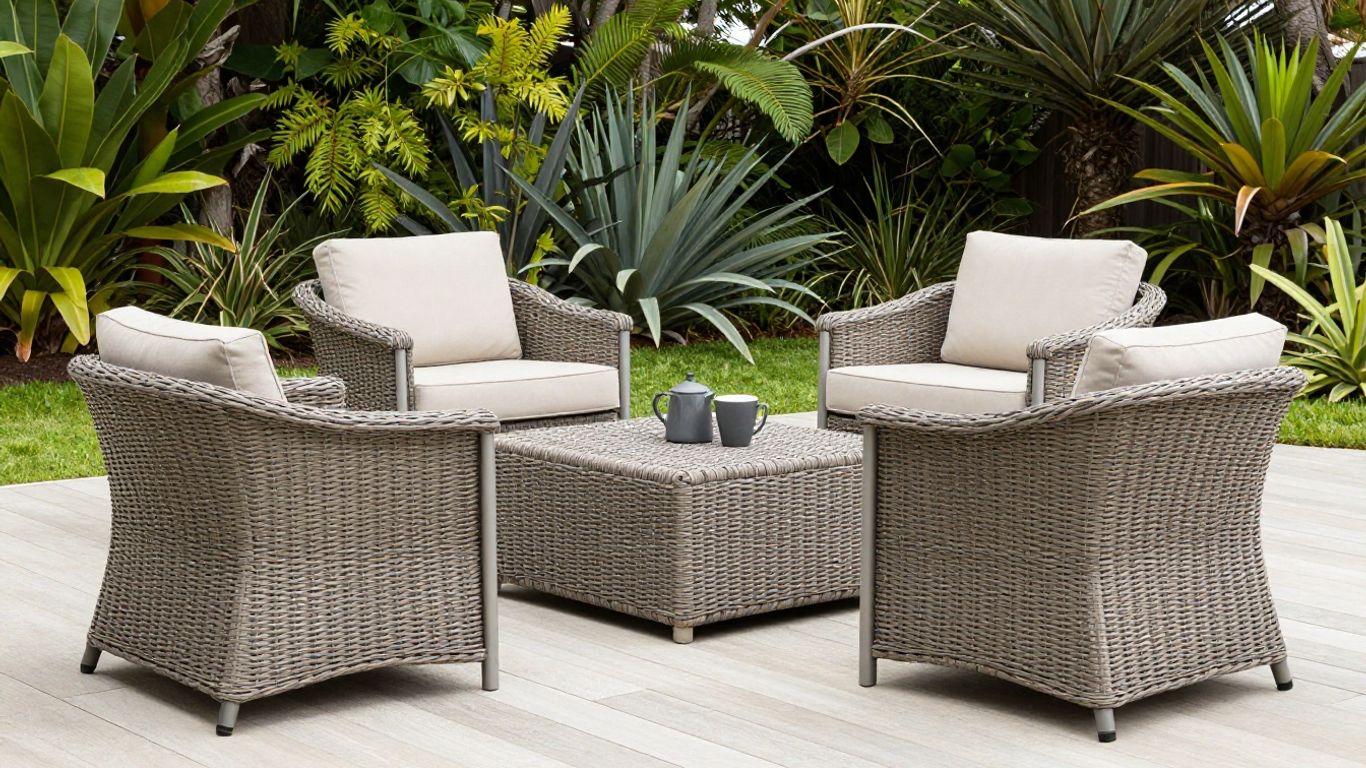
Wood brings warmth and a natural grain, though it usually needs more regular care than coated metal or synthetic materials. Aluminium is light and does not rust in the same way steel does, while steel can offer a reassuringly substantial feel when its protective finish and hardware are appropriate. Synthetic wicker and recycled or engineered materials can provide a familiar woven or timber-like appearance with less routine upkeep.
Do not choose on appearance alone. Ask how the material handles UV, moisture, movement, and cleaning, then consider whether its maintenance suits your habits. Design Concepts outdoor furniture is described as using rust-proof aluminium or marine-grade stainless steel frames, Teak timber, Urecel reticulated foam, and Sunproof or Sunbrella fabrics for harsh New Zealand conditions.
Evaluate frames, joints, and weight capacity
Look underneath and around the piece, not only at the cushions. Check whether legs sit evenly, joints feel firm, hardware is suitable for outdoor use, and the frame remains stable when you shift your weight. A heavier chair is not automatically stronger, but excessive movement or flexing deserves a closer look.
Ask about the stated weight capacity where it is available, especially for loungers, hanging chairs, and benches. For tables, inspect how the legs attach to the top and whether the base will remain steady on your surface. These details are easy to overlook during a quick scroll online, so product specifications and a showroom visit can both be useful.
Check cushions, fabrics, and weather resistance
Outdoor comfort depends heavily on what is inside and around the cushion. Look for fabrics described as UV or fade resistant, fillings that can dry efficiently, and covers that can be removed for cleaning. Free-draining or quick-dry construction is particularly helpful where cushions may be caught by showers.
Press the seat and back to see whether the support feels even rather than merely soft. Check seams, zips, piping, and the way water can leave the cushion after rain. A cover that resists moisture still benefits from ventilation and prompt drying, so avoid treating weather resistance as permission to ignore care.
Identify features that improve long-term durability
Small construction choices often matter more than a fashionable colour. Powder-coated finishes, rust-resistant hardware, replaceable covers, adjustable feet, and slatted or free-draining surfaces can all make outdoor furniture easier to live with. Rounded edges and stable bases may also reduce wear in busy family spaces.
Use this simple inspection sequence when comparing similar pieces. It keeps the decision grounded in the parts you will rely on after the first season.
- Examine frame finish and exposed hardware.
- Check drainage beneath seats and tabletops.
- Look for removable, replaceable, or washable covers.
- Confirm that feet suit the surface where the furniture will stand.
Afterward, weigh those practical features against the look you want. A well-made piece should feel considered from every angle, not just attractive in a product photograph.
Find the best value during an outdoor furniture sale
A discount is useful only when the furniture is right for your space and likely to be used. Compare the sale price with the usual price, but also include delivery, covers, assembly, and any accessories needed to make the set functional. A lower ticket price can lose its advantage if the piece is uncomfortable or difficult to protect. The best value is usually found by considering the full ownership cost.
Compare sale prices with typical retail pricing
Check the regular price, the length of the promotion, and whether the product is part of a current collection or a final run. If possible, compare the same model across the retailer’s own pages rather than relying on a large percentage badge. Read what is included: cushions, covers, tables, and hardware are not always bundled together.
A useful starting point is this outdoor furniture sale guide, which covers measuring, materials, clearance items, delivery, and accessory costs. When you find a promising deal, save the specifications as well as the price so you can make a fair comparison later.
Calculate the cost per season of use
Divide the complete purchase cost by the number of seasons you realistically expect to enjoy it. Include delivery and any essential protection, then be honest about your climate and storage. A durable set used for many years may be better value than a cheaper one replaced after a short period.
This calculation is not meant to predict an exact lifespan. It simply shifts your attention from the excitement of the discount to the furniture’s likely usefulness, comfort, and care requirements. Long-term value beats impulse savings when the set becomes part of daily life.
Distinguish genuine discounts from limited-selection clearance
Clearance can be an excellent way to buy a quality piece, but availability may be limited and matching components may already be gone. Check whether you can add another chair later, replace a damaged cushion, or order the same finish if your plans change. Inspect sale items carefully for display wear, minor marks, or missing packaging.
A clearance price should not rush you past the practical questions. Confirm the exact condition, stock level, warranty treatment, and return terms before paying, especially if you cannot see the furniture in person.
Look for bundle savings and included accessories
Sets can offer better value when you need several coordinated pieces, but only if every item has a role in your layout. Compare the bundle with buying the components separately and price the accessories that are genuinely necessary, such as a cover, umbrella base, or replacement cushion. Avoid adding pieces simply because the combined discount looks persuasive.
The same principle applies to colour and finish. A coordinated set can make a small space feel calmer, while a mix of complementary pieces may let you buy gradually. Choose the arrangement that gives you useful flexibility without creating storage problems.
Check comfort, fit, and style before buying
Outdoor furniture should invite you to stay, not just photograph well. Comfort is personal, so product dimensions and attractive styling cannot replace sitting down when that is possible. Online shoppers can still compare seat depth, height, cushion thickness, and back support with furniture already at home. Treat fit as a practical test rather than a finishing detail.
Test seat height, depth, and cushion support
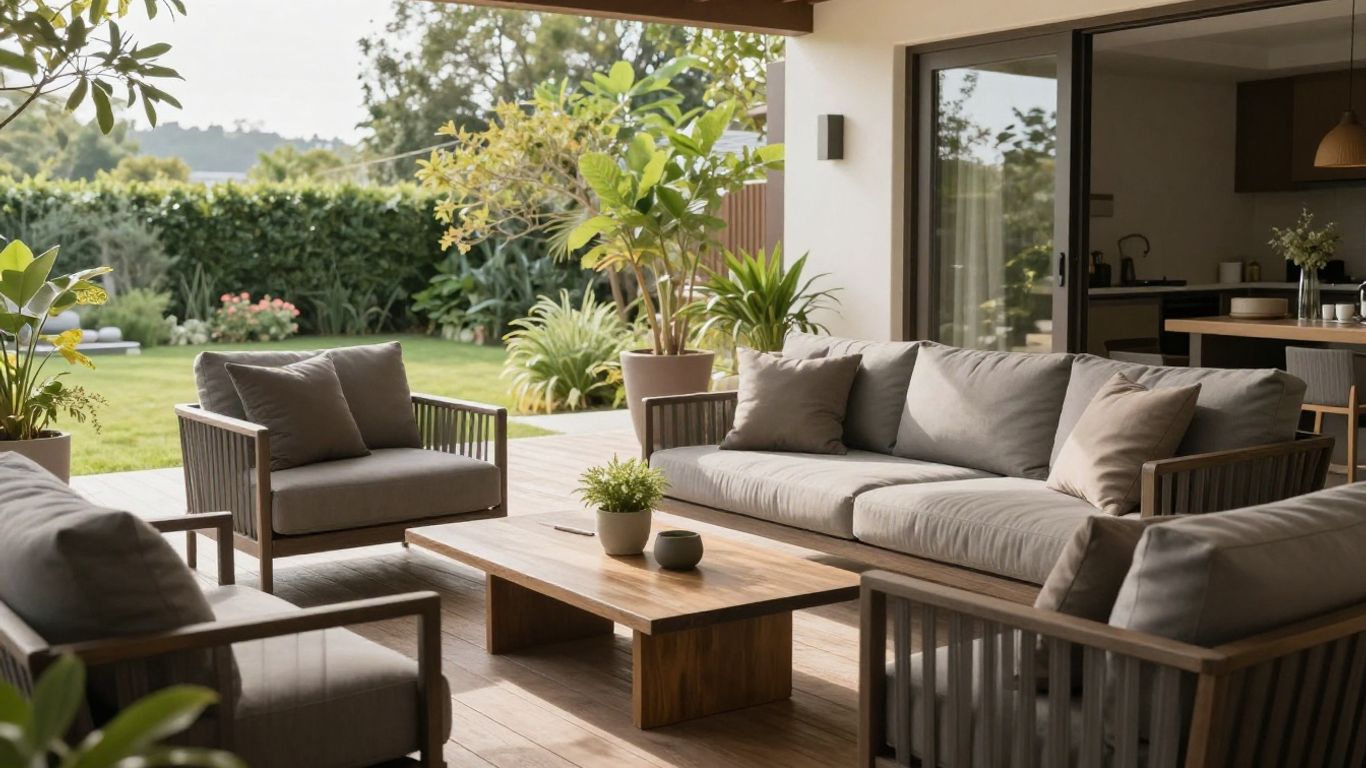
Sit with your feet resting naturally and check whether you can stand up without pushing hard against the arms. Your knees should feel comfortable, and the seat should support you without forcing you into a slouched position. For sofas and loungers, consider whether the depth suits everyone who will use them, not just the tallest or shortest person in the household.
Pay attention to how the cushions recover after you sit. A soft first impression can become tiring if the foam collapses or the back provides little support. If you are comparing lounge settings, this outdoor lounge furniture guide offers useful prompts about ergonomics, cushion quality, and movement through the layout.
Coordinate colors and finishes with your outdoor setting
Take photographs of your deck, paving, walls, planting, and existing furniture before you shop. Neutral frames and fabrics can make it easier to add colour through cushions and accessories, while a stronger finish may become the focal point. Consider how the chosen colour will look in direct sun, under shade, and beside wet greenery.
You do not need every surface to match exactly. Repeating one tone through a frame, planter, or side table is often enough to make different pieces feel intentional. Texture can do the same job, especially when smooth tabletops sit beside woven or timber details.
Confirm dimensions for doors, patios, and balconies
A piece that fits the patio may not fit through the front door, lift, stairwell, or narrow side access. Measure the packaged dimensions where they are provided, not only the assembled size, and check turning space around corners. For balconies, confirm that the furniture will not block access or interfere with drainage and railings.
Delivery access should be part of the purchase decision. If assembly occurs on site, ask how much clear space the delivery team needs and whether packaging will be removed. These checks are simple, but they can prevent a beautiful sale purchase from becoming an awkward return.
Balance current trends with timeless design
Trends are enjoyable, particularly when a sale makes an expressive finish more affordable. Still, large furniture has a long visual and practical presence, so choose a silhouette you can imagine using after the trend has passed. Keep bolder choices to cushions, smaller tables, or accessories if you prefer to refresh the setting often.
Prioritise proportion and comfort over labels such as modern or classic. A well-scaled chair with a durable finish will usually feel more at home than a fashionable piece that crowds the space or asks too much maintenance from you.
Review delivery, warranties, and return policies
The buying experience continues after checkout. Delivery timing, access requirements, assembly, warranty coverage, and returns can all affect the real value of an outdoor furniture sale. Read the product page and policy details before you commit, and keep copies of the order information. Clear answers now are far easier than trying to resolve uncertainty after a large package arrives.
Confirm shipping costs and delivery time frames
Ask whether delivery is nationwide, whether the quoted price changes by region, and whether the furniture arrives in one shipment or several. Check estimated time frames against your renovation or entertaining plans, but allow for weather and stock movement. For apartments and difficult access, confirm whether kerbside delivery or placement inside the home is offered.
With Design Concepts outdoor furniture delivery, the source describes a New Zealand retailer offering outdoor furniture designed for New Zealand’s harsh climate; confirm the current delivery terms for your particular order. Make sure someone can receive the shipment and inspect cartons promptly for visible damage.
Understand assembly requirements and included hardware
Some settings arrive ready to use, while others require leg attachment, modular joining, or full assembly. Find out which tools you need, how long the work may take, and whether the instructions and hardware are included. Count bolts and fittings before beginning, and do not force a joint that seems misaligned.
Assembly is also a chance to inspect the furniture. Check that frames sit squarely and that moving parts operate smoothly before removing all packaging. If something is missing or damaged, photograph it and contact the retailer promptly.
Compare warranty coverage for frames and finishes
A warranty is most useful when you understand what it covers and what it excludes. Look for separate terms for frames, finishes, fabrics, foam, mechanisms, and structural defects, then check the duration and claim process. Normal fading, misuse, accidental damage, and inadequate care may be treated differently from a manufacturing fault.
Keep your invoice, product details, and care instructions together. Follow the stated maintenance requirements, since cleaning and storage practices may affect a claim. A longer warranty is reassuring, but its practical value depends on clear coverage and responsive support.
Check return conditions for clearance furniture
Sale and clearance items may have different return rules, particularly when stock is discontinued or a product has been marked as seconds. Confirm the time limit, condition requirements, collection fees, and whether the original packaging is needed. If the furniture is assembled, ask whether it must be dismantled before collection.
Do not assume that a reduced price removes every consumer right, but do read the retailer’s specific policy carefully. Understanding the conditions helps you decide whether a hard-to-return item is worth buying without an in-person test.
Protect and maintain your sale purchases
Good outdoor furniture still benefits from sensible care. Covers, airflow, correct cleaning products, and timely repairs protect both appearance and performance. Maintenance does not need to become a weekend project; a few repeatable habits are usually enough. Follow the care instructions supplied with the furniture first, since materials and finishes vary.
Use covers and proper outdoor storage
Choose covers that fit rather than loose sheets that collect water and rub against the finish. Allow cushions to dry before covering them, and leave some ventilation where possible. Store smaller cushions and umbrellas in a dry, airy place when they are not needed for several weeks.
Do not drag covered furniture across rough paving, and check underneath covers after wet weather. Moving the pieces slightly away from walls can improve airflow and reduce damp patches that are easy to miss.
Clean each material with the right products
Brush away loose dirt before washing, then use mild soap and water unless the care instructions specify another product. Rinse thoroughly so residue does not remain in fabric or textured finishes. Test any cleaner on a hidden area first, particularly on timber, painted surfaces, and upholstery.
For fabric care, this Sunbrella maintenance advice covers practical approaches to common spills and stains. Clean marks sooner rather than later, but avoid aggressive scrubbing that can damage fibres or alter the surface appearance.
Prepare furniture for severe weather and winter
Before a major storm, remove umbrellas, loose cushions, and lightweight accessories. Move portable furniture to a sheltered position, secure pieces that could shift in wind, and avoid stacking items in a way that strains frames or legs. If winter use is limited, clean and dry everything before storage rather than putting away damp furniture.
Shelter is helpful, but do not seal wet furniture under an airtight cover. Retain airflow, inspect after heavy rain, and check for standing water on tables or beneath cushions. These simple steps reduce avoidable wear through the quiet months.
Replace cushions, hardware, and small components when needed
A worn zip, missing foot, loose bolt, or tired cushion does not always mean the whole setting needs replacing. Contact the retailer or manufacturer to ask about compatible components, and record the model and finish before ordering. Replace damaged hardware promptly if it affects stability or safety.
Small repairs are easier when you notice them early. Add a quick inspection to your seasonal cleaning routine, then tighten, clean, or store each item before a minor issue becomes a structural one.
Conclusion
Shopping an outdoor furniture sale becomes much more rewarding when you measure first, inspect construction, test comfort, and price the complete ownership experience. Choose pieces that suit your climate and routines, then protect them with consistent care. The result is an outdoor setting that feels good today and continues earning its space over many seasons.
Frequently Asked Questions
Is an outdoor furniture sale a good time to buy?
Yes, provided the furniture suits your space and the reduced price reflects a genuine saving. Compare normal pricing, included items, delivery, warranty terms, and likely years of use before deciding.
Which outdoor furniture material lasts the longest?
There is no single best material for every setting. Durability depends on the frame, finish, hardware, fabric, drainage, climate, exposure, and maintenance, so compare the complete construction rather than one material name.
How do you measure a patio for outdoor furniture?
Measure the usable area and record doors, steps, railings, drains, and fixed features. Leave clear walking space and room to move dining chairs, then check packaged dimensions for delivery access.
Should outdoor furniture be covered all the time?
Not always. Covers can help during prolonged rain or periods of non-use, but furniture and cushions should be dry and ventilated first. Poorly fitted covers that trap moisture may create their own problems.
What should you check before buying clearance furniture?
Check the exact condition, stock levels, included accessories, matching availability, warranty, and return policy. Ask about display marks or missing packaging and keep a record of the agreed details.
How can you make outdoor cushions dry faster?
Choose cushions with suitable draining or quick-dry construction, stand them on edge after rain, and place them where air can circulate. Avoid covering or storing them while they are still damp.
How often should outdoor furniture be cleaned?
Light cleaning every few weeks or as needed is a practical starting point, with a more thorough clean at the beginning and end of the main outdoor season. Increase the frequency in dusty, coastal, or heavily used settings.