

How to choose outdoor furniture for comfort, durability, and style
Key Takeaways
Good outdoor furniture should suit your space, your climate, and the way you actually spend time outside.
- Measure first, including doors, walkways, and furniture clearances.
- Choose materials and finishes that suit your local weather exposure.
- Test comfort and check how cushions, tables, and storage will work day to day.
- Inspect construction details rather than judging quality by appearance alone.
- Include covers, cleaning, repairs, and replacement parts in your overall budget.
Assess your outdoor space and lifestyle
Before you browse furniture, look carefully at the area you want to furnish. A balcony, covered veranda, sunny deck, and open lawn each place different demands on furniture. The best approach to how to choose outdoor furniture is to start with the space and your habits, then select pieces that support both.
Measure the area and map the layout
Measure the length and width of the usable area, not just the overall footprint. Note posts, steps, railings, drains, built-in planters, and any section where the ceiling or roofline changes. A quick sketch with measurements will help you compare furniture dimensions without relying on guesswork.
For a compact balcony, a small round table or two slim chairs may leave more room to move. A larger patio might support separate dining and lounging zones, but only if each zone still feels open rather than crowded.
Consider sun, shade, wind, and weather exposure
Observe the space at different times of day. Strong afternoon sun can fade fabrics and make dark surfaces uncomfortable, while a damp, shaded corner may need especially good airflow and drainage. Wind matters too: lightweight pieces can shift, tip, or become a nuisance during unsettled weather.
Think about how much shelter the furniture will have throughout the year. A covered area gives you more material flexibility, while fully exposed furniture needs finishes, fabrics, and construction suited to repeated rain, humidity, and sunlight. A practical outdoor furniture guide can help you compare these factors before you commit.
Match furniture to how you use the space
Start with a simple picture of a normal week. If you eat outside often, prioritise a table with comfortable legroom and chairs that support longer meals. If the space is mainly for reading, coffee, or quiet evenings, deep seating and a small side table may be more useful than a large dining set.
Allow your occasional habits some room, but do not let an imagined party dictate every purchase. Furniture that serves your everyday routine will usually provide more value than a specialist piece used once or twice a year.
Plan for walkways, doors, and other clearances
Leave enough space for people to pull out chairs, walk behind seated guests, and open nearby doors without awkward manoeuvring. Check the swing of gates, sliding doors, and storage lids as well as the path to the house. These details are easy to miss when you focus only on whether a sofa technically fits.
A useful test is to mark the furniture footprint on the ground with tape or flattened cardboard. Walk through the proposed arrangement and adjust it before delivery; a few minutes of testing can prevent an expensive reshuffle.
Choose materials for your climate
Material affects appearance, comfort, cleaning, and how often you will need to protect or refresh your furniture. There is no single best choice for every New Zealand outdoor space. Match the material to exposure, the amount of care you are willing to provide, and the character you want around your home.
Compare wood, metal, wicker, and plastic
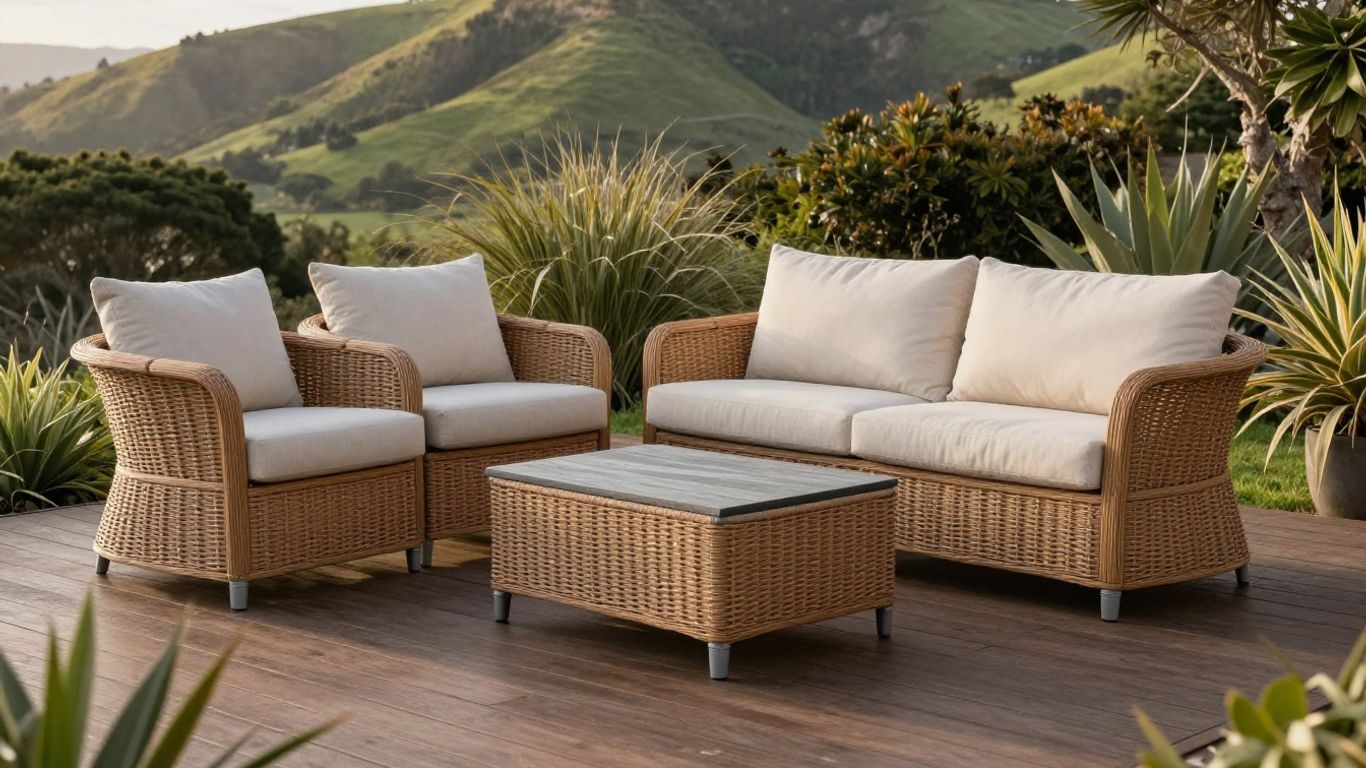
Wood brings warmth and a natural texture, but some species and finishes need regular attention. Metal can feel crisp and architectural; aluminium is easy to move and does not rust in the same way as ordinary steel, while coated steel may offer a heavier feel when properly protected. Wicker and similar woven materials create a relaxed look, although their suitability depends on the fibre and how much shelter the area provides.
Plastic is often light and straightforward to clean, but its appearance and resistance to sun and temperature changes vary considerably. Compare the actual construction rather than assuming that a material name tells you everything about performance.
Understand weather resistance and maintenance needs
Weather resistance is a combination of material, finish, drainage, airflow, and upkeep. A sheltered chair may need less intervention than the same chair placed beside a pool or in full coastal exposure. Before buying, ask what should be covered, what can remain outside, and whether cushions need to be stored after rain.
Use this simple comparison as a starting point, then check the manufacturer’s care instructions for the specific piece.
| Material | Strengths | Check before buying |
|---|---|---|
| Aluminium | Light, clean-lined, and suited to many outdoor settings | Finish quality, frame stability, and wind exposure |
| Teak or other wood | Warm grain and a substantial natural appearance | Cleaning, oiling or weathering expectations |
| Wicker or rope | Adds texture and a relaxed decorative feel | Fibre type, UV resistance, and drainage |
| Plastic or resin | Easy to move and generally simple to wipe clean | Colour stability, stiffness, and overall construction |
The table is most useful when you connect it to your own conditions. For a damp, exposed site, drainage and corrosion resistance may matter more than a particular colour or weave; for a protected courtyard, visual texture and touch may carry more weight.
Look for rust-resistant and UV-protected finishes
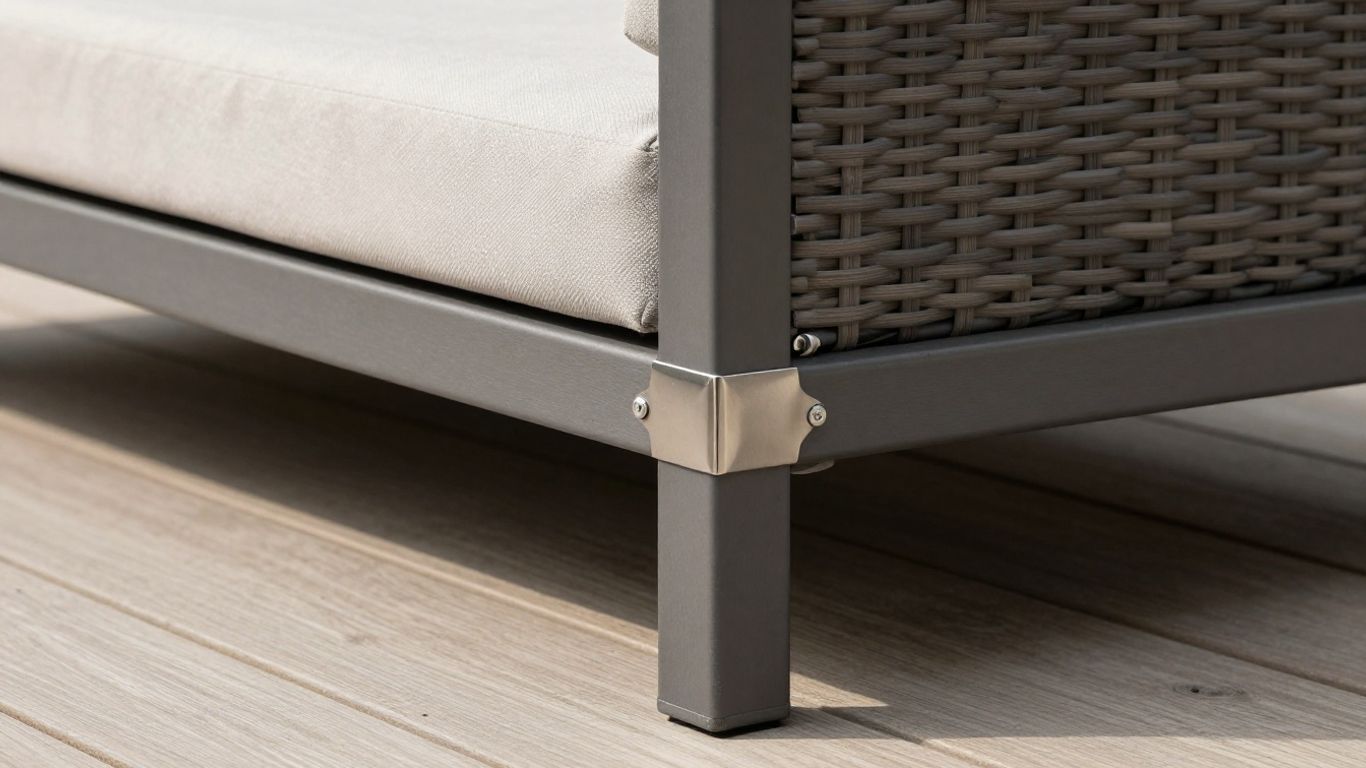
Inspect how exposed frames, fasteners, and legs are protected. Rust-resistant construction is particularly valuable near the coast or anywhere that furniture is frequently wet, while UV protection helps finishes and fabrics retain their appearance in strong sunlight. Look for clear care information rather than vague promises about all-weather use.
Design Concepts’ aluminium side tables are described as rust-free and powder-coated, with adjustable feet for stability. That kind of specific product information makes it easier for you to judge whether a table fits your conditions.
Consider how materials affect comfort and appearance
Materials change how furniture feels as well as how it looks. Metal may heat up in direct sun, wood can feel pleasant and tactile, and woven surfaces can soften a modern setting. Cushions, shade, and the placement of the furniture can often solve comfort issues without abandoning a material you love.
Aim for a relationship between the furniture and its surroundings. Warm timber tones can soften masonry, while restrained metal frames may suit a contemporary exterior. The result should feel connected to your home rather than like a separate display.
Select comfortable and functional pieces
Outdoor furniture is successful when you want to use it repeatedly. Look beyond the photograph and consider posture, seat depth, cushion behaviour, table height, and how easily each piece can be moved or stored. Small functional decisions often make the difference between a patio that looks finished and one that becomes part of your daily life.
Choose seating based on body support and use
Try seating whenever possible, or compare dimensions carefully if you are shopping online. Check seat height, depth, arm height, back angle, and whether your feet rest comfortably on the ground. Dining chairs usually need a more upright posture, while lounge seating can be deeper and more relaxed.
Consider the people who will use the space most. A chair for morning coffee may need easy entry and a supportive back, while a sofa for long conversations should let you change position without feeling hemmed in.
Decide whether cushions are necessary
Cushions add softness and can make firmer frames much more inviting, but they also introduce another care task. Look for fabrics suited to outdoor exposure, removable covers where practical, and filling that can dry properly after damp weather. If you dislike carrying cushions inside, choose furniture with a comfortable frame or plan dedicated storage nearby.
The right answer depends on how much shelter you have and how often you are prepared to maintain the space. Comfort should be tested in context, not judged by thickness alone.
Add tables that fit dining, lounging, or entertaining
Choose table height and surface area according to the activity. A dining table needs room for plates and elbows, a coffee table should sit within easy reach of lounge seating, and a side table may be enough beside a single chair. Round tables encourage conversation and can ease circulation, while rectangular tables often make better use of a long deck.
For entertaining, check whether there is space for serving dishes without blocking guests. A table that looks generous in a showroom may feel surprisingly tight once you add place settings, glasses, and shared food.
Prioritize storage and flexible furniture designs
Flexible pieces help you adapt the space as your needs change. An ottoman can act as a footrest, extra seat, or occasional surface, while modular seating can be rearranged for a quiet afternoon or a larger gathering. Design Concepts’ outdoor sofas include flexible modular designs, alongside Urecel Quick-Dry foam and marine-grade frames as documented product features.
Also consider where throws, cushions, covers, and serving items will go. A beautiful arrangement is easier to enjoy when the things that protect and support it are close at hand.
Evaluate quality and construction
Durability is usually found in details that are easy to overlook online. Examine the frame, joints, hardware, fabric, filling, and finish as a complete system. A well-built chair should feel stable and deliberate, not merely attractive from one angle.
Inspect frames, joints, hardware, and finishes
Run your hands over accessible edges and look for clean joins, even welds, secure fixings, and a consistent finish. On timber, check the grain, sanding, and protection around joints. On metal, look closely at corners and points where water might collect.
Ask whether the construction is designed for outdoor use rather than adapted from indoor furniture. Product specifications, care instructions, and warranty terms can reveal more than styling photographs.
Check cushion fabric and filling quality
Fabric should feel appropriate to the expected exposure and use. Ask whether it resists fading, mould, and mildew, and whether covers can be removed for cleaning. Filling should provide support without collapsing quickly, while the cushion design should allow moisture to escape rather than remain trapped.
A useful way to compare pieces is to sit on them for several minutes and check whether the support remains comfortable. Softness at first contact is not the same as lasting comfort.
Compare weight, stability, and wind resistance
Weight affects both everyday usability and how furniture behaves in gusty weather. Very light pieces are convenient to move but may need a sheltered position or a storage plan. Heavier furniture can feel reassuringly stable, though it should still have level feet and a sound frame.
Think about the whole arrangement. A large umbrella, tall chair, or loosely placed cushion may catch wind even when the main table is substantial, so stability is not only a property of the frame.
Identify warranties and replacement-part options
A warranty can clarify what the maker expects from the product and what support is available if a covered issue occurs. Read its duration, exclusions, care requirements, and whether it applies to fabric, frames, finishes, and hardware separately. Also ask whether covers, cushions, glides, and other replacement parts can be ordered later.
This information matters because outdoor furniture is used hard and exposed often. Good after-sales support can extend the useful life of a set without forcing you to replace every piece after one damaged component.
Balance budget, value, and maintenance
Set your budget around the finished outdoor area, not just the largest item. Delivery, cushions, covers, lighting, shade, storage, and care products can change the final cost. A clear total helps you compare a smaller, better-made arrangement with a larger set that may require frequent replacement.
Set a realistic budget for the full setup
List the functions you need first, then price the essentials before adding decorative extras. You might begin with two comfortable chairs and a table, or with a dining set that can also support casual work and entertaining. Leave some room for weather protection and unexpected practical needs.
If you are furnishing in stages, choose a first purchase that can stand alone. That way, the space feels useful immediately rather than waiting for every planned piece.
Compare upfront cost with long-term durability
A lower price is not automatically better value if frames loosen, finishes deteriorate, or cushions need replacing quickly. Compare construction, expected care, warranty support, and the likelihood that the furniture will remain comfortable after repeated use. Long-term value matters when the area is used throughout the warmer months.
Use a simple five-year view rather than judging only the price on the day. The cheaper option may still be sensible for occasional or sheltered use, while a heavily used exposed setting may justify spending more on materials and construction.
Estimate cleaning, covering, and refinishing requirements
Before you buy, write down the care the furniture will need across a typical season. A realistic routine might include:
- Brushing away leaves and dirt before they stain or retain moisture.
- Washing frames and fabric according to the care instructions.
- Drying cushions fully before stacking or storing them.
- Checking fixings, feet, covers, and drainage points after severe weather.
These tasks are manageable when they fit your routine, but frustrating when they require more time and storage than you have. Choose accordingly, and remember that good drainage and airflow can reduce the effort needed to keep furniture fresh.
Decide when premium furniture is worth the investment
Premium furniture can make sense when the space is exposed, heavily used, difficult to replace, or central to how you entertain. It may also be worthwhile when comfort and appearance need to remain consistent over many seasons. Design Concepts’ outdoor bar stools illustrate the sort of detailed specification worth comparing, including UV-resistant Olefin Rope, weather fade-resistant wicker, quick-dry foam cushions, and A-grade fine-sanded teak.
The goal is not to buy the most expensive option. It is to spend more where performance, comfort, and repairability will have a noticeable effect on your everyday experience.
Coordinate style and plan for care
Once the practical decisions are clear, bring the visual elements together. Outdoor furniture should complement the architecture, planting, and finishes around it while still feeling relaxed enough for daily use. A limited palette and a few repeated textures usually look more considered than a collection of unrelated pieces.
Match furniture to your home’s exterior
Look at the colours and materials already present on the house. Timber cladding, brick, stone, rendered walls, and dark window frames each create a different starting point. You can echo one existing tone in the furniture or use contrast deliberately, but avoid choosing pieces in isolation from the building.
Scale matters as much as colour. Low seating may suit a long deck, while a more upright dining arrangement can provide definition beside large doors. Step back and consider how the furniture will look from inside the house as well.
Combine colors, textures, and patterns effectively
Choose one dominant material or colour, then add variation through cushions, rugs, planters, or smaller tables. Natural timber, woven surfaces, powder-coated metal, and performance fabrics can work together when their tones share a relationship. Patterns are most effective when they repeat or balance something already present in the garden or exterior.
Keep larger pieces relatively calm if you want the space to feel versatile. You can refresh the look later with removable textiles rather than replacing the main furniture.
Use covers, shade, and storage to extend furniture life
Protection should be convenient enough that you will actually use it. A well-placed umbrella can reduce direct sun, while breathable covers and dry storage can help when weather turns. Do not trap damp cushions under a cover; let them dry first and maintain airflow around the furniture.
Storage also protects the small things that make a setting comfortable, including cushions and throws. Plan it at the same time as the furniture rather than trying to find room after the area is already full.
Create a seasonal maintenance routine
Set aside a few short sessions each season to inspect, clean, and reset the space. Check joints and hardware, look for marks or corrosion, wash fabrics as directed, and review whether furniture is still draining properly. Before periods of severe weather, secure light pieces and move vulnerable accessories under cover.
A consistent routine is kinder to both your time and your budget. It also gives you a chance to notice small issues while they are still easy to fix.
Conclusion
When you measure carefully, match materials to exposure, test comfort, inspect construction, and budget for care, choosing outdoor furniture becomes a much clearer process. Select pieces that support the way you live now, then protect and maintain them so your outdoor space remains comfortable, durable, and welcoming for years.
Frequently Asked Questions
What should you consider first when choosing outdoor furniture?
Start with the size and layout of your space, then consider how you will use it and how exposed it is to sun, wind, rain, and humidity. These factors narrow the choice more effectively than style alone.
Which outdoor furniture material lasts the longest?
Longevity depends on the material, construction, finish, climate, and maintenance. Well-made wood, aluminium, steel, woven materials, and resin can all perform well when suited to the conditions and cared for correctly.
Is it better to buy outdoor furniture with cushions?
Cushions usually improve softness and support, but they require extra cleaning and storage. Choose them when you value lounge comfort and have a practical way to dry and protect them.
How much clearance should you leave around patio furniture?
Leave enough room for doors to open, chairs to pull out, and people to walk comfortably behind seated guests. The exact amount depends on the layout, but a taped floor plan is a useful way to test circulation before buying.
How can you protect outdoor furniture from bad weather?
Use suitable shade, breathable covers, and dry storage for cushions and smaller accessories. Secure lightweight items before strong winds, and avoid covering furniture while it is still wet.
How do you know if outdoor furniture is well made?
Look for stable frames, clean joints, secure hardware, consistent finishes, quality fabric, supportive filling, and clear care instructions. Warranty coverage and replacement-part availability are also useful signs of long-term support.
How often should outdoor furniture be cleaned?
Light cleaning should happen whenever dirt, leaves, or spills collect, with a more thorough inspection at least seasonally. Follow the care instructions for each material and allow cushions to dry fully after washing or rain.