

Weather resistant outdoor furniture: How to choose pieces that last in any climate
Key Takeaways
Good outdoor furniture should suit your climate, your available space, and the way you actually live outdoors.
- Weather resistant does not mean completely waterproof or maintenance-free.
- Choose frames, fabrics, cushions, and finishes for your local conditions.
- Look closely at joints, drainage, hardware, and outdoor-use ratings before buying.
- Keep cushions dry, clean surfaces regularly, and inspect furniture seasonally.
- Covers and sheltered placement can extend the life of even durable pieces.
Understand what weather resistant really means
Weather resistant outdoor furniture is designed to handle exposure better than indoor furniture, but it is not immune to the elements. Rain, sunlight, salt, wind, and temperature changes all place different demands on a piece. The most reliable choice is one that combines suitable materials with sound construction and a care routine you can manage. In New Zealand, that usually means preparing for several kinds of weather rather than one predictable season.
Weather resistant vs. waterproof and all-weather
Weather resistant means a material or product can tolerate outdoor conditions without quickly losing its function or appearance. Waterproof suggests a much higher level of protection from water, yet cushions, seams, joints, and drainage points may still allow moisture in. “All-weather” is often a useful description, but you should still check what the manufacturer means by it and whether the rating applies to the frame, upholstery, or complete piece.
A sensible approach is to ask how furniture performs when wet, how quickly it dries, and whether it is intended to stay outside year-round. A water-resistant fabric may cope beautifully with showers while still benefiting from storage during long periods of rain. Likewise, a rust-resistant frame can last longer when standing water is prevented.
How sun, rain, humidity, wind, and frost cause damage
Sunlight gradually fades fabric and can make some plastics brittle. Rain and humidity encourage mildew when water becomes trapped beneath cushions or inside poorly ventilated frames. Wind adds movement and abrasion, while frost and freezing temperatures can make water expand in small cracks or seams.
Damage is often cumulative rather than dramatic. A little fading, a loose fastener, or a cushion that stays damp overnight may seem harmless, but repeated exposure shortens the useful life of furniture. Placement, airflow, and drainage therefore matter almost as much as the material listed on the product page.
Why outdoor-rated materials still need maintenance
Outdoor ratings describe intended performance, not permission to ignore care. Dust, pollen, bird droppings, sunscreen, and salt settle on surfaces and can hold moisture against them. Regular, gentle cleaning removes those contaminants before they stain fabric, dull finishes, or encourage corrosion.
This is where small maintenance habits make a noticeable difference. Brush off debris, allow wet cushions to dry upright, and deal with spills promptly. If you are comparing materials and care requirements, this outdoor furniture materials guide offers a useful way to think about drainage, humidity, and long-term upkeep.
When covers and sheltered placement are necessary
A roof, pergola, covered balcony, or wall can reduce direct sun and rain, but shelter does not eliminate humidity or wind-driven water. Covers are especially useful for cushions, occasional-use furniture, and periods of severe weather. They should be breathable and fitted correctly; a damp cover pressed against fabric can create the problem it is meant to prevent.
If you cannot store large pieces, prioritise furniture with free-draining cushions, quick-dry materials, stable frames, and finishes suited to outdoor exposure. Even then, moving cushions into a dry, ventilated area before a storm is a simple form of protection.
Compare the best materials for outdoor furniture
Material choice affects weight, comfort, appearance, maintenance, and lifespan. There is no single best option for every patio: a sunny apartment balcony has different needs from a wind-exposed coastal deck. Start with the conditions your furniture will face, then consider whether the look and upkeep fit your routine.
The two images below show the contrast many buyers are balancing: inviting natural textures on one hand, and resilient modern construction on the other.
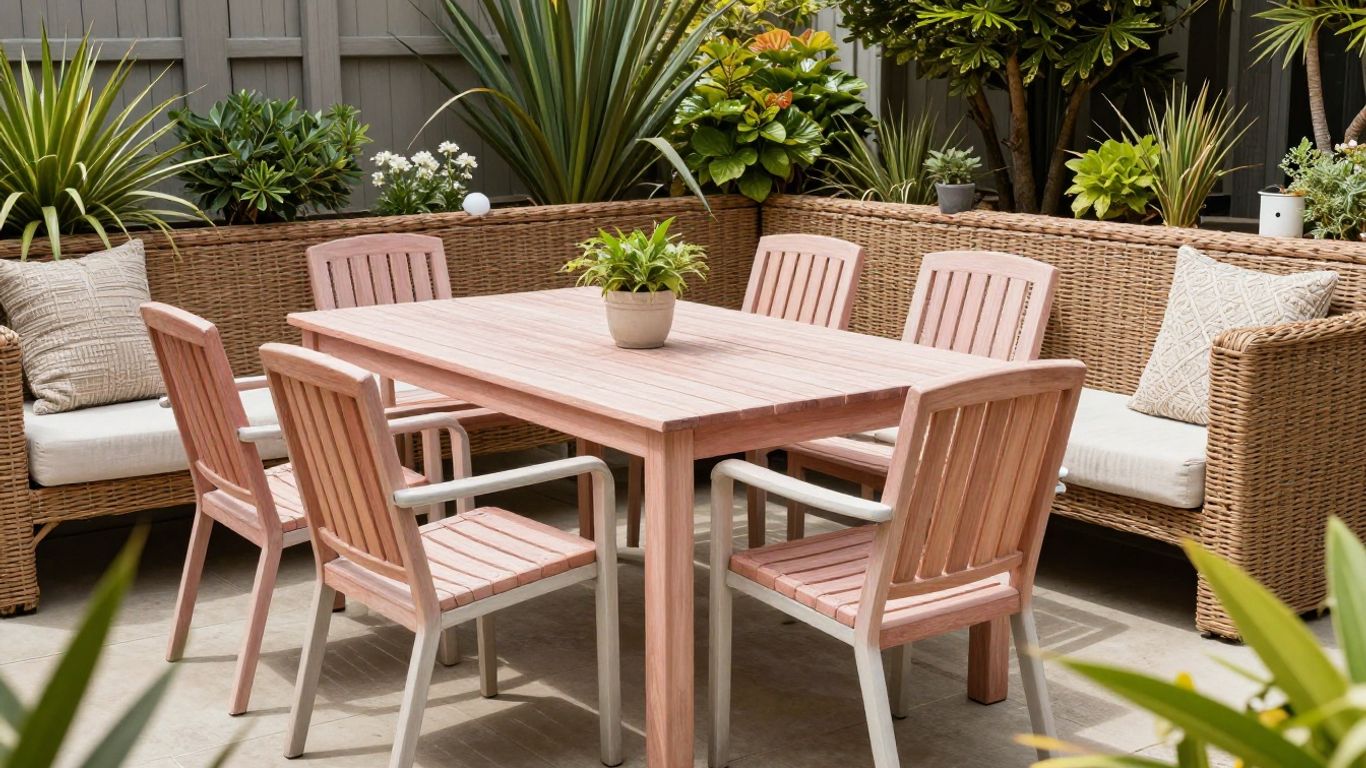
Aluminum and steel for lightweight, sturdy frames
Aluminum is light, easy to move, and naturally resistant to rust, making it practical for balconies and spaces that need frequent rearranging. Steel can offer a reassuringly solid feel, although its protective finish and hardware deserve close attention. Check for capped ends, even welds, and a finish that has not been chipped during assembly or transport.
Powder-coated aluminum is particularly useful when you want a clean contemporary appearance with relatively little maintenance. A lighter frame still needs a broad, stable base in windy areas, especially when paired with a tall back or large umbrella.
Teak and other natural woods for warmth and durability
Teak brings warmth and a substantial feel to an outdoor setting. Its natural oils help it cope with outdoor exposure, though the surface will gradually weather to a silvery tone if left untreated. You can preserve more of the original colour with suitable care, or allow the patina to develop and focus on keeping the timber clean and well ventilated.
Other outdoor woods may need more frequent sealing and closer inspection around joints. Look for smooth finishing, sound joinery, and clear instructions rather than assuming every timber piece will perform like teak.
HDPE lumber and recycled plastic for low-maintenance use
HDPE lumber and recycled plastic are useful when you want outdoor furniture that is easy to wash and less vulnerable to routine moisture. These materials can imitate painted or wood-grain finishes while avoiding some of the splitting and staining associated with untreated timber. Their considerable weight may also help keep larger pieces stable.
They are not maintenance-free, however. Dirt can collect in textured surfaces, and very dark colours may become hot in strong sun. Leave enough airflow around the furniture and follow the cleaning guidance for the particular finish.
Wicker, resin, and synthetic rattan for texture and flexibility
Natural wicker is better suited to protected locations, while resin wicker and synthetic rattan are made for more demanding outdoor use. They provide the woven texture many people want without relying on plant fibres that can deteriorate quickly in persistent damp. Inspect the weave closely for even tension and a secure connection to the frame.
The underlying frame matters just as much as the visible weave. A well-finished synthetic surface cannot compensate for a frame that flexes, traps water, or uses hardware that starts to corrode after a short period.
Powder-coated and stainless steel finishes for corrosion resistance
Finishes create the first line of defence between a frame and the environment. Powder coating provides a durable coloured surface, while stainless steel is often selected for its corrosion resistance, particularly where furniture faces regular moisture. Neither should be treated as indestructible: scratches, cut edges, salt deposits, and stagnant water can still cause trouble.
Use a soft cloth and mild detergent for routine cleaning, and avoid abrasive pads that can mark the protective layer. This simple comparison can help you match a material to the balance of appearance, upkeep, and exposure you expect.
| Material or finish | Useful qualities | Points to check |
|---|---|---|
| Aluminum | Light, rust-resistant, easy to move | Frame stability and coating quality |
| Teak | Warm appearance and outdoor durability | Sealing preference and timber joinery |
| HDPE or recycled plastic | Low-maintenance and easy to clean | Heat, weight, and surface texture |
| Synthetic rattan | Woven look with outdoor practicality | Weave tension and frame construction |
| Stainless steel | Strong corrosion resistance | Grade, fasteners, and salt exposure |
The comparison is a starting point, not a substitute for product specifications. A carefully built piece in a suitable material will usually outperform a cheaper piece with a more impressive-sounding label.
Match furniture choices to your local climate
Your local weather should influence both what you buy and where you put it. New Zealand homes can experience strong UV, heavy rainfall, salty air, frost, and gusty conditions, sometimes within the same region. Consider your microclimate too: a shaded courtyard, exposed rooftop, and covered veranda each behave differently.
Selecting materials for hot, sunny regions
Strong sunlight can fade upholstery, warm dark surfaces, and age some plastics. Choose UV-stable fabrics, durable coatings, and layouts that offer shade during the hottest part of the day. A quality umbrella or pergola can protect both furniture and the people using it, while lighter finishes may feel more comfortable under direct sun.
Rotate cushions occasionally so one side does not receive all the exposure. If the area is unused for several weeks, move textiles indoors or use breathable covers rather than leaving them in full sun.
Preventing moisture damage in rainy or humid areas
In damp conditions, drainage and airflow are essential. Avoid placing cushions directly on wet decking, check that water can escape from seat bases, and leave space between furniture and walls. Quick-dry foam can be particularly helpful for upholstered pieces, but even fast-drying cushions need room to breathe.
For a broader regional perspective, this guide to durable outdoor living discusses choices for strong sun, heavy rainfall, and salty air. Apply the same principle at home: select for the conditions you actually have, not just the style you like in a showroom.
Preparing furniture for snow, ice, and freezing temperatures
Snow and ice add weight, while freeze-thaw cycles can expose weaknesses in timber, seams, coatings, and trapped water. Clear snow rather than allowing a heavy layer to sit on a table or canopy, and avoid forcing frozen cushions or moving pieces across icy surfaces. Store removable textiles somewhere dry before winter weather settles in.
If your furniture will not be used for months, clean it first and give it plenty of ventilation in storage. A cover can help, provided it does not trap condensation against the frame or fabric.
Choosing stable designs for windy locations
Wind can overturn lightweight chairs, drag tables across hard surfaces, and stress umbrella fittings. Select broad bases, low centres of gravity, and frames with enough weight for the setting. Secure umbrellas separately and avoid leaving loose cushions where they can become damaged or blown into neighbouring spaces.
For a balcony or exposed deck, measure the available footprint before buying. Stability should not depend on pushing furniture against a railing, since that can create both damage and safety concerns.
Accounting for coastal salt air and chlorinated pools
Salt spray and pool chemicals can settle on frames, hardware, fabric, and nearby surfaces. Rinse exposed furniture with fresh water when practical, then allow it to dry fully. Pay particular attention to joins and fasteners, where residue can remain unseen.
Choose corrosion-resistant hardware and finishes, and do not assume a sheltered poolside position is dry. Splashing, sunscreen, and constant humidity can be just as relevant as rainfall.
Evaluate construction quality before you buy
A material name only tells part of the story. The way a frame is joined, the quality of its hardware, and the design of its cushions often determine how furniture feels after several seasons. Whenever possible, sit in the piece, inspect the underside, and read the care instructions before you commit.
The right question is not simply whether a product looks substantial. Ask whether it is built for the exposure, movement, cleaning, and storage pattern your space will require.
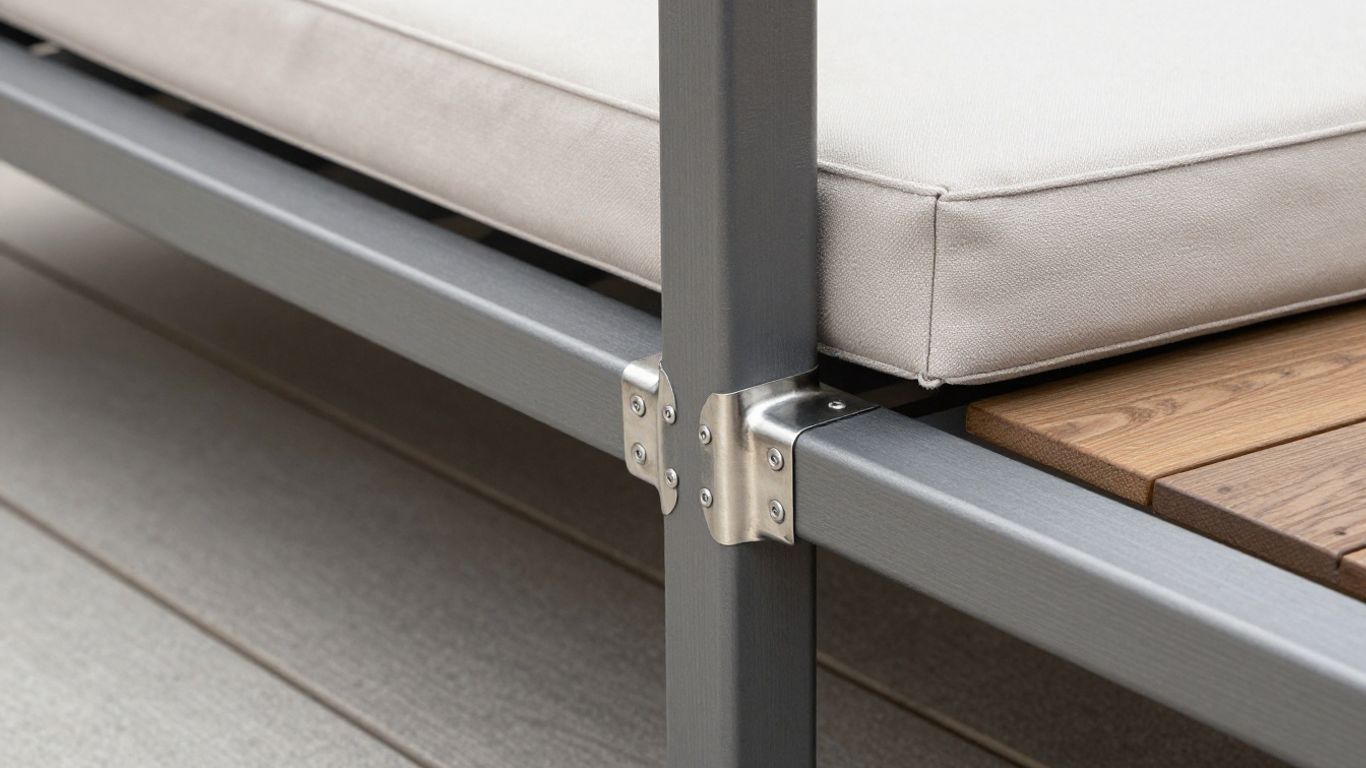
Checking frame strength, joints, and hardware
Push gently against arms, backs, and corners to detect unwanted flex. Welds should look even, joints should meet cleanly, and screws should sit securely without visible rust or stripping. Timber pieces need particular attention around end grain and areas where water may collect.
If assembly is required, keep the instructions and inspect the hardware before tightening anything. Correct assembly supports stability; over-tightening can damage softer materials or distort a frame.
Choosing UV-resistant cushions and upholstery
Fabric should be intended for outdoor use and backed by clear care instructions. Look for removable covers, solution-dyed fibres, water-shedding surfaces, and colours suited to the amount of sunlight your patio receives. Comfort also depends on the cushion core, not just the outer fabric.
The Tasman Alu Single Sofa combines Sunbrella fabric, quick-dry foam inner cushion cores, and a robust powder-coated frame. Those are specific features to look for when comparing upholstered seating, rather than vague promises about all-weather performance.
Assessing drainage, ventilation, and drying performance
Lift cushions and look beneath them. Slatted or open bases usually allow water to escape more readily than enclosed platforms, while mesh or ventilated construction can reduce dampness after rain. Seams, piping, and cushion covers should not create deep pockets where water remains hidden.
A cushion that feels dry on top may still be wet underneath. Stand cushions on their edge after rain and avoid stacking them until both sides are dry.
Comparing weight, stability, and portability
Heavy furniture can feel reassuring in a windy garden, but it may be difficult to clean around or move into shelter. Lighter pieces suit flexible layouts and smaller balconies, provided they have stable proportions and can be secured when necessary. Think about the route from storage to patio as well as the final position.
Wheels, adjustable feet, and modular sections can make a substantial difference in everyday use. They should work smoothly without making the furniture feel loose or unstable.
Identifying warranties and outdoor-use ratings
Read the warranty for the specific component you care about: fabric, frame, finish, or cushion filling. Check exclusions for stains, misuse, normal fading, wind damage, and failure to follow care instructions. A clear outdoor-use rating and accessible support are valuable because they tell you what the maker expects from the product.
Keep your receipt, assembly information, and care guide. These documents make it easier to resolve a genuine manufacturing issue and to maintain the furniture in the way the warranty requires.
Choose comfortable and practical pieces for your space
A beautiful setting can become frustrating when furniture is too large, too low, or awkward to use. Plan the room around movement, sightlines, shade, and the activities you want to support. Comfort is not an afterthought; it includes seat height, cushion support, table clearance, and how easily you can clean or rearrange the space.
Measuring patios, decks, balconies, and entertaining areas
Measure the usable floor area, not just the overall patio. Mark doors, steps, drains, posts, railings, and the swing of gates or sliding doors. Note the position of afternoon sun and any roofline that may limit an umbrella or tall chair.
Write down the dimensions of the furniture as assembled, including arms and table overhangs. For compact areas, a side table or slim bench may be more useful than a larger occasional piece that blocks circulation.
Balancing seating capacity with walking clearance
Allow a comfortable route around tables and between seating groups. Dining chairs need space to pull out, while loungers need room to recline without obstructing a doorway. It is usually better to seat fewer people comfortably than to fill every available metre.
Create a temporary floor plan with masking tape or cardboard. Walking through that outline can reveal tight corners long before delivery day.
Selecting dining, lounging, and multifunctional furniture
Dining sets suit meals and structured entertaining, while sofas, lounge chairs, and daybeds invite longer, more relaxed use. Multifunctional pieces can be valuable on balconies or small decks, especially when a bench doubles as flexible seating. Match the furniture to your habits rather than buying a complete set simply because it is coordinated.
Consider how often you host, whether children need easy access, and whether you prefer furniture that can be rearranged between lunch and evening drinks.
Coordinating cushions, finishes, and outdoor accessories
Use texture and colour to make an outdoor area feel connected to your home. Natural timber can soften a metal frame, while a restrained fabric palette keeps a larger seating arrangement from feeling busy. Accessories such as umbrellas, side tables, lanterns, and outdoor heating should add function without reducing walking clearance.
Choose textiles that can be removed and cleaned easily. A coordinated look is more sustainable when individual covers or cushions can be replaced rather than an entire setting.
Planning for storage when severe weather arrives
Before buying, decide where cushions, covers, umbrellas, and smaller furniture will go during storms or winter. A dry bench box, garage shelf, utility room, or ventilated storage cupboard may be enough. Do not rely on a storage plan that requires lifting heavy pieces through a narrow doorway.
The Outdoor Daybeds collection illustrates why practical details such as quick-dry foam, included throw cushions, and built-in wheels can matter alongside appearance. Even useful mobility does not remove the need to protect loose textiles during severe weather.
Maintain weather resistant outdoor furniture
A simple maintenance schedule preserves comfort and helps you spot small problems early. Clean more often in coastal, leafy, or heavily used locations, and clean before applying any protective product. Always test a cleaner or sealer on a hidden area first.
The goal is not to make furniture look untouched. It is to remove damaging residue, keep water moving away, and repair minor wear before it spreads.
Cleaning different frame and surface materials
Start with a soft brush or cloth to remove loose dirt, then use mild soap diluted in water where the material allows it. Rinse thoroughly so detergent does not leave a film, and dry metal hardware and shaded joints. Avoid pressure-washing delicate weaves, coatings, and timber unless the care instructions specifically allow it.
For everyday upkeep, a short routine works well:
- Brush away leaves, grit, and pollen before they become wet.
- Wipe spills from frames and tabletops as soon as you notice them.
- Rinse salt or pool residue with clean water.
- Dry cushions upright and separate from one another.
That sequence keeps cleaning manageable and reduces the amount of moisture held against the furniture. For more detailed guidance on teak, upholstery, and concrete, see these outdoor furniture maintenance tips.
Protecting wood with the right sealers and oils
Clean and dry timber before applying oil or sealer, and use only a product compatible with the wood and its existing finish. Follow the label for preparation, coats, drying time, and ventilation. Applying more product than the timber can absorb may leave a sticky surface that attracts dirt.
If you prefer a weathered grey appearance, regular washing and inspection may be all that is needed. Treating timber is a choice about colour and surface care as well as protection.
Removing stains, mildew, rust, and surface corrosion
Deal with mildew and stains promptly using a cleaner recommended for the affected material. Rust marks on a coating may be superficial, but bubbling, flaking, or deep pitting suggests the finish needs closer attention. Do not use the same abrasive method on a painted frame, timber tabletop, and woven resin surface.
Rinse away cleaning residue and dry the area completely. If corrosion returns quickly, investigate trapped moisture, damaged coating, or incompatible hardware rather than repeatedly scrubbing the symptom.
Caring for cushions and outdoor fabrics
Shake out cushions, open removable covers where possible, and let every layer dry fully after rain. Blot spills instead of rubbing them deeper into the weave, then follow the fabric maker’s cleaning instructions. Store cushions in a dry, ventilated place during long wet periods, even when the frame can remain outside.
The Sunbrella fabric care guide is a useful reference for handling common outdoor stains while protecting the appearance of a durable, fade-resistant fabric. Avoid assuming that one cleaning solution suits every upholstery fibre.
Inspecting fasteners, finishes, and structural wear
At the start and end of each outdoor season, check screws, bolts, feet, welds, straps, and moving parts. Tighten loose hardware carefully and replace damaged caps or glides before water reaches vulnerable areas. Look for cracks, splinters, frayed straps, peeling coatings, and unusual movement when you sit down.
Repairing a small issue is usually simpler than waiting until a joint fails. Keep compatible touch-up products and replacement hardware available when the manufacturer recommends them.
Avoid common buying and maintenance mistakes
Most disappointing purchases are not caused by one bad material. They happen when the furniture is chosen for a showroom moment without considering exposure, dimensions, construction, or care. A short inspection and a realistic maintenance plan can prevent expensive frustration.
Confusing indoor furniture with outdoor-rated construction
Indoor furniture may have finishes, foam, adhesives, and fabrics that are not designed for rain, UV, or repeated drying. A covered porch can reduce exposure, but it does not automatically make an indoor piece suitable. Check that the complete construction, not just the visible surface, is rated for outdoor use.
If specifications are vague, ask what happens to the fabric and cushion core after wet weather. Comfort indoors is not proof of outdoor durability.
Choosing appearance over climate suitability
A particular colour, weave, or timber finish may look perfect in a photograph and perform poorly in your setting. Strong sun, salt spray, or constant damp should narrow your choices before you settle on styling. Choose the look from within the group of materials that can handle your conditions.
This approach still leaves plenty of room for personal taste. It simply avoids paying for a finish that will fade, stain, or corrode faster than you expect.
Using harsh cleaners or incompatible protective products
Bleach, solvents, abrasive powders, and stiff brushes can damage coatings and fibres even when they remove dirt quickly. Oils and sealers can also react badly with existing finishes. Read both the furniture care guide and the product label, and test any treatment discreetly.
When in doubt, begin with mild soap, clean water, and a soft cloth. Stronger treatment should be a considered response to a specific stain, not the default cleaning method.
Leaving cushions and furniture exposed unnecessarily
Durable furniture can often stay outside, but unnecessary exposure still adds wear. Cushions collect moisture, leaves, sunscreen, and dust, while umbrellas and lightweight accessories can be damaged by wind. Move or cover what you can before forecast storms and during long periods when the space is unused.
Covers work best when clean, breathable, and properly fitted. Check underneath them after wet weather rather than assuming the furniture is dry.
Replacing inexpensive pieces instead of repairing durable ones
A loose bolt, worn foot, stained cover, or small finish scratch may be repairable. Before discarding a piece, check whether replacement covers, hardware, glides, or cushion inserts are available. Repairing one component can preserve the frame and reduce waste.
Replacement is sensible when the structure is unsafe or corrosion has seriously weakened it. Otherwise, a little time spent maintaining a well-built piece can be better value than repeatedly buying short-lived furniture.
Conclusion
The best outdoor furniture for your home is the furniture that matches your climate, space, comfort needs, and willingness to care for it. Choose construction as carefully as appearance, protect vulnerable textiles, and treat drainage and airflow as essential features rather than extras. With those habits, your outdoor setting can remain inviting through changing New Zealand seasons.
Frequently Asked Questions
What does weather resistant outdoor furniture mean?
It means the furniture is designed to tolerate outdoor exposure better than indoor furniture, although it may still need cleaning, drying, covers, or sheltered placement to maintain its condition.
Can weather resistant furniture stay outside all year?
Some pieces can remain outside year-round when their materials and construction suit the climate. Removable cushions, umbrellas, and lightweight accessories usually benefit from dry storage during severe or prolonged weather.
Which material is best for rainy climates?
Look for rust-resistant or corrosion-resistant frames, breathable construction, good drainage, and cushions that dry readily. No material performs well if water remains trapped against it.
Is teak completely maintenance-free?
No. Teak is durable outdoors, but it still benefits from cleaning and inspection. You can maintain its original colour with suitable treatment or allow it to weather naturally.
How do you stop outdoor cushions from going mouldy?
Keep them off wet surfaces, dry them upright after rain, provide airflow, and store them in a dry place during long damp periods. Clean spills and organic debris promptly.
Are outdoor furniture covers always necessary?
Not always, but covers can reduce exposure and extend the life of furniture and textiles. They should be breathable, correctly fitted, and removed often enough to prevent condensation from building up.
How often should outdoor furniture be cleaned?
Clean it whenever dirt, salt, pollen, spills, or mildew appear, with a more thorough inspection at least seasonally. Coastal and humid locations may require more frequent rinsing and drying.