

How to choose outdoor furniture in New Zealand for every space and season
Key Takeaways
Choosing outdoor furniture in New Zealand is easier when you begin with the space, climate, and way you plan to use it. Focus on materials, comfort, protection, and long-term value rather than appearance alone.
- Measure the area and plan clear walking routes before you shop.
- Match frames, fabrics, and finishes to your local weather exposure.
- Choose seating and dining pieces around your everyday routines.
- Use shade, covers, storage, and regular cleaning to extend furniture life.
- Compare construction, warranties, delivery, and aftercare—not only the ticket price.
Understand New Zealand’s outdoor furniture requirements
New Zealand outdoor areas can be exposed to strong sun, rain, wind, salt air, and seasonal temperature changes. The right choice for a sheltered courtyard may not suit a beachfront deck or an open rural terrace. Start by considering your microclimate, available storage, and how often you want to maintain each piece. A useful outdoor furniture selection guide can help you bring those practical decisions together before you buy.
Account for changing weather conditions
Think about what your furniture will face on an ordinary week, not just on a perfect summer afternoon. Strong ultraviolet light can fade fabric and dry out some finishes, while persistent dampness can encourage mould or corrosion. Wind also affects stability, especially on balconies and exposed decks, so heavier bases, secure positioning, and stackable pieces may matter more than expected. Weather exposure should shape the shortlist from the beginning.
Look for materials and cushions that suit the amount of shelter available. A covered patio gives you more flexibility, but it does not eliminate humidity or sideways rain. If your furniture will remain outside, prioritise finishes and fabrics designed for outdoor use and create a simple routine for drying, covering, or storing vulnerable components.
Match furniture to coastal, urban, or rural settings
Salt spray makes coastal settings particularly demanding, while urban balconies may need lightweight pieces that can be moved or stored easily. Rural properties often have more space but greater exposure to wind, dust, and weather from several directions. Walk around the proposed area at different times of day and notice where water collects, where the sun lands, and whether prevailing winds affect comfort.
Your surroundings should influence both material and layout. Choose stable furniture for open lawns, rust-resistant frames near the coast, and compact or modular arrangements where access is tight. The goal is not to buy the heaviest or most expensive option; it is to buy something that fits the conditions you actually have.
Measure patios, decks, balconies, and entertaining areas
Measure the usable floor area, then record doors, steps, railings, planters, outdoor taps, and roof supports. Include the route from the delivery entrance to the final position, since a large tabletop or sofa may need to pass through narrow gates or hallways. Leave enough room for chairs to slide out and for people to walk behind seated guests.
Sketch the arrangement with paper or masking tape before ordering. For dining areas, account for the pushed-back chair as well as the table footprint. For lounge settings, check that coffee tables remain reachable without blocking the main path. These small checks prevent a beautiful set from making the space feel cramped.
Set a realistic budget for long-term value
A low purchase price can become poor value if frames corrode, cushions hold moisture, or replacement parts are hard to find. Set a total budget that includes delivery, assembly, covers, cushions, and any storage you may need. Then compare how much maintenance the furniture will require over several seasons.
It can make sense to spend more on the pieces you use constantly, such as a sofa frame or dining chairs, while choosing simpler occasional tables or stools. Look for clear warranty terms and ask whether covers, cushions, and hardware can be replaced. Value is measured by years of comfortable use, not by the initial number alone.
Choose the right outdoor furniture materials
Material choice affects comfort, appearance, maintenance, and lifespan. No single option is perfect for every New Zealand setting, so compare the frame, finish, woven surface, cushion construction, and hardware together. A material that performs well in a dry, sheltered courtyard may need more care beside the sea. Use the local climate and your maintenance habits as equal parts of the decision.
Compare aluminium, steel, and wrought iron
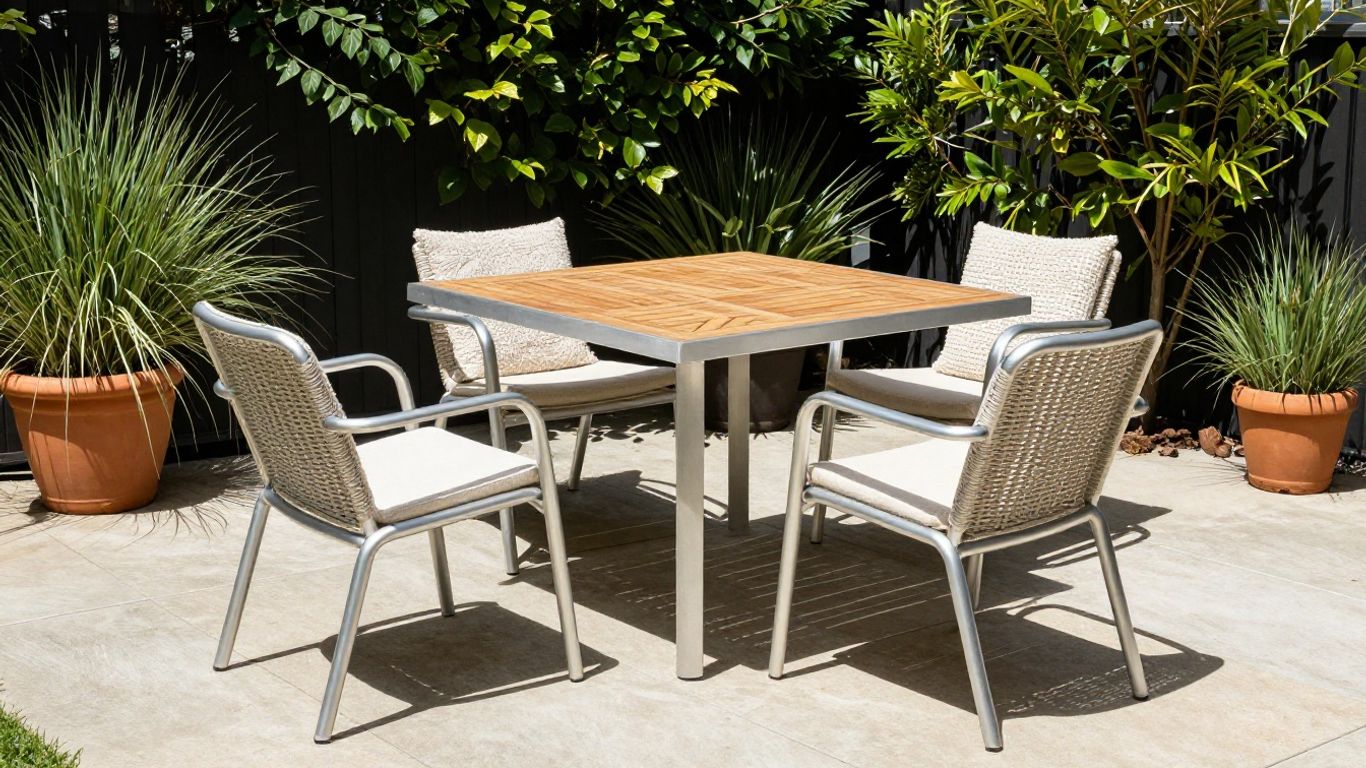
Aluminium is light, easy to move, and well suited to many contemporary outdoor settings, particularly when it has a durable protective finish. Steel can feel substantial and stable, but the quality of its coating and the care of exposed joins matter. Wrought iron offers a classic, weighty look, although it may need careful rust prevention and occasional refinishing.
Check welds, fasteners, drainage points, and the underside of the frame rather than judging only the visible colour. On a windy site, stability may be useful, but remember that you still need to move or secure furniture before severe weather. Ask how the finish should be cleaned and whether touch-up products or replacement feet are available.
Evaluate timber species and maintenance needs
Timber brings warmth and texture to a deck, but every species has a maintenance profile. Some outdoor timbers weather to a silvery tone if left untreated, while others need regular oiling or sealing to retain their original colour. Moisture, direct sun, and poor drainage can all accelerate changes in the surface.
Keep timber off persistently wet ground and allow air to circulate around the legs. Follow the maker’s care instructions instead of applying an indoor wood product by assumption. If you prefer a relaxed, weathered appearance, choose a species and finish that can age gracefully rather than committing to a maintenance routine you will not enjoy.
Consider wicker, rattan, and synthetic woven materials
Natural rattan is attractive but is generally better protected from rain and prolonged dampness. Synthetic woven materials are commonly chosen for outdoor use because they can provide a similar texture with easier weather care. Inspect the weave for even tension and check that it is securely finished around corners and beneath the seat.
The frame beneath the weave still matters. A well-made woven chair can be let down by weak joints or poor drainage, while a sound frame may remain comfortable for years with simple cleaning. Ask whether the material is intended for full exposure, partial shelter, or covered use before placing it on an open deck.
Weigh plastic and composite options
Plastic and composite furniture can be practical for family spaces, pool areas, and smaller balconies. They are often easy to wipe down and move, but quality varies in colour stability, rigidity, and resistance to heat. Check whether the piece feels secure when you sit down and whether its surface becomes uncomfortable in direct sun.
A useful comparison is less about labels and more about the complete specification. Consider weight, drainage, UV suitability, repairability, and end-of-season storage. The table below gives you a starting point, but the finish and construction should always be checked on the actual product.
| Material | Strengths | Points to check |
|---|---|---|
| Aluminium | Lightweight, modern, easy to move | Coating quality, wind stability, joins |
| Steel | Solid feel and strong structure | Rust protection, exposed hardware, drainage |
| Timber | Warm texture and natural character | Sealing, oiling, moisture, seasonal colour change |
| Synthetic weave | Relaxed appearance and outdoor practicality | UV suitability, weave tension, frame quality |
Use the table to narrow your options, then match the final choice to your exposure and care routine. If you want design-led pieces selected for New Zealand conditions, Design Concepts collections offer a useful reference point for comparing style with material performance.
Select furniture for comfort and everyday use
Outdoor furniture should feel easy to use on a normal morning, not only look inviting in a photograph. Consider how many people sit together, whether children or older guests will use it, and whether you prefer formal dining or relaxed lounging. Seat height, arm support, cushion depth, and table clearance can make a noticeable difference. Plan for the habits you already have rather than an imagined lifestyle.
Build a practical outdoor seating arrangement
Begin with one clear purpose: conversation, dining, reading, or a combination of these. A sofa and two chairs can create a flexible conversational group, while separate chairs may work better when you need to move seats around. Keep the centre of the arrangement open enough for a coffee table and leave a comfortable path to the house.
Modular seating is useful when your needs change, but only if the individual sections remain stable and comfortable when separated. Check the back height, arm width, and seat firmness in person where possible. A comfortable outdoor sofa should support the way you actually sit, whether that means upright conversation or a longer afternoon stretch.
Choose dining furniture for entertaining
Dining furniture needs enough room for elbows, serving dishes, and chairs that can pull back without hitting a wall. Rectangular tables suit larger gatherings, while round or square versions can make a compact area easier to navigate. Measure the full occupied footprint, not just the tabletop.
Supportive chairs are worth prioritising because guests may sit for several hours. Check that the table height works with the chair seat and arms, and consider whether cushions stay in place when people move. For more guidance on proportions and seating capacity, explore these outdoor dining sets as a planning reference.
Add loungers and occasional seating
Loungers work best when you can reach them without crossing the main dining route. Adjustable backs, easy-to-clean surfaces, and wheels can improve everyday use, while stools and benches offer flexible seating for visitors. Avoid filling every open corner; breathing room makes the area feel calmer and easier to maintain.
Think about where occasional pieces go when they are not being used. Stackable chairs, nesting tables, or lightweight stools can clear the deck quickly before a storm. A small side table beside a lounger may be more useful than another decorative item because it keeps drinks, books, and sunscreen within reach.
Check cushions, fabrics, and ergonomic details
Sit on a chair for several minutes if you can. Notice whether the seat tilts comfortably, whether the back supports you, and whether the cushion shifts when you stand. Outdoor fabrics should suit the exposure, while quick-dry or free-draining construction is helpful in areas that receive regular rain.
Remember that weather resistance does not mean maintenance-free. Cushions last longer when they can be removed, aired, and stored during prolonged wet spells. A simple seating plan should also include somewhere to place cushions and throws when the weather turns.
Design an outdoor area that suits your home
The best outdoor rooms feel connected to the house rather than decorated as an afterthought. Repeat a colour, material, or shape from the architecture, then use furniture to create a practical transition between indoors and out. You can keep the arrangement relaxed while still giving each area a clear purpose. Start with proportion and circulation before adding accessories.
Coordinate colors, textures, and architectural style
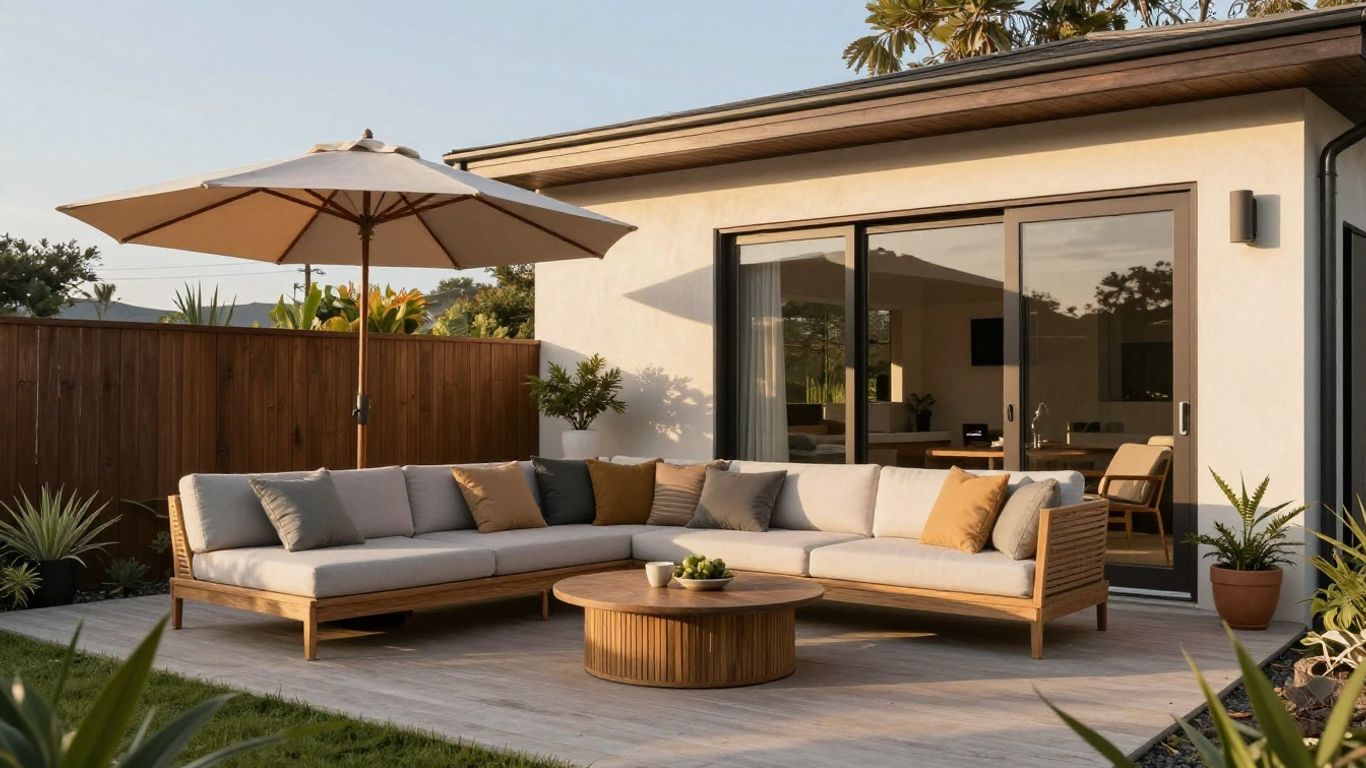
Use the building as your starting point. A timber-clad home may suit natural textures and softened colours, while a modern concrete or rendered exterior can take sharper silhouettes and restrained tones. You do not need every item to match; repeating two or three visual cues is usually enough.
Texture helps an outdoor area feel comfortable without making it busy. Combine a smooth tabletop with woven seating, or pair a simple frame with tactile cushions. Choose fabrics and finishes that still look appealing after ordinary cleaning and exposure, rather than relying on delicate details that need constant protection.
Use furniture to define zones
A dining table naturally marks one zone, while a sofa, chairs, and low table can form another. On a larger deck, orient each group toward a view or focal point and leave a visible route between them. On a smaller patio, one flexible set may need to serve breakfast, work, and evening drinks.
Use rugs, planters, lighting, or a change in furniture direction to signal boundaries without building anything. Keep essential routes open and make sure doors, grills, and storage areas remain accessible. Good zoning makes a space feel larger because every item has a job.
Balance shade, privacy, and circulation
Observe where the sun and wind move across the area before positioning the main seating. Umbrellas, pergolas, screens, and planting can improve comfort, but they also affect views and airflow. Place shade where people sit most often and preserve enough clearance to open doors or move serving dishes.
Privacy solutions should feel connected to the home rather than forming a barrier around it. Consider the angle of neighbouring windows, the height of screens, and whether a planter can soften the edge. Recheck the arrangement with furniture occupied; a route that looks generous on a plan can feel narrow once chairs are pulled out.
Make small outdoor spaces feel more functional
Small balconies and courtyards benefit from furniture with more than one use. A compact bistro set can provide dining and a work surface, while a bench can double as seating and storage if the design allows. Foldable or stackable pieces help you change the layout without permanently sacrificing floor space.
Keep the palette simple and favour raised or visually light frames where possible. Measure door swings and railing clearances carefully, and do not overlook vertical opportunities such as wall-mounted lighting or planters. The aim is a clear, comfortable room rather than a collection of undersized objects.
Protect outdoor furniture from the elements
Protection is part of choosing furniture, not a chore to consider later. Even durable pieces benefit from sensible placement, regular cleaning, and periods of shelter. Create a routine that is easy enough to follow after a busy weekend. Small actions prevent dirt, moisture, and sun exposure from becoming expensive repairs.
Use covers, storage, and shade solutions
Use fitted covers when furniture will sit unused for extended periods, but allow pieces to dry before covering them. Covers should not trap condensation, and they need secure fastenings in windy areas. Store cushions in a dry, ventilated place rather than leaving them beneath a waterproof cover while damp.
Shade reduces heat and direct ultraviolet exposure, especially during the brightest part of the day. Move lightweight furniture into a protected position before strong winds arrive, and avoid placing pieces where falling branches or pooling water are likely. A few minutes of preparation can save considerable cleaning and repair later.
Clean different materials correctly
Begin with the gentlest method: remove loose dirt, use mild soapy water where appropriate, and rinse without forcing water into joints or cushions. Follow the manufacturer’s instructions for timber oils, woven materials, coated metals, and outdoor fabrics. Test any unfamiliar cleaner on a concealed area first.
Do not assume that a pressure washer is suitable for every surface. It can damage finishes, drive water into seams, or stretch woven material. Dry furniture thoroughly and pay attention to undersides, feet, and drainage channels where grime commonly collects.
Prevent rust, fading, mold, and moisture damage
Rust prevention starts with keeping frames clean and identifying scratches or exposed metal early. Fading is reduced by shade, suitable covers, and fabrics designed for outdoor exposure. Mould and mildew are more likely when cushions remain damp or furniture sits in stagnant air.
Improve airflow by leaving small gaps between pieces and lifting cushions after rain. Clear leaves from table edges and frame joints, and check hardware at the start and end of each season. If moisture damage keeps returning, change the furniture position rather than repeatedly treating the symptom.
Prepare furniture for winter and severe weather
Before winter, wash and dry furniture, tighten loose fasteners, and decide which pieces need indoor storage. Stack or secure movable items ahead of forecast high winds, and remove umbrellas from their stands unless they are specifically designed to remain open. Inspect covers after storms so trapped moisture does not linger.
A seasonal checklist makes this easier: clean, dry, cover, store, secure, and inspect. Keep care products together and label replacement hardware or cushion bags if several sets are involved. Consistency matters more than an elaborate maintenance system.
Shop for quality outdoor furniture in New Zealand
Shopping well means comparing the complete ownership experience, not just a photograph or sale price. Look at construction, fabric performance, warranty terms, delivery access, and aftercare together. A boutique retailer such as Design Concepts can be useful when you want design-led options alongside practical information about New Zealand conditions. You can also browse broader outdoor furniture in NZ coverage to understand the range of styles and categories available.
Compare local retailers and online stores
Online shopping makes it easier to compare dimensions, finishes, and availability, while a showroom lets you test comfort and scale. Use both where possible. Read the product specifications carefully and check whether photographs show the exact finish, cushion colour, and configuration you will receive.
Local advice may be valuable when your site has unusual exposure or access restrictions. Ask whether delivery reaches your region, whether items arrive assembled, and how long a made-to-order piece may take. Design Concepts offers online and in-store shopping with nationwide delivery, so those channels can suit different stages of your research.
Check warranties, delivery, and assembly services
A warranty should explain what is covered, for how long, and what care the customer must provide. Check exclusions for coastal exposure, improper cleaning, fading, or damage caused by severe weather. Keep your invoice and care instructions together from the day of delivery.
Measure gates, stairs, lifts, and doorways before booking. Confirm whether assembly is included, whether packaging is removed, and what happens if access is difficult. Delivery planning is especially important for large tables, modular sofas, and heavy frames.
Inspect construction, finishes, and replacement parts
Look closely at joins, welds, stitching, zips, table edges, and the way legs meet the ground. Sit in every chair if you visit a store, and open or adjust moving parts several times. Online, look for detailed dimensions and close-up images rather than relying on lifestyle photography alone.
Ask about replacement covers, cushions, feet, glides, and hardware. A repairable piece can remain useful even when one component eventually wears out. These details also reveal whether the retailer expects the furniture to be cared for over many seasons.
Know which features justify a higher price
A higher price can be justified by better frame construction, durable finishes, outdoor-rated fabric, quick-dry or free-draining cushion design, and reliable warranty support. It may also reflect modular flexibility, replaceable components, or a finish that needs less frequent attention. The benefit should be clear in the specification rather than implied by styling alone.
Design Concepts highlights features such as UV and fade resistance, mould and mildew resistance, quick-dry foam, free-draining cushions, and rust-resistant frames where they apply to particular products. Compare those details with your site and habits, then choose the features that solve a real problem for you. That is a more dependable route to long-term value than simply choosing the most expensive set.
Conclusion
The right outdoor furniture New Zealand choice brings together climate, comfort, scale, style, and care. Measure carefully, select materials that suit your exposure, plan flexible zones, and check the ownership details before you commit. With those decisions in place, your patio, deck, balcony, or garden can become a comfortable extension of your home in every season.
Frequently Asked Questions
What is the best material for outdoor furniture in New Zealand?
There is no single best material for every setting. Aluminium, treated timber, synthetic weave, steel, plastic, and composites can all work when their finish, maintenance needs, and weather suitability match your local conditions.
How do I protect outdoor furniture from New Zealand weather?
Use shade where possible, dry cushions promptly, clean surfaces regularly, and cover or store furniture during long periods of poor weather. Secure lightweight pieces before strong winds and avoid trapping moisture beneath covers.
How much space should I leave around an outdoor dining table?
Leave enough room for chairs to pull back and for people to walk behind seated guests. Measure the table with chairs occupied, then add clearance for doors, steps, serving areas, and the main route through the space.
Are outdoor cushions waterproof?
Outdoor cushions are usually designed to resist weather rather than remain completely waterproof in every situation. Check the fabric and filling specifications, and store cushions dry when heavy rain is expected or when the furniture will be unused.
Should I cover outdoor furniture every night?
Not necessarily. In a sheltered, dry area, regular airflow may be better than constant covering. Use breathable, well-fitted covers for extended exposure or storage, and always allow wet furniture to dry before covering it.
Is timber outdoor furniture difficult to maintain?
Timber maintenance depends on the species, finish, and appearance you want. Some pieces can weather naturally, while others need periodic oiling or sealing. Follow the care instructions and keep timber away from persistent moisture.
When should I replace outdoor furniture?
Consider replacement when the frame is structurally unsafe, corrosion cannot be controlled, cushions no longer dry or support you, or repairs cost more than the furniture's remaining value. Replaceable covers and hardware may extend the life of an otherwise sound piece.