

How to choose outdoor furniture NZ homeowners will love for years
Key Takeaways
Choosing outdoor furniture is easier when you begin with the way you live, then work through space, materials, comfort, style, and care.
- Measure first, including walking space and room for chairs to move.
- Choose frames, fabrics, and finishes that suit your local weather.
- Prioritise genuine comfort, especially for seating used every day.
- Match dining furniture to your household size and entertaining habits.
- Protect and maintain each piece so it remains useful for years.
Define your outdoor space and lifestyle
The best outdoor furniture nz homes can use for years starts with an honest look at the space you have. A compact balcony needs a different plan from a large lawn or covered deck. Before you browse styles, notice how sunlight, wind, access, and views shape the area. Your furniture should make outdoor living feel natural rather than crowded.
Measure the area and plan clear walking paths
Measure the usable floor area, not just the overall footprint. Include doors, steps, garden edges, railings, and any posts that affect placement. Leave enough room to pull out dining chairs and walk behind seated guests without constantly sidestepping furniture.
Use masking tape on the deck or patio to mark the approximate size of a table, sofa, or lounge chair. This simple test often reveals that a piece that looks modest online may dominate your space. Check delivery access too, especially if furniture must pass through a narrow gate or stairway.
Match furniture to how you use the space
Think about a normal week before planning for an imaginary party. If you eat outside most evenings, give the dining table pride of place. If your outdoor area is mainly for morning coffee, reading, or late-afternoon relaxing, comfortable lounge seating may be the better investment.
Consider whether you need a surface for laptops, drinks, children’s activities, or serving food. A well-placed side table can be more useful than adding another large chair. For smaller homes, thoughtful zoning can make one outdoor area serve several purposes without feeling over-furnished.
Consider sun, wind, rain, and coastal conditions
New Zealand conditions vary considerably, so look beyond a product’s appearance. Strong sun can fade fabric, prevailing wind can shift lightweight furniture, and coastal air can accelerate corrosion on unsuitable metal. Rain exposure also affects cushions, joints, and the drying time of upholstered pieces.
Observe your space at different times of day if possible. A sunny dining area may need shade at lunch, while an exposed balcony may call for heavier frames and furniture that can be secured. In coastal locations, regular rinsing and sensible placement can make a noticeable difference to longevity.
Create zones for dining, lounging, and entertaining
Zones give an outdoor area a clear purpose without requiring walls. Place dining furniture near the kitchen or barbecue, and position lounge seating where conversation and views take priority. Keep the routes between these areas open so guests can move easily.
You can define each zone with a rug, umbrella, change of flooring, or a different furniture arrangement. Design Concepts’ guidance on creating outdoor living zones is useful when you want a deck, patio, or balcony to work more like an extension of the home. Keep the overall palette related so the areas feel connected.
Choose materials that suit New Zealand conditions
Material choice affects appearance, comfort, cleaning, and the likely life of your furniture. No single option is perfect for every location or budget. Instead, compare how each material responds to moisture, ultraviolet light, salt air, temperature changes, and everyday wear. Long-term value matters more than choosing the cheapest item at the outset.
Compare aluminium, steel, and wrought iron
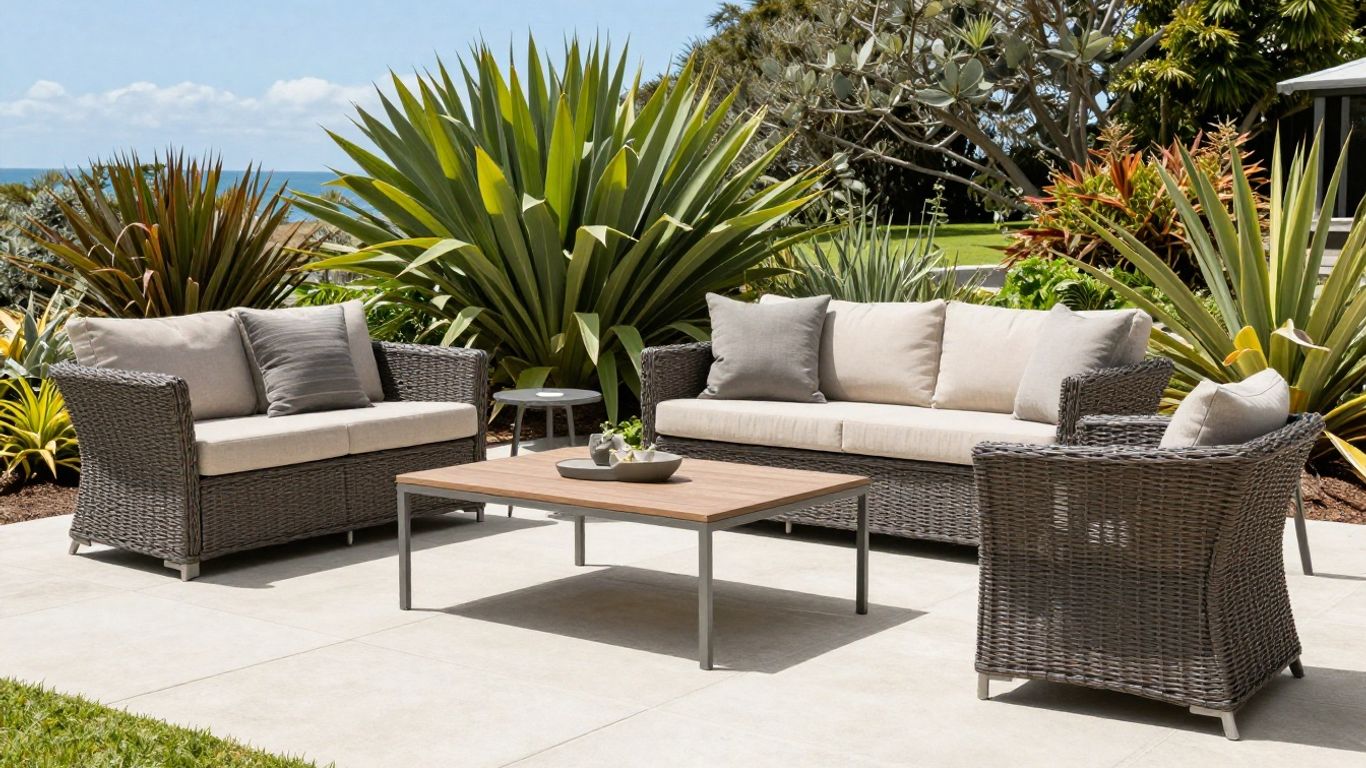
Aluminium is light, practical, and easy to move when you want to change a layout. Powder-coated finishes can provide an attractive protective surface, while marine-grade aluminium is especially relevant where coastal exposure is a concern. Check the frame construction and finish rather than judging only by colour.
Steel can feel solid and substantial, but it needs an appropriate protective coating and regular attention to damaged surfaces. Wrought iron offers a classic, weighty look and can suit formal gardens, although its weight and maintenance needs may make it less convenient for a small deck. Look for drainage and sturdy feet as well as the headline material.
Understand the benefits of teak and other hardwoods
Teak brings warmth and a natural grain that works comfortably with both traditional and contemporary homes. Its oils can help it cope with outdoor use, but it still benefits from cleaning and sensible placement. Over time, untreated teak may develop a silver-grey appearance, which some homeowners like and others prefer to prevent.
Other hardwoods can also be attractive, though their suitability depends on species, treatment, construction, and finishing. Ask how the timber should be cleaned and whether it needs periodic oiling. Do not assume that every wood product has the same weather performance.
Evaluate synthetic wicker, resin, and plastic
Synthetic wicker and resin can provide woven texture without the same moisture sensitivity as untreated natural fibres. Plastic is often light and easy to clean, making it useful for casual seating, balconies, or extra chairs. The quality of the weave, resin, connectors, and finish still matters.
Inspect the underside and joins where possible. A well-made piece should feel stable rather than brittle or overly flexible. If the furniture will sit in full sun, ask about UV stability and whether the colour is likely to fade unevenly.
Weigh durability against maintenance requirements
A durable material is only a good choice if its care routine fits your habits. Use the table below as a starting point, then confirm the manufacturer’s instructions for the exact product.
| Material | Strengths | Watch points |
|---|---|---|
| Aluminium | Lightweight, versatile, and generally easy to clean | Check coating quality and frame construction |
| Teak | Warm natural appearance and outdoor suitability | May need cleaning or oiling depending on the finish |
| Synthetic wicker | Textured look with practical weather resistance | Inspect weave, UV performance, and joins |
| Steel or wrought iron | Solid feel and substantial visual presence | Coatings and rust prevention need attention |
The right comparison is not simply “which lasts longest?” It is “which material gives you the look and performance you want at a maintenance level you will actually keep up?” That answer may differ between a covered veranda and an exposed seaside terrace.
Select comfortable and practical outdoor seating
Outdoor seating should invite you to stay a while, not merely fill an empty corner. Consider how long you sit, whether you eat or recline, and how easily the furniture can be moved or stored. Cushions, frame proportions, and seat angles all contribute to comfort. Visit a showroom or use detailed dimensions when possible, because photographs rarely show scale accurately.
Compare sofas, lounge chairs, benches, and modular settings
A sofa creates a strong social centre, while individual lounge chairs offer more flexibility and can be angled toward a view. Benches are efficient for dining or occasional guests, especially when you need to seat several people along one side of a table. Modular settings are useful when your layout changes with the season or occasion.
Design Concepts’ outdoor sofa collections include modular designs, Sunbrella® fabrics, Urecel Quick-Dry foam, and rust-proof frames as documented product features. Use those details to compare a sofa with other options, but also check the exact specification of the model you are considering.
Choose cushions made for outdoor use
Outdoor cushions should be assessed for more than a water-resistant cover. Look for removable covers, practical drainage, moisture management, and fabrics designed to handle ultraviolet exposure. Quick-dry foam can be useful where cushions may get damp, but it does not mean they should be left permanently saturated.
A cushion that feels comfortable in a showroom may become less pleasant if it holds moisture or flattens quickly. Check whether covers can be removed for cleaning and where cushions should be stored during prolonged wet weather. Colour also matters: lighter shades may feel cooler in strong sun, while darker fabrics can show dust more readily.
Check seat height, depth, and ergonomic support
Measure seat height against your dining table or preferred posture. Deep, low seating may be wonderful for lounging but awkward for older guests or anyone who wants to stand easily. Firm support, a useful back angle, and an armrest at a natural height often matter more than a generous cushion alone.
If children or frequent guests will use the furniture, choose proportions that accommodate different body types. Sit down if you can, and check whether your feet rest comfortably on the ground. For online purchases, compare the listed dimensions with a chair or sofa you already own.
Plan flexible seating for guests and everyday use
You do not need a permanent seat for every occasional visitor. A practical mix might include a main sofa, two movable chairs, and a bench or stackable option for larger gatherings. Keep lighter pieces where you can move them under cover or create a new conversation group.
A flexible arrangement also helps when the sun shifts or the weather changes. Before buying, decide where spare cushions and smaller chairs will go when they are not in use. Good storage planning prevents the outdoor area from becoming a collection of things that need moving every time you open the door.
Find the right outdoor dining furniture
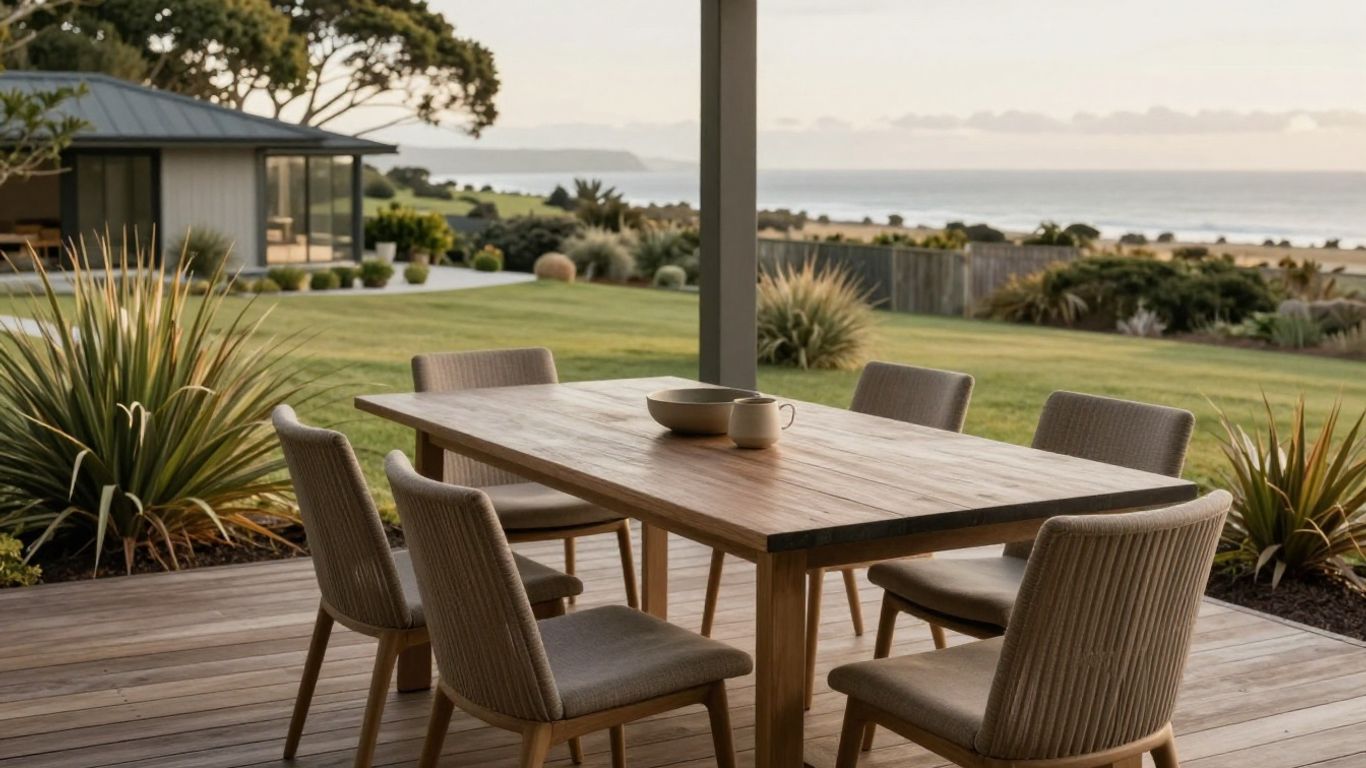
Outdoor dining furniture needs to support both everyday meals and the occasional longer gathering. Start with the table because it determines circulation, chair count, and the visual weight of the zone. Allow room for serving dishes and comfortable elbow space rather than planning only for the number of plates. A table that is technically large enough can still feel cramped.
Choose a table shape for your available space
Rectangular tables suit longer decks and larger groups, while round tables can improve conversation and soften a compact setting. Square tables work well where the available area is balanced, though they may limit seating flexibility as the group grows. An oval design can offer some of the circulation benefits of a round table with useful length.
Measure the table footprint plus the pulled-back chair footprint. Design Concepts’ aluminium outdoor dining tables include round and rectangular options, so shape can be considered alongside legroom, finish, and the size of your entertaining area.
Match table size to household and guest numbers
Plan for your usual household first, then decide how often you host larger groups. A four-seat table may be more useful every day than an eight-seat table that leaves little room to move. If you regularly entertain, an extendable design or a nearby bench can add capacity without dominating the space.
Remember that chairs have different widths, especially models with arms. Leave enough room between places for people to eat comfortably and get in and out without disturbing everyone else. The table’s height should also work with the chairs you choose, rather than being treated as a separate purchase.
Compare fixed, folding, and extendable designs
Fixed tables tend to feel stable and visually grounded, making them a good choice for a dedicated dining zone. Folding tables are convenient for small balconies or occasional use, especially when storage is limited. Extendable tables offer a middle path, keeping a manageable everyday size while accommodating guests when needed.
Check the extension mechanism, locking points, and storage requirements before you commit. A design that looks clever may be inconvenient if one person cannot open it easily. Also consider whether the table can remain stable on your paving or deck when fully extended.
Select chairs that balance comfort and easy storage
Dining chairs should allow you to sit comfortably for a full meal without making the table feel crowded. Arms add support but take up more lateral space, while armless chairs may slide neatly beneath the tabletop. Stackable or folding chairs can be worthwhile when you host only occasionally.
Choose chair feet that suit your surface and will not catch on decking boards. If cushions are required, confirm whether they tie securely and dry readily. A coordinated table and chair set is convenient, but mixing complementary pieces can give you better comfort and flexibility.
Build a cohesive outdoor furniture style
A successful outdoor room feels related to the architecture around it without becoming overly matched. Begin with the largest pieces, then add colour and texture through cushions, rugs, lighting, and planting. Outdoor furniture should look good from inside the house too, since the view through a window is part of your daily experience. Keep practicality in the design rather than treating it as an afterthought.
Coordinate colours, textures, and finishes
Choose one dominant finish and one or two supporting textures. For example, a dark metal frame can sit comfortably with warm timber accents and natural-toned fabric. Repeating a colour in cushions, planters, or lighting helps separate pieces feel intentional.
You do not need every item from one collection. Similar undertones, proportions, or edge details can create harmony. Samples are useful because outdoor light changes how neutrals, greys, and timber tones appear across the day.
Match furniture to your home’s architecture
Modern homes often suit clean-lined aluminium, simple upholstery, or architectural concrete accents. Character homes may work better with warmer timber, softer profiles, or woven textures. This is a guide, not a rule: contrast can be effective when the proportions and colours are considered.
Look at window frames, paving, cladding, and existing garden structures. Repeating one of those visual cues in the furniture creates a bridge between indoors and out. In a smaller property, a restrained palette can also make the entire home feel more spacious.
Add shade with umbrellas, awnings, or pergolas
Shade improves comfort and helps protect people, cushions, and finishes from direct sun. An umbrella is flexible and comparatively simple to reposition, while an awning or pergola can provide broader, more permanent coverage. Check the base, fixing method, clearance, and wind exposure before choosing.
The shade structure should not obstruct doors, views, or the movement of an extendable table. Consider where shadows fall at the times you most often use the space. Close or secure umbrellas during strong winds rather than relying on their weight alone.
Layer the space with rugs, lighting, and accessories
Accessories make an outdoor setting feel finished, but they should earn their place. A weather-suitable rug can define a lounge zone, while low lighting supports evening meals without overwhelming the view. Side tables, planters, and scatter cushions add usefulness and softness in smaller doses.
For practical inspiration, explore outdoor accessories and lighting alongside the main furniture. Add pieces gradually so you can see what the space genuinely needs. Keep cables, drainage, and cleaning access clear, particularly around dining and cooking areas.
Shop smarter for outdoor furniture NZ
Shopping well means comparing the whole ownership experience, not just the ticket price. Look at materials, construction, comfort, delivery, warranty terms, and the care routine together. Product photography can help you imagine a setting, but measurements and written specifications are what protect you from costly surprises. A thoughtful shortlist is usually more useful than browsing endlessly.
Set a realistic budget for quality and longevity
Set a range before you shop, then divide it between the main furniture and the details that make it usable, such as shade, cushions, or storage. Very low prices can be attractive, but replacement costs add up when frames, fabrics, or finishes do not suit your exposure.
Spend more selectively on the pieces you use most. A daily sofa or dining table may deserve stronger construction than occasional extra seating. Focus on repairability, warranty support, and expected care as well as the initial purchase price.
Compare warranties, delivery, and assembly services
Read what a warranty covers, for how long, and whether exclusions apply to weather exposure, fabric, or normal fading. Delivery conditions matter too: check lead times, access requirements, regional charges, and whether assembly is included. These details are especially relevant when a large setting must reach an upper deck or a remote property.
Design Concepts offers nationwide delivery and a five-year fabric warranty as part of its documented customer proposition, but you should confirm the terms that apply to the particular purchase. A clear retailer makes those conditions easy to find before payment.
Check product dimensions, weight, and care instructions
Compare every important dimension, including overall width, seat depth, table height, and the space required when doors or extensions are open. Weight can affect stability in wind, but it also affects moving, delivery, and seasonal storage. Ask whether cushions, covers, and replacement parts are available.
Before ordering, make sure you understand the recommended cleaners and storage method. A product that needs frequent oiling or indoor storage may not suit your routine. This is where a detailed outdoor furniture buying guide can help you build a more useful checklist.
Assess local retailers, online stores, and showroom options
A showroom lets you test comfort, colour, scale, and construction in person. Online shopping can offer a wider view of collections and make comparison easier, particularly if you live outside a major centre. Whichever route you choose, look for clear specifications, responsive advice, realistic photographs, and dependable after-sales support.
A broader market search can also help you understand the range of outdoor furniture options available for patios, balconies, and gardens. Use it for comparison, then return to the retailer whose materials, service, and warranty best fit your needs.
Maintain and protect your outdoor furniture
Even well-made furniture benefits from simple, consistent care. Dirt, salt, leaves, and standing moisture are easier to remove before they build up. Keep drainage points clear, respond quickly to spills, and follow the product instructions rather than applying a strong household cleaner by default. A few minutes of attention can preserve both appearance and comfort.
Clean each material using the right method
Start with a soft brush or cloth to remove loose debris, then use mild soapy water where the instructions allow it. Rinse thoroughly and let pieces dry fully. Timber, coated metal, woven materials, and outdoor fabrics each have different limits, so avoid assuming one cleaner is suitable for everything.
Test an unfamiliar product on a hidden area first. Do not use abrasive pads on painted or powder-coated surfaces, and avoid trapping moisture beneath cushions. Regular light cleaning is usually kinder to finishes than infrequent aggressive scrubbing.
Protect cushions and frames during wet weather
Move cushions under cover when heavy rain is forecast, even if their covers are designed for outdoor use. Stand them on edge so air can circulate, and never store them while damp. Furniture covers can help, but they should fit correctly and allow ventilation rather than sealing moisture against the frame.
Salt air deserves extra attention. Rinse exposed frames periodically with fresh water and inspect joints, fasteners, and coating damage. Deal with small marks early so they do not become a larger maintenance problem.
Prepare furniture for seasonal changes
Before winter or a period when the area will be unused, clean everything, dry it thoroughly, and decide what can be stored under cover. Secure lightweight pieces before windy weather and check umbrella bases, covers, and fixings. In summer, pay closer attention to direct ultraviolet exposure and cushion ventilation.
A seasonal check is also a good time to tighten loose hardware and inspect feet or glides. Keep care products together so maintenance does not become a search through the garage. Design Concepts’ advice on protecting outdoor fabrics from UV provides a useful reminder that strong New Zealand sun can affect fabric care decisions.
Know when to repair, replace, or refinish pieces
Repair a piece when the structure remains sound and the fault is limited to hardware, a cover, a finish, or a replaceable cushion. Refinishing may restore suitable timber or metal, but it should follow the material’s preparation requirements. Replacement makes more sense when a frame is unstable, corrosion has compromised safety, or repairs cost close to a better long-term option.
Inspect furniture at the start and end of each season. If a chair rocks, a table no longer locks securely, or a cushion has lost meaningful support, address it before regular use resumes. Good care is not about keeping every item forever; it is about making sensible decisions before small faults become unsafe.
Conclusion
When you choose outdoor furniture around your space, habits, climate, comfort, and care capacity, you are far more likely to create an outdoor room you will enjoy rather than replace. Measure carefully, compare materials honestly, test seating where possible, and select pieces that support the way you actually live.
Frequently Asked Questions
What is the best material for outdoor furniture in New Zealand?
There is no single best material for every New Zealand setting. Aluminium, teak, synthetic wicker, resin, steel, and wrought iron can all work when their construction, finish, exposure, and maintenance requirements suit the location.
How much space should you leave around outdoor furniture?
Leave enough room to walk comfortably and pull dining chairs back from the table. Marking furniture footprints with tape before buying can help you judge circulation more accurately than relying on photographs.
Are outdoor cushions waterproof?
Most outdoor cushions are designed to resist weather rather than remain completely waterproof in every condition. Store them during prolonged rain, allow them to dry fully, and check the product’s fabric, foam, and care specifications.
Is teak suitable for an exposed deck?
Teak can be suitable for outdoor use, but exposure does not remove the need for care. Its appearance changes naturally over time, and cleaning or oiling requirements depend on the finish and the look you want to maintain.
Should outdoor dining chairs have arms?
Armchairs can provide extra comfort and support, while armless chairs are often easier to fit around a table or store. Choose according to available space, table height, user comfort, and how often the chairs need to move.
How can you protect outdoor furniture from strong sun?
Use shade where practical, rotate or reposition pieces, and follow the care instructions for fabrics and finishes. Covers, ventilation, and UV-suitable materials can also help reduce fading and heat-related wear.
How often should outdoor furniture be cleaned?
Light cleaning every few weeks is a sensible starting point, with more frequent rinsing in dusty, leafy, or coastal areas. Clean spills promptly and adjust the routine according to the material, local weather, and how heavily the furniture is used.