

How to choose outdoor sofas NZ homeowners can enjoy year-round
Key Takeaways
A good outdoor sofa should suit your space, habits, local weather, and budget—not just look appealing in a photograph.
- Measure carefully, including walking routes and delivery access.
- Choose frames, fabrics, and cushions for New Zealand conditions.
- Select a configuration that works for everyday lounging and guests.
- Consider comfort, cleaning, covers, delivery, and replacement parts.
- Check specifications, warranties, stock, and after-sales support before buying.
Assess your outdoor space and lifestyle
Before comparing outdoor sofas NZ homeowners can enjoy year-round, study the space you already have. Notice where people walk, where the sun falls, and how the area connects with your home. A sofa that fits the floor plan but blocks a door will quickly become frustrating. Your daily habits matter just as much as the available dimensions.
Measure the area and plan circulation
Measure the full area, then mark the sofa footprint with masking tape or cardboard. Leave enough room to walk around it, open doors, pull out dining chairs, and reach planters or storage. A useful outdoor living space guide can also help you think about separate zones rather than filling the entire deck with furniture.
Match the sofa to your entertaining habits
Think about how you actually use the space. If you host long lunches, a sofa near a dining table may work better than a deep lounge setting; if evenings are mostly quiet, a generous chaise or corner arrangement may be more comfortable. Count regular household users first, then decide how much extra seating you need for visitors.
Account for sun, wind, and exposure
Track the strongest sun and prevailing wind before choosing a position. Full exposure calls for fade-resistant fabrics and weather-conscious construction, while a sheltered veranda gives you more flexibility. Also consider whether rain drains away from the sofa or collects beneath it after a storm.
Check access for delivery and installation
Measure gates, paths, stairs, lifts, and the narrowest doorway between the street and the final position. Remember that a modular sofa may arrive in several manageable pieces, while a fixed frame can be awkward to turn around a corner. Confirm packaging dimensions and assembly requirements before placing the order.
Choose materials that suit New Zealand weather
New Zealand weather can shift from bright UV to damp conditions and strong wind within a short period. Materials should therefore be judged as a complete system: frame, weave, fabric, foam, fasteners, and feet all have a role. The right choice depends on exposure, cleaning habits, and whether you will use covers or storage.
Compare powder-coated aluminum, steel, and timber frames
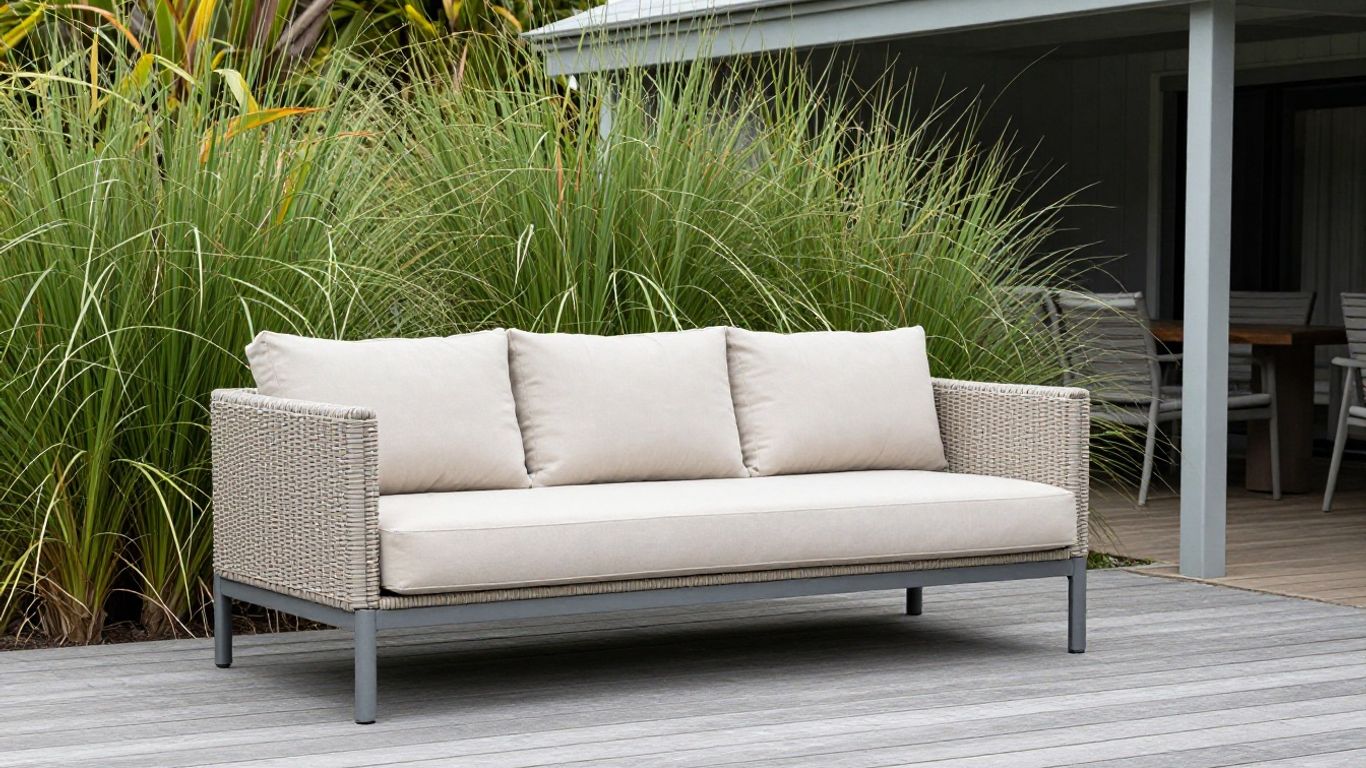
Powder-coated aluminum is light, practical, and naturally resistant to rust, making it useful when you may need to move furniture. Steel can feel substantial, but its coating and maintenance requirements deserve close attention. Timber brings warmth and texture, though it generally needs more regular care to preserve its appearance outdoors.
Understand the benefits of synthetic wicker and outdoor fabrics
Synthetic wicker can create a softer, woven look while remaining easier to manage than many natural fibres. Outdoor fabrics should be assessed for UV and fade resistance, moisture handling, and cleaning instructions rather than colour alone. For a broader comparison of weather-resistant seating, browse this outdoor sofa collection before narrowing your shortlist.
Select cushions with quick-drying, UV-resistant fillings
Cushions that hold water can stay damp long after the rain has passed, encouraging unpleasant smells and mildew. Quick-drying foam and free-draining construction help moisture leave the cushion sooner, while UV-resistant covers help maintain colour. Check whether the base allows airflow and whether covers can be removed for cleaning.
Identify materials suited to coastal locations
Salt air places extra demands on metal finishes, fabric, and fixings, especially near the coast or on an exposed balcony. Look for rust-resistant or rust-proof frame claims, strong UV performance, and fabrics designed for moisture management. In coastal Auckland, for example, furniture selected for salt-air, humidity, and high UV exposure is a sensible starting point.
Find the right outdoor sofa configuration
Configuration determines how easily your sofa supports ordinary days and fuller gatherings. A compact fixed sofa may be ideal for a balcony, while a modular arrangement can adapt as your household changes. Sketching two or three layouts on paper often reveals more than browsing photographs alone.
Compare modular, sectional, and fixed designs
Modular sofas give you the most freedom to separate seats or create a corner, although each connection needs to feel secure. Sectionals create a defined lounging area and make good use of corners, while fixed designs offer simplicity and a cleaner visual line. Choose the format that matches both your room shape and your willingness to rearrange furniture.
Choose seating capacity for everyday use
Start with the number of people who use the sofa most often, not the largest party you host once a year. Two or three generous seats can feel more comfortable than a crowded four-seat design. If guests are frequent, add occasional chairs or stools rather than buying a sofa so large that it overwhelms the room.
Add ottomans, chaise sections, or corner units
An ottoman can act as a footrest, extra seat, or casual surface, while a chaise creates room to stretch out without adding a separate lounger. Corner units are useful when you want to turn a straight run into a sociable setting. The outdoor ottoman collection offers ideas for adding flexible pieces without redesigning the whole space.
Plan flexible layouts for guests and seasonal changes
Leave enough clearance to move modules without scraping walls, railings, or planters. You might face seats toward the afternoon sun in summer, then turn them toward a sheltered wall during cooler months. Flexible furniture earns its space when you can change the arrangement without needing a complete replacement.
Prioritize comfort and practical design
Outdoor furniture should feel inviting enough that you choose it over the indoor sofa. Comfort comes from proportions, supportive filling, and a backrest that suits how you sit—not simply from thick cushions. Practical details then determine whether that comfort remains easy to live with.
Evaluate seat depth, height, and cushion support
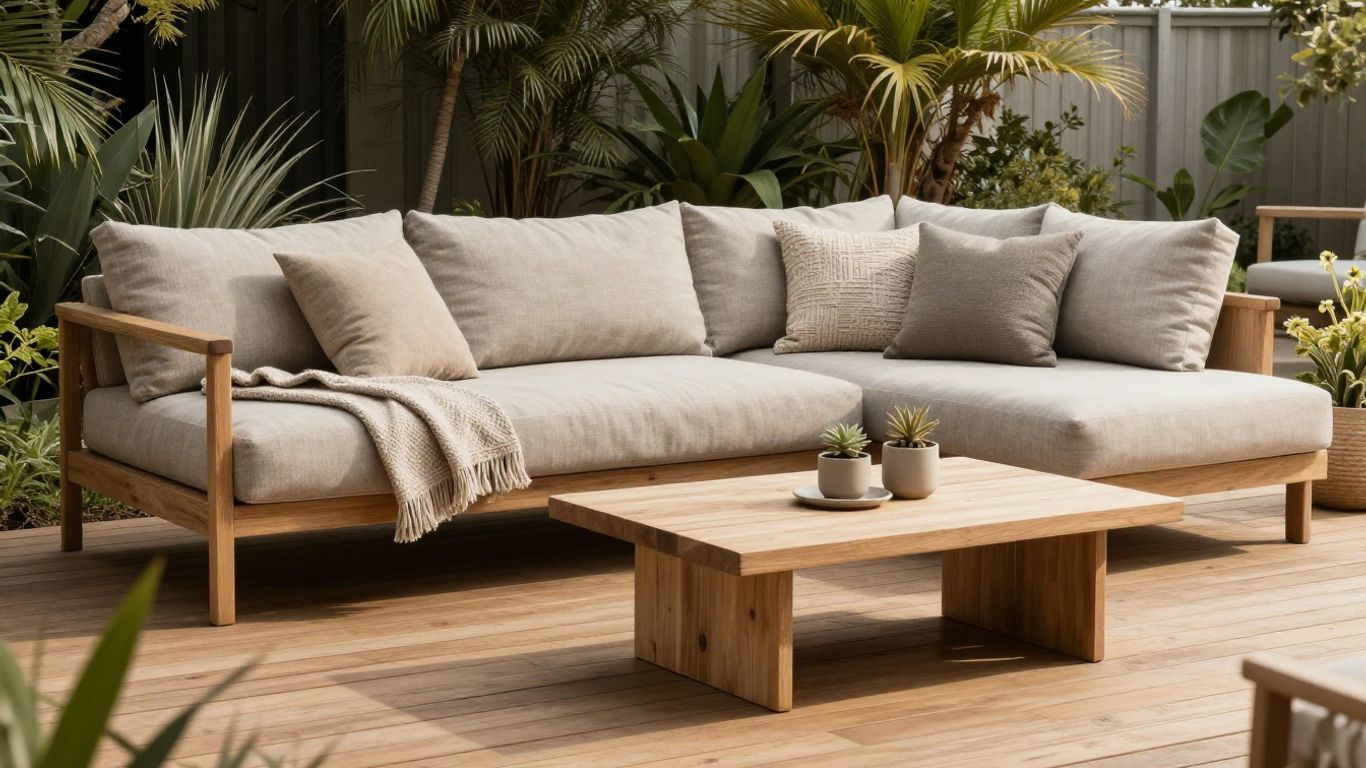
Sit upright and relaxed before you commit. Deeper seats suit lounging and taller users, while a shallower seat can make conversation and standing easier. Pay attention to cushion compression, seat height, armrest position, and whether your feet rest comfortably on the ground.
Look for ergonomic backrests and adjustable features
A backrest should support your lower and upper back without forcing you into one position. Adjustable feet can help a sofa sit steadily on slightly uneven paving, and removable cushions make turning or airing them easier. Try the sofa in person when possible, but use the published measurements to check the fit at home.
Coordinate colors and textures with your outdoor setting
Use the surrounding architecture as your starting point. Warm timber, stone, and planting can handle natural neutrals, while a modern deck may suit charcoal, pale grey, or a restrained contrast. Texture matters too: woven finishes soften hard paving, while clean-lined frames can keep a small balcony feeling uncluttered.
Balance style with easy cleaning and maintenance
A beautiful sofa is less useful if every mark requires specialist treatment. Ask how the fabric, frame, and foam should be cleaned, and whether replacement covers or cushions are available. Easy everyday care is often more valuable than a delicate finish that looks perfect only under ideal conditions.
Set a realistic budget for outdoor sofas NZ
Price should reflect how often you will use the sofa, how exposed it is, and how long you expect to keep it. A low initial cost may be reasonable for a sheltered, lightly used space, while a more exposed entertaining area can justify stronger materials. Compare the whole purchase rather than the sofa frame alone.
Compare entry-level, mid-range, and premium construction
Entry-level furniture can suit temporary arrangements or covered areas, but inspect joints, coatings, cushions, and fabric specifications carefully. Mid-range options often improve comfort and weather performance, while premium construction may offer more durable frames, high-performance fabrics, and better repairability. The best tier is the one that matches your exposure and use.
Calculate the long-term value of durable materials
Estimate the cost over several seasons rather than focusing only on the checkout total. A frame that resists rust, cushions that dry quickly, and fabric backed by a clear warranty may reduce replacement and maintenance costs. For comparison, this outdoor furniture buying guide is useful when weighing material choices and intended locations.
Include covers, side tables, and delivery costs
Allow room for the accessories that make the sofa practical. Covers, side tables, clips, cushions, and delivery can materially change the final cost, especially when access is difficult. Check whether a cover is recommended for your chosen product or whether the construction is intended for more open exposure.
Review warranties, returns, and replacement parts
Read the warranty wording instead of relying on a short product badge. Look for the period, what is covered, exclusions for misuse or weather events, and the process for making a claim. Also ask whether covers, cushions, feet, clips, or individual modules can be replaced rather than forcing you to discard an otherwise sound sofa.
Protect and maintain your outdoor sofa
Even weather-resistant furniture benefits from sensible care. Maintenance is less about constant work and more about preventing water, dirt, and UV exposure from becoming bigger problems. Follow the product instructions first, since cleaning methods vary between powder coating, timber, synthetic weave, and fabric.
Use fitted covers and smart storage
A fitted, breathable cover can reduce dirt and direct exposure when the sofa is not being used. Avoid trapping dampness beneath a cover, and allow cushions to dry fully before storing them. Keep covers and cushions somewhere ventilated rather than in a sealed, wet bundle.
Clean frames and cushions without causing damage
Begin with a soft brush or cloth to remove loose dirt, then use mild soapy water if the care instructions permit it. Rinse thoroughly and let every component dry completely. Avoid harsh chemicals, abrasive pads, and high-pressure spray unless the manufacturer specifically approves them.
Prevent mold, mildew, fading, and rust
Good airflow is one of the simplest protections. Keep cushions raised from persistently wet surfaces, clear leaves from joins, and deal with spills promptly. Inspect metal connections and feet periodically, since small chips or trapped moisture can become more serious when ignored.
Prepare the sofa for winter and severe weather
Before a forecast storm, secure or move loose cushions, ottomans, and side tables, then position the sofa away from exposed edges if possible. During a long wet period, use breathable protection and check underneath for pooling water. A short seasonal inspection can reveal loose fixings or blocked drainage before the next busy period.
Buy with confidence from a New Zealand retailer
A retailer should make it easier to understand what you are buying, where it can be delivered, and how support works after purchase. Product photographs are useful, but dimensions, material details, and warranty terms deserve equal attention. Buying locally can also make questions about regional weather and delivery access easier to resolve.
Verify product dimensions and material specifications
Compare the listed width, depth, height, seat height, and module dimensions with your measurements. Confirm whether dimensions include cushions, arms, or connectors, and check the exact frame, fabric, foam, and base materials. For a product with documented all-weather construction, the Tekapo Single Sofa is one example worth examining closely.
Check stock, delivery zones, and lead times
Ask whether the sofa is in stock, made to order, or arriving in a future shipment. Delivery timing can vary by region, rural address, island location, and access requirements, so provide accurate details early. Nationwide delivery is useful only when the conditions, fees, and expected timeframe are clear.
Compare showroom testing with online purchasing
A showroom lets you test seat depth, cushion firmness, arm height, and fabric texture. Online shopping gives you time to compare specifications and layouts at home, but you should still check the returns process and request clarification when a detail is missing. Design Concepts pairs the Pauanui Alu Double Sofa with documented details such as marine-grade aluminium, Sunbrella fabric, Quick Dry Foam, adjustable feet, and a five-year fade warranty.
Confirm warranty support and after-sales service
Before paying, save the product page and warranty information for your records. Ask who handles claims, what evidence is needed, and whether replacement components can be ordered. Design Concepts also presents the Kapiti Single Sofa with a rust-proof aluminium frame, Sunbrella fabric, quick-dry foam, and a five-year outdoor fabric guarantee, giving you specific details to assess rather than vague promises.
Conclusion
Choosing outdoor sofas NZ homeowners can enjoy year-round becomes much simpler when you begin with measurements, exposure, and everyday use. Compare complete construction systems, test comfort where possible, budget for the supporting details, and buy from a retailer that clearly explains delivery and warranty support. The result should feel like a natural extension of your home—comfortable enough for quiet mornings and dependable enough for long evenings with friends.
Frequently Asked Questions
What is the best material for an outdoor sofa in New Zealand?
There is no single best material for every setting. Powder-coated or rust-resistant aluminium, weather-resistant outdoor fabrics, and quick-drying cushion systems are strong choices for many exposed areas, while timber can work well when you are prepared to maintain it.
Should an outdoor sofa be covered all year?
A breathable fitted cover can help during long periods of non-use or severe weather, but it should not trap moisture. Let the sofa and cushions dry before covering them, and follow the care guidance for your specific materials.
How much space should you leave around an outdoor sofa?
Leave enough room for comfortable walking, door movement, access to storage, and nearby furniture. The exact clearance depends on your layout, but marking the sofa footprint on the ground is a practical way to test circulation.
Are modular outdoor sofas better than fixed sofas?
Modular sofas are better when you expect to rearrange the space or host groups of different sizes. Fixed sofas can be simpler and visually cleaner, so the better option depends on your room shape, habits, and tolerance for moving furniture.
How do you stop outdoor sofa cushions from going moldy?
Keep cushions ventilated, avoid leaving them on wet surfaces, and dry them fully after rain or cleaning. Remove leaves and spills promptly, and store cushions in a dry, breathable place during extended wet weather.
Is quick-dry foam worth paying more for?
It can be worthwhile in exposed or frequently used spaces because it helps water drain and cushions dry more quickly. Its value depends on the complete cushion design, including the cover fabric, base, airflow, and drainage.
What should you check before ordering an outdoor sofa online?
Check full dimensions, materials, cushion construction, care instructions, warranty terms, delivery access, stock status, lead time, and returns. Also confirm whether the sofa arrives assembled or in modules and whether replacement parts are available.