

How to choose outdoor dining sets NZ homeowners can enjoy year-round
Key Takeaways
A year-round outdoor dining area should feel comfortable, suit your space, and stand up to New Zealand weather. Start with measurements and daily habits, then compare materials, protection, seating, and whole-setting value.
- Measure the area, including walking routes and access points.
- Choose a table shape and size around the way you host.
- Match materials to your local climate and maintenance routine.
- Prioritise comfortable seating, weather protection, and easy storage.
- Compare the complete cost, warranty, delivery, and long-term value.
Define your outdoor dining needs
Before comparing outdoor dining sets NZ homeowners might enjoy, work out how the space needs to function. A compact balcony has different demands from a large deck, while a family that eats outside most nights will value different features from occasional entertainers. Your measurements, routines, and storage options should guide the shortlist rather than the other way around.
Measure the available space
Measure the usable floor area, not just the overall patio or deck. Mark doors, steps, railings, planters, grills, and any route you need to keep clear. Allow enough room to pull chairs back and walk behind seated guests; a set that technically fits can still make the area feel awkward.
Take note of the surface as well. Uneven paving may need adjustable feet, while a windy balcony calls for a stable base and careful placement. If you shop online, keep your measurements beside you and check the packed dimensions as well as the assembled size.
Choose the right table size and shape
Table capacity is best judged by both width and elbow room. A small round table can make conversation easy in a tight corner, while a rectangular table usually gives you more usable surface for serving dishes and place settings. Think about whether you need space for platters, drinks, and a centrepiece every time you eat.
As a useful starting point, two to four seats may suit a smaller household, while six or more seats make sense when family meals and guests are common. Aluminium outdoor dining tables can be a practical option when you want designs ranging from intimate round tables to more spacious rectangular arrangements.
Plan for everyday meals and entertaining
Consider your real calendar rather than an idealised one. If you host only a few times each year, a compact table with flexible extra seating may be more useful than a permanently oversized setting. If outdoor lunches are a regular part of summer, prioritise a generous tabletop, easy-clean surfaces, and chairs you can sit in for several hours.
You may also want a nearby serving surface. A side table or outdoor coffee table can hold drinks and dishes without forcing the dining table to do everything. The best setting supports ordinary breakfasts as comfortably as special occasions.
Account for storage and access
Check how the furniture will enter the property and where cushions, covers, or folding pieces will go. Narrow gates, stairs, lifts, and apartment corridors can affect your choice just as much as the finished space. Leave a clear path for carrying the table in and moving chairs around it.
For smaller homes, prioritise pieces that stack, fold, or have a manageable footprint. Before ordering, confirm assembly requirements and whether the set can be brought through the intended entrance. Those small checks prevent an attractive purchase from becoming a logistical problem.
Select materials suited to New Zealand conditions
New Zealand outdoor furniture faces strong sun, wet weather, changing temperatures, and, in coastal areas, salt-laden air. No material is completely maintenance-free, so the right choice depends on the exposure of your site and the care you are realistically willing to provide. Look closely at the material itself, its finish, and the hardware used to hold everything together.
Compare powder-coated metal and aluminium
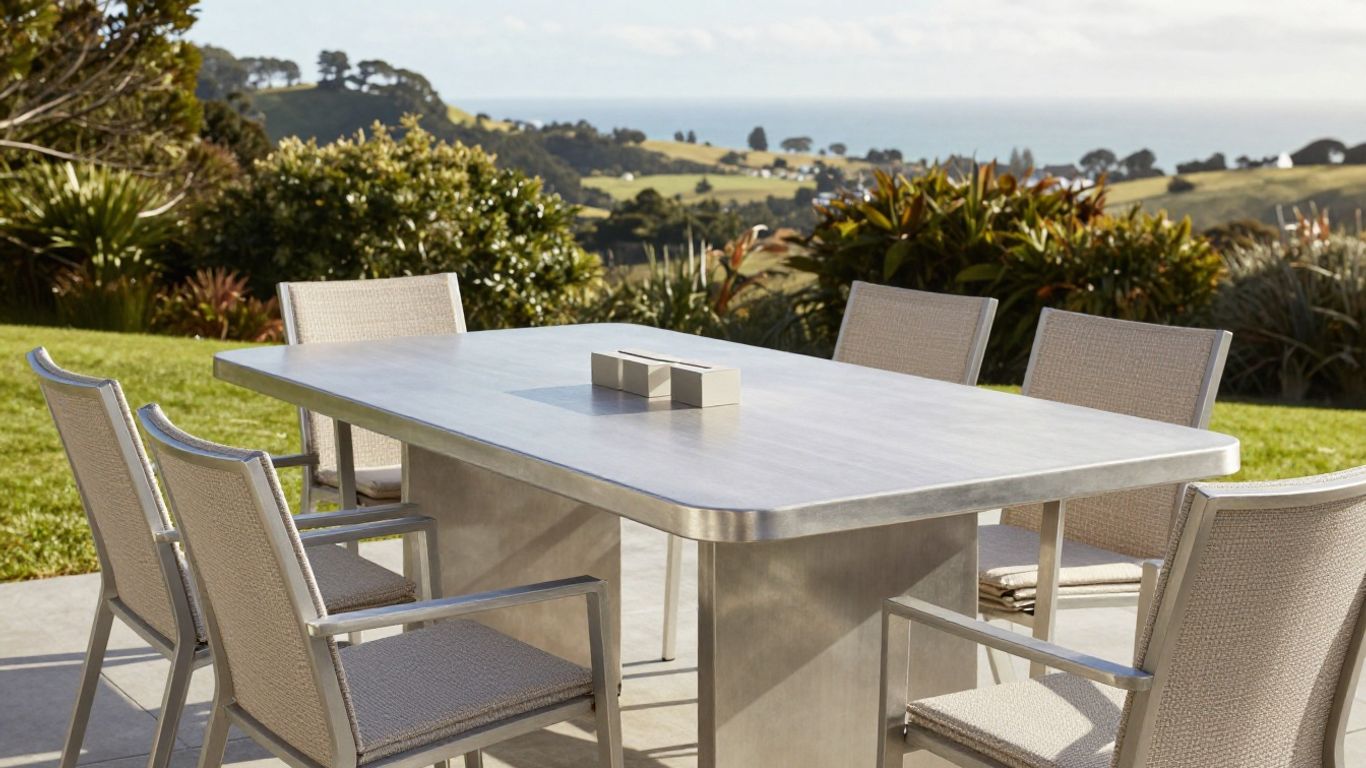
Powder-coated metal can offer a clean, contemporary appearance, but inspect the finish carefully and ask how exposed edges and joints are protected. Aluminium is valued for being relatively light and easy to move, which helps when you need to rearrange the deck or store furniture seasonally. It also works well for modern tables and bar-height pieces.
For a coastal home, ask specifically about corrosion resistance and the care recommended by the maker. Design Concepts offers outdoor furniture collections that include rust-free frames, UV and fade resistance, and quick-dry foam; check the individual dining product listing to confirm which features apply to your chosen setting.
Understand hardwood and engineered timber options
Hardwood brings warmth and natural variation that can soften a hard-paved patio. It will usually need more considered care than a metal frame, including regular cleaning and, depending on the timber and finish, periodic oiling or recoating. Look for stable construction, well-finished edges, and drainage that prevents water sitting on horizontal surfaces.
Engineered timber can provide a consistent appearance and may suit a more controlled budget, but its outdoor rating and edge sealing matter. Ask how it should be cleaned, whether it can be left uncovered, and how the finish is expected to age. A little honest maintenance planning is better than choosing a material you will resent caring for.
Consider recycled plastic and composite materials
Recycled plastic and composite options can be useful when you want straightforward cleaning and a less timber-led look. They are often worth considering for busy households, holiday homes, or settings where cushions and furniture may be exposed to occasional rain. Still, check the frame, fasteners, and underside rather than judging only the tabletop.
Colour stability and heat are also practical questions. Dark surfaces may feel warmer in direct sun, while pale surfaces can show marks more readily. Request care instructions and examine samples in the light conditions where the furniture will actually sit.
Match materials to your maintenance routine
Your best material is the one you can maintain consistently. A covered veranda may allow more flexibility than an exposed seaside deck, and a setting used daily may need simpler cleaning than one brought out for occasional entertaining. Simple care habits can preserve appearance and reduce the need for early replacement.
Create a short care routine: wipe spills promptly, clean according to the manufacturer’s instructions, allow wet cushions to dry fully, and inspect fittings at the start of each season. That approach keeps maintenance manageable without turning outdoor dining into a weekend project.
Choose a table design that fits your space
The table is the visual and practical centre of the setting, so its proportions deserve as much attention as its finish. Consider how people move around it, where the sun falls, and whether you want the furniture to blend into the architecture or make a stronger statement. Design Concepts’ aluminium dining range includes dining and bar tables, giving you a useful starting point when comparing formats.
Round and square tables for compact patios
Round tables work well where corners and narrow walkways make rectangular edges inconvenient. They encourage conversation and can usually seat guests without creating a hard visual stop. Square tables suit balanced patios and sheltered courtyards, especially when you want to push the setting neatly into a corner when it is not in use.
Check the central base before buying. A pedestal can offer better legroom, while four legs may feel more familiar but create more obstacles around the chairs. Whichever shape you choose, measure the chair clearance as a complete setting.
Rectangular tables for larger gatherings
Rectangular tables make efficient use of a long deck and provide a clear arrangement for shared dishes. They can also be easier to position beside a wall or outdoor kitchen. Leave enough space at each end for a chair to pull out, especially if the table is close to a railing or planting.
A longer tabletop does not automatically mean better entertaining. If most meals are for two or four people, an oversized table may dominate the area and reduce the room available for lounging. Choose the largest size that you will use comfortably, not simply the largest one available.
Extendable designs for flexible seating
An extendable table can give you everyday proportions while allowing more seats for birthdays or long lunches. Look at how the extension is stored, how easily one person can operate it, and whether the expanded top remains stable. The join should feel level when you run your hand across it.
Think through the expanded footprint before ordering. Mark it on the floor with removable tape, then place chairs around the outline. This quick test shows whether the extra capacity leaves enough room to walk and serve.
Bar-height tables for balconies and entertaining areas
Bar-height tables create a more upright, informal setting and can work well on balconies or beside an outdoor kitchen. They may also make a narrow area feel visually lighter because the seating profile is different from a traditional dining chair. Comfort depends on matching the table height with the stools, so test the relationship rather than relying on appearance.
For longer meals, look for stools with foot support and a comfortable seat height. Outdoor bar stools can suit entertaining areas where you want UV-resistant rope or weather-resistant wicker alongside quick-dry foam cushions, provided those features are listed for the specific product.
Find comfortable and practical outdoor seating
A dining table only succeeds when people want to stay seated. Chairs should support relaxed meals, move easily, and tolerate the conditions of the site. Consider how cushions behave after a shower, how much room arms require, and whether the seating can be rearranged for different occasions.
Compare dining chairs, benches and armchairs
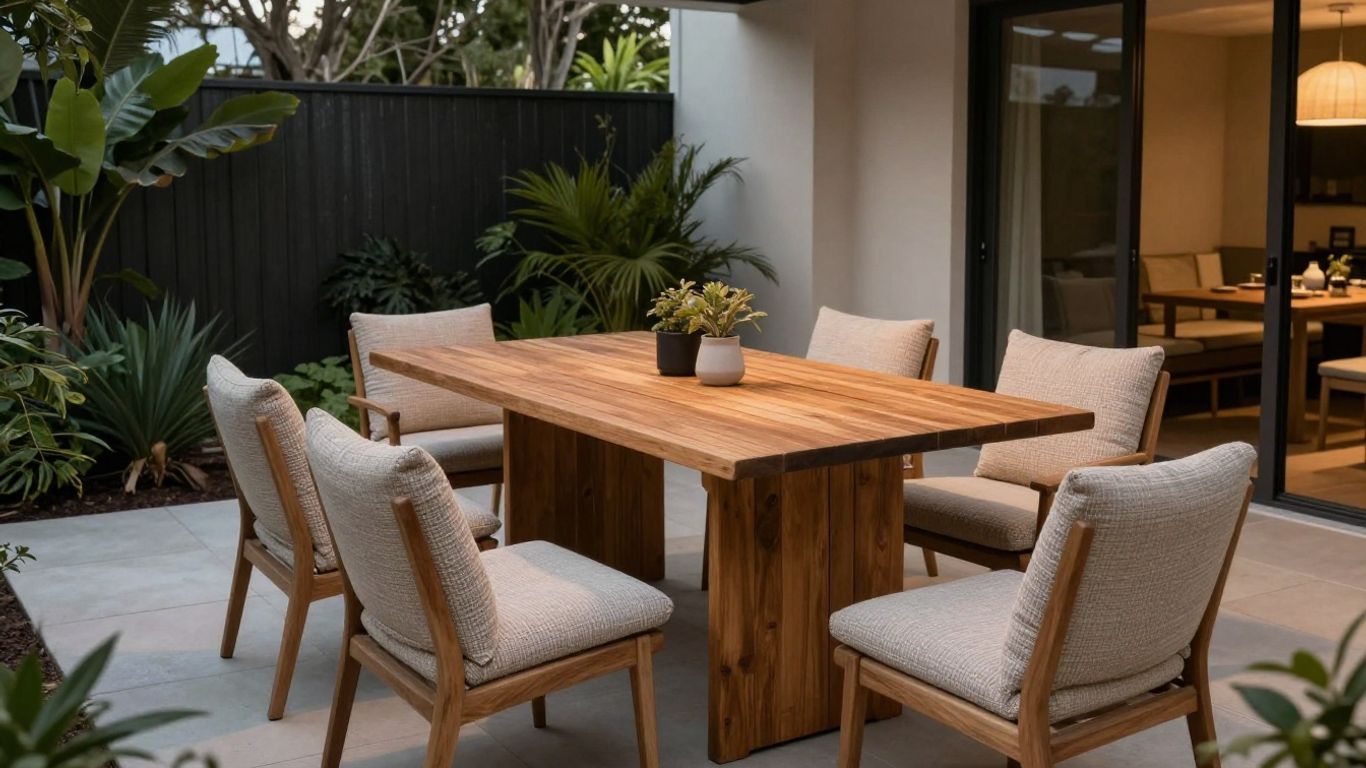
Dining chairs offer individual support and are usually easiest to move around a table. Benches can add capacity along one side and create a more relaxed look, although they may be less comfortable for very long meals if they lack a back. Armchairs feel generous at the head of the table but need extra clearance.
Mixing forms can work if the seat heights align. Outdoor benches are designed for settings ranging from morning coffees to larger gatherings, making them worth considering when you want flexible seating alongside a dining table. Check the bench width and leg position against the table base before committing.
Look for supportive ergonomic features
Sit in the chair if possible, or compare dimensions carefully online. A supportive back angle, sensible seat depth, stable arms, and a foot position that feels natural all matter more than a dramatic silhouette. Rounded edges are pleasant where people regularly brush past the furniture.
Remember that comfort varies between bodies. A low lounge-style chair may look inviting but sit poorly at a dining table, while a narrow chair may save space but feel restrictive. Prioritise the position you will hold while eating, talking, and reaching for shared dishes.
Select weather-resistant cushions and upholstery
Outdoor cushions should cope with moisture, sunlight, and regular handling. Look for covers that can be removed for cleaning and interiors designed to dry rather than retain water. If your setting is exposed, store cushions during prolonged wet weather even when the fabric is marketed for outdoor use.
Design Concepts outdoor furniture includes collections with UV and fade resistance, mould and mildew resistance, free-draining cushions, and quick-dry foam. These features are not automatically present in every product, so read the specifications for the exact chair or dining setting you are considering.
Balance seating capacity with walking space
More seats are useful only if guests can reach them. Keep the table’s full chair footprint in mind, including the distance needed to pull out a chair and pass behind someone who is seated. A smaller setting with clear circulation often feels more comfortable than a crowded one with nominally higher capacity.
Test the arrangement using temporary chairs or boxes before buying. Open the doors, carry a serving dish through, and sit in the least convenient position. If those simple movements feel cramped, reduce the setting or change its orientation.
Evaluate durability and weather protection
Year-round enjoyment depends on more than a strong-looking frame. Finishes, joints, fabrics, drainage, and daily placement all affect how a setting ages. You should also consider the specific exposure of your home: a sheltered courtyard, an open rural deck, and a coastal balcony will not ask the same things of furniture.
Check finishes, joints and hardware
Inspect welds, bolts, hinges, feet, and extension mechanisms. A smooth finish and even gaps suggest careful construction, while loose hardware or rough edges deserve questions before purchase. Stainless or appropriately protected hardware can be especially useful where rain and humidity are common.
Ask how replacement fittings are obtained and whether the finish can be repaired. Product photographs help, but a detailed specification and clear care instructions tell you more about what ownership will involve.
Assess resistance to sun, rain and coastal air
Strong sun can fade fabrics and alter finishes, while persistent dampness can encourage mould if water cannot drain. Coastal air adds salt exposure, so choose materials and coatings suited to the site rather than assuming any outdoor label is enough. Positioning beneath a roof or shade sail can reduce exposure but does not remove the need for care.
A practical inspection after wet or windy weather is useful. Look for standing water, movement in the frame, discolouration, and grit caught in joints. Early attention is easier than trying to restore neglected furniture later.
Use covers, shade and protective treatments
Covers, umbrellas, and shade structures reduce the load on furniture, particularly during long periods when the setting is not being used. Choose covers that allow some ventilation and fit securely without rubbing against sharp corners. Do not cover cushions while they are damp.
Sun protection deserves its own planning. This Sunbrella fabric guide explains how solution-dyed acrylic is used for fade resistance and durability; use it as background, then verify the fabric specification attached to the particular product you are buying. A little shade can also make meals more comfortable on bright days.
Know when furniture should be stored indoors
Store cushions indoors during extended rain, severe weather, or winter inactivity where practical. Lightweight chairs and smaller accessories are easier to protect than a large table, so plan storage before choosing a complete set. If indoor space is limited, a ventilated outdoor storage box may help with soft furnishings and smaller items.
Furniture that remains outside should still be cleaned and checked periodically. Seasonal storage is not a sign that the setting is unsuitable; it is one of the simplest ways to extend its useful life.
Match the setting to your outdoor style
A well-chosen dining set should feel connected to the home rather than dropped onto the deck. Start with the architecture, surrounding plants, and colours you already own. Then add contrast carefully through texture, upholstery, lighting, or a single accent colour.
Create a cohesive look with colour and texture
Repeat one or two tones across the table, chairs, cushions, and nearby planting. Timber can warm up a minimalist space, woven textures can soften metal, and a restrained neutral palette makes seasonal accessories easier to change. Avoid matching every item exactly; a little variation keeps the setting relaxed.
Texture is particularly useful when the colours are quiet. A woven seat, ribbed planter, or tactile cushion can add interest without taking more floor space. Keep the number of competing finishes under control so the dining area remains restful.
Coordinate tables with existing outdoor furniture
If you already have a sofa or lounger, match the visual weight rather than chasing an identical collection. A substantial lounge arrangement may need a table with a similarly grounded frame, while a small balcony can benefit from lighter profiles throughout. Check seat heights and cushion tones so the zones feel related.
Think about sightlines from inside the home. The furniture may be visible through large windows, so a coherent colour story can make the outdoor area feel like a natural extension of the interior.
Choose contemporary, coastal or natural designs
Contemporary settings often rely on clean lines, dark or pale neutral finishes, and uncluttered silhouettes. Coastal spaces can take cues from pale timber, woven textures, and soft blue-grey accents, while natural schemes use organic shapes and earthy colours. Let the location guide the style rather than forcing a theme.
You can also combine styles through proportion. A simple aluminium table with warm timber accessories may feel more personal than a fully matched suite. Choose pieces you would still enjoy if you moved or changed the surrounding décor.
Add lighting and accessories without overcrowding
Lighting extends the hours you can use the setting, but it should not compete with faces or obstruct serving. Place a lamp or pendant to one side, use low-level lights along the approach, and keep cords away from wet areas. Nearby planters and side tables can add function without filling every empty corner.
For a considered finishing touch, browse outdoor living accessories such as cushions, side tables, garden pots, and outdoor lighting. Choose only what supports the way you use the space. A clear tabletop and an open route are more valuable than a crowded display.
Compare value before you buy
Price is only one part of the decision. A lower upfront cost may be less attractive if the setting needs frequent replacement, while a premium finish is not worthwhile if the size or comfort is wrong. Compare the complete arrangement, including seating, cushions, delivery, assembly, protection, and likely care.
Set a realistic budget for the complete setting
Write down the full list before you browse: table, chairs, cushions, shade, covers, delivery, and any assembly help. This prevents a low table price from disguising the cost of making the space usable. If your budget is limited, spend first on the pieces that affect comfort and durability every day.
You can add accessories later, but check that the core furniture works on its own. A strong table and comfortable chairs will serve you better than a heavily styled setting that lacks practical protection.
Compare warranties and replacement parts
Read what the warranty covers, for how long, and whether exclusions apply to weather exposure, misuse, or normal colour change. Ask whether cushion covers, hardware, feet, and extension components can be replaced. Clear answers are a sign that you are evaluating ownership, not just the moment of delivery.
Keep your receipt, care instructions, and product details together. If you buy a setting in stages, record the finish and dimensions so later additions have a better chance of matching.
Review delivery, assembly and returns
Check delivery coverage, lead times, access requirements, and whether assembly is included. Measure doorways and lifts once more before dispatch, particularly for large rectangular tables. A return policy is useful only when you understand its conditions, fees, and exclusions.
For a nationwide purchase, ask how damaged or missing parts are handled. Local showroom advice can also be valuable if you want to test comfort before ordering, while detailed online dimensions help when visiting a store is not practical.
Shop for seasonal offers and long-term value
Seasonal offers can make a quality setting more accessible, but do not let a discount override your requirements. Compare the reduced price with the warranty, materials, care needs, and expected use. Flexible payment options may help with timing, yet the total purchase still needs to fit your budget.
A useful final test is to imagine the setting after five years of ordinary meals, wet weather, and rearranging. If the proportions still make sense and the care routine feels realistic, you are closer to a purchase that will earn its place outdoors.
Conclusion
The right outdoor dining set starts with how you live, then balances space, comfort, materials, protection, style, and total value. Measure carefully, choose a practical format, and select finishes you can maintain; your outdoor area will feel easier to use through everyday meals and relaxed gatherings.
Frequently Asked Questions
What size outdoor dining table should you choose?
Choose a size based on your usual number of diners, the space needed for serving dishes, and the clearance required to move comfortably around pulled-out chairs. Test the full footprint before buying.
Which material is best for outdoor dining furniture in New Zealand?
There is no single best material for every property. Aluminium and protected metal can suit modern, exposed areas, while timber, composite, and recycled plastic offer different appearances and maintenance demands. Match the choice to your local exposure and care routine.
Are outdoor cushions safe to leave in the rain?
Outdoor cushions are designed for exterior use, but they still benefit from protection. Bring them inside during prolonged rain, avoid covering them while damp, and allow them to dry fully to reduce moisture and mildew problems.
Is a round or rectangular table better for a small patio?
A round table often makes movement easier in a compact area because it has no sharp corners. A small rectangular table may be better when you need to position furniture against a wall. Measure both options with chairs included.
How much space should you leave around an outdoor dining set?
Leave enough clearance to pull chairs back and walk behind seated guests. The exact amount depends on the chair depth, nearby doors, and the way people enter the area, so mark the furniture footprint on the floor first.
Should outdoor dining furniture be covered?
A well-fitted, ventilated cover can reduce exposure to sun, rain, and debris when the furniture is not being used. Covers work best alongside regular cleaning and should not be placed over wet cushions or trapped moisture.
What should you check before ordering outdoor furniture online?
Confirm assembled and packed dimensions, materials, care instructions, warranty terms, delivery access, assembly requirements, and returns. Also check whether replacement covers, cushions, feet, or hardware are available for the specific product.