

Weatherproof outdoor furniture: How to choose pieces that last in every season
Key Takeaways
Good outdoor furniture should suit your climate, your space, and the amount of care you are willing to provide. Use these points as a practical filter before you buy.
- Treat “weatherproof” as a level of resistance, not a promise of total immunity.
- Match materials and finishes to your sun, rain, wind, frost, and coastal exposure.
- Inspect frames, joins, drainage, stability, cushions, and replaceable parts.
- Measure walkways and clearances before choosing seating or dining furniture.
- Compare the full ownership cost, including maintenance, covers, warranties, and repairs.
Understand what “weatherproof” really means
The phrase weatherproof outdoor furniture sounds reassuring, but it does not mean a chair can be ignored forever. Most outdoor pieces are weather-resistant: they are designed to handle particular conditions for a reasonable period when cared for properly. Your job is to find out which conditions the materials, finish, fabric, and construction are actually prepared for.
Your local exposure matters as much as the label. Strong sun, salt air, driving rain, frost, and sheltered humidity place different demands on a frame and its upholstery. A useful durable outdoor furniture guide can help you compare those demands before you start shopping.
Weather-resistant vs. waterproof materials
Weather-resistant materials slow the effects of moisture, sunlight, and temperature changes; waterproof materials are designed to stop water passing through a particular surface or component. Even a waterproof cushion cover may not prevent water entering through seams, zips, or the underside. Think of the whole item rather than one impressive material claim.
For example, a metal frame may resist rain while its untreated hardware rusts, and a coated tabletop may shed water while a cushion absorbs it. Ask what is protected, how it drains, and whether the protection depends on a cover or sheltered placement.
UV resistance and color retention
Ultraviolet light can fade fabric, dry timber, and weaken some plastics over time. Look for outdoor-rated fabrics, UV-resistant finishes, and colours that will not make gradual fading too noticeable. Dark surfaces can also become hot in full sun, so a shaded layout may improve comfort as well as preserve appearance.
Turn cushions periodically where practical and avoid leaving removable fabric in intense sun when the space is not in use. Colour retention depends on exposure as well as on the material itself, so no finish should be treated as permanently fade-proof.
Protection from rain, humidity, snow, and frost
Rain is only one part of the moisture problem. Humidity can keep cushions and joints damp, while snow and frost can make trapped water expand inside cracks or porous materials. Good drainage, airflow underneath furniture, and a place to dry cushions are especially valuable in wet or changeable climates.
If you live near the coast, salt carried in the air can settle on frames and fittings even when furniture is under cover. Rinsing residue away and checking drainage after storms will usually do more than relying on a weatherproof label alone.
Why no outdoor furniture is completely maintenance-free
Every material has a small care routine, even if that routine is only occasional washing and inspection. Covers need airflow, timber may need cleaning or oiling according to its finish, and cushions need to dry fully before storage. A low-maintenance choice reduces work; it does not remove the need to notice problems early.
That modest commitment is worthwhile because small marks, blocked drains, loose fasteners, and surface rust are easier to address before they become structural damage.
Choose the best materials for your climate
There is no single best material for every outdoor setting. A sheltered balcony may reward light furniture and compact cushions, while an exposed deck needs weight, stable proportions, and finishes that cope with wind and salt. Compare materials against your actual conditions, not just against a showroom sample.
Design Concepts is a New Zealand-owned and operated retailer whose collections are selected or made for New Zealand’s climatic conditions, with a design-led approach to outdoor living. That kind of local context is useful, but you should still check the specifications of each individual piece.
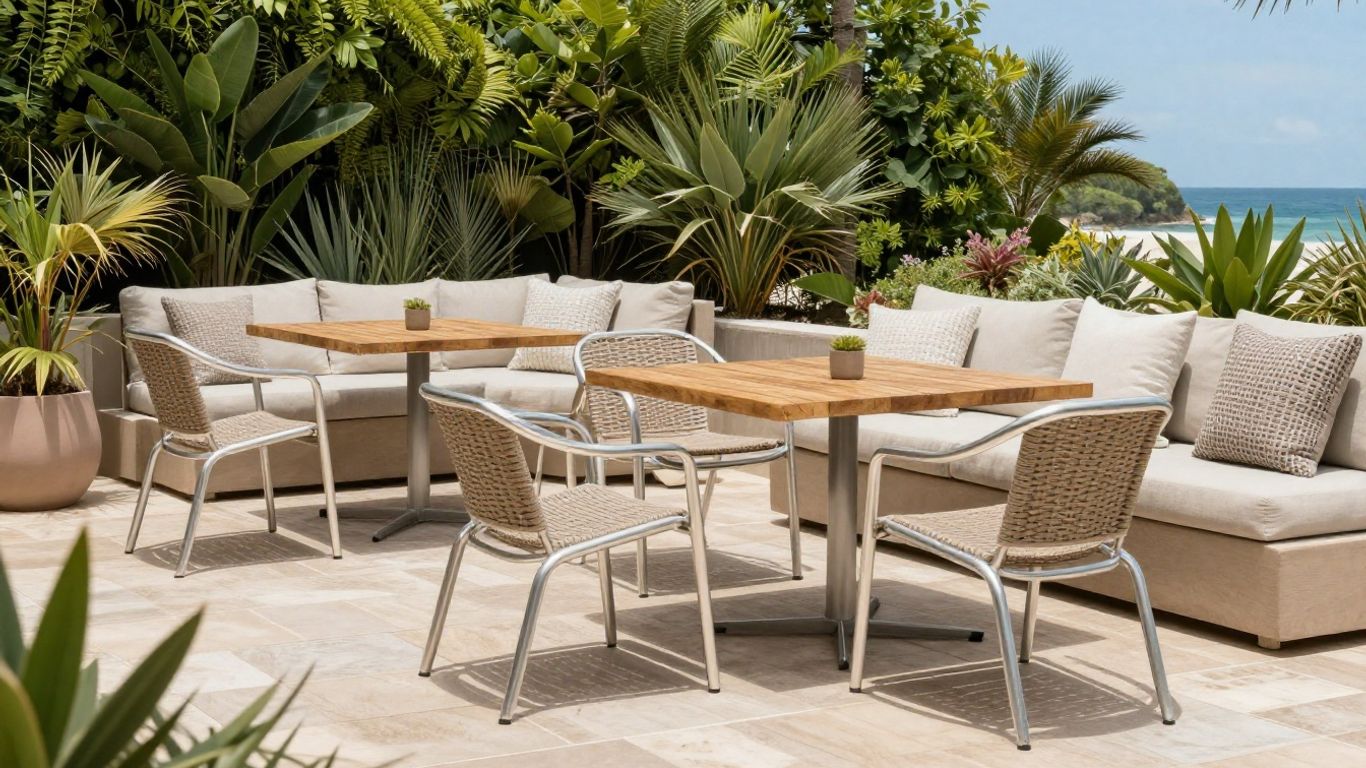
Powder-coated aluminum for lightweight durability
Powder-coated aluminum is light, easy to move, and generally well suited to damp environments when the coating remains intact. It will not usually develop the same type of rust as untreated steel, but scratches, cut edges, and poorly protected fittings still deserve attention. In windy locations, its lightness means stability must be considered carefully.
Check whether the frame has adjustable feet, a broad base, or a way to secure it when strong weather arrives. A lighter chair can be convenient day to day, but an overly light table may move or tip.
Teak and other naturally weather-resistant woods
Teak contains natural oils that help it cope with outdoor moisture, although it still changes colour and texture as it ages. You can allow it to weather naturally to a silvery tone or follow the manufacturer’s guidance for retaining a warmer appearance. Other woods vary considerably, so do not assume every timber performs like teak.
Look closely at end grain, joints, and the quality of the finish. Timber furniture benefits from airflow and should not sit in persistently wet soil or against a wall where water cannot escape.
Recycled plastic and all-weather poly lumber
Recycled plastic and poly lumber can be practical choices when you want furniture that is easy to wash and less vulnerable to rot or splintering than untreated wood. Their weight varies, so stability and fastener quality remain relevant. Surface texture, colour, and heat under direct sun are also worth considering before you choose.
For another perspective on all-weather poly furniture, compare the material description, care instructions, warranty, and delivery terms rather than relying on the word “all-weather” alone.
Wrought iron and steel: Strengths and corrosion risks
Wrought iron and steel offer strength and a reassuringly solid feel, which can help in exposed areas. Their vulnerability is corrosion, especially around chips, welds, screw heads, and places where water sits. A powder-coated surface can provide protection, but it must be maintained when damaged.
Inspect the underside and concealed joins before buying. If a steel piece is intended for a coastal or very damp setting, ask whether the hardware and finish are rated for that environment.
Wicker, rattan, and synthetic resin differences
Natural rattan and wicker have a warm, woven appearance but are not automatically suitable for year-round exposure. Synthetic resin wicker is designed for outdoor use and is usually easier to clean, though its frame and weave quality still determine longevity. Look for even weaving, secure edges, and a frame that will not trap water.
Keep woven furniture away from standing water and clean beneath cushions and around the feet. A breathable, shaded position can extend the life of both the weave and the upholstery.
Evaluate construction and design quality
Materials tell only part of the story. Two chairs made from the same broad material can perform very differently because of their welds, fasteners, drainage, proportions, and finishing. Before buying, handle the furniture if you can, or study detailed photographs and specifications online.
You are looking for construction that anticipates real use: people shifting their weight, wet cushions being moved, tables being cleaned, and furniture being exposed to changing weather. A pleasing design matters, but it should not hide flimsy details.
Look for rust-resistant frames and hardware
Check whether the frame is aluminum, treated steel, stainless steel, or another corrosion-resistant option, and ask what happens where different metals meet. Rust often begins at a scratch, a bolt, a weld, or a hollow section that cannot dry properly. Caps and drainage holes can be small but meaningful details.
Look underneath the piece as carefully as you inspect the visible finish. If the product description only says “rust-resistant” without explaining the frame or hardware, ask for clarification.
Check joinery, welds, and weight capacity
Joints should feel aligned and firm rather than flexing noticeably when you apply gentle pressure. Welds should look consistent, with no sharp spatter or obvious gaps. For sofas, loungers, and dining chairs, confirm the stated weight capacity and consider how the furniture will be used by several people over time.
A table that rocks in the showroom may become more troublesome outdoors, where uneven paving and seasonal movement add to the problem. Good joinery is not glamorous, but it is one of the clearest signs of lasting value.
Choose drainage-friendly cushions and surfaces
Cushions dry more quickly when water can escape through the fabric, foam, seams, and underside rather than pooling in a sealed cavity. Slatted or subtly angled surfaces can also prevent puddles. Ask whether covers are removable and whether the filling is intended for outdoor use.
The best arrangement still needs help from you. Lift cushions after heavy rain, keep them off saturated ground, and give damp areas room to breathe before covering or storing them.
Consider wind exposure and furniture stability
Wind changes the buying decision, particularly on rooftops, balconies, open decks, and coastal properties. Broad bases, sensible weight, low profiles, and secure placement can make furniture safer and more comfortable. Umbrellas and tall pieces deserve extra caution because they catch more wind than low seating.
Plan where furniture will go during severe weather before you buy it. If moving a heavy table indoors is unrealistic, choose a location with shelter and consider an appropriate anchoring method.
Assess replaceable parts and repairability
Ask whether cushions, covers, feet, slats, and hardware can be replaced separately. A damaged cushion should not necessarily make an otherwise sound frame unusable. Repairable furniture can also be easier to update when your colour preferences change.
Keep the product information, care instructions, and purchase details together. They can save time when you need a replacement part or want to make a warranty enquiry later.
Match furniture to your outdoor space
A durable piece is not a successful purchase if it blocks the door, crowds the table, or makes your favourite corner awkward to use. Start with how you move through the space and what you want to do there. Then choose furniture that supports those habits without making every gathering feel tightly arranged.
For ideas on combining comfort, proportions, and climate suitability, browse this guide to planning an outdoor living space while keeping your own measurements in front of you.
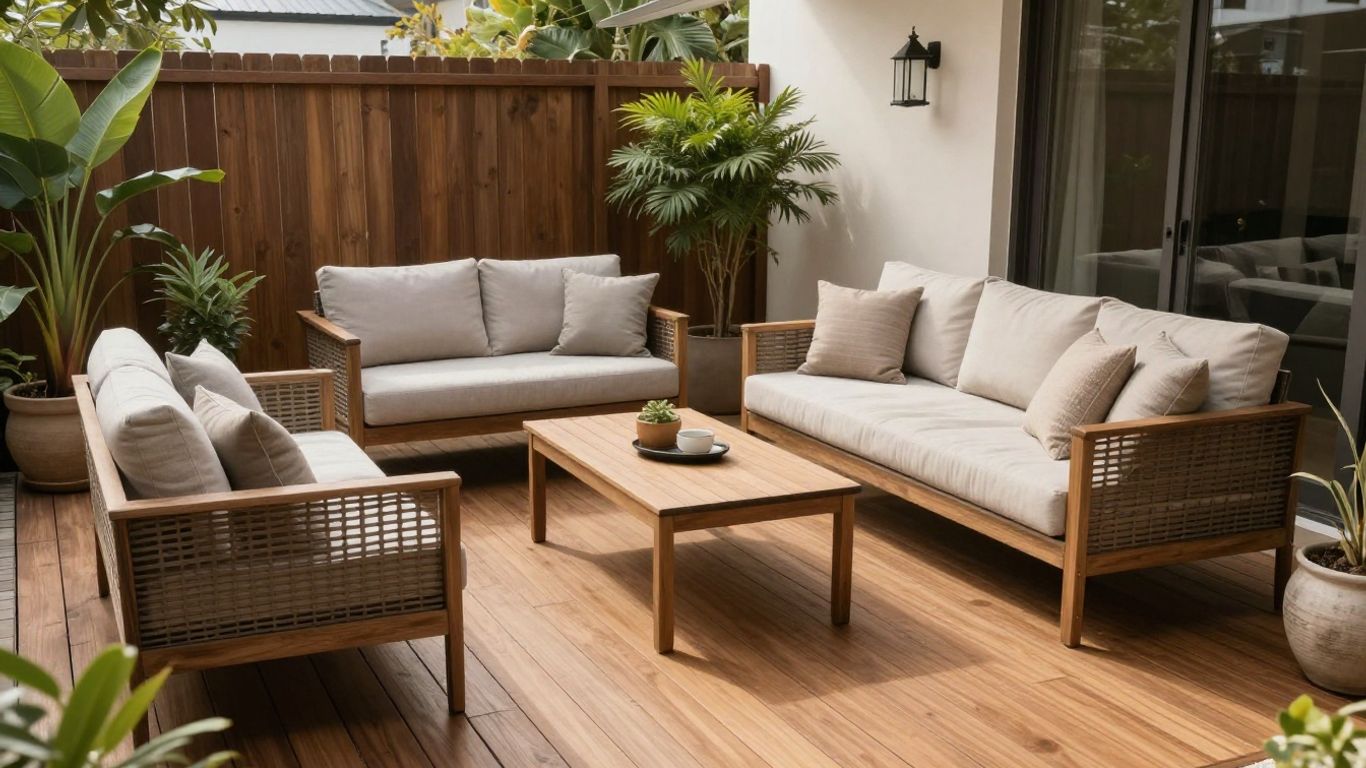
Selecting seating for patios, decks, and balconies
Choose seating by activity first: upright chairs for meals, deeper loungers for reading, and modular sofas for relaxed conversation. On a balcony, arms and side tables can consume more space than expected, so compact dimensions matter. On a broad deck, a mix of seating heights can create separate zones without requiring walls.
Test seat depth, back support, arm height, and cushion firmness whenever possible. Comfort is personal, but awkward proportions are difficult to solve with styling alone.
Choosing dining sets for everyday use and entertaining
A dining set should work for ordinary meals, not only for the largest gathering you host once a year. Round tables can improve conversation and circulation in compact areas, while rectangular tables often make better use of long decks. Benches can add flexible seating but may need cushions for longer meals.
Leave room to pull chairs out fully and to carry food around the table. If you entertain often, consider whether extensions, stackable chairs, or a nearby serving surface would make the arrangement more practical.
Measuring layouts, walkways, and clearance
Measure the usable area after accounting for railings, steps, doors, planters, and fixed grills. Mark the furniture footprint on the ground with tape or cardboard before ordering. This simple test reveals whether a sofa depth or chair swing will interfere with the path you use most.
Use a small checklist when planning the layout:
- Keep the main doorway and walking route clear.
- Allow space to pull dining chairs back from the table.
- Check that drawers, gates, and storage doors can open.
- Measure delivery access, including stairs, lifts, and narrow turns.
After marking the footprint, walk through the space at different angles. A layout that looks generous on paper may feel tight once cushions, people, and serving dishes are added.
Coordinating colors and finishes with your home
Start with the fixed elements you cannot easily change, such as paving, cladding, decking, brick, and exterior paint. Furniture can then either echo those tones or provide a deliberate contrast. Repeating one finish in a side table, frame, or planter often makes a collection feel settled without making every item identical.
Remember that sunlight changes how colours read throughout the day. Request fabric samples where available, especially if your outdoor area is shaded in the morning and bright in the afternoon.
Balancing comfort, function, and visual appeal
The strongest outdoor rooms feel good to use and easy to maintain. A beautiful sofa that stays damp, a dining chair that cannot slide under the table, or a table that is too delicate for family use will frustrate you quickly. Let appearance guide the shortlist, then let comfort and practical details decide.
Design Concepts focuses on design-led outdoor furniture alongside practical considerations such as comfort, durability, and nationwide delivery. Those are helpful buying criteria, but the right balance still depends on your space and routine.
Protect and maintain weatherproof outdoor furniture
Even well-made furniture lasts longer when water, dirt, and leaf debris do not remain trapped against it. Set a simple rhythm: inspect after major weather, clean when surfaces look dull or marked, and dry cushions before putting them away. Regular light care is easier than trying to recover neglected furniture.
Follow the maker’s care instructions before using a strong cleaner or pressure washer. Test any product on a hidden area first, particularly on painted frames, timber, woven surfaces, and coloured fabric.
Cleaning different frame and surface materials
Use mild soap, clean water, and a soft brush for most routine cleaning, adjusting the method to the material. Rinse salt and grime from metal, avoid saturating timber unnecessarily, and brush debris out of woven furniture rather than forcing it deeper. Dry surfaces thoroughly, especially around joints and feet.
Do not mix cleaning chemicals or assume an indoor product is safe outdoors. A gentle, repeatable routine usually protects finishes better than occasional aggressive scrubbing.
Preventing mold, mildew, stains, and fading
Mold and mildew thrive where moisture, shade, and organic debris remain together. Improve airflow, remove leaves, and avoid pushing furniture tightly against damp walls. Deal with spills promptly because oils, food, and sunscreen can leave stains or attract dirt.
Fading is reduced by sensible placement as well as UV-resistant materials. Shade sails, umbrellas, and natural shelter can protect furniture while also making the space more pleasant to use.
Caring for outdoor cushions and fabrics
Shake off loose debris, clean spills according to the fabric instructions, and stand cushions on edge so air can circulate. Do not store them while damp. If removable covers can be washed, close zips before cleaning and allow them to dry completely before refitting.
Design Concepts notes features such as UV and fade resistance, mould and mildew resistance, quick-dry foam, and free-draining cushions across relevant outdoor furniture selections; check the listing for the specific item rather than assuming every cushion has every feature. A five-year fabric warranty is also part of the retailer’s stated positioning, but warranty terms should be read for the particular product.
Using covers without trapping moisture
A cover is useful against dust, leaves, and some weather, but it should not become a sealed damp pocket. Choose a breathable cover that fits without pressing wet fabric against the furniture. Remove it periodically, air the piece, and check for condensation after humid or rainy weather.
Covers are most effective when paired with drainage and shelter, not used as a substitute for either. If the furniture is already wet, let it dry before covering it for storage.
Preparing furniture for winter and severe weather
Before a storm, secure or relocate lightweight pieces, close umbrellas, and remove loose cushions and accessories. Check that drains are clear and that furniture is not sitting where runoff collects. In winter, store what you can in a dry, ventilated area and raise pieces slightly from persistently wet ground.
A seasonal check also gives you a chance to tighten fasteners, touch up small finish damage, and identify parts that need replacing before the next busy outdoor season.
Shop for long-term value
The cheapest item at checkout is not always the least expensive choice over several seasons. Consider how often you will use the furniture, how exposed it is, and whether you have somewhere to store cushions or move the frame. A slightly higher initial cost can make sense when it buys better comfort, repairability, and support.
Compare complete sets carefully. One price may include cushions, covers, delivery, or assembly while another may not, which can change the real value considerably.
Comparing upfront cost with expected lifespan
Estimate the cost per season rather than focusing only on the ticket price. A durable frame with replaceable fabric may remain useful after a cheaper set has faded or weakened. Conversely, premium construction may be unnecessary for a sheltered area that receives occasional use.
Include cleaning products, storage, covers, delivery, and likely replacement parts in your mental calculation. This gives you a more honest picture of what the purchase will cost.
Reviewing warranties and manufacturer support
Read what the warranty covers, how long each component is protected, and whether commercial or coastal exposure changes the terms. Fabric, frame, finish, and cushions may each have different conditions. Keep receipts and follow the care instructions because maintenance requirements can affect a claim.
Responsive support is valuable when a part arrives damaged or a question arises after installation. Ask how issues are handled before you commit to a large order.
Identifying misleading weatherproofing claims
Be cautious when a listing uses broad words without naming the material, test, finish, or care limits. “Water-resistant,” “outdoor,” and “all-weather” can describe different levels of performance. Look for specific information about UV exposure, drainage, corrosion, fabric, storage, and warranty coverage.
A credible description should also tell you what the product is not designed to withstand. Clear limitations are usually more useful than an absolute promise.
Deciding when premium materials are worth it
Premium materials are often worthwhile in exposed, frequently used spaces where replacement is difficult or disruptive. They may also repay their cost through better comfort, stronger construction, and parts that can be renewed. In a covered courtyard with occasional use, a simpler material may meet your needs perfectly well.
Spend more on the features you will notice every week: supportive seating, reliable drainage, stable frames, durable fabric, and finishes suited to your climate. Spend less on details that add cost without improving use or lifespan.
Building a durable outdoor furniture set over time
You do not need to furnish the entire area in one purchase. Start with the piece that solves your biggest need, then add complementary items after you understand how the space behaves through sun, rain, and wind. This approach lets you test comfort, colour, and maintenance before committing to a full collection.
Design Concepts offers outdoor-living products including sofas, dining sets, loungers, umbrellas, and fires, with online, in-store, and nationwide delivery options. Whether you shop there or elsewhere, building gradually helps you choose a set that feels intentional rather than forcing a mismatched bundle.
Conclusion
Weatherproof outdoor furniture is best understood as a considered combination of suitable materials, sound construction, sensible placement, and regular care. When you match each piece to your climate and measure your space carefully, you can create an outdoor room that stays comfortable and attractive through changing seasons without expecting any product to be completely maintenance-free.
Frequently Asked Questions
What does weatherproof outdoor furniture mean?
It usually means furniture designed to resist particular outdoor conditions such as rain, sunlight, humidity, or wind. The term does not guarantee complete protection from every climate or eliminate the need for care.
What is the best material for rainy climates?
The best choice depends on exposure, but corrosion-resistant metal, suitable synthetic materials, and well-maintained teak can all perform well. Drainage, airflow, and cushion care are just as important as the frame material.
Is powder-coated aluminum good for outdoor furniture?
Powder-coated aluminum is lightweight and can be durable outdoors when the coating and hardware are properly maintained. Check stability in windy locations and repair chips before corrosion develops around them.
Can outdoor furniture stay outside all winter?
Some pieces can remain outside if they are designed for the conditions and positioned where water drains away. Cushions and lightweight accessories are usually better stored or protected during prolonged rain, frost, snow, or severe wind.
How do you stop outdoor cushions from getting moldy?
Allow cushions to dry fully, improve airflow, clean spills promptly, and avoid storing them in sealed damp spaces. Breathable covers can help, but they should not trap condensation against wet fabric.
How much space should you leave around outdoor furniture?
Leave enough room for doors, walkways, pulled-out dining chairs, and normal movement. Marking the furniture footprint with tape or cardboard is a practical way to test clearances before ordering.
Is expensive outdoor furniture always better?
Not always. Value depends on the climate, frequency of use, construction, comfort, warranty, repairability, and maintenance required. A mid-priced piece suited to a sheltered space may be a better choice than a premium item designed for conditions you do not have.