

Patio furniture NZ: a practical guide to choosing outdoor furniture
Key Takeaways
A well-planned patio starts with the way you live outdoors, then balances materials, comfort, upkeep, and cost. Use these points to narrow your choices before you shop.
- Measure the space and leave comfortable routes around furniture.
- Match frame, fabric, and finishes to sun, rain, and wind exposure.
- Choose dining or lounge furniture to suit how you use the area.
- Compare the full cost, including delivery, assembly, and care.
- Clean and protect furniture regularly to help it last.
Start with your space and how you’ll use it
Before browsing patio furniture nz, take a moment to look at the space you have and how you want it to feel. A balcony used for morning coffee calls for different pieces than a deck where friends gather for dinner. A simple plan can help you avoid buying furniture that looks right online but feels awkward at home. For more outdoor furniture planning, start with the dimensions and routines that matter to you.
Measure the patio, deck, or balcony
Measure the usable floor area, noting walls, doors, steps, railings, and any permanent planters. Then check the dimensions of furniture you are considering, including the extra room needed to pull out a chair or walk behind a seated guest. For a quick first pass, write down these details:
- The widest and longest clear measurements.
- Door swings and the space needed to open them.
- Fixed features such as posts, taps, and planters.
- Walkways you want to keep clear.
Use those notes to sketch a rough layout or mark the furniture footprint on the ground with tape. Seeing the space this way makes it easier to judge whether a table or sofa will leave enough room to move comfortably.
Plan around dining, lounging, and entertaining
Think about what you do outside most often, rather than trying to fit every possible use into one area. If you regularly eat outdoors, a table and chairs may earn their space; if you tend to stretch out with a book, lounge seating could be more useful. You can also use a small side table or a flexible extra chair to support more than one activity without crowding the main seating.
Account for sun, wind, and access routes
Notice where the sun falls at different times of day and whether the area is exposed to wind or rain. An umbrella may be useful in a sunny spot, while a sheltered corner can make cushions easier to manage. Keep a clear route between the house and the seating area, too, especially if you often carry food or drinks outside.
Choose materials for New Zealand conditions
Outdoor furniture faces changing conditions, and the best choice depends on where it will sit and how much care you are willing to give it. Consider direct sun, wet weather, wind, and coastal air rather than relying on appearance alone. The right material is one that suits both your setting and your routine. Design Concepts offers outdoor furniture collections selected or made for New Zealand’s climate.
Compare timber, aluminum, and steel frames
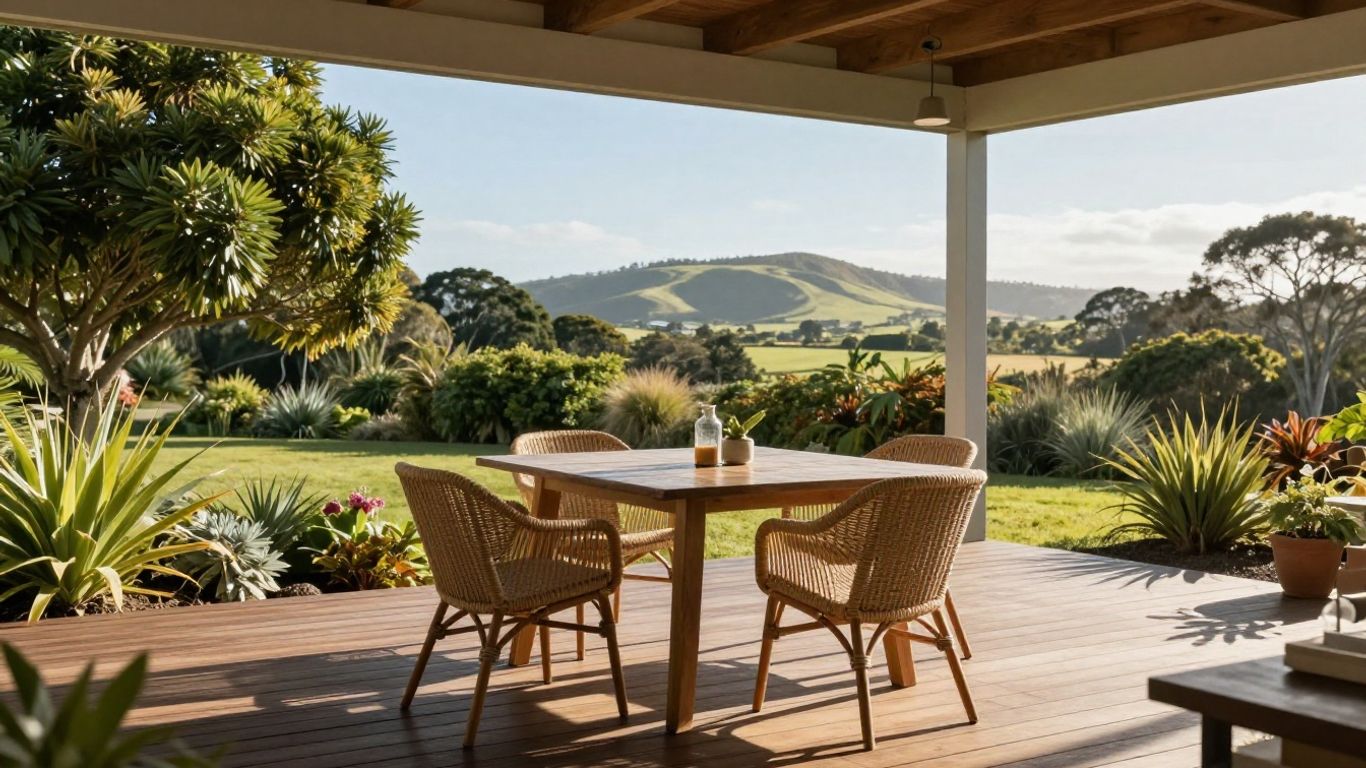
Each frame material has a different look and maintenance profile, so compare the details of the specific piece. Timber can bring warmth and natural variation; aluminum is often chosen for a lighter, clean-lined look; and steel can feel substantial. Finishes, construction, and care instructions matter as much as the material name. This quick comparison can help you decide what to investigate further.
| Frame material | What to consider | A practical question |
|---|---|---|
| Timber | Natural appearance and finish care | What cleaning or treatment does it need? |
| Aluminum | Weight and surface finish | Is the finish suited to your exposure? |
| Steel | Frame construction and coating | How should you protect the surface? |
Use the table as a starting point, then check the product’s care guidance and warranty terms before deciding. Even within one material type, construction and finish can differ, so the details are worth reading.
Weigh up wicker, rope, and other woven finishes
Woven finishes can soften the look of a patio and suit both dining and lounge settings. Look closely at how the weave is made and whether the design is intended for outdoor use; also consider whether the furniture will be exposed to full sun or frequent rain. If you like a woven style, ask what cleaning is recommended and whether the weave needs to be covered or stored during rough weather.
Check fabric and finishes for UV and moisture resistance
Cushion fabric and frame finishes have a direct effect on how furniture handles life outside. Look for product information about UV and fade resistance, mould and mildew resistance, quick-dry foam, free-draining cushions, and rust-resistant frames where those features matter to your setting. Design Concepts describes these kinds of weather-ready features in its brand information, but you should confirm which ones apply to the particular piece you are considering. For a closer look at weather-resistant outdoor furniture, compare the stated materials and care instructions rather than assuming every product is built the same way.
Find the right furniture for your layout
Once you know the space and conditions, choose pieces around the activities you want to make room for. A dining set can give meals a natural home, while lounge seating creates a more relaxed corner. If your patio is small, a restrained layout often feels more inviting than filling every open patch. Browsing examples of outdoor furniture sets can help you picture how different pieces might work together.
Choose a dining set for outdoor meals
Start with the number of people you usually seat, then decide whether you need occasional extra places for guests. The table shape should fit the footprint and leave room for chairs to move; round tables can suit some compact areas, while rectangular designs can make use of a longer space. Design Concepts offers outdoor dining sets, so you can compare table and seating options with the dimensions of your own patio in mind.
Consider lounge seating for relaxed spaces
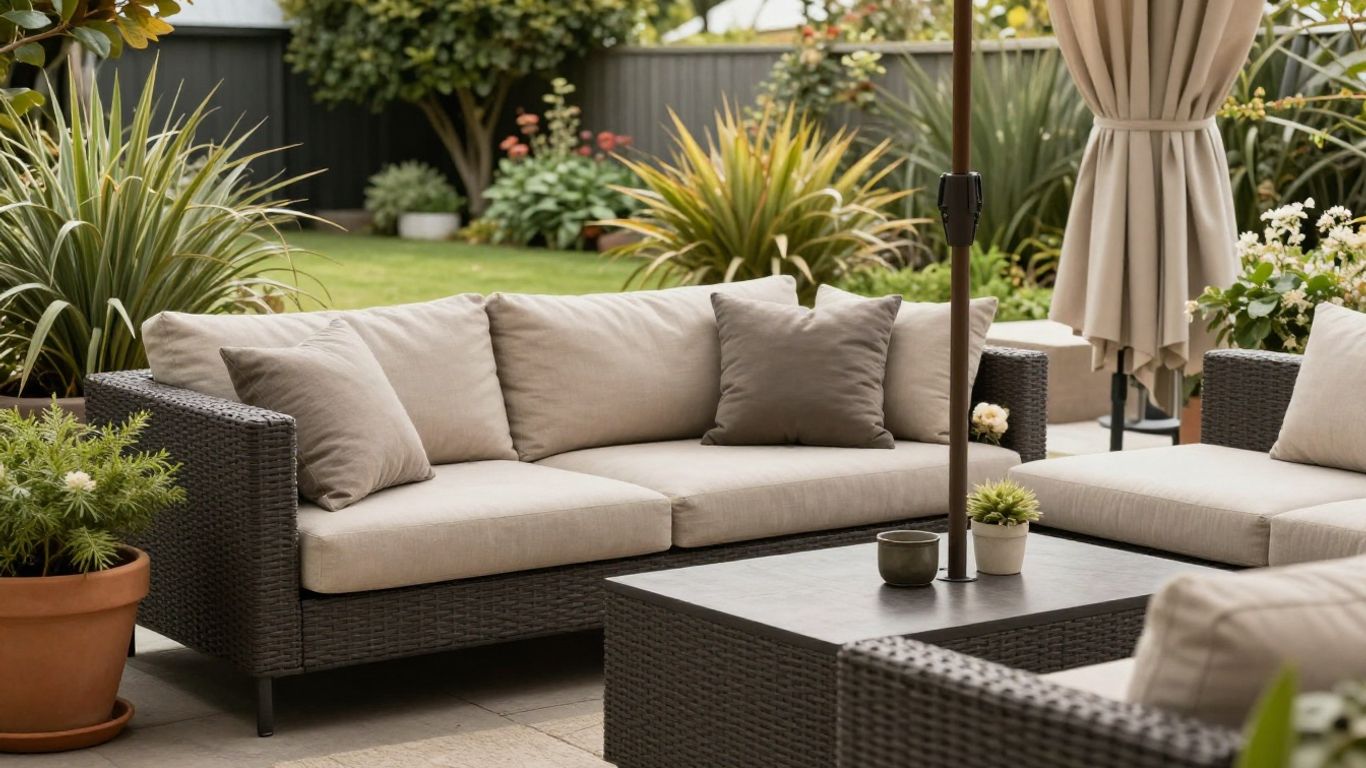
A sofa or lounge chair can turn an underused deck into a place to slow down, but check the overall depth as well as the width. Leave enough space for side tables and a clear path through the area. If cushions will stay outside, check their material and care guidance, and consider where you can bring them during wet weather.
Make small patios work with compact or modular pieces
On a smaller patio, choose a few pieces that serve the way you actually use the space. A compact dining set may be more useful than a larger lounge; alternatively, a small seating arrangement with a side table can leave room for plants or a clear walkway. Modular pieces can offer flexibility, but measure each arrangement you are likely to use so the layout remains comfortable rather than merely possible.
Prioritize comfort and practical features
Furniture should feel good to use, not just look appealing in a product photo. If you can, try a chair or sofa in person, or compare its dimensions carefully with seating you already find comfortable. Small practical details can make a noticeable difference day to day, especially when the furniture is used often. Design Concepts offers outdoor sofas and loungers among its outdoor-living products, giving you options to consider for a relaxed seating area.
Check seat height, depth, and support
Seat height and depth affect how easy it is to sit down, get up, and settle in for a while. Consider who will use the furniture and whether the seat supports the way you like to sit. Armrests, back angle, and cushion firmness all contribute to comfort, so look beyond the overall style when comparing pieces.
Look for adjustable shade and weather-ready cushions
If your patio gets strong sun, think about where shade will fall and whether an umbrella can be positioned without blocking movement. For cushions, check the product details for UV and fade resistance, quick-dry foam, and free-draining construction rather than treating “outdoor” as a complete specification. Even weather-ready cushions may benefit from being stored or covered when you are not using them.
Consider storage, stacking, and easy-care details
Practical features can save effort when the weather changes or you need to clear the area. Check whether chairs stack, whether a table folds, and where cushions or covers can be kept. Also look at cleaning instructions before buying: a finish that is easy to wipe down may suit you better than one that needs regular treatment.
Set a budget and compare retailers
A useful budget includes more than the furniture’s ticket price. Allow for delivery, assembly, covers, cushions, or any other items you need to make the space work. Compare the quality and support offered alongside the style, and keep a note of what is included in each option. This makes it easier to judge value without rushing toward the lowest price.
Compare quality, warranties, and expected lifespan
Read product descriptions and warranty terms closely, paying attention to what materials and components are covered and for how long. A warranty is not a promise that furniture will never need care, so check the conditions and recommended upkeep. Design Concepts is a New Zealand-owned and operated boutique retailer, and its outdoor furniture is available through nationwide delivery; check the terms for the specific product and order when comparing your options.
Check delivery costs, lead times, and assembly
Before placing an order, confirm the delivery area, likely timing, and whether the furniture arrives assembled or requires setup. Measure access routes as well as the patio itself, including gates, stairs, and narrow passages. Delivery details can change the practical cost of a purchase, so compare them alongside the item price rather than leaving them until checkout.
Ask about returns and replacement parts
Find out how returns work, including any time limits, conditions, or costs for sending an item back. If you are buying a set, ask whether individual parts such as cushions or chairs can be replaced later. Keep the product information and care instructions somewhere easy to find; they can be useful if you need to follow up after purchase.
Care for your patio furniture
A little regular attention can keep your outdoor space looking welcoming and help you spot wear before it becomes harder to address. Follow the product’s own care instructions, since the right approach varies by material and finish. A simple routine—cleaning, checking, and protecting—can make upkeep feel manageable through the year.
Clean each material with suitable products
Remove loose dirt and leaves regularly, then use the cleaning method recommended for the furniture’s material. Avoid assuming that one cleaner suits timber, metal, woven finishes, and fabric alike. Test a product in an inconspicuous area when the care guidance allows, and let the furniture dry fully before replacing cushions.
Protect furniture from harsh weather and off-season exposure
When strong wind, prolonged rain, or intense sun is forecast, use a suitable cover or move furniture to a sheltered area if practical. Store cushions somewhere dry when they are not in use, and make sure any cover allows appropriate airflow. If you live near the coast, check frame finishes regularly and follow the manufacturer’s cleaning advice.
Refresh cushions and finishes as they wear
Check cushions for fading, seams for wear, and frames for loose fittings as the seasons change. Clean stains promptly using the recommended method, and tighten or repair components only as directed. If a finish needs attention, use a product suited to that material so a small refresh does not create a larger maintenance problem.
Conclusion
The right patio furniture is the furniture that fits your space, your weather exposure, and the way you like to spend time outdoors. Measure first, compare materials and comfort carefully, and include delivery and upkeep in your budget. With a considered layout and a simple care routine, you can create an outdoor area that feels inviting and works well for everyday life.
Frequently Asked Questions
How do I choose patio furniture for a small space?
Measure the usable area and keep room for doors, walkways, and chairs to move. Choose only the pieces that suit your most common activities, and consider compact or flexible designs.
Which outdoor furniture material is best for New Zealand weather?
There is no single best choice for every home. Compare the material, finish, care instructions, and exposure to sun, rain, wind, or coastal air for each specific piece.
Should outdoor furniture be covered when it rains?
A suitable cover or sheltered storage can help protect furniture during prolonged wet weather. Follow the product’s guidance and avoid trapping moisture under a cover.
What size dining set will fit my patio?
Measure the table footprint and allow space to pull out chairs and walk around them. Test the layout with a simple sketch or temporary markers before buying.
How can I make outdoor seating more comfortable?
Check seat height, depth, back support, and cushion firmness. Shade and a nearby surface for drinks or books can also make a seating area more pleasant to use.
How often should I clean patio furniture?
Remove loose dirt regularly and clean more thoroughly as needed, following the instructions for each material. Frequent light care can prevent grime from building up.
What should I check before ordering patio furniture online?
Confirm the dimensions, delivery cost and timing, access requirements, assembly details, warranty, and return terms. Check product-specific care instructions and what is included in the price.