

Outdoor sofas NZ: how to choose the right style, material, and size
Key Takeaways
A good outdoor sofa should feel at home in your space and suit the weather it will face. Start with the layout, then compare materials, comfort, and the full cost of ownership.
- Choose a sofa shape that suits how you use your outdoor area.
- Check frame and cushion materials against your local sun, rain, wind, and salt exposure.
- Measure the furniture footprint and leave room for doors and walkways.
- Test comfort and consider cleaning, storage, and covers as part of everyday use.
- Compare delivery, care, and warranty terms—not just the initial price.
Choose an outdoor sofa style for your space
The right shape depends on the space you have and how you want to spend time in it. A compact sofa can make a small deck feel inviting, while a larger arrangement may work better when you regularly host friends. Think about how people will move through the area as well as how many seats you need.
Compare modular, sectional, and loveseat designs
A modular sofa lets you change the arrangement as your needs shift, while a sectional offers a more fixed corner shape and a loveseat keeps the footprint modest. If you are still weighing configurations, this overview of modular and sectional lounge options can help you picture how each might work. Favor flexibility if you expect to rearrange the space; choose a fixed form if you already know where the sofa will sit.
Match the sofa to your patio or garden aesthetic
Look at the colors and textures already around the sofa: deck boards, paving, fencing, planting, and any shade structure. A restrained frame color can sit quietly against greenery, while warm timber tones may connect naturally with timber decking. For a softer look, you can bring in color through cushions and accessories that are easier to change than the main furniture.
Decide whether you need a standalone sofa or a complete lounge set
A standalone sofa is a useful choice when you already have chairs or a coffee table, or when the space has room for only one main seating piece. A complete lounge set can make a larger area feel coordinated and ready for conversation, but it needs enough room to breathe. Decide what you already own before paying for pieces that may not earn their floor space.
Select materials that suit New Zealand conditions
New Zealand conditions can vary sharply between a sheltered courtyard, a windy deck, and a coastal patio. Consider the furniture’s exposure to sun, rain, and salt air alongside the amount of care you are prepared to give it. For more help planning your outdoor sofa layout, include the conditions around the site as well as its dimensions.
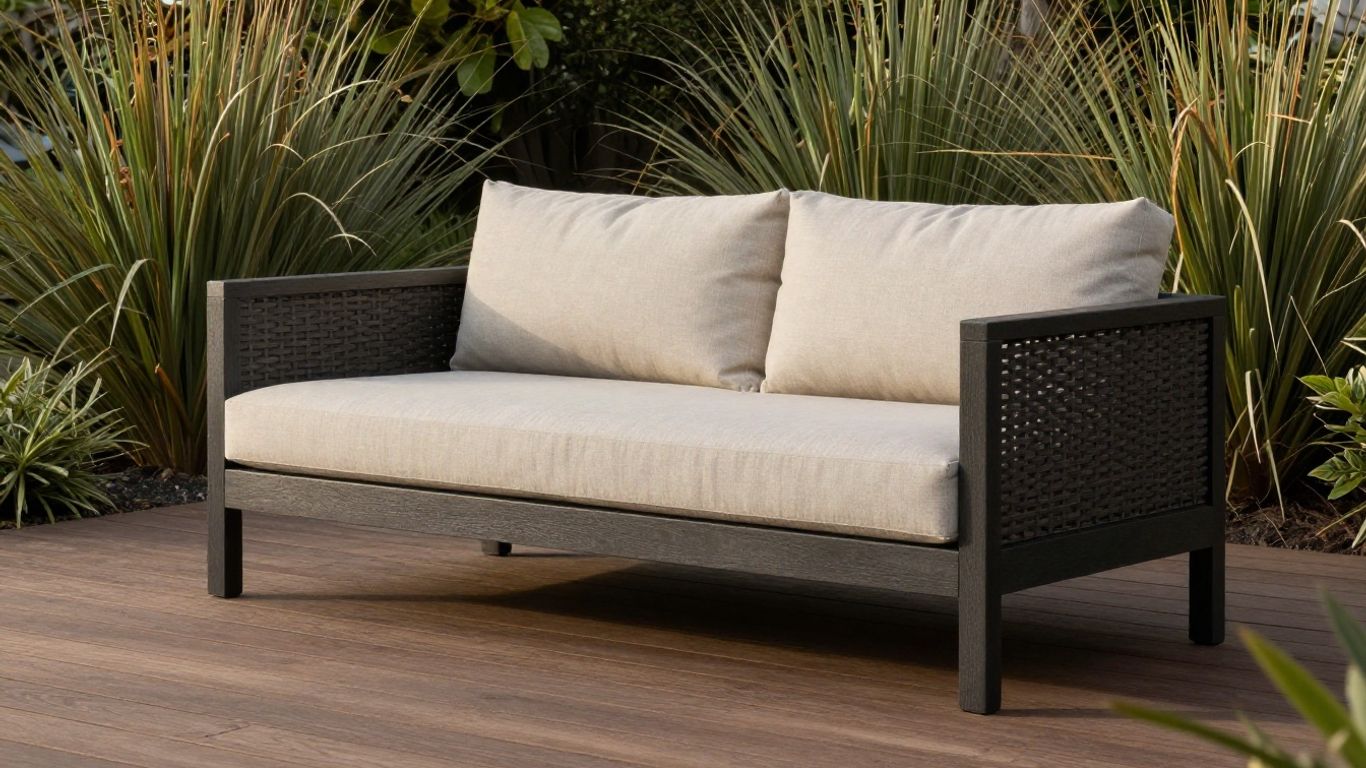
Compare aluminum, timber, and synthetic wicker frames
Each frame material has a different look and care profile, so compare it with the conditions where the sofa will live. The table offers a starting point; check the specific product details before deciding, because finishes and construction differ between models.
| Frame material | What to consider | A practical question |
|---|---|---|
| Aluminum | Light visual profile; inspect the finish and construction | Is the frame suited to the exposure at your home? |
| Timber | Natural grain and color; care needs vary by timber and finish | Are you comfortable with its ongoing care? |
| Synthetic wicker | Woven texture; inspect the weave and supporting frame | Does the style and construction suit your setting? |
Use the table to narrow your options, then look closely at the finish and care guidance for the sofa you are considering. For example, the Kapiti Double Sofa is described with a rust-proof aluminum frame, premium Sunbrella fabric, and quick-dry foam. Those are product-specific details to compare with your own needs, not assumptions to make about every sofa.
Choose cushions and fabrics that resist moisture and fading
Outdoor cushions need to cope with more than occasional use: they may face strong sun, damp mornings, or a sudden shower. Check whether the fabric is described as UV-resistant or fade-resistant, and whether the cushion construction is designed to drain or dry quickly. A product’s materials and care instructions will tell you more than the label “outdoor” on its own.
Consider coastal exposure, wind, and intense sun
Salt air, gusts, and prolonged sun each call for a slightly different check. Near the coast, look closely at frame materials and finishes; in an exposed spot, consider whether the furniture is stable and whether cushions can be stored when not in use. In a sunny position, fade resistance matters for keeping the fabric looking good over time, though shade and sensible care can still help.
Find the right size and layout
A sofa that looks compact online can take up more room once you add a table and allow space to walk around it. Measure the area you can actually use, including any posts, planters, steps, or other features that limit placement. Sketching the layout first makes it easier to compare dimensions and avoid an awkward fit.
Measure the usable area before you shop
Measure the width and depth of the furniture zone, rather than relying on the full size of the deck or patio. Note any narrow access points too, since a piece that fits its final location may still be difficult to carry through a gate or doorway. Keep your measurements handy when comparing product specifications.
Plan clearances for walkways, doors, and other furniture
Room to move is part of a comfortable layout. Before settling on a sofa, mark out its footprint and check how it affects nearby doors, steps, and other seating. A short list of practical checks can make your measurements more useful:
- Mark the sofa’s full width and depth on the ground.
- Check that doors can open without hitting the furniture.
- Keep a clear route between the house and the seating area.
- Allow enough room to use nearby tables and chairs.
If the layout feels tight on paper, it may feel even tighter when people are seated and moving around. Recheck the plan with any coffee table or extra chair included, rather than treating the sofa as an isolated piece.
Adapt the layout for small decks and larger entertaining areas
On a small deck, a loveseat or standalone sofa can leave room for circulation without making the seating feel like an afterthought. In a larger entertaining area, you might arrange a sectional around a table or combine a sofa with separate chairs. Keep the conversation area connected, but avoid filling every available corner with furniture.
A quick visual reference can help you compare different arrangements, but your measurements should guide the final choice. Think about where guests will enter, sit, and set down a drink before deciding which layout feels natural.
Prioritize comfort and practical features
Comfort is personal, and photographs rarely tell you how a sofa will feel after an hour of sitting. Consider your usual way of relaxing: upright with a book, stretched out with family, or gathered around a low table. Then check the construction and care details that make the sofa practical for everyday use.
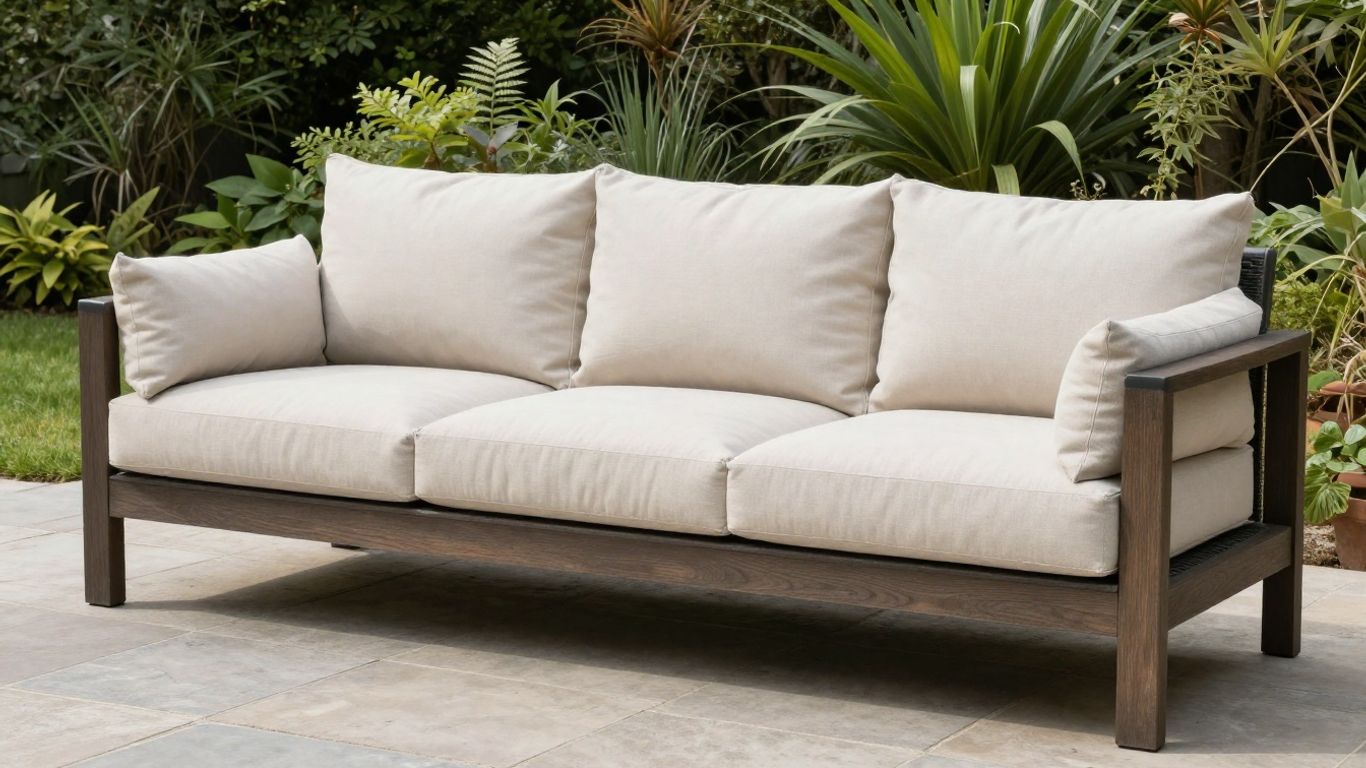
Check seat depth, back support, and cushion firmness
Seat depth, back height, and cushion feel all affect whether a sofa suits you. If possible, sit on a model and notice whether your feet rest comfortably and whether the back offers the support you prefer. A deeper seat can be pleasant for lounging, but it may not suit everyone, so use your own comfort as the guide.
Look for removable covers and easy-to-clean finishes
Ask whether cushion covers can be removed and what care the fabric requires. Also check how the frame and other surfaces should be cleaned, especially if the sofa sits beneath trees or close to a pool. The Matakana Single Sofa is described with a powder-coated aluminum frame, Sunbrella Sooty fabric, quick-dry foam, and a five-year fabric warranty; check the product information for the terms that apply.
Consider modular pieces, storage, and adjustable components
Useful details can make a sofa easier to live with, especially if your layout changes through the year. The Tolaga Bay Single Sofa is described as modular, with interlocking clips and spring-loaded seating. When comparing any adjustable or modular design, confirm how the pieces connect and whether the configuration suits your space; for cushions and accessories, consider where they will go when the weather turns.
Set a budget and compare value
The purchase price is only one part of what an outdoor sofa costs to own. Delivery, assembly, protective covers, and care products can all affect the final figure, and some items may be optional rather than included. Set a budget that accounts for the features you will genuinely use, not just the ones that look appealing on a product page.
Compare entry-level, mid-range, and premium options
Price bands can help you organize your search, but they do not tell the whole story about comfort or durability. Compare frame construction, fabric details, cushion design, and the warranty alongside the price. Then decide which features matter most for your climate and how often you expect to use the sofa.
Factor in covers, delivery, assembly, and ongoing care
A clear cost comparison should include the work and extras involved in getting the sofa into place and keeping it in good condition. Check whether delivery reaches your address, whether assembly is needed, and whether a cover is supplied or sold separately. If you want more ideas for comparing outdoor furniture value, include those additional costs rather than comparing sticker prices alone.
Weigh warranty coverage against expected lifespan
Read the warranty terms carefully: coverage may differ for the frame, fabric, and cushions, and some conditions can affect a claim. A longer warranty can be reassuring, but it is still worth checking what is covered and what care is expected. Compare that information with the construction and the amount of exposure the sofa will face at your home.
Shop for outdoor sofas in New Zealand
Once you have a preferred style and a shortlist of materials, confirm that the practical details line up. Product dimensions, stock status, delivery access, and warranty terms can all affect whether a promising sofa is the right one for your home. If you are buying online, take time to review those details before placing an order.
Check stock, delivery areas, and lead times
Availability and delivery timing can vary, especially for made-to-order furniture or items shipped beyond major centers. Confirm that delivery is available to your address and ask about access requirements, including narrow passages or stairs. If you need the sofa by a particular date, get a clear lead-time estimate before committing.
Review return policies, warranties, and product specifications
Read the product specifications for dimensions, frame material, fabric, and care instructions, then compare them with your notes. Check the returns policy and warranty terms separately; they answer different questions and may have different conditions. Keep the product details and purchase information somewhere easy to find in case you need them later.
Inspect samples or showroom models before committing
Seeing a sofa in person can help you judge the fabric color, scale, and feel in a way a screen cannot. If a showroom visit is possible, sit down and look at the finish from several angles; if not, ask what information or samples are available to help you decide. Use that final check to confirm that the sofa fits both your measurements and your everyday preferences.
Conclusion
The best outdoor sofa for your home is the one that fits your space, feels comfortable, and suits the weather and care routine it will face. Measure carefully, compare materials and product details, and include delivery and warranty terms in your decision. A little preparation makes it easier to choose a sofa you will enjoy using through the seasons.
Frequently Asked Questions
What should I look for when buying outdoor sofas NZ?
Start with the size and layout of your outdoor area, then compare frame and cushion materials against your local weather. Comfort, cleaning needs, delivery, and warranty terms are also worth checking before you buy.
How do I choose between a modular sofa and a fixed sectional?
A modular design can be rearranged, while a sectional usually keeps a more defined shape. Choose based on whether you expect to change your layout and how much room you have.
Which frame material is best for an outdoor sofa?
There is no single best material for every home. Compare the frame’s construction and finish with your exposure to sun, rain, wind, or salt air, and consider the care it requires.
How much space should I leave around an outdoor sofa?
Leave enough room for doors to open and people to walk through comfortably. Include nearby tables and chairs when planning, rather than measuring only the sofa footprint.
Can outdoor sofa cushions stay outside in the rain?
That depends on the fabric and cushion construction. Check the product’s care instructions and moisture-related details, and consider storing cushions when conditions are poor.
How can I keep outdoor sofa fabric from fading?
Choose fabric described as UV-resistant or fade-resistant, and consider placing the sofa in shade when practical. Follow the care instructions for cleaning and storage.
What costs should I include in my outdoor sofa budget?
Include the sofa price as well as delivery, assembly, covers, and ongoing care. Check whether those extras are included or charged separately, and review the warranty terms.