

Outdoor furniture New Zealand: How to choose durable, stylish pieces for every season
Key Takeaways
Outdoor furniture should feel like a natural extension of your home, but it also needs to cope with New Zealand’s sun, salt air, rain, and wind. Choose materials, proportions, fabrics, and maintenance habits with your particular setting in mind.
- Assess your local exposure to salt, UV, rain, wind, and temperature changes.
- Choose materials according to durability, appearance, comfort, and maintenance needs.
- Measure carefully and create clear zones for dining, lounging, and entertaining.
- Look for weather-resistant fabrics, quick-dry or free-draining cushions, and practical shade.
- Compare construction quality and long-term value rather than focusing only on the starting price.
Understand New Zealand’s outdoor living conditions
New Zealand’s outdoor areas are wonderfully varied, from sheltered courtyards to exposed coastal decks. The same chair may perform very differently in a humid Auckland garden, a windy Wellington balcony, or a dry Canterbury property. Before you choose a look, observe how your space handles sun, moisture, salt, and prevailing wind. That simple assessment will help you choose outdoor furniture New Zealand homeowners can enjoy for more than one season.
How coastal air affects furniture materials
Salt carried in coastal air can settle on frames, fasteners, and fabric, where it combines with moisture and gradually accelerates corrosion or surface wear. If you live near the sea, favour rust-resistant or corrosion-resistant construction and avoid leaving salty residue in place for long periods. A sheltered position helps, but it does not remove the need for occasional rinsing and inspection. Pay particular attention to joins, screws, underside surfaces, and areas where water can collect.
Managing intense sun and UV exposure
Bright sun can fade fabric, dry timber, and make some plastics brittle over time. You can reduce the load by placing seating under shade, turning cushions regularly, and using covers when furniture is not in use. UV stability matters over time, especially for upholstery that sits in full sun every afternoon. Colourfast fabrics and a sensible shade plan will usually preserve the appearance of a set better than relying on material alone.
For a deeper look at fabric performance in this climate, see this UV protection guide. It is useful when you are comparing colours as well as upholstery specifications.
Preparing for rain, wind, and changing temperatures
Rain is not the only concern: wind can move lightweight pieces, while repeated wet and dry cycles can stress timber, finishes, and cushion fillings. Give water a clear route away from tabletops and seat bases, and avoid pushing furniture tightly against a wall where it cannot dry. In exposed locations, heavier frames, stable bases, and stackable or movable pieces can make seasonal preparation much easier. Check that an umbrella can be closed and secured before a squall arrives.
Matching furniture choices to your local climate
Think about your immediate microclimate rather than relying on a broad regional label. A covered deck may need less weather protection than an uncovered lawn, while a balcony can receive stronger wind even in a sheltered suburb. Auckland’s humidity and salt-air considerations differ from Canterbury’s dry summers, frosts, and strong winds, so your maintenance routine should follow the conditions around the furniture. The practical climate and furniture guide offers another useful way to think through those local differences.
Choose the right outdoor furniture materials
Material selection affects appearance, weight, comfort, care, and expected lifespan. No single option is perfect for every New Zealand space, so compare the frame, finish, fasteners, and cushions as a complete product rather than judging a sample by its surface alone. A well-made set in a suitable material can be easier to live with than a cheaper set that needs constant attention.
Comparing teak, eucalyptus, and other hardwoods
Hardwoods bring warmth and a substantial, natural feel to an outdoor room. Teak is valued for its oils and dense grain, while eucalyptus and other hardwoods can offer an attractive alternative when they are properly finished and maintained. Timber will develop character as it weathers, although uneven exposure may produce different tones across a table or chair. Ask whether the wood is intended to weather naturally or requires a particular oil, stain, or sealant before you make that decision.
When aluminum and stainless steel make sense
Aluminium is light, easy to reposition, and useful when you want a clean contemporary profile. A suitable powder-coated finish can add protection and colour, but scratches and chips still deserve prompt attention. Stainless steel can work well for hardware and selected structural details, particularly where strength and a neat appearance matter. In coastal areas, inspect the grade, joins, and fasteners rather than assuming every metal product will behave the same way.
Benefits and limitations of outdoor wicker
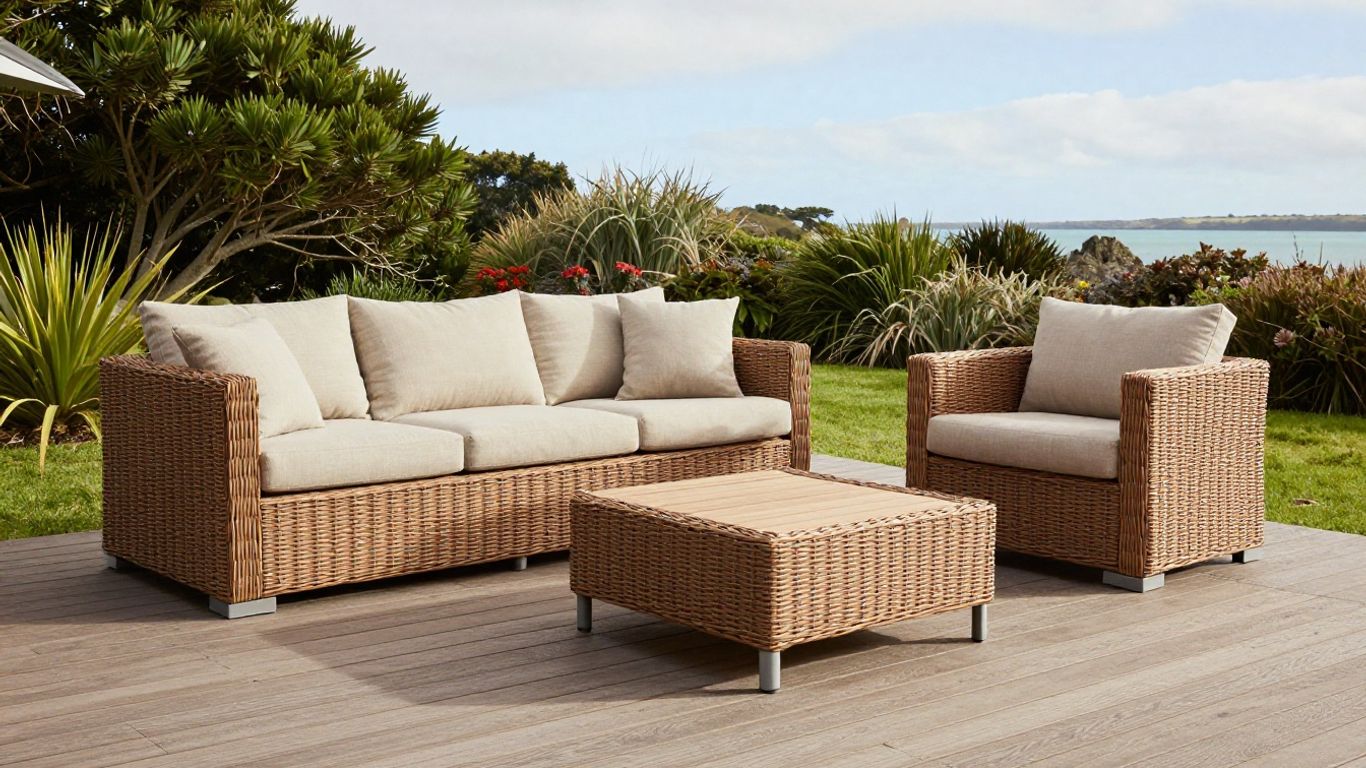
Outdoor wicker is generally a woven synthetic material rather than traditional indoor cane, and it can give a veranda or patio a softer, more relaxed texture. It is comfortable alongside generous cushions and works across both classic and contemporary settings. The weave can, however, collect dirt and may be harder to clean than a flat frame. Look closely at the frame beneath it, the consistency of the weave, and whether the piece can dry properly after rain.
Evaluating recycled plastic and composite materials
Recycled plastic and composite materials can be practical where low routine maintenance is a priority. They do not require the same treatment as timber, and many pieces are easy to wipe clean. Their weight, heat retention, colour stability, and finish vary, so request care information and consider how the surface will feel in full summer sun. A material that looks right in a showroom should also suit the way you plan to use and store it.
Plan a comfortable and functional outdoor space
A successful outdoor room begins with how you move through it, not with the number of pieces you can fit. Start by noting doors, steps, drains, garden edges, outdoor kitchens, and views you want to preserve. Then decide whether the space is primarily for meals, quiet lounging, entertaining, or a combination of all three. This approach keeps the final arrangement comfortable instead of crowded.
Measuring patios, decks, balconies, and courtyards
Measure the usable floor area, not just the overall boundary. Record projections, railings, uneven edges, door swings, and the direction furniture will travel during delivery. Mark the footprint of a proposed table or sofa with masking tape or cardboard, then walk around it at different times of day. A useful outdoor space planning guide can help you connect those measurements with your lifestyle and preferred furniture arrangement.
Creating zones for dining, lounging, and entertaining
Separate activities visually without making the area feel divided. A dining table can sit near the kitchen or barbecue, while a sofa and coffee table may work better toward the view or evening shade. On a larger deck, a lounger or occasional chair can create a quieter third zone. Repeating one material, colour, or cushion tone across the settings will make the whole arrangement feel considered.
Allowing enough room for movement and access
Comfortable circulation is one of the easiest details to underestimate. Leave space to pull dining chairs back, walk behind a seated person, open doors, and carry food safely. Keep pathways clear around stairs, gates, and pool edges, and avoid placing low tables where they become a trip hazard. If your space is tight, nesting tables, stackable chairs, or modular seating may offer more flexibility than a large fixed suite.
Choosing furniture that suits your home’s architecture
Let the lines of your home guide the furniture’s shape and visual weight. A pared-back contemporary house may suit slim aluminium or structured modular seating, while a weatherboard home can carry the warmth of timber and woven texture. This does not mean matching every detail; contrast can be attractive when the proportions are consistent. Look from inside the house as well as from the garden so the outdoor arrangement supports the rooms around it.
Select cushions, fabrics, and accessories for durability
The pieces you touch most often have a major influence on whether an outdoor setting feels inviting. Cushions need to be comfortable, but they also need to dry, resist fading, and cope with regular handling. Accessories should earn their space by improving shade, warmth, lighting, storage, or everyday convenience. Treat them as part of the design from the beginning rather than as last-minute additions.
Choosing weather-resistant upholstery and covers
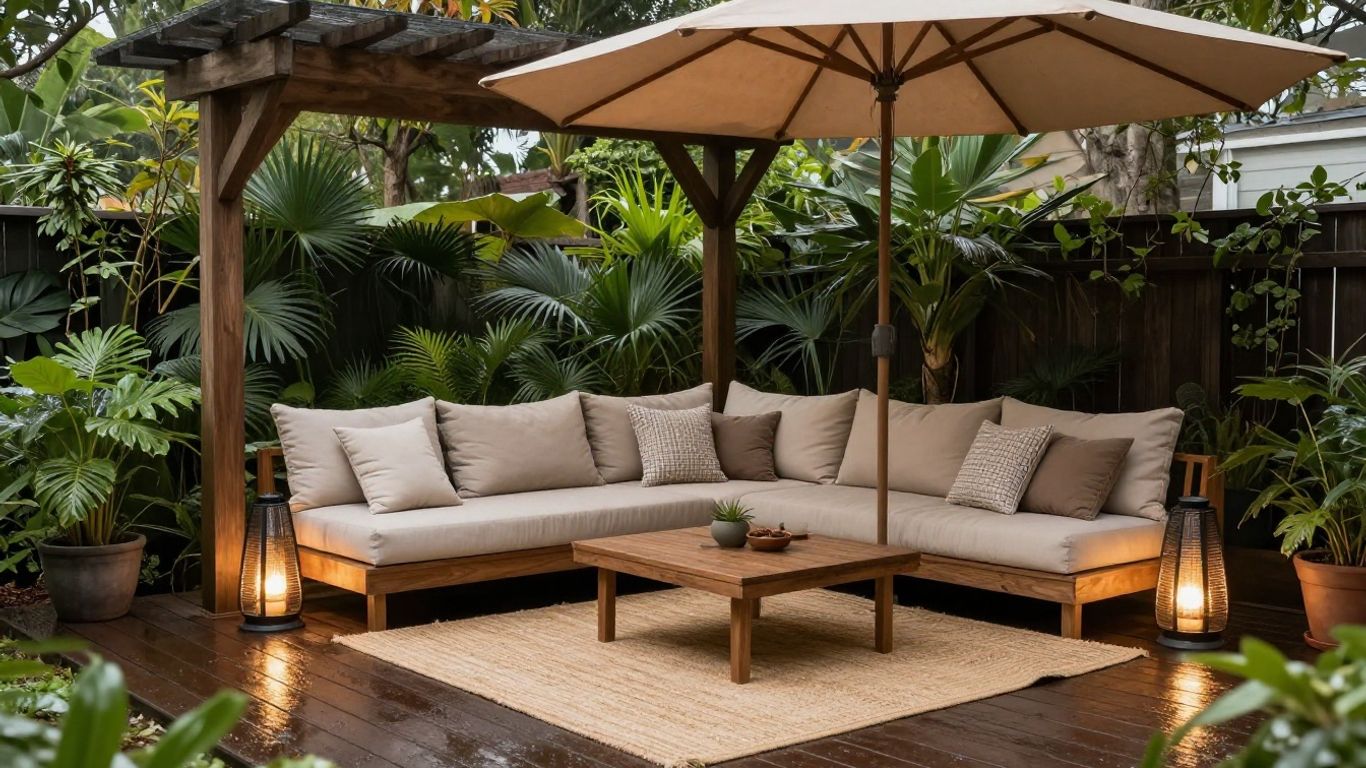
Outdoor upholstery should be selected for the conditions it will actually face. Solution-dyed or otherwise weather-resistant fabrics can help manage strong sunlight, while mould- and mildew-resistant options are useful in damp settings. Covers should fit securely without trapping moisture underneath, and cushions should be lifted or stood on edge when the weather turns wet. A fabric warranty can also be worth considering because it gives you clearer information about the maker’s expectations for performance.
Comparing quick-dry foam with standard outdoor cushions
Quick-dry foam is designed to let water move through the cushion more readily than conventional foam, which can shorten drying times after rain. Standard outdoor cushions may still be perfectly comfortable in a covered, well-ventilated position, but they generally need more active protection. Whichever option you choose, check the seat depth, firmness, removable covers, drainage, and replacement availability. Do not confuse a water-resistant cover with a cushion that can be left permanently saturated.
Using umbrellas, awnings, and shade structures
Shade is valuable for both comfort and furniture preservation. An umbrella offers flexibility and can be moved as the sun changes, while an awning or fixed structure provides more consistent coverage. Choose a base heavy enough for the location, and close the umbrella whenever you leave it unattended or conditions become gusty. Leave enough clearance for the canopy, nearby branches, doors, and the view from inside.
Adding outdoor lighting, rugs, and heating
Lighting can extend the useful hours of a patio without overwhelming it. Use warm, low-glare fixtures along paths and around dining or seating areas, keeping cables protected and dry. Outdoor rugs can define a zone, but they need a breathable backing and enough airflow to avoid trapping moisture against the deck. Heating should be positioned with generous clearance from fabrics, walls, and foliage, following the manufacturer’s instructions rather than improvising around a crowded setting.
Balance quality, style, and budget
A low price is not necessarily poor value, just as a high price is not automatic proof of quality. Compare the construction, finish, warranty, comfort, delivery, assembly, and care requirements together. If a set will be used every week, spending more on the parts that receive the most wear may be sensible. If it is occasional seating in a sheltered corner, a simpler choice could meet your needs.
Identifying construction details that signal quality
Look for even joins, stable frames, clean welds, smooth edges, and hardware that feels appropriate to the environment. On woven furniture, check that the pattern is consistent and firmly attached. On timber, inspect the grain direction, finish, and places where water might sit. Sit in every chair if possible, open and close moving parts, and listen for flexing or rattling that suggests the piece may not tolerate regular use.
Comparing entry-level, mid-range, and premium options
Entry-level furniture can suit a sheltered area or a short-term need, but it may have thinner frames, simpler finishes, or less resilient upholstery. Mid-range pieces often provide a useful balance of construction, comfort, and design. Premium furniture may justify its price through better materials, replaceable components, stronger warranties, or more refined proportions. The right tier depends on exposure and frequency of use, not on how impressive the label sounds.
A simple comparison can keep the decision grounded in practical priorities:
| Consideration | Entry-level | Mid-range | Premium |
|---|---|---|---|
| Frame and finish | Basic construction | More considered finish | Higher-spec materials or detailing |
| Cushion performance | Standard outdoor filling | Better resilience and covers | Advanced drainage or tailored upholstery |
| Design flexibility | Fewer configurations | Several useful formats | Custom or modular possibilities |
| Long-term value | Best for lighter use | Balanced everyday option | Suits intensive use and longevity goals |
After comparing the tiers, add delivery, assembly, covers, and likely replacement costs to the ticket price. That fuller figure often changes which option offers the best value for your space.
Deciding when custom-made furniture is worthwhile
Custom work can be worthwhile when a balcony, courtyard, or unusually shaped deck makes standard proportions awkward. It may also help when you need a particular seat height, configuration, fabric, or finish. Before committing, confirm lead times, care instructions, warranty coverage, and what happens if the piece does not fit as expected. For a straightforward rectangular patio, a well-chosen modular or standard set may deliver similar practicality with less complexity.
Avoiding common low-quality outdoor furniture problems
Watch for wobbly legs, thin or poorly protected metal, loose weaving, cushions that hold water, and covers that cannot be removed for cleaning. Very light furniture may be difficult to keep secure in an exposed spot, while dark surfaces can become uncomfortably hot in full sun. Be cautious of vague material descriptions and unclear warranty language. A careful inspection before purchase is much easier than trying to correct a poor fit later.
Maintain and store outdoor furniture year-round
Good maintenance is mostly about small, regular actions rather than difficult restoration projects. Sweep away grit, deal with spills promptly, and allow wet cushions to dry fully before stacking them. Inspect the furniture at the change of seasons, especially after storms and before periods of heavy use. These habits help you preserve comfort and finish while making problems easier to spot.
Cleaning different materials without causing damage
Begin with the gentlest method: remove loose dirt, use mild soap diluted in water, and rinse thoroughly unless the care instructions say otherwise. A soft brush can reach woven surfaces, while a cloth is safer for powder-coated frames and delicate finishes. Avoid aggressive pressure washing, harsh solvents, and abrasive pads unless the manufacturer specifically permits them. Always test a cleaning solution on a discreet area first.
Protecting wood with oils, stains, or sealants
Timber care depends on the species, finish, and appearance you want. Some owners prefer the silvery patina of naturally weathered wood, while others want to retain a warmer colour with an appropriate oil or stain. Clean and dry the surface before applying anything, and follow the product instructions for recoat timing. Sealants are not a substitute for sensible placement: standing water, poor airflow, and constant exposure will still shorten the life of timber.
Preventing rust, mildew, fading, and fabric damage
Rinse salt and grime from exposed frames, keep drainage paths open, and treat small chips or scratches before corrosion spreads. Keep fabric ventilated, avoid storing damp cushions in a sealed box, and rotate pieces if one side receives much more sun. Mould and mildew are easier to prevent than remove, so airflow matters as much as the cleaning product. Check zips, seams, and cushion edges because these often show wear first.
Storing or covering furniture during harsh weather
Use breathable, well-fitted covers rather than sealing wet furniture under plastic. Remove umbrellas, light accessories, and loose cushions before strong winds, and store them somewhere dry with room for air to circulate. If you have storage space, stack or fold only the pieces designed for it; forcing furniture into a tight pile can damage frames and fabric. Even a covered set benefits from occasional airing and cleaning during winter.
Conclusion
When you assess your local conditions, measure honestly, and compare materials with comfort and maintenance in mind, choosing outdoor furniture New Zealand becomes a much clearer process. Aim for pieces that suit the way you live, complement your home, and can be protected when the weather turns difficult. That balance is what makes an outdoor space enjoyable throughout the year.
Frequently Asked Questions
What is the most durable material for outdoor furniture in New Zealand?
There is no single best material for every location. Teak, suitable coated metals, synthetic wicker, recycled plastic, and composite materials can all perform well when their specifications, finish, placement, and maintenance match the local conditions.
How do you protect outdoor furniture from New Zealand’s strong sun?
Use shade where possible, choose UV-resistant fabrics and finishes, rotate cushions, and cover furniture when it is not being used. Good airflow and regular cleaning also help prevent sun-exposed materials from deteriorating prematurely.
Should outdoor furniture be covered in winter?
Covering can help during prolonged rain, frost, or periods when the furniture is unused. Choose breathable covers, let everything dry first, and remove the covers periodically so trapped moisture does not encourage mildew.
Is teak better than aluminium for coastal homes?
Both can be suitable, but they offer different benefits. Teak provides natural warmth and needs timber-specific care, while aluminium is lighter and depends heavily on the quality of its protective coating and hardware.
How much space should you leave around an outdoor dining table?
Leave enough room to pull chairs back and walk behind seated guests without blocking doors or paths. Marking the table and chair footprints on the floor before buying is a practical way to test circulation.
Are outdoor cushions waterproof?
Most outdoor cushions are water-resistant rather than completely waterproof. Their covers may shed light rain, but prolonged saturation can still reach the filling, so dry cushions fully and store them during extended wet weather.
How often should outdoor furniture be cleaned?
Lightly clean furniture whenever dirt, leaves, or spills accumulate, then do a more thorough inspection and wash at seasonal changes. Coastal homes and damp areas may need more frequent rinsing and attention to drainage and mildew.