

Outdoor furniture Auckland: An expert guide to choosing the right setup for your home
Key Takeaways
Auckland’s weather rewards outdoor furniture that is chosen for its setting, not just its appearance. Start with the conditions around your home, then match materials, layout, comfort, and maintenance to the way you actually live.
- Choose frames, fabrics, and cushions that suit rain, humidity, salt air, UV exposure, and wind.
- Measure carefully so dining, lounging, shade, and movement all work together.
- Inspect construction and comfort in person where possible, not just in photographs.
- Include covers, cleaning, repairs, storage, delivery, and warranty support in your budget.
- Buy from a retailer that can explain materials, availability, assembly, and after-sales service.
Understand Auckland’s outdoor conditions
Auckland’s outdoor areas can be exposed to several kinds of wear at once. Rain and humidity slow drying, coastal air can leave salt deposits, and bright sun gradually affects finishes and fabrics. Before you choose a style, think about where the furniture will sit and how much protection that position provides.
Account for rain, humidity, and drying time
Rain is only part of the problem; furniture that stays damp for long periods can become unpleasant to use and harder to maintain. Look for sensible drainage, breathable covers, and cushions that can dry efficiently. Quick-dry foam and free-draining cushions are useful features where outdoor seating is exposed to regular showers, but you should still give wet pieces airflow rather than trapping them under a cover.
Protect furniture from coastal salt air
If your home is near the harbour or coast, salt can settle on frames, fittings, glass, and fabric. A regular rinse with fresh water helps remove residue before it builds up, while rust-resistant or corrosion-resistant frame materials reduce the risk of premature deterioration. Do not assume a sheltered-looking balcony is fully protected; wind can carry salty moisture well beyond the shoreline.
Plan for UV exposure and strong winds
Sun can fade textiles and heat dark surfaces, while strong gusts can move umbrellas, lightweight chairs, and loose accessories. Position furniture where possible to take advantage of existing shade, and secure pieces that could become unstable. Design Concepts describes collections made for New Zealand conditions, including UV-resistant fabrics and rust-resistant frames, so those specifications are worth checking when comparing options.
Assess the conditions of your specific outdoor area
Walk through the space at different times of day before buying. Note where rain lands, how quickly water drains, whether nearby walls reflect heat, and which direction prevailing winds approach from. A covered courtyard may allow more flexibility than an exposed deck, while a shaded balcony may need greater attention to humidity and airflow than to direct sun.
Choose materials that suit your lifestyle
There is no single best outdoor material for every Auckland home. Aluminium, steel, teak, hardwoods, synthetic wicker, and outdoor plastics each bring different balances of weight, warmth, upkeep, and longevity. The right choice depends on whether you want to move furniture often, leave it outdoors year-round, or spend a little time maintaining a natural finish.
Compare powder-coated aluminium and steel
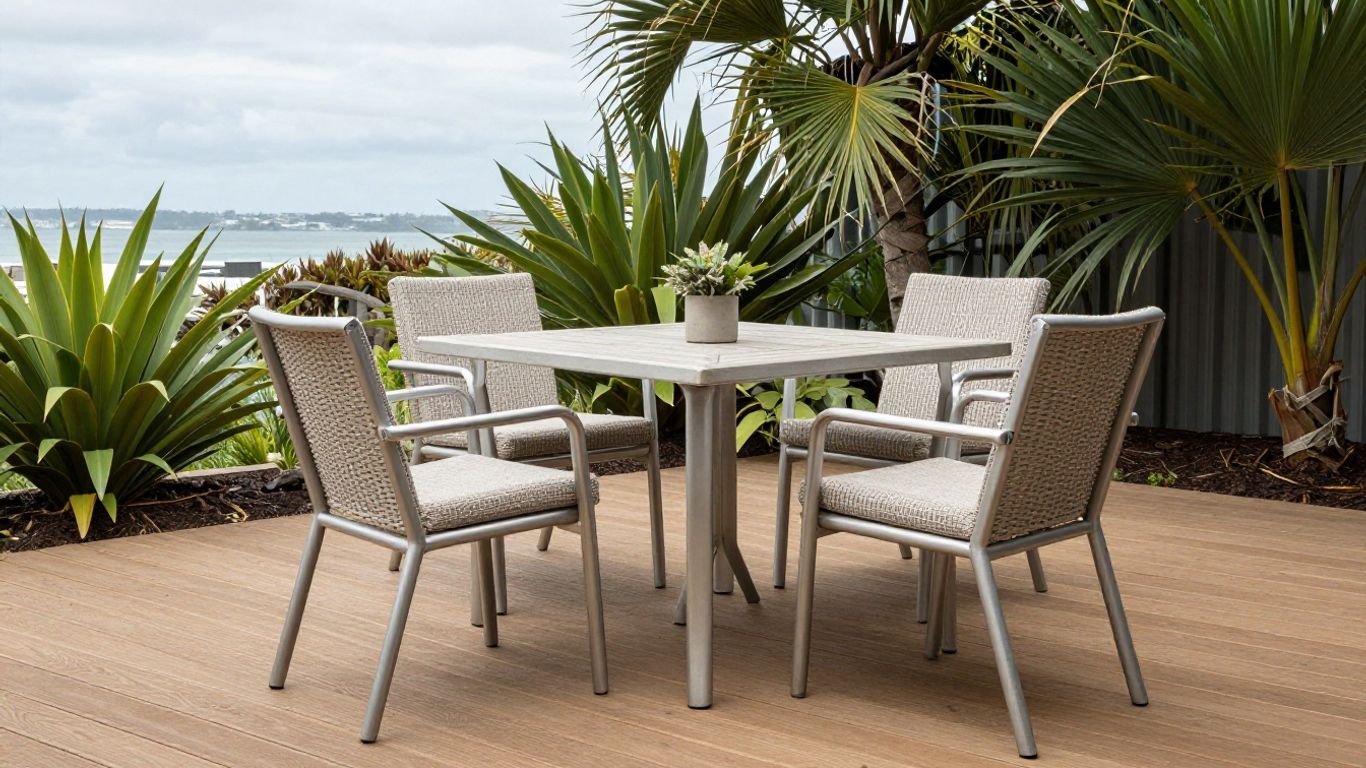
Powder-coated aluminium is light, practical, and generally easy to move around a deck or patio. Steel can feel heavier and substantial, but its finish and protection against corrosion deserve close inspection, particularly in damp or coastal positions. Ask what treatment has been used, inspect the coating for chips, and check how exposed fasteners and joints are protected.
Consider teak and other hardwood options
Teak brings a warm, natural appearance and can suit both relaxed and formal settings. It will weather over time if left untreated, developing a silvery tone, while regular cleaning and suitable oiling can help you retain a richer colour. Other hardwoods may also work well, but confirm that the timber is intended for outdoor use and ask how it should be maintained in Auckland’s climate.
Evaluate synthetic wicker and outdoor plastics
Synthetic wicker can create a softer, more woven look without the same moisture sensitivity as untreated natural fibres. Outdoor plastics are often light and simple to clean, making them useful for casual seating or homes where furniture needs to be rearranged. In either case, inspect the weave, edges, and underside, since thin or poorly finished components may show wear before the main frame does.
Match material durability with maintenance preferences
Be honest about the care you will provide. If you prefer a quick rinse and occasional clean, powder-coated frames and easy-care outdoor fabrics may be more suitable than a finish that needs regular oiling. If you enjoy the gradual character of timber, a little planned maintenance can be part of the appeal. A table like this can help narrow the choice before you visit a showroom:
| Material | Strengths | Points to check | Typical care |
|---|---|---|---|
| Aluminium | Lightweight and easy to move | Coating, joints, and frame thickness | Wash and inspect regularly |
| Steel | Heavy, stable, and substantial | Corrosion protection and chips | Keep clean and repair exposed areas |
| Teak | Warm natural appearance | Timber grade and finish | Clean; oil if you want to retain colour |
| Synthetic wicker | Woven appearance and low fuss | Weave quality and UV stability | Brush, wash, and dry thoroughly |
This comparison is a starting point rather than a substitute for checking the exact product. Design Concepts describes its range as using materials such as marine-grade aluminium and sustainable teak, which may be useful reference points when you are comparing construction details rather than shopping by colour alone.
Plan furniture around your space and how you use it
A good outdoor arrangement should feel natural on an ordinary day, not only when guests arrive. Start with the activities you want to support: eating, reading, resting, working, or entertaining. Then let the dimensions of the space guide the number and scale of pieces you bring into it.
Choose between dining and lounging furniture
Dining furniture suits meals, games, and work that needs a stable surface, while lounge furniture encourages longer, lower, more relaxed use. If you mainly eat outdoors, prioritise a comfortable table height and chairs that let you sit upright. If your space is for morning coffee and afternoon relaxation, a sofa, occasional table, and flexible chair may be more useful than a large dining setting.
Create a practical layout for balconies and small patios
On a balcony, every centimetre has a job. A compact round table can soften circulation, while a bench may seat more people without adding several chair backs. Measure the door swing, railing position, storage points, and planter locations before ordering; a beautiful setting that blocks the only access route will quickly become frustrating.
Design larger areas for entertaining
A generous deck can support separate dining and lounging zones without feeling cluttered. Use a dining table as the anchor for meals, then place sofas or armchairs nearby so conversation can continue after dinner. Design Concepts publishes guidance on using outdoor furniture to create distinct zones, a useful way to think about a large area as several connected rooms rather than one empty rectangle.
Allow enough room for movement and access
Leave space to pull out chairs, walk behind seated guests, open doors, and reach storage. Remember that cushions and people take up more room than the furniture footprint suggests. Before delivery, mark the proposed dimensions with tape or cardboard for a day; this simple test often reveals tight corners that a floor plan misses.
Build a comfortable and cohesive outdoor setting
Once the practical pieces are selected, comfort and visual rhythm bring the setting together. You do not need every item to match exactly. Repeating one material, shape, or colour across seating, tables, textiles, and shade can make a mixed collection feel deliberate.
Combine seating styles for flexibility
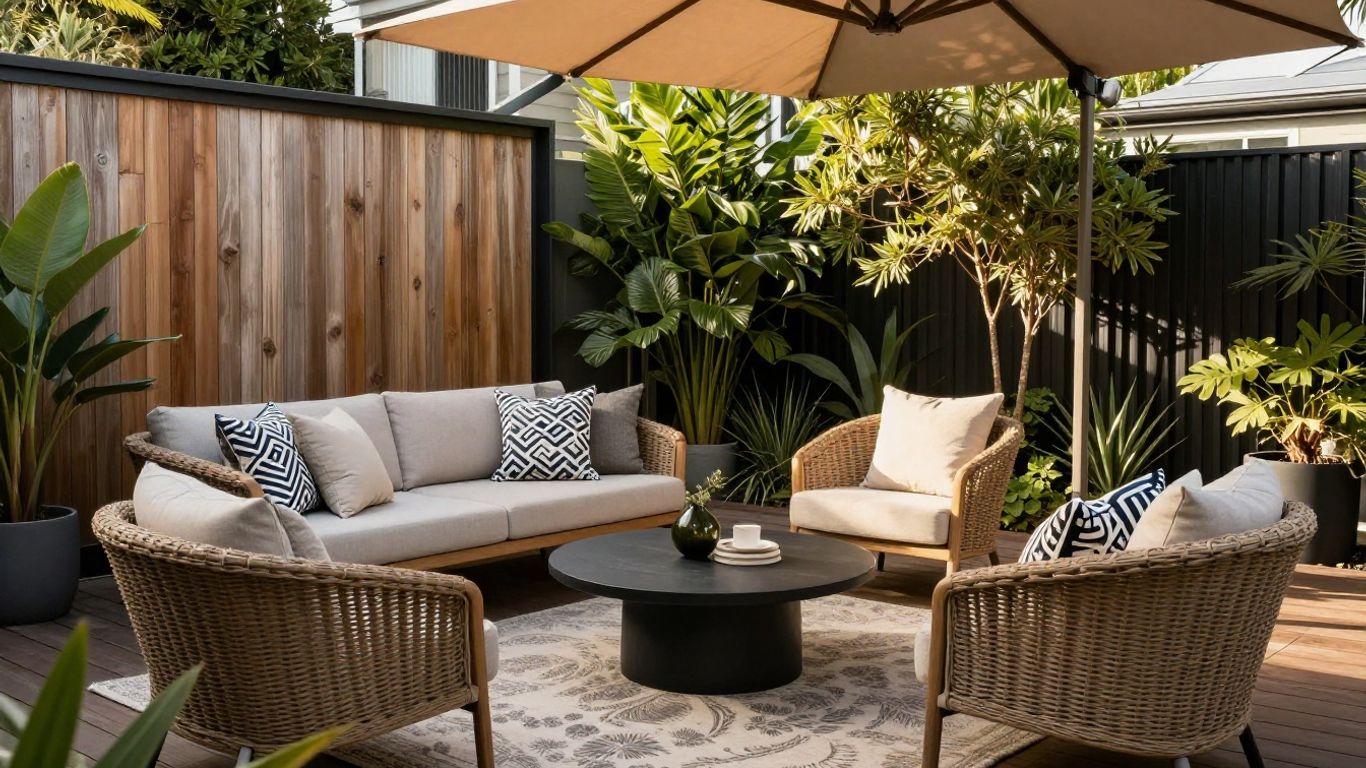
A sofa creates a strong lounging base, but occasional chairs, benches, and stools make the arrangement easier to adapt. A bench can serve a family meal or provide extra seating during a gathering, while a stool can become a footrest or side table. Think about how many people you host most often, then add flexibility rather than filling every available space.
Select the right table size and shape
Round tables encourage conversation and work well where circulation is tight. Rectangular tables offer more serving space and can align neatly with a long deck or outdoor room. For a useful reference when planning meals, aluminium outdoor dining tables are available in round and rectangular formats, with options described as suitable for smaller gatherings and larger entertaining.
Add shade, privacy, and wind protection
Shade affects comfort, fabric life, and how long you can use the area during the day. An umbrella, pergola, screen, or carefully placed planting can also make a large space feel more intimate. Wind protection should not create a damp pocket, though, so preserve enough airflow for cushions and frames to dry after rain.
Coordinate cushions, rugs, and outdoor accessories
Accessories should add comfort without creating a collection of objects that must be moved every time the weather changes. Choose a small palette, repeat one accent colour, and use outdoor-rated fabrics and rugs. Design Concepts’ outdoor accessories range includes cushions, garden pots, side tables, and outdoor lighting, so you can build the finishing layer gradually rather than buying everything at once.
Evaluate quality, comfort, and long-term value
A photograph can show a silhouette, but it cannot tell you whether a frame flexes, a chair feels supportive, or a cushion dries well. If you can visit a showroom, sit down and examine the details at close range. If you are buying online, read the specifications carefully and ask direct questions before committing.
Inspect frames, joints, and finishes
Look underneath tables and chairs as well as at the visible surfaces. Welds should look even, joints should feel secure, and moving parts should operate without excessive play. Check whether feet are stable on your surface and whether the finish has consistent coverage around corners, edges, and connection points.
Test seat depth, height, and cushion support
Comfort is personal, so test a seat in the way you will actually use it. Your feet should rest comfortably, your knees should not be forced upward, and the back support should suit the posture you prefer. Comfort deserves a proper test because a chair can look generous while feeling too low, too deep, or insufficiently supported.
Compare warranties and expected lifespan
A warranty is useful only when you understand what it covers, for how long, and under which care conditions. Ask whether the frame, finish, fabric, foam, and moving components have separate terms. For a broader buying reference, this modern outdoor furniture guide covers material choices, weather resistance, comfort, and longevity for New Zealand conditions.
Calculate the total cost beyond the purchase price
Include delivery, assembly, covers, replacement cushions, cleaning products, and possible storage. A cheaper piece may cost more if it needs frequent refinishing or replacement, while a higher-quality setting may offer better value when it remains comfortable and attractive for longer. Price-match promises or interest-free payment options can affect the purchase decision, but they should not replace checking construction and care requirements.
Know what to look for when buying in Auckland
Shopping locally gives you a chance to test scale, colour, and comfort against real samples. Online shopping can offer broader access and convenient comparison, but measurements and specifications become even more important. Whichever route you take, a confident purchase comes from clear answers rather than pressure to buy quickly.
Compare local showrooms with online retailers
A showroom helps you judge seat firmness, frame weight, fabric texture, and the relationship between table and chair height. Online, look for complete dimensions, material descriptions, care instructions, warranty information, and photographs from several angles. You can browse Auckland outdoor furniture for collections described as suited to coastal salt spray and urban humidity, then use those criteria when comparing any shortlisted setting.
Check delivery access and assembly services
Measure gates, stairways, lifts, hallways, and the distance from the unloading point to the outdoor area. Ask whether delivery includes room placement, packaging removal, and assembly, and whether large modular pieces arrive separately. These details matter particularly on apartment balconies and properties with narrow access.
Confirm stock availability and custom-order timelines
A setting shown online may be available immediately, held at another location, or made to order. Confirm the status of every component, including cushions, covers, and replacement parts, before you plan around a delivery date. If you are coordinating furniture with building work or a summer gathering, leave room for delays rather than scheduling everything tightly.
Review returns, repairs, and after-sales support
Read the returns policy before purchase and clarify how faults are assessed. Ask who handles repairs, whether spare covers or fittings can be ordered, and what care records you should keep. Good after-sales support is especially valuable for outdoor furniture because normal exposure, accidental damage, and manufacturing faults are treated differently.
Maintain and protect your outdoor furniture
Even well-made furniture benefits from simple, consistent care. Maintenance is less about polishing everything constantly and more about removing dirt, helping wet materials dry, and dealing with small problems before they spread. Your routine should reflect how exposed the furniture is and how often you use it.
Establish a regular cleaning routine
Brush away leaves and grit before they become embedded, then wash suitable surfaces with mild soap and clean water. Follow the care instructions for timber, coated metal, glass, and fabric, since an overly strong cleaner can damage a finish. Clean more frequently near the coast or under trees, where salt, pollen, and organic debris accumulate quickly.
Use covers and storage strategically
Covers are helpful during extended periods of poor weather, but they should fit properly and allow ventilation. Covering damp cushions can trap moisture, so dry them first and remove covers periodically on humid days. Store small cushions and accessories indoors when practical, while keeping heavier frames positioned safely rather than dragging them across the floor.
Repair scratches, stains, and loose fittings
Deal with scratches promptly, especially on metal surfaces where exposed areas may become vulnerable. Tighten loose fasteners carefully, replace damaged feet, and treat stains according to the fabric or material instructions. If a problem affects the frame or a structural joint, stop using the piece until the retailer or a qualified repairer has assessed it.
Prepare furniture for winter and severe weather
Before a major storm, secure or move umbrellas, lightweight chairs, cushions, and decorative items. Check drains and storage areas so water does not collect around furniture, and allow wet pieces to dry fully after the weather clears. A short seasonal inspection of frames, fittings, covers, and fabric seams can prevent a small repair from becoming an expensive replacement.
Conclusion
The best outdoor furniture Auckland setup is one that fits your space, reflects your everyday habits, and is prepared for the city’s rain, salt, sun, and wind. Choose materials with care, test comfort, plan movement, and treat maintenance and support as part of the purchase rather than an afterthought. With that approach, your deck, patio, or balcony can feel like a genuine extension of your home.
Frequently Asked Questions
What is the best material for outdoor furniture in Auckland?
The best material depends on exposure and maintenance preferences. Powder-coated aluminium, well-protected steel, teak, hardwood, synthetic wicker, and outdoor plastics can all suit different settings when their finishes and care requirements match the conditions.
Should outdoor furniture be covered all year?
Not necessarily. Covers can protect furniture during prolonged rain or periods of non-use, but they should fit correctly and allow ventilation. Never cover wet cushions or trap moisture against a frame.
How much space should you leave around outdoor dining furniture?
Leave enough room to pull chairs out and walk behind seated guests. Marking the furniture footprint and the chair positions with tape before buying gives you a more realistic sense of clearance than the table dimensions alone.
Is teak suitable for an Auckland deck?
Teak can be suitable when it is intended for outdoor use and maintained according to the manufacturer’s guidance. It can weather naturally to a silvery tone, or you can use appropriate care to retain more of its original colour.
How can you protect outdoor cushions from Auckland weather?
Choose outdoor-rated fabrics and cushioning, provide shade where possible, and let cushions dry thoroughly after rain. Store smaller cushions during extended wet weather and clean spills promptly according to the care instructions.
Is it better to buy outdoor furniture online or in a showroom?
A showroom lets you test comfort, finish, scale, and construction. Online shopping can be convenient, but you should confirm dimensions, materials, care instructions, delivery access, warranty terms, and stock status before ordering.
How often should outdoor furniture be cleaned?
Clean it when dirt, salt, leaves, or stains appear, with more frequent attention in exposed coastal or damp locations. A light regular clean is usually easier on finishes than allowing grime and organic debris to build up.