

Outdoor furniture delivery New Zealand: a complete guide to ordering with confidence
Key Takeaways
A little planning before you order can make delivery day simpler and help you avoid surprises.
- Confirm delivery coverage, service level, and any extra charges for your address.
- Compare the full cost and ask how estimates, tracking, and delays are handled.
- Measure the route and arrange any building access before delivery day.
- Check what assembly, placement, and packaging removal services are included.
- Inspect the order promptly, document any issues, and follow care instructions.
Check delivery coverage across New Zealand
Delivery arrangements can vary between a town address, a rural property, and an island location. Before you place an order, confirm that the retailer can serve your exact address and explain what the service includes. This delivery planning guide is a useful companion when you are weighing up coverage, costs, timing, and access.
Confirm service to your town, rural address, or island
A delivery option shown at checkout may not cover every location in the same way. Enter your full address or contact the retailer to confirm whether the carrier delivers there, especially if you live outside a main center or need service to an island. Design Concepts offers nationwide delivery for outdoor furniture, but it is still sensible to confirm the arrangements for your particular address before ordering.
Ask whether delivery is to the door, driveway, or curbside
The word “delivery” can describe different levels of service. Ask where the driver will leave the furniture, whether they will carry it beyond the driveway, and whether the delivery team can take it to a deck or patio. A clear answer helps you decide whether you need another person to help move the boxes once they arrive.
Check for regional surcharges and remote-area restrictions
A delivery charge may depend on your location, the size of the furniture, or the carrier’s route. Request the total cost for your address rather than relying only on a general estimate, and ask whether access limitations could affect the quote. For more context on preparing for a delivery, use this outdoor delivery guide alongside the retailer’s own terms.
Find out whether the carrier delivers to apartment buildings
Apartment deliveries can involve building rules that do not apply to a house. Ask whether the carrier can reach your unit, if the service stops at the lobby, and whether a lift or loading bay must be booked. If the building has delivery hours or a required access code, share those details early so the driver is not left waiting.
Compare delivery costs and time frames
The price of the furniture is only one part of the order total. Freight charges, access requirements, and optional services can affect what you pay and when the furniture arrives. Compare the details in writing so you can weigh a lower-cost option against a delivery window that better suits your plans.
Check whether shipping is included in the furniture price
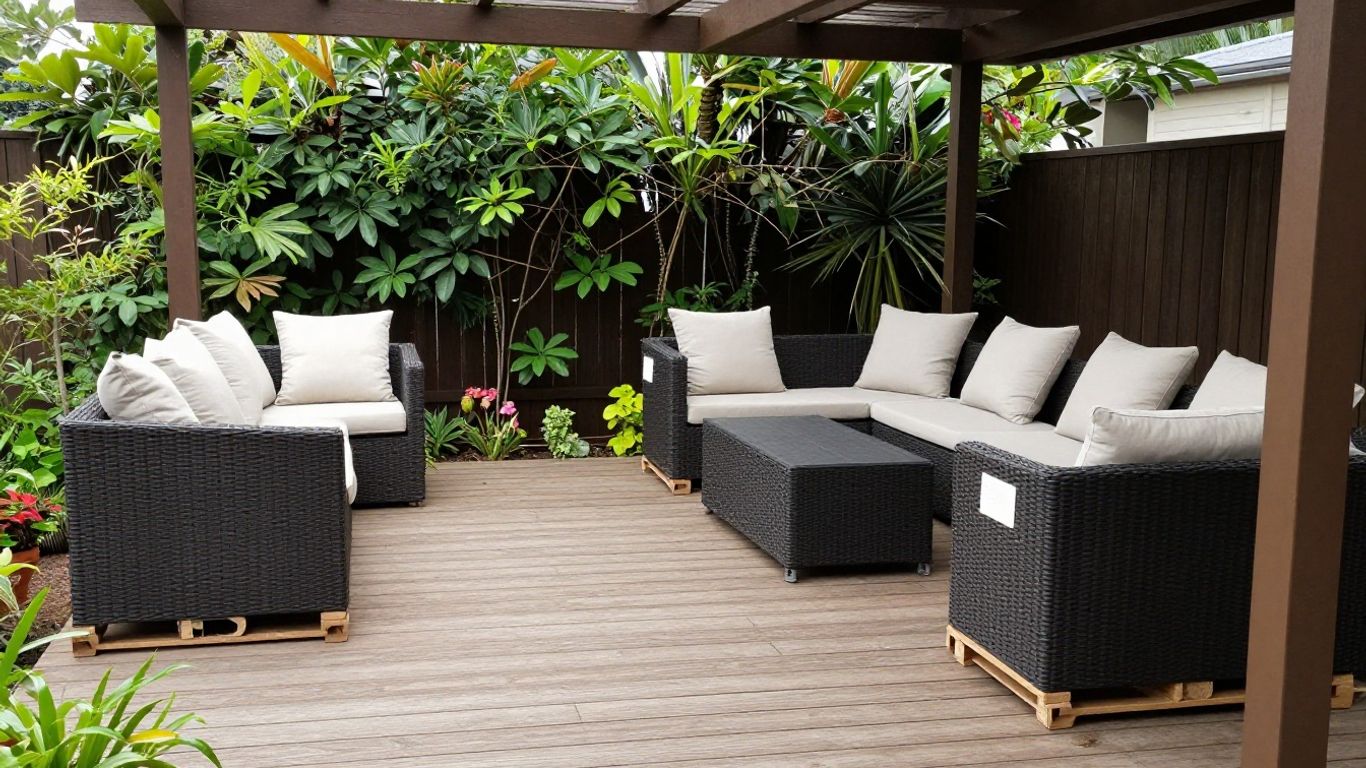
Look for a separate delivery charge before you commit, and check whether it changes when you enter your postcode. Design Concepts offers nationwide delivery for outdoor furniture; confirm the delivery cost and expected timing for your exact address before completing an order. That way, you can compare the full amount rather than treating an advertised furniture price as the final total.
Ask about delivery estimates, dispatch dates, and tracking
An estimated arrival window is not always the same as a confirmed dispatch date. Ask when the order is expected to leave the warehouse, whether the carrier will provide tracking, and how you will be contacted to arrange delivery. These details make it easier to plan around work, building access, or a property that is not occupied every day.
Compare standard, express, and scheduled delivery options
Different service labels can mean different things from one retailer to another, so check the actual terms rather than assuming a name guarantees a particular arrival time. A simple comparison can help you ask focused questions before choosing:
| Option to compare | What to confirm | Useful when |
|---|---|---|
| Standard | Estimated window and tracking method | Your schedule has some flexibility |
| Express | Availability for your address and any added fee | You need the order sooner |
| Scheduled | Whether you can select or request a delivery day | You need to coordinate access or help |
Once you have the answers, compare both the extra cost and the certainty the service provides. A specific date may be useful for access planning, while a broader window may work well if you can be flexible.
Confirm what happens if an item is delayed or unavailable
Ask how the retailer will notify you if an item is held up, and whether the rest of the order can arrive separately. Check what happens if a product is unavailable after purchase and whether you can change or cancel the order under the terms. Having the process clear before checkout makes a delay easier to manage.
Prepare your home and access route
A delivery can go smoothly at the curb and still run into trouble at the last doorway. Check the route from the vehicle to the spot where you want the furniture, including turns, steps, gates, and changes in level. Give the retailer accurate measurements and mention anything that could affect the carrier’s access.
Measure doorways, hallways, stairs, and outdoor entry points
Use the packaged dimensions where available, not only the assembled furniture measurements. Measure narrow doorways, hallway turns, stair landings, gates, and the path onto your deck or patio; then compare those figures with the largest box. A few practical checks before ordering can prevent a bulky item from becoming difficult to move on the day:
- Measure the narrowest point along the full route.
- Check ceiling height and turning space on stairs.
- Note steps, raised thresholds, and tight outdoor gates.
- Allow room to maneuver a box around corners.
If any point is close, ask the retailer whether the item can be delivered in separate packages or whether the carrier has specific size limits. Small differences in the route can matter when a large carton needs to be turned or tilted.
Check vehicle access, parking, and delivery-day restrictions
Think about where a delivery vehicle can stop and how far the driver may need to carry the order. Narrow roads, shared driveways, steep approaches, or limited parking can change what is practical. Tell the retailer about these conditions and check for local restrictions, such as a loading zone that is only available at certain times.
Arrange building access or body corporate approval in advance
If you live in a managed building, check its delivery rules before you book. You may need to reserve a lift, protect shared floors, use a service entrance, or provide advance notice to the building manager. Confirming those requirements ahead of time gives the carrier clear instructions and reduces the chance of a missed or rescheduled delivery.
Plan for large items that may arrive on pallets or in oversized boxes
Large outdoor settings can take up more space in transit than their finished footprint suggests. Ask how the furniture will be packaged, whether it may arrive on a pallet, and whether someone needs to be present to receive it. Make room for temporary storage if you cannot assemble or place every piece straight away, and keep the route clear until the order is inside.
Choose delivery and assembly services
The level of help you need depends on how the furniture is packed, where it needs to go, and whether you are comfortable assembling it yourself. Check the service details before you pay, because delivery, placement, assembly, and removal of packaging may be treated as separate services. A few direct questions will help you choose an option that suits both your space and your time.

Check whether the furniture arrives flat-packed or assembled
Ask whether each item arrives ready to use or needs assembly, and whether the order includes more than one package. Product information may describe the furniture itself without spelling out how it will be packed for transport. Knowing what to expect helps you plan storage space, tools, and time before the delivery arrives.
Compare self-assembly with a paid assembly service
Self-assembly may suit you if the instructions are clear and you have the right tools, while a paid service can be useful when the item is large or the setup is more involved. Confirm what the assembly charge covers, whether the service is available at your address, and if it must be booked when you order. Also check that the furniture can reach its final position before assembly begins.
Ask whether packaging removal is included
Cardboard, protective wrap, and other packing materials can quickly fill a small outdoor space. Ask whether packaging is taken away as part of the service or left for you to dispose of, and whether the answer changes if you pay for assembly. If you will be handling the cleanup, keep recycling and rubbish arrangements in mind before delivery day.
Confirm if the delivery team can place items in your preferred outdoor area
A delivery to the premises may not include carrying furniture to a particular deck, balcony, or garden corner. Describe the route and final location, then ask whether placement is included and whether there are restrictions on stairs or distance from the vehicle. This is especially useful when you are buying a large table or several pieces that would be awkward to reposition later.
Protect your order during transport
Outdoor furniture may travel through several handling stages before it reaches your home. Packaging should protect the order from knocks and exposure, but you can still ask how the retailer prepares bulky or delicate pieces for transit. Keep expectations practical: packaging helps reduce risk, but it is worth knowing how to respond if something arrives damaged.
Review the retailer’s packaging and weather-protection approach
Ask whether the furniture is wrapped or boxed and how the order is protected if it is waiting outside during a delivery. Consider where it can be placed if you are not home, and whether you can provide a covered drop-off location. Once you understand the plan, make sure your delivery instructions identify any sheltered area that is accessible to the driver.
Ask how fragile materials, such as glass or ceramic, are handled
If your order includes a glass tabletop or ceramic component, ask whether it is packed separately and how the carrier is asked to handle it. Confirm whether the pieces arrive in the same shipment as the rest of the furniture, since separate boxes may need separate checks. Knowing which parts are especially delicate helps you inspect them carefully on arrival.
Check the process for reporting transit damage
Before delivery, find out whom to contact and what information the retailer needs if an item is damaged. Ask whether you should note visible damage with the driver, keep the original packaging, or submit photographs through a particular channel. Following the stated process promptly can make it easier to explain what happened and what part of the order is affected.
Keep order details and delivery records until you have inspected everything
Save your order confirmation, delivery messages, and any notes from the carrier until the furniture and all components have been checked. A short video can also help you understand how a delivery-related walkthrough is approached; use it as general preparation, not a substitute for your retailer’s terms.
Keep those records in one place so you can refer to the order details if you need to contact the retailer. It is much easier to describe a missing component when you have the product and package information to hand.
Inspect and care for furniture after delivery
Take a little time to check the order before disposing of its packaging or putting it into regular use. Compare the delivered items with your order confirmation and look over visible surfaces, fittings, and accessories. Prompt inspection gives you a clear record of what arrived and helps you raise any concern while the delivery details are still easy to find.
Check each item and its components as soon as possible
Open each package carefully and compare its contents with the product information or parts list. Look for scratches, dents, cracked surfaces, loose fittings, or components that appear to be missing. Check the full order even if the outer packaging looks intact, since a box can conceal a problem.
Photograph damage or missing parts before contacting the retailer
Take clear photographs of the item, the affected area, and the packaging before moving or assembling it. Keep the images with your order number and a short description of what is missing or damaged. A concise record helps the retailer understand the issue without requiring you to rely on memory alone.
Follow setup instructions before using the furniture
Assemble the furniture in the order shown in the instructions and use the supplied fittings where specified. Check that pieces are stable and that any adjustable parts are secured before anyone sits or places weight on them. If instructions are missing or a component does not fit, pause and contact the retailer rather than forcing it into place.
Store cushions and apply material-specific care for New Zealand conditions
Follow the care guidance for the particular frame, finish, and fabric, and consider your own exposure to sun, wind, rain, and coastal air. Some Design Concepts outdoor sofas feature Sunbrella fabrics, Urecel Quick-Dry foam, and marine-grade frames; care still depends on the instructions for the specific product. Store cushions when they are not in use if recommended, and clean or protect materials according to their stated care requirements.
Conclusion
Confident outdoor furniture delivery starts with clear answers about coverage, cost, timing, access, and the services included. Measure the route, prepare your delivery instructions, and inspect each item as soon as it arrives. With those details settled, you can spend less time resolving logistics and more time enjoying your outdoor space.
Frequently Asked Questions
How do I check whether outdoor furniture can be delivered to my address?
Enter your full address at checkout or contact the retailer directly, especially if you live rurally, on an island, or outside a main center. Ask whether any location-specific limits or extra charges apply.
What should I ask about the delivery cost?
Ask for the total charge to your exact address and confirm whether it includes carrying the furniture beyond the driveway, assembly, or packaging removal. Compare the full cost rather than just the listed furniture price.
How can I prepare for a large furniture delivery?
Measure the full route from the vehicle to the intended spot, including doorways, turns, stairs, and outdoor gates. Clear the path and arrange parking or building access ahead of time.
Does delivery usually include placement and assembly?
Not necessarily. Retailers may treat delivery, placement, assembly, and packaging removal as separate services, so confirm what is included before you place the order.
What should I do if furniture arrives damaged?
Photograph the damage and packaging, keep your order details, and contact the retailer promptly using its stated reporting process. Avoid discarding packaging until you know whether it may be needed.
Should I inspect furniture before assembling it?
Yes. Check each item and its components against the order and parts list before assembly, and document any damage or missing pieces. This makes it easier to identify an issue before the furniture is in use.
How should I care for outdoor cushions after delivery?
Follow the care instructions for the specific fabric and filling. Store cushions when recommended, and consider the sun, rain, wind, and coastal conditions where you live.