

Outdoor furniture delivery New Zealand: A complete guide to costs, timing, and choosing the right service
Key Takeaways
A smooth outdoor furniture delivery New Zealand experience starts well before the courier arrives. Check the total cost, confirm access, and choose pieces that suit both your space and the local weather.
- Confirm delivery zones, rural fees, and minimum order values before paying.
- Compare the complete delivered price, including oversized-item and assembly charges.
- Measure every access point, not just the final patio or deck.
- Allow extra time during summer, sales, and holiday periods.
- Photograph packaging and furniture immediately if anything arrives damaged.
Understanding outdoor furniture delivery across New Zealand
New Zealand’s geography makes delivery availability highly dependent on your address. A retailer may offer nationwide delivery but use different transport partners, timeframes, and service levels between major cities, provincial centres, and rural properties. Before you order, enter your full address and ask what “delivery” includes. This delivery planning guide is also useful when you are comparing zones, service options, access requirements, and packaging.
How delivery zones affect availability
Retailers commonly divide addresses into metropolitan, regional, rural, and remote zones. Your postcode may determine whether a standard online delivery price applies or whether the retailer needs to provide a custom quote. Availability can also vary for very large items, so check the product page rather than assuming every piece in a collection travels under the same terms.
Urban, regional, and rural delivery differences
Urban deliveries often have more frequent transport routes and easier access for larger vehicles. Regional and rural deliveries may take longer, involve transfers between carriers, or require collection from a depot if the final road is difficult to reach. Share useful details such as narrow bridges, gravel roads, steep driveways, apartment restrictions, or limited turning space before dispatch.
What furniture retailers typically deliver
Most retailers arrange transport for outdoor sofas, dining sets, tables, chairs, loungers, umbrellas, and related accessories. The service may be kerbside or property delivery rather than room placement, and assembly is often separate. Read the delivery wording carefully so you know whether the driver will carry items beyond the driveway or remove packaging.
When store pickup may be the better option
Pickup can make sense when your address attracts a substantial rural surcharge, when you already have a suitable trailer, or when you need the furniture on a particular day. It is less convenient for a large modular sofa or heavy dining table, and you must still protect the pieces during transport. If you choose pickup, confirm the packed dimensions and the retailer’s loading requirements first.
Comparing outdoor furniture delivery costs
The advertised furniture price is only one part of the purchase. Freight can depend on cubic volume, total weight, the number of cartons, delivery distance, and whether the address is rural. For practical context, this delivery cost guide explains why product volume and location can change the final freight estimate.
Standard delivery fees and minimum order values
Some retailers use a flat fee for smaller parcels, while others calculate freight at checkout or set a minimum order value for delivery. A low-cost accessory may therefore have a relatively high delivery charge, whereas combining it with a larger order could be more economical. Ask whether the quoted fee includes GST, residential delivery, and any booking or handling charge.
Oversized-item and multi-piece delivery charges
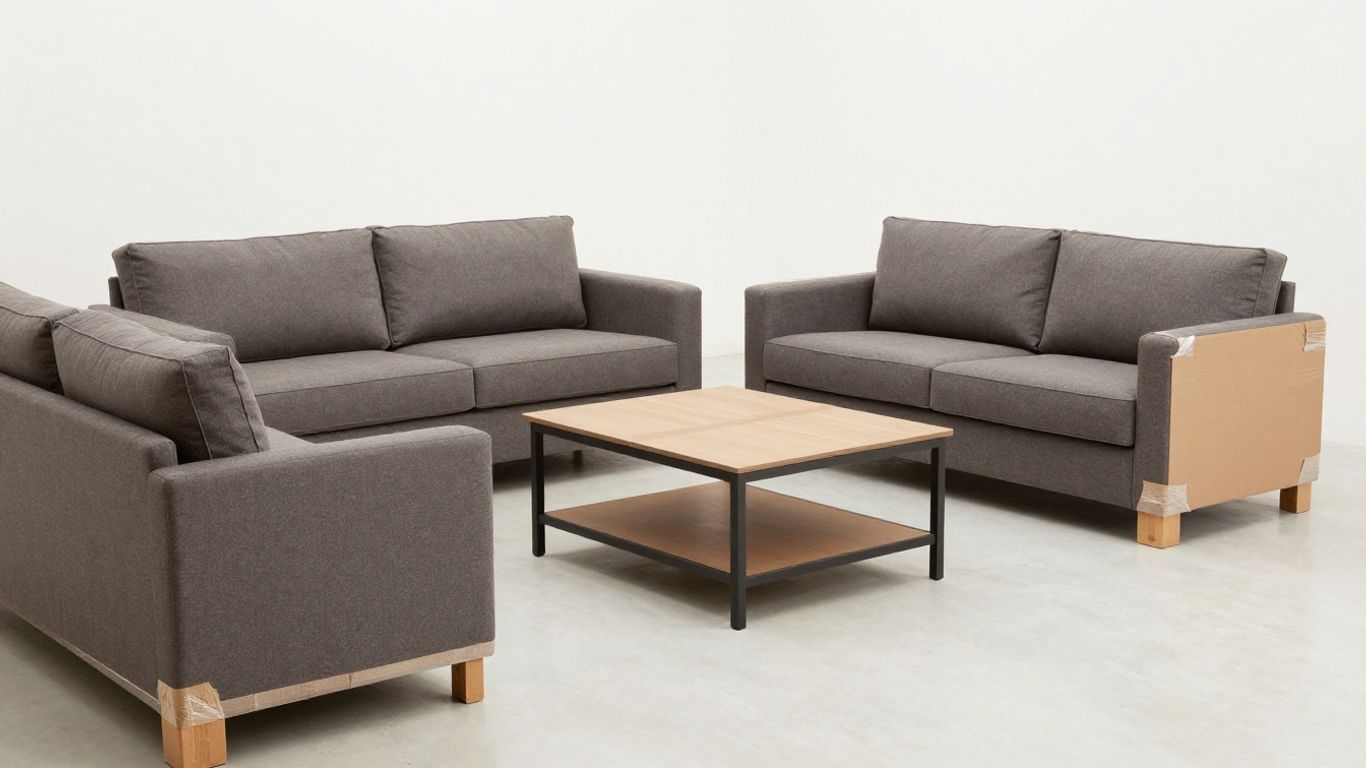
A lounge suite may arrive in several cartons, even when it is sold as one set. Oversized pieces can require two-person handling, tail-lift equipment, or a special freight service. Check whether the price applies to the complete set or only to one carton, and whether combining multiple items changes the rate.
Rural surcharges and remote-area fees
Rural delivery can involve an additional fee because the carrier travels farther or uses a separate route. Some addresses classified as rural may still be close to a town, but the classification is usually based on the freight network rather than driving distance alone. Get written confirmation for your exact address before you compare offers.
How to estimate the total delivered price
A simple estimate should include the furniture, freight, rural or remote-area surcharge, assembly, placement, and any old-furniture removal you arrange separately. Use a small comparison table so the options are judged on the same basis rather than on the headline price alone.
| Cost item | What to check | Why it matters |
|---|---|---|
| Furniture | Set contents and sale price | Confirms what you are actually buying |
| Freight | Zone, cartons, and handling | Shows the base transport cost |
| Access | Stairs, narrow entries, or special equipment | May change the service or fee |
| Assembly | Included or charged separately | Prevents an unexpected add-on |
After adding these items, compare the delivered totals and the service included. A slightly higher quote may be better value if it covers careful handling or placement that another carrier leaves to you.
Choosing furniture that ships safely
Good delivery outcomes begin with a suitable product and realistic expectations about transport. Outdoor furniture must handle weather after it arrives, but it also needs sensible packaging and a route into your home. Look for clear specifications, care instructions, warranty information, and images that help you understand the construction before ordering.
Materials suited to New Zealand weather
New Zealand conditions can mean strong UV, coastal salt, wind, rain, and seasonal moisture. Powder-coated aluminium, rust-resistant frames, teak, all-weather wicker, UV-resistant fabrics, and quick-drying cushion systems can each be useful, depending on the setting and maintenance you are prepared to provide. This guide to choosing outdoor furniture can help you match materials and layouts to your climate and lifestyle.
Packaging requirements for bulky outdoor pieces
Large furniture should be protected with sturdy cartons, corner guards, internal padding, and moisture-aware wrapping. Cushions need to remain clean and dry, while delicate finishes should be separated from metal hardware and sharp edges. Ask how the item is packed and whether you should retain the packaging until you have completed your inspection.
Flat-pack versus fully assembled furniture
Flat-pack pieces are often easier to move through tight doorways and may cost less to transport. Fully assembled furniture saves time but can create problems at gates, stairs, lifts, and narrow corridors. Consider the trade-off honestly: a flat-pack table may fit the route comfortably, while an assembled sofa may need more careful planning or a different delivery service.
Checking product dimensions before ordering
Measure the furniture in its usable form and in its packaged form. The carton may be longer, wider, or taller than the finished piece, and modular furniture can arrive in multiple substantial boxes. Keep the product dimensions beside your measurements when you check each gate, door, stair landing, and turning point.
Planning your delivery timeline
A delivery date is usually an estimate rather than a guarantee, particularly when freight crosses regions. You can make the process easier by ordering before you urgently need the furniture and by keeping your phone available for the carrier. If you are furnishing a new deck or entertaining area, build a little flexibility into the wider project schedule.
Typical dispatch and transit timeframes
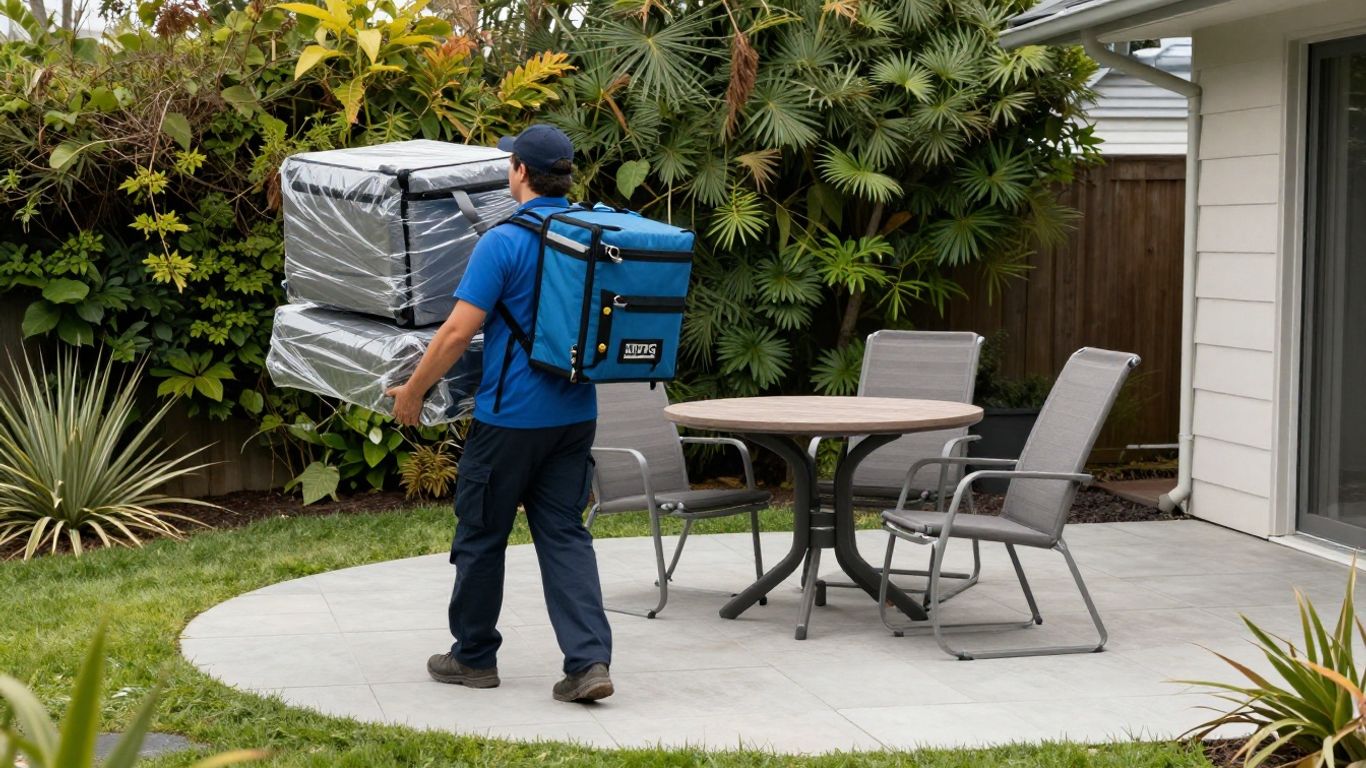
Dispatch is the time between order confirmation and the retailer handing goods to the carrier. Transit is the journey to your address, and these stages may be listed separately. Stock availability, warehouse location, delivery zone, and booking windows all affect the estimate, so ask when the order is expected to leave rather than relying only on the arrival date.
Seasonal delays and peak shopping periods
Spring and summer usually bring more outdoor-living orders, while sale events and public holidays can put extra pressure on warehouses and transport networks. Weather, ferry schedules, road closures, and carrier capacity can also affect regional routes. Ordering early gives you more choice and reduces the chance of having to rearrange an event around freight.
Coordinating delivery with home renovations
Do not schedule delivery before a deck, paving, painting, or landscaping worksite is safe and accessible. Dust, wet concrete, loose gravel, and construction materials can damage furniture or obstruct the driver. If your project is in Auckland, Design Concepts offers delivery across the Auckland region, but you should still confirm the timing and access conditions for your property.
What to do when an order is delayed
Check the tracking information, then contact the retailer if the promised window has passed or the status has stopped changing. Ask whether the delay is at the warehouse, with the carrier, or at the final-mile booking stage. Keep a written record of updates and agree on the next practical step, especially if you have arranged tradespeople or an event.
Preparing your property for delivery
A clear delivery route protects the furniture, the driver, and your home. Walk the path from the vehicle access point to the intended outdoor setting before delivery day, and look at it as a series of turns rather than a straight line. Remove avoidable obstacles and tell the retailer about anything that cannot be changed.
Measuring gates, doors, stairs, and access routes
Measure the narrowest point of every route, including gate openings, door frames, stairwells, and lift doors. Allow room for packaging, hands, and safe movement; a measurement that barely exceeds the carton width may not be workable. Also check ceiling height, balcony access, and tight corners where a long carton cannot be rotated.
Clearing a safe delivery area
Move pot plants, toys, tools, outdoor heaters, and fragile decorations away from the route. Sweep leaves and debris from the landing area, and make sure the surface is stable rather than slippery or muddy. If rain is forecast, identify a dry temporary location where cartons can be opened without sitting in standing water.
Arranging help for heavy or oversized items
Never assume one driver can safely carry a large sofa or stone-topped table alone. Arrange extra help if the delivery terms require it, and make sure everyone knows where the furniture is going before lifting begins. Keep children and pets away from the route while cartons and components are being moved.
A short preparation list can keep the day calm:
- Confirm the delivery window and driver contact details.
- Unlock gates and secure pets indoors.
- Measure and clear the full access route.
- Prepare blankets, gloves, and a dry inspection area.
Once these jobs are done, you can focus on checking the order rather than solving access problems at the kerb.
Confirming assembly and placement services
Ask in advance whether assembly, packaging removal, and placement are included. If the service is kerbside only, decide who will move the furniture and what tools are needed. For umbrellas, bases, and large modular pieces, confirm whether anchoring or specialist installation is recommended.
Inspecting and protecting your furniture after delivery
Your inspection should happen as soon as practical, while the delivery condition is clear. Do not discard cartons, protective film, or hardware bags until you have confirmed that every part is present and undamaged. A careful first check also helps you identify missing instructions before assembly begins.
Checking for damage before signing
Look over cartons for punctures, crushed corners, torn wrapping, water exposure, or signs of impact. After opening them, check frames, tabletops, legs, fabrics, cushions, and fittings under good light. If the carrier requires a delivery note signature, ask how visible or concealed damage should be recorded before you sign.
Documenting delivery issues with photos
Photograph the packaging before opening it, then take clear images of any damage from several angles. Include labels, carton markings, and the affected component so the retailer can match the evidence to your order. Write a short description of what happened and contact the retailer promptly through the channel named in its delivery policy.
Understanding returns, replacements, and warranties
Read the retailer’s terms for change-of-mind returns, transit damage, missing parts, and manufacturing faults. These are separate situations and may have different notification windows or evidence requirements. For applicable Design Concepts products, the published information includes a five-year fabric warranty, so check whether the specific item you are buying is covered and what exclusions apply.
Maintaining furniture for long-term outdoor use
Maintenance depends on the material, finish, fabric, and exposure. Clean dirt promptly, allow cushions to dry properly, use covers or shade where suitable, and store removable soft furnishings during severe weather. A product guide on UV protection for outdoor furniture offers practical advice on reducing sun damage and extending the life of outdoor fabrics.
Conclusion
When you treat outdoor furniture delivery New Zealand as part of the buying decision rather than an afterthought, the process becomes much easier to manage. Confirm the real delivered cost, measure the route, allow time for regional variables, and inspect everything before settling into your new outdoor space.
Frequently Asked Questions
How much does outdoor furniture delivery cost in New Zealand?
The price depends on the furniture’s size, weight, number of cartons, delivery zone, and service level. Rural addresses, oversized pieces, assembly, and placement can add to the base freight charge.
How long does outdoor furniture delivery usually take?
Timing varies by stock availability, dispatch location, destination, and carrier capacity. Major-city deliveries may be quicker, while regional and rural routes can need extra time or a separate booking.
Do I need to measure furniture packaging?
Yes. The packaged dimensions are often more useful than the finished dimensions because cartons must pass through gates, doors, stairs, lifts, and corners.
Is outdoor furniture delivered assembled?
Some products arrive fully assembled and others are flat-packed. Check the product listing and delivery terms, as assembly and packaging removal may be separate services.
What should I do if furniture arrives damaged?
Record the condition of the packaging and furniture with photographs, note the damage on the delivery paperwork if possible, and contact the retailer promptly using its stated claims process.
Can rural customers receive large outdoor furniture deliveries?
Often, yes, but the carrier may apply a surcharge, use a different service, or deliver to a depot. Confirm the arrangement for your exact address before placing the order.
How can I protect outdoor furniture after delivery?
Follow the care instructions, clean it regularly, keep cushions dry, provide shade where practical, and use suitable covers or storage during harsh weather. Maintenance needs vary by material and fabric.