

Outdoor furniture delivery NZ: A practical guide to costs, timing, and hassle-free ordering
Key Takeaways
A smoother outdoor furniture delivery nz experience starts before you place the order. Check the costs, measurements, access route, and retailer policies before delivery day arrives.
- Confirm the delivery zone, timing options, and any rural or difficult-access surcharge.
- Measure the furniture, packaging, doors, gates, stairs, lifts, and final placement area.
- Ask whether the item arrives flat-packed, fully assembled, or with an optional assembly service.
- Inspect the packaging and furniture carefully, and record damage before accepting the order.
- Keep your order details, photographs, receipts, and warranty information in one place.
Understand how outdoor furniture delivery works in NZ
Delivery can mean more than a courier leaving a box at your front door. Outdoor sofas, dining tables, umbrellas, and modular pieces may need a larger vehicle, extra handling, or a scheduled time slot. If you understand the process early, you can choose a service that suits your property rather than discovering limitations on delivery day.
Delivery zones and regional coverage
Start by entering your complete address, including the suburb, town, postcode, and rural delivery details. Nationwide coverage does not always mean the same service at every address; some locations may have different lead times, depot arrangements, or delivery methods. For Auckland shoppers, outdoor furniture for Auckland can help you think about climate, space, and local delivery together.
A local delivery area may offer more flexible scheduling than a remote address, but you should still ask whether the quoted service reaches your driveway or only the nearest accessible point. Confirm this before paying, especially if your home sits down a long shared driveway or behind a security gate.
Standard, express, and scheduled delivery options
Standard delivery is usually the economical choice when you can be flexible about timing. Express delivery may shorten the wait, but it can have limited availability for bulky items or regional addresses. A scheduled service is useful when you need to arrange access, move a vehicle, or have someone available to receive the furniture.
Ask for an estimated dispatch date as well as an estimated arrival window. Those are different milestones, and stock availability, freight transfers, weekends, and public holidays can affect the gap between them.
Large-item and two-person delivery services
A large outdoor setting may arrive on a pallet, in several cartons, or as a team-delivered item. Two-person delivery can reduce the risk of dropping a heavy tabletop or damaging a wall, but it does not automatically include carrying furniture into the house or placing it on the deck. Read the service description carefully.
If you are considering a substantial modular sofa, ask about carton dimensions, total weight, and whether the crew can move each piece to the intended area. Design Concepts offers nationwide delivery, but the exact handling service should still be confirmed for your order and address.
Rural, apartment, and difficult-access considerations
Rural and apartment deliveries often depend on practical access rather than distance alone. A freight vehicle may not fit a narrow lane, while an apartment building may require a loading dock booking, lift dimensions, body-corporate approval, or a delivery time restriction.
Tell the retailer about stairs, steep driveways, gravel, low branches, narrow corridors, and shared entrances. If the driver cannot safely reach the stated drop-off point, you may need to collect the item from a depot or organise additional help.
Compare outdoor furniture delivery costs
The displayed furniture price is only one part of the delivered cost. Freight, rural fees, assembly, special handling, and access restrictions can change the final amount. A quick comparison of the complete quote is more useful than comparing headline prices alone.
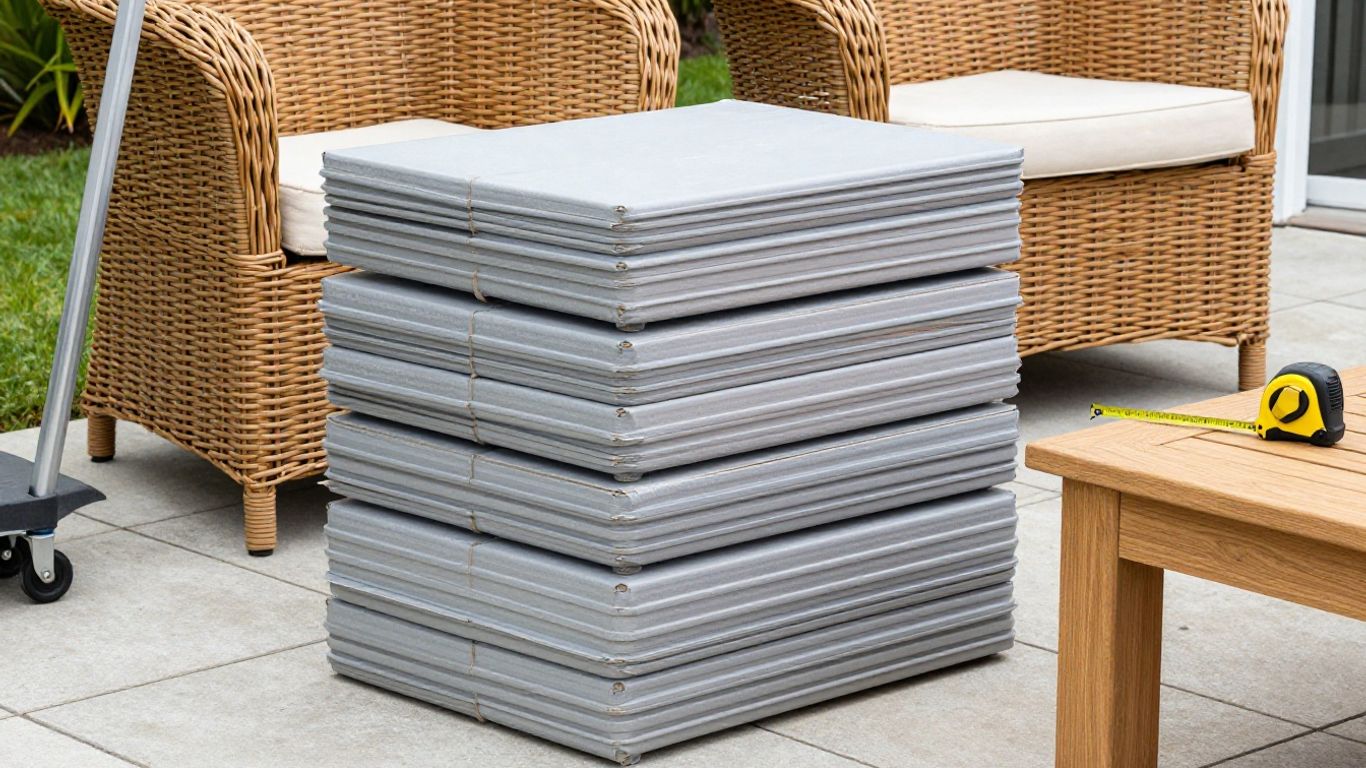
How delivery fees are calculated
Retailers may calculate delivery by postcode, order value, cubic volume, weight, distance, or a combination of these factors. A compact chair and a long dining table can therefore attract very different charges even when their prices are similar. Check whether the fee applies per order, per item, or per delivery address.
Before checkout, look for a freight estimate and ask whether it includes tax, pallet handling, doorstep placement, and removal of packaging. The final delivered price is the figure that should guide your comparison.
Thresholds for free or discounted shipping
Free shipping thresholds can make sense when your order already includes several pieces, but they are not always universal. Some promotions exclude oversized products, remote postcodes, sale items, or assembly services. Read the conditions rather than assuming every item in the basket qualifies.
You can also compare the cost of ordering a complete setting at once with buying individual pieces later. Consolidating freight may be worthwhile, provided you have measured the space and are confident about the design.
Extra charges for rural and remote addresses
A rural surcharge may cover longer freight routes, transfer between carriers, or delivery to a limited-access area. It may appear only after you enter your postcode, so check the checkout total before confirming payment. Ask whether the quoted fee includes delivery to your property or to a rural depot.
The same care applies to islands, lifestyle blocks, and locations reached by unsealed roads. Give the retailer accurate instructions and a phone number the carrier can use on the day; vague access information can cause delays or a failed delivery attempt.
Assembly, room-of-choice, and installation fees
Assembly and placement are separate services from basic freight. Some retailers offer them as an add-on, while others deliver furniture ready to use. Design Concepts describes full-service assembly among its delivery information, so check whether it applies to the product you are buying and what the team will and will not do.
Use a written quote that separates furniture, freight, assembly, and any special access fee. This makes it easier to compare options and avoids paying for a service you cannot use because the delivery route has not been checked.
| Cost component | What to confirm | Why it matters |
|---|---|---|
| Base freight | Address, item count, and delivery point | Establishes the standard transport charge |
| Rural surcharge | Postcode and depot or driveway delivery | Prevents an unexpected regional fee |
| Assembly | Included tasks and furniture placement | Clarifies what happens after unloading |
| Special access | Stairs, lifts, narrow paths, or booked loading areas | Helps avoid failed delivery attempts |
Once each component is visible, you can compare like with like. A slightly higher quote may be better value if it includes the handling your property requires.
Choose furniture that is suitable for delivery
The easiest piece to buy is not always the easiest piece to receive. Outdoor furniture has to fit through the route to your patio, survive handling, and arrive in a condition you can inspect. Product dimensions and material information are as useful for delivery planning as they are for styling your space.
Measuring furniture and entry points
Measure the assembled furniture, then check the packaged dimensions if they are available. Compare those numbers with the width and height of gates, doors, hallways, stairwells, lifts, and any turning points. Remember to allow clearance for hands and protective packaging, not just the bare measurement.
For a table, measure both the tabletop and the base if they ship separately. For a modular sofa, map the route for each section rather than treating the suite as one object. A simple sketch can reveal a tight corner that a tape measure alone misses.
Packaging, weight, and handling requirements
Packaging protects furniture but also adds bulk. Ask how many cartons you should expect, whether a pallet is involved, and whether the carrier needs a firm, level unloading area. Heavy concrete, stone, or solid timber components may need several people even when the individual cartons look manageable.
Keep children and pets away from the unloading area, and do not try to move a heavy item with improvised equipment. If the retailer recommends two-person handling, treat that as a safety requirement rather than an optional convenience.
Flat-pack versus fully assembled products
Flat-pack furniture can be easier to move through narrow access points and may cost less to freight. You will need a clear assembly area, the right tools, and enough time to follow the instructions carefully. Fully assembled furniture saves setup time but usually needs a larger path from the vehicle to its final position.
Check whether cushions, covers, bases, fixings, and hardware are packed separately. Knowing what should arrive prevents you from mistaking a multi-carton order for an incomplete one.
Protecting delicate materials during transport
Materials such as painted finishes, glass, fabric, and natural timber need careful handling from the warehouse to the patio. Look for secure wrapping, corner protection, and packaging that keeps surfaces away from abrasion. Once installed, follow the care guidance for the particular material rather than relying on a generic outdoor-furniture routine.
For fabric seating, UV protection for outdoor furniture offers useful background on choosing options suited to strong New Zealand sunlight. Delivery protection matters, but long-term placement, cleaning, and storage matter too.
Prepare your home before delivery day
A clear delivery route can save time and prevent avoidable damage. Walk from the likely unloading point to the outdoor area and notice every obstacle, including low roofs, garden edging, slippery paving, and doors that do not open fully. Do this while you still have time to make changes.
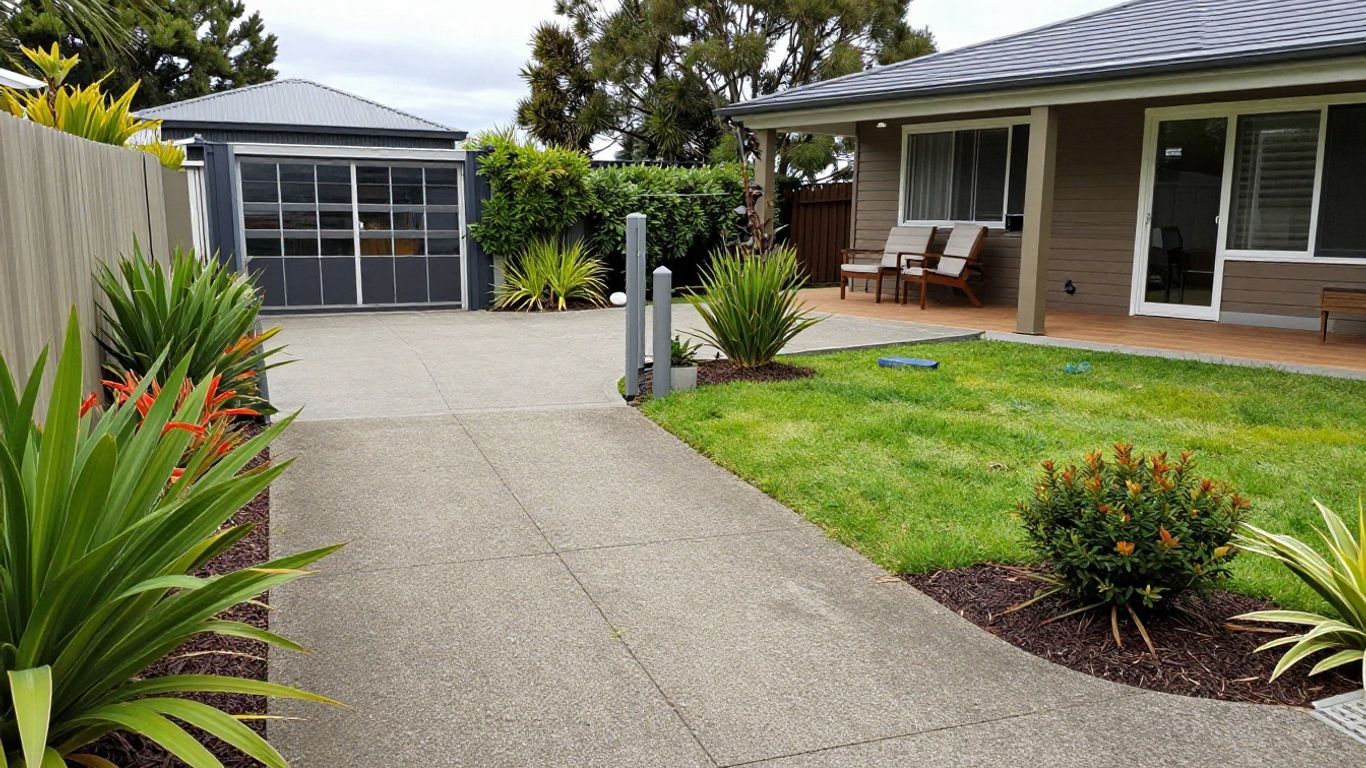
Clearing pathways, gates, and outdoor areas
Remove pots, bikes, toys, hoses, tools, and loose décor from the route. Unlock gates and make sure the surface is reasonably firm and dry. If furniture is going onto a deck or paved area, clear enough space for the delivery team to set cartons down without leaning them against fragile surfaces.
Where practical, protect vulnerable corners and floors with temporary coverings. Do not leave valuables or breakable decorations in the work area; unloading is easier when the team has room to turn and place each item.
Checking stairs, lifts, and narrow access points
Measure the narrowest point of every route, including the inside of lift doors and the space between a handrail and wall. Check lift weight limits and booking rules if you live in an apartment. A delivery team may also need permission to use a shared entrance or loading zone.
Make a short access note for the carrier with gate codes, parking instructions, and the best route. Send photographs if the access is unusual, but do not assume a photo replaces the retailer’s approval of the delivery conditions.
Planning for weather and temporary storage
Rain can make cardboard packaging weak and outdoor surfaces slippery. Arrange a dry, covered place for cartons if the furniture cannot be unpacked immediately, and avoid scheduling delivery when severe weather is likely. Do not store cushions or fabric components on damp ground while you deal with the rest of the order.
The most useful preparation is simple and practical:
- Clear a stable unloading area close to the final route.
- Protect floors, walls, corners, and delicate paving where needed.
- Keep a tape measure, phone, and order details available.
- Arrange a dry place for cartons and loose accessories.
These steps give you room to inspect the order without blocking the driveway or exposing materials to unnecessary moisture. They also make it easier to notice damage before packaging is discarded.
Arranging help for oversized furniture
If the retailer does not provide room-of-choice placement, arrange help before the truck arrives. Choose people who can lift safely, and use a trolley or lifting straps designed for the load rather than relying on one person to drag it across the deck.
For especially heavy or awkward pieces, ask the retailer whether a specialist service is available. It is better to reschedule than to risk an injury, a damaged wall, or a scratched frame.
Inspect and receive your outdoor furniture
Receiving the order is not just a handover. It is your first opportunity to check whether the shipment has travelled well and whether the cartons match what you purchased. Take a few calm minutes before signing or allowing packaging to be removed.
Checking packaging for visible damage
Look for crushed corners, torn wrapping, punctures, water marks, opened tape, and signs that a carton has been dragged. Photograph each issue with the whole package visible, then take closer images of the damaged area. Packaging damage does not always mean the furniture is damaged, but it deserves a closer inspection.
Compare the number of cartons with the delivery note. If the order is split across multiple shipments, confirm which pieces are arriving now and which are still outstanding.
Documenting issues before signing
Read the delivery record before signing it, particularly any statement that the goods arrived in good condition. If you notice damage, describe it clearly on the driver’s device or paperwork and keep a copy or photograph of your note. Avoid signing a completely clean receipt when you have already identified a problem.
If the driver cannot wait for a full inspection, record the visible packaging condition and contact the retailer promptly. A dated trail of photographs, notes, and messages is much more useful than a vague report several days later.
Verifying parts, hardware, and included accessories
After the delivery team leaves, check the contents against the order confirmation and product instructions. Look for legs, connectors, cushions, covers, umbrella bases, bolts, washers, and care materials where those items are included. Do not throw away cartons until you are satisfied that the order is complete and undamaged.
Set aside any questionable component rather than assembling around it. A missing washer or incorrect bracket can make a finished item unstable and may complicate a later claim.
What to do if furniture arrives damaged
Contact the retailer as soon as possible with your order number, photographs, delivery notes, and a concise description of the issue. Keep the furniture and packaging in the condition in which they arrived unless you are told otherwise. Do not repair, discard, or return an item without written instructions.
Ask what resolution is available, whether replacement parts can be sent, and whether the carrier needs to inspect the damage. Prompt, organised communication helps separate transport damage from a missing-part issue and gets the right response moving sooner.
Manage returns, warranties, and delivery problems
Delivery policies matter after the boxes have gone as well as before they arrive. Read the retailer’s terms for change-of-mind returns, faulty goods, damaged deliveries, refunds, and warranty coverage. Keep your receipt and product information, since the same item may have different requirements for a return and a manufacturing claim.
Understanding change-of-mind return policies
A change-of-mind return is different from a faulty or damaged product claim. Check the return window, whether the item must be unused, who pays return freight, and whether bulky furniture can be collected. Assembly, customisation, clearance terms, and opened packaging may affect eligibility.
Before ordering, confirm whether you can return a large item from your address and whether the original packaging must be retained. These details can make a significant difference to the practical cost of changing your choice.
Handling incorrect or incomplete orders
If the colour, size, quantity, or model is wrong, stop before assembling or using the item. Photograph the labels and contents, compare them with your order confirmation, and report the discrepancy in writing. Keep all cartons and accessories together while the retailer investigates.
For a missing carton, ask whether the order was split into separate consignments. For an incorrect item, ask for clear instructions about collection, replacement, or refund rather than paying to send it back yourself.
Reviewing damage and manufacturing warranties
A warranty may cover particular materials, components, or manufacturing faults for a stated period. It may not cover ordinary wear, misuse, storm damage, incorrect care, or damage caused during unapproved modification. Read the exclusions as carefully as the headline term.
Design Concepts identifies a five-year fabric warranty in its product and business information, but you should confirm that the warranty applies to the specific fabric and purchase. Keep care records where sensible, follow the supplied instructions, and report a problem with photographs and proof of purchase.
Protecting your rights under NZ consumer law
New Zealand consumer law can provide protections when goods are not of acceptable quality, do not match their description, or are not fit for the purpose you explained. A store policy cannot simply remove those legal protections. The appropriate remedy depends on the nature and seriousness of the problem.
Start by giving the retailer a clear description of the issue and a reasonable opportunity to respond. If the matter remains unresolved, use official consumer guidance or seek independent advice. Staying factual and keeping written records will help you explain what happened and what outcome you are seeking.
Conclusion
A successful outdoor furniture delivery begins with a realistic check of freight, access, measurements, weather, and retailer policies. When you prepare the route, inspect the shipment, and keep good records, you give yourself the best chance of receiving furniture that is ready to enjoy without expensive surprises.
Frequently Asked Questions
How long does outdoor furniture delivery take in NZ?
Timing depends on stock status, dispatch schedules, freight routes, location, and whether the item needs special handling. Ask for both an estimated dispatch date and an arrival window.
Does outdoor furniture delivery include assembly?
Not always. Basic delivery, room-of-choice placement, and assembly are separate services in many orders, so check exactly what the quoted fee includes.
Can outdoor furniture be delivered to a rural address?
Often, but rural delivery may involve a surcharge, a depot collection, or restrictions on vehicle access. Provide accurate directions and confirm the final drop-off point before ordering.
What should you measure before ordering?
Measure the furniture and its packaging, then compare those dimensions with gates, doors, corridors, stairs, lifts, and turning points along the delivery route.
What should you do if packaging is damaged?
Photograph the packaging before opening it, note the damage on the delivery record if possible, and contact the retailer promptly with your order details and images.
Can you return outdoor furniture if you change your mind?
That depends on the seller’s change-of-mind policy, including its time limit, condition requirements, exclusions, and return-freight arrangements. Check the terms before purchase.
What does a furniture warranty usually cover?
Coverage varies by product and material. It may address specified manufacturing faults for a stated period, while excluding misuse, normal wear, poor care, or weather-related damage outside the terms.