

Outdoor furniture Auckland: How to choose pieces for your space and climate
Key Takeaways
Auckland’s weather, your available space, and the way you plan to use it should guide every outdoor furniture decision. Start with practical needs, then choose pieces that feel at home in your setting.
- Consider rain, strong sun, humidity, and coastal air when choosing materials.
- Measure your space and leave comfortable routes around furniture.
- Match dining and lounging pieces to the way you spend time outdoors.
- Check cushion performance, frame construction, care needs, and warranties.
- Compare dimensions, delivery options, and availability before you buy.
Understand Auckland’s outdoor conditions
Auckland’s outdoor areas can face rain, humid spells, strong sun, and salt carried in coastal air. Conditions also vary from one home to another: a sheltered courtyard has different needs from an exposed deck near the water. Before you shop for outdoor furniture Auckland, notice where rain collects, which areas get the most sun, and how exposed your space is to wind. These observations help you choose furniture that suits your own microclimate rather than an imagined average.
Plan for rain, humidity, and changing weather
Rain and humidity make drainage and drying worth considering from the outset. Look for frames and finishes suited to outdoor use, and think about where cushions can go when showers arrive. If your patio stays damp or shaded, allow airflow around furniture rather than pushing every piece tight against a wall. A little attention to drainage and shelter can make everyday care more manageable.
Consider sun exposure and UV damage
Track how sunlight moves across your outdoor area during the hours you tend to use it. A sunny spot may call for shade, while prolonged exposure can affect finishes and fabrics over time. Removable cushions are easier to protect when they are not in use, and a cover can be useful when furniture will sit unused for a while. Choose pieces with outdoor-suitable finishes and fabrics, and follow their care instructions.
Account for coastal air and salt exposure
Near the coast, salt-laden air can be hard on metal finishes and other exposed surfaces. Check the recommended care routine for any frame you consider, and be prepared to rinse or wipe furniture as directed by its manufacturer. A sheltered position may reduce direct exposure, though it will not eliminate it. For more ideas on weighing weather and layout together, see this Auckland furniture planning guide.
Choose materials that suit your setting
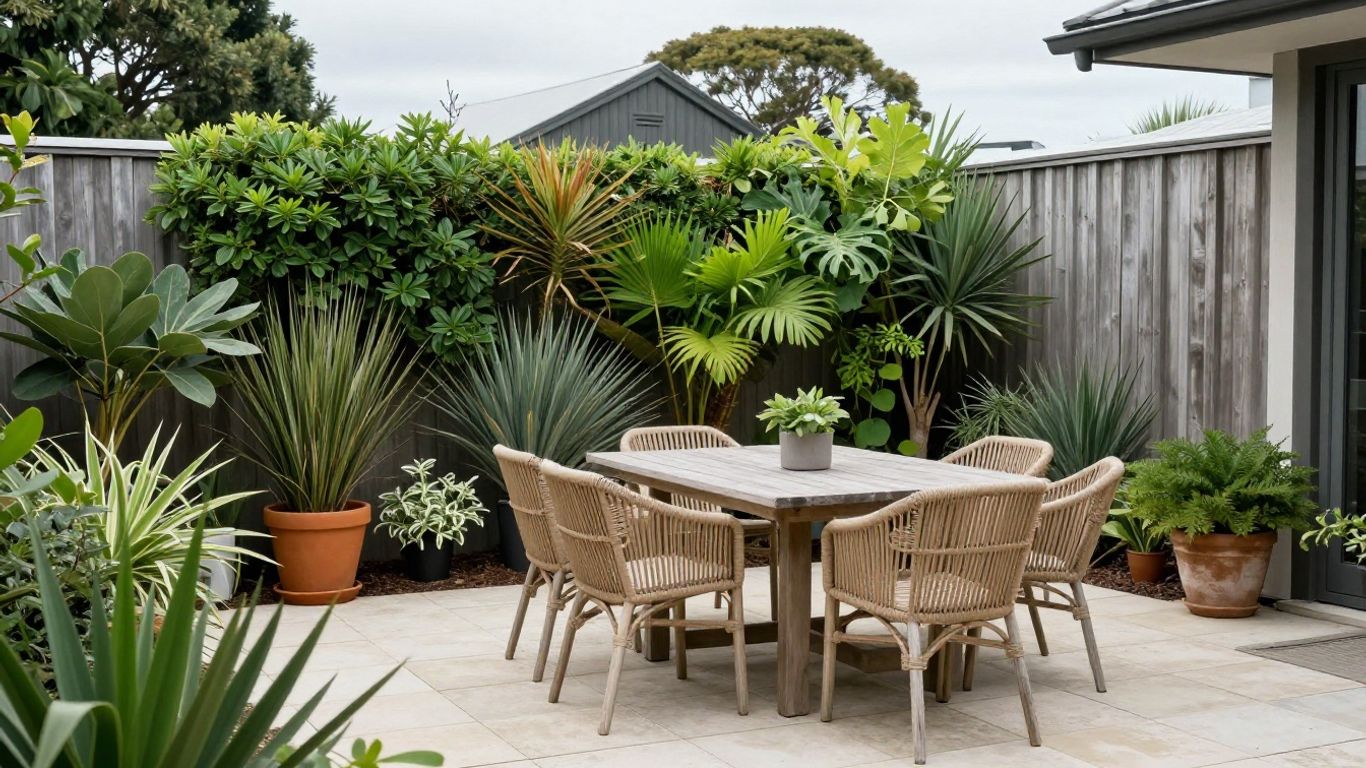
No single material is right for every Auckland home. Timber brings a natural look but may need regular care; metal can offer a clean-lined frame; and synthetic wicker creates a woven appearance without using natural rattan. Your choice should reflect exposure, upkeep, and how you want the furniture to feel in the space. The image below offers a visual starting point for thinking about materials alongside the surrounding garden and paving.
Compare teak, eucalyptus, and other hardwoods
Hardwoods can bring warmth and texture to an outdoor setting, but their appearance and maintenance needs vary. Ask whether the timber is treated, what finish it has, and how often the maker recommends cleaning or oiling it. If you prefer a weathered look, check whether that change in colour is expected and acceptable to you. A realistic care routine matters more than choosing a timber simply because it sounds durable.
Weigh the pros and cons of aluminum and steel
Metal frames can suit both contemporary and traditional spaces, though the finish and care guidance matter. Aluminium is relatively light to move; steel is often heavier, which may be useful where furniture could shift in the wind. The table gives you a simple comparison to take into showrooms or use while browsing online.
| Material | What to consider | Useful question before buying |
|---|---|---|
| Teak or other hardwood | Natural grain and a changing finish | What care does the maker recommend? |
| Aluminium | Lightweight and easy to reposition | Is the finish suitable for your exposure? |
| Steel | A heavier frame that may feel substantial | How should you maintain the coating? |
| Synthetic wicker | Woven appearance with outdoor-suitable construction | Is the frame and weave intended for outdoor use? |
Treat these as prompts, not guarantees: construction and finish vary by product. Read the care information for the specific piece, especially if your furniture will sit in full sun or near the coast.
Explore synthetic wicker and weather-resistant fabrics
Synthetic wicker can give a patio a relaxed, woven look, while outdoor fabrics are made to cope with more exposure than ordinary indoor upholstery. Check whether cushions are designed to drain and dry, and ask whether covers should be stored during wet weather. Design Concepts’ outdoor sofas feature Sunbrella fabrics and Urecel Quick-Dry foam, according to the product information. That may suit your priorities, but confirm care instructions and the specifications of the exact sofa you are considering.
Match furniture to your outdoor space
A well-chosen set can still feel awkward if it overwhelms the patio or blocks a door. Start with the usable area, including fixed features such as steps, planters, and outdoor taps. Then map where you want to eat, sit, or pass through. This kind of outdoor space planning helps you picture the layout before you commit to large pieces.
Measure patios, decks, and balconies
Measure the full area, then note the parts that furniture cannot occupy, such as a door swing or a path to the garden. Check the dimensions of each piece, including chairs when they are pulled out, rather than relying on a product photo for scale. In a balcony or narrow courtyard, a smaller table may leave more room to move and make the space more useful day to day.
Allow enough room to move around dining and lounge areas
Comfortable circulation is part of a functional layout, not an afterthought. Before you settle on a configuration, mark the furniture footprint with tape or a few temporary objects. Keep the routes you use most often clear, and test whether chairs can slide back without colliding with walls or planters. A simple on-site check often reveals issues that a floor plan misses.
Choose flexible pieces for compact spaces
Compact outdoor areas benefit from furniture that can adapt as your plans change. A few decisions can help you preserve useful floor space without making the setting feel bare:
- Choose a table shape that leaves a clear route through the area.
- Consider chairs that can be tucked away when they are not in use.
- Use a bench where it can serve more than one seating arrangement.
- Keep accessories limited to what you will regularly use.
Try the arrangement in everyday conditions, not just when everything is neatly in place. If you often host guests, leave enough room to shift seats around; if the space is mainly for quiet mornings, prioritize an easy route to the door and a comfortable place to sit.
Select furniture for how you’ll use it
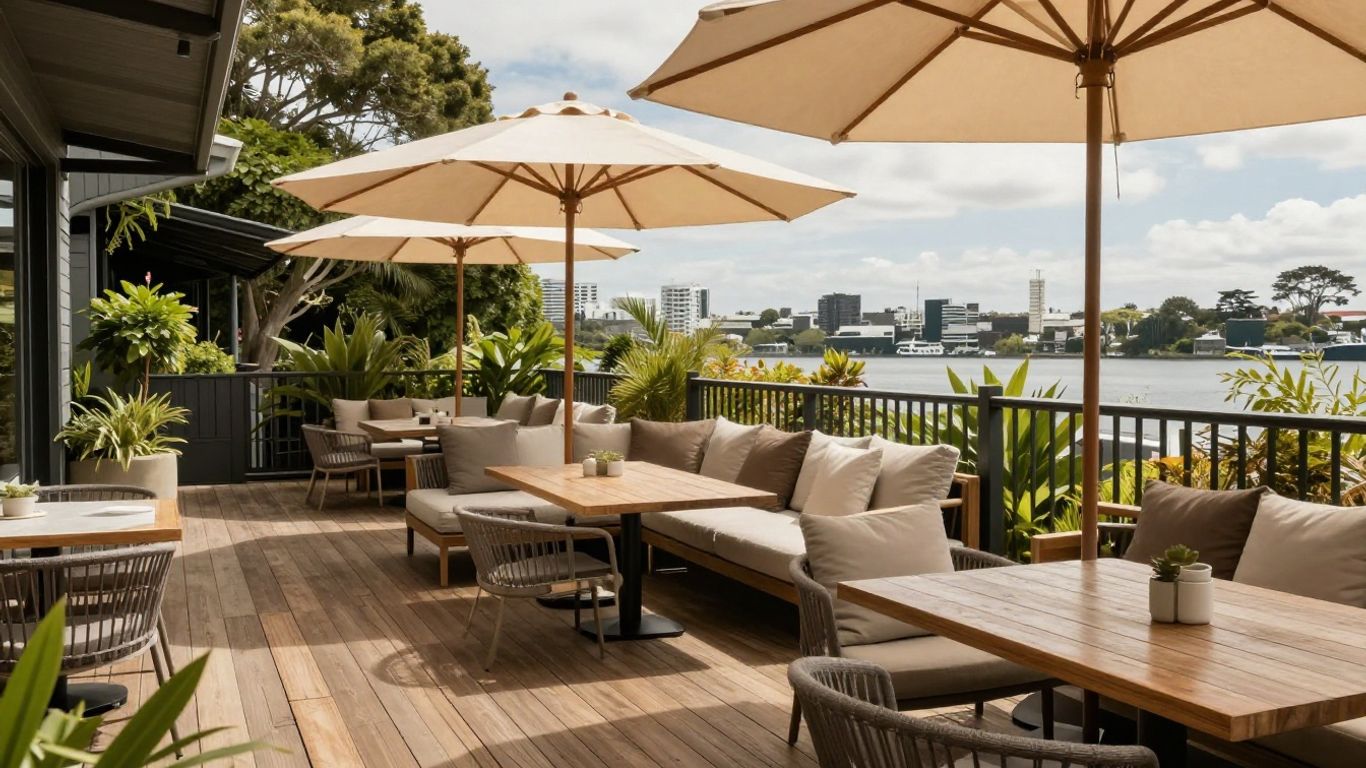
Think about an ordinary week before planning for a special occasion. You might need a table for weekday meals, a comfortable corner for reading, or flexible seating when friends visit. Define those routines first, then choose furniture that supports them without crowding the area. Design Concepts offers outdoor dining sets described as designed to withstand New Zealand’s diverse climate; as with any purchase, check the details for the specific set.
Build a practical outdoor dining area
Choose a table based on how many people usually sit down together, not only the largest gathering you host once a year. Consider the space needed to pull chairs out and serve food, and decide whether a round, square, or rectangular top works best with your layout. Outdoor dining sets range from compact arrangements to larger groupings, so check the dimensions and chair count before you buy. This outdoor furniture overview can also help you compare broad categories of seating and dining options.
Create a comfortable lounge or conversation zone
A lounge area works best when people can talk without needing to twist around furniture or shout across a wide gap. Arrange seats to face one another or angle toward a shared view, and consider whether you want a low table close at hand. Seat depth, back support, and cushion feel are personal; try them in person if you can. A short video can help you spot layout ideas, but use measurements from the products you are actually considering.
Add shade and storage where they’re needed
Shade can make a sunny patio more comfortable, and storage gives cushions or smaller accessories a place to go when the weather turns. Check where an umbrella can stand without obstructing a doorway or path, and whether its base fits the available area. For storage, consider access as well as capacity: an item you can reach easily is more likely to be used. Keep the choices proportionate to the space rather than filling every corner.
Coordinate style, comfort, and durability
Outdoor furniture should feel connected to your home, but appearance is only part of the decision. Look at the proportions, colours, and textures already present in your exterior, then consider which pieces will be comfortable enough for regular use. Your choices need to work together through changing weather and everyday wear. A care routine you can keep is often more valuable than a material that sounds impressive but does not suit your habits.
Choose shapes and finishes that complement your home
Take cues from your home’s exterior materials and the shape of the outdoor area. Clean-lined furniture can work well alongside modern cladding, while timber tones and woven textures can soften a more formal setting. You do not need to match every finish exactly; repeating one or two colours or materials is usually enough to make the space feel considered. Bring a photo of the area when shopping if you want to compare finishes more easily.
Check cushions for support and quick-drying performance
Cushions have a major effect on comfort, so check the seat depth, firmness, and back support before deciding. Ask what the covers are made for and how they should be cleaned, particularly if they will remain outside. Design Concepts’ outdoor sofas are listed with Urecel Quick-Dry foam and rust-proof frames, as well as Sunbrella fabrics; verify those details on the product listing for the model you choose. Even with outdoor-oriented materials, follow the maker’s guidance on storage and maintenance.
Balance upfront cost with expected lifespan
A lower initial price can be appealing, but it is useful to consider care, replacement parts, and warranty terms alongside it. Compare products at a similar size and level of construction, then ask what the warranty covers and what it excludes. Design Concepts’ Aluminium Outdoor Benches are described as comfortable seating for outdoor settings; check the product details and care information when assessing whether a bench suits your budget and use. A considered purchase is one you can maintain and enjoy over time.
Shop for outdoor furniture in Auckland
Shopping locally can help you understand how a piece feels and how it will fit your home, while online listings make it easier to compare dimensions and finishes. Look for clear product information and straightforward answers about care, delivery, and warranties. You can browse outdoor furniture ranges for a broad sense of available types, then narrow your shortlist by the needs of your own space. Keep notes so the final comparison is based on more than appearance alone.
Compare local retailers, ranges, and delivery options
Retailers may differ in the styles they carry, what is available to view, and how delivery is arranged. Check whether delivery reaches your suburb, whether assembly is included, and what access details the delivery team needs. If you are shopping online, confirm how returns work and whether delivery charges change with distance or order size. These details can affect the total cost and the ease of getting furniture into place.
Inspect construction, warranties, and care requirements
If you visit a showroom, sit on the furniture and look closely at joints, finishes, and cushion covers. Ask for warranty terms in writing, including what is covered and how to make a claim. Before buying, make sure you understand any routine cleaning or storage recommendations. A few direct questions can help you distinguish between features that suit your needs and claims that are not relevant to your setting.
Check furniture dimensions and availability before buying
Confirm the full dimensions of each shortlisted item, including the height of table edges, the width of chairs, and any clearance needed for an umbrella. Check current availability and estimated delivery timing, then compare those details with your measurements and plans. If you are combining several pieces, consider whether they can be delivered together and fit through the access route to your outdoor area. That final check can save you from a frustrating surprise on delivery day.
Conclusion
Choosing outdoor furniture for Auckland is a matter of matching your local conditions, available space, and everyday habits with pieces you can care for comfortably. Measure first, compare materials and product details, and make room for both comfort and movement. With those basics in place, you can create an outdoor area that feels like a natural extension of your home.
Frequently Asked Questions
What should I consider when buying outdoor furniture in Auckland?
Consider how much sun, rain, humidity, and coastal air your space receives, then choose materials and finishes suited to those conditions. Measure carefully and think about the way you plan to use the area.
Which outdoor furniture materials are easiest to maintain?
Maintenance depends on the exact product and finish. Check the care instructions for each option and choose a routine you are comfortable following.
Is timber suitable for an Auckland patio?
Timber can work well outdoors, but its care needs and appearance over time vary by species and finish. Ask the maker how to clean and maintain the specific piece.
How do I measure an outdoor area for furniture?
Measure the usable floor area, then account for doors, steps, paths, and fixed features. Compare those measurements with the full dimensions of each item, including space needed to pull out chairs.
How much space should I leave around an outdoor dining table?
Leave enough clearance for people to sit down, pull chairs out, and move around without blocking a main route. Testing a proposed layout with tape or temporary markers can help.
Do outdoor cushions need to be stored during rain?
That depends on the cushion construction and the manufacturer’s care guidance. Check whether the covers and filling are designed for outdoor use, and whether the maker recommends covering or storing them in wet weather.
Should I choose a dining set or separate outdoor furniture pieces?
A dining set can simplify matching the table and chairs, while separate pieces give you more flexibility. Choose the approach that best fits your space, budget, and usual number of guests.