

Outdoor furniture Auckland: How to choose the right pieces for year-round living
Key Takeaways
Auckland’s outdoor conditions call for furniture that is comfortable, well planned, and suited to regular exposure to rain, sun, wind, and salt air.
- Assess your space before choosing materials or furniture sizes.
- Match timber, metal, wicker, recycled materials, or plastic to your maintenance routine.
- Create clear zones for dining, lounging, entertaining, and storage.
- Prioritise comfort, weather-resistant fabrics, stable frames, and practical accessories.
- Judge value by durability, warranty support, usability, and long-term care—not price alone.
Understand Auckland’s outdoor living conditions
Auckland gives you plenty of opportunities to use an outdoor area, but the climate can be demanding on furniture. Rain, humidity, strong sunlight, coastal air, and shifting winds all affect how frames, finishes, cushions, and fabrics perform. If you start by understanding the conditions around your home, you can choose outdoor furniture Auckland that remains inviting through more of the year.
Account for rain, humidity, and coastal air
Rain and humidity can leave water sitting in joints, beneath cushions, and on poorly ventilated surfaces. Near the coast, salt-laden air can accelerate corrosion on unsuitable metals and leave a residue that needs regular cleaning. Look for designs that allow water to drain away, keep cushions off persistently damp ground, and avoid placing furniture where runoff collects.
A covered deck is helpful, but it does not necessarily keep wind-driven rain or humid air away. Give each piece room to dry, and consider whether you can move or cover it when a wet spell arrives. A climate-conscious outdoor furniture guide can help you compare these conditions with materials and everyday use.
Assess sun exposure and seasonal changes
The same chair may sit in shade during winter and receive intense afternoon sun in summer. Map the movement of sunlight across your space before deciding where to place sofas, dining tables, or lighter-coloured fabrics. UV exposure can fade textiles and gradually dry or alter timber finishes, while seasonal changes may affect how often you use shade, heating, and removable cushions.
Think about your habits as well as the forecast. If you eat outside most evenings, a table in full afternoon sun may need an umbrella or nearby shade. If your space is mainly for morning coffee, comfort and glare control may matter more than creating a large entertaining area.
Measure wind, drainage, and available shelter
Wind is easy to underestimate, especially on an elevated balcony, exposed deck, or corner site. Measure the usable area, then note where wind enters, where doors swing, and where water drains after heavy rain. Stable, appropriately weighted furniture is safer and more comfortable than pieces that shift whenever the weather changes.
Check the route from the entrance to the outdoor area too. A large table may fit the patio but fail to pass through a gate, stairwell, or narrow doorway. Taking these measurements early prevents expensive delivery surprises and helps you choose pieces that can be repositioned when conditions change.
Match furniture choices to your maintenance routine
Every material needs some care, but the right choice depends on how much time you realistically want to spend maintaining it. A timber setting may suit you if you enjoy occasional cleaning and refinishing; a powder-coated frame may be preferable if you want a simpler routine. Be honest about whether cushions will be stored, covers will be used, and spills will be dealt with promptly.
Your routine matters as much as the climate. Furniture that looks excellent on day one is not a good fit if its care requirements make you avoid using it. Choose a finish and construction that you can maintain consistently rather than relying on ideal conditions.
Choose materials that suit your space
Outdoor materials each make a different compromise between appearance, weight, comfort, upkeep, and price. Auckland’s weather does not make one material universally right; your location, shelter, household, and preferred style matter just as much. Compare the options as a complete system, including cushions, fasteners, finishes, and how easily each piece can be moved.
Compare teak, eucalyptus, and other hardwoods
Hardwoods bring natural colour, texture, and warmth to a deck or garden. Teak is often selected for outdoor use because of its dense structure and attractive ageing, while eucalyptus and other hardwoods can offer a more accessible way to introduce timber. Ask how the wood has been finished, whether it is intended to weather naturally, and what cleaning or oiling the supplier recommends.
Timber can develop a silvered appearance over time when left untreated, or retain more of its original colour with regular care. Keep boards and legs clear of standing water, and avoid assuming that every hardwood product has identical weather performance. Grain, joinery, thickness, and finish all influence longevity.
Weigh aluminium, steel, and powder-coated metal
Aluminium is light, easy to move, and well suited to spaces where you may change the layout. Steel can provide useful weight and a solid feel, but its protective finish and care instructions deserve close attention. Powder coating adds a durable coloured surface, although scratches, chips, and exposed fasteners still need prompt care.
For exposed or coastal locations, inspect the frame specification rather than judging by appearance alone. Rounded edges, sound welds, drainage points, and quality hardware can make a noticeable difference. A frame that is easy to lift may be ideal for a sheltered balcony, while heavier construction may be more appropriate where wind is a regular concern.
Consider synthetic wicker and recycled materials
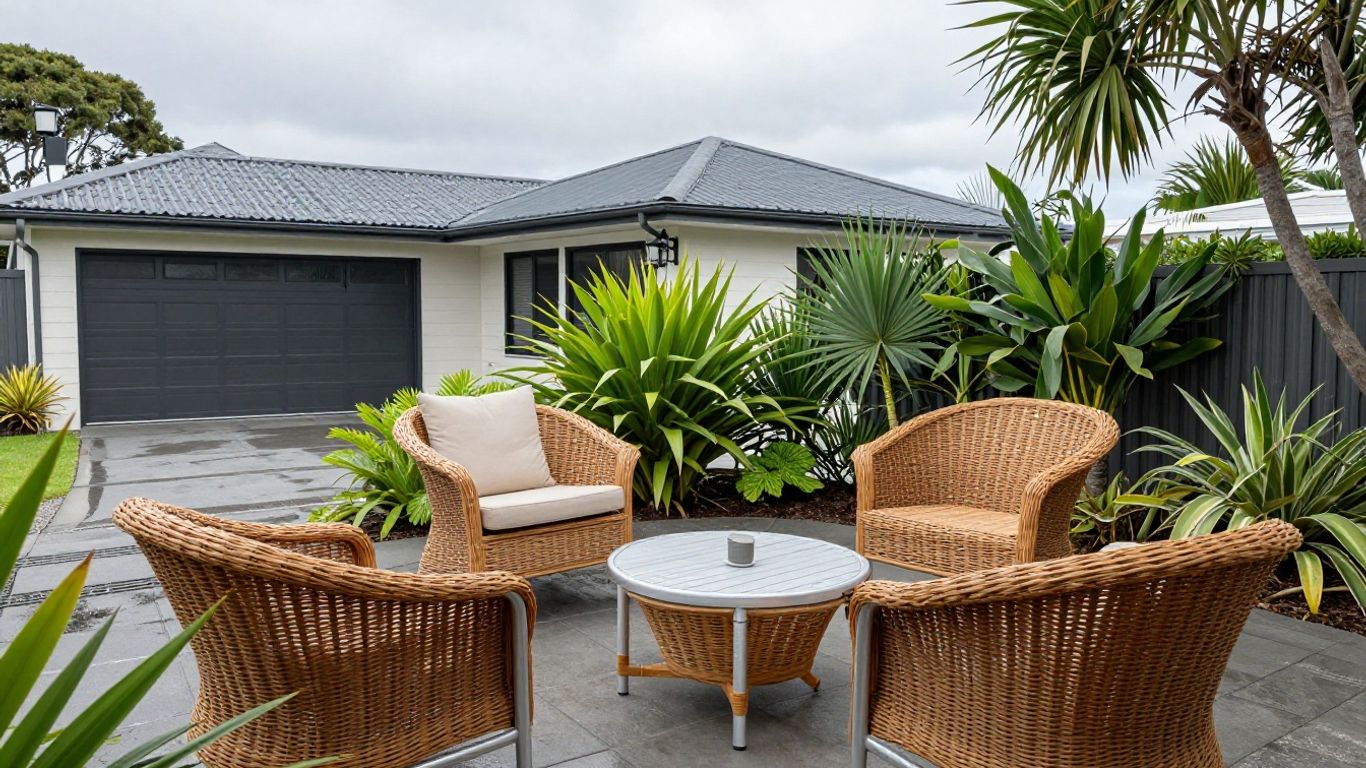
Synthetic wicker can provide the woven look many people want without the same sensitivity as natural fibre. Check whether the weave is tightly secured, how it is supported by the frame, and whether dirt can be rinsed from the underside. Recycled plastic and composite materials can also be practical when you want low-fuss cleaning, strong colour, and furniture that does not require frequent refinishing.
The finish should suit the architecture around it. Woven textures soften a hard-edged deck, while recycled materials can work well in family spaces where meals, muddy shoes, and frequent rearranging are part of daily life. You can explore additional garden living products when storage and seasonal accessories need to be considered alongside furniture.
Know when plastic furniture is a practical choice
Plastic furniture is not automatically a compromise. It can be useful for a small balcony, children’s area, occasional seating, or a space where lightweight pieces need to be moved often. Good-quality outdoor plastic should still be stable, UV-suitable, and easy to clean; very light or brittle pieces may be less satisfactory in strong sun or wind.
Think about replacement and storage as well. Stackable plastic chairs can solve a genuine space problem, while a more substantial recycled option may offer better everyday comfort and stability. Choose based on the job the furniture needs to do, not on material labels alone.
Plan a comfortable and functional layout
A successful outdoor area should feel like another room, not a collection of furniture pushed against the edges. Begin with the activities you want to support, then place the largest pieces before adding occasional chairs, tables, shade, and decoration. Planning this way keeps the space comfortable when several people are using it at once.
Define zones for dining, lounging, and entertaining
Dining needs a table, chairs, elbow room, and a clear path for serving. Lounging benefits from deeper seating, a coffee table, and a layout that supports conversation. Entertaining may need flexible stools, side tables, and open space where people can stand without blocking doors or walkways.
You do not need walls to create zones. A rug designed for outdoor use, a change in flooring, a low planter, or the orientation of a sofa can gently separate activities. Keep the visual connection between zones so the area still feels generous.
Select furniture to fit balconies, decks, and patios
For a balcony, prioritise pieces with a compact footprint and manageable weight. On a deck, consider how furniture relates to railings, stairs, and the view; on a patio, you may have more freedom to create a full dining or lounge arrangement. Measure the clear interior dimensions rather than relying on the advertised area.
Foldable, stackable, or modular pieces can give you more flexibility when the space serves different purposes. Before buying, check the furniture dimensions with cushions included and confirm that the configuration can enter through every access point.
Allow enough space for movement and access
Comfort depends on more than seat dimensions. Leave room to pull out dining chairs, walk behind seated guests, open doors, and reach storage. A setting that looks balanced in a floor plan can feel cramped once people, plates, bags, and children are moving through it.
A useful test is to mark the furniture footprint with removable tape or cardboard. Walk the route you use most often, sit in each position, and open nearby doors. Small adjustments at this stage are much easier than returning an oversized setting later.
Use shade and privacy features strategically
Shade can make a sunny space usable for longer, while privacy features can make a balcony or courtyard feel more settled. Place an umbrella where its base will not obstruct movement, and consider the sun’s angle at the times you normally eat or relax. Screens and planters should soften sightlines without creating a wind trap.
Layering works well: overhead shade for glare and heat, planting for privacy, and furniture orientation for shelter. Keep removable features easy to secure or store, particularly if your outdoor area is exposed to sudden gusts.
Select seating, tables, and accessories
The pieces you touch and use most deserve careful attention. Seat height, cushion resilience, table clearance, and fabric feel influence whether you use the area every day or only when guests arrive. Start with comfort and function, then build a consistent look around those decisions.
Choose outdoor sofas and chairs for daily comfort
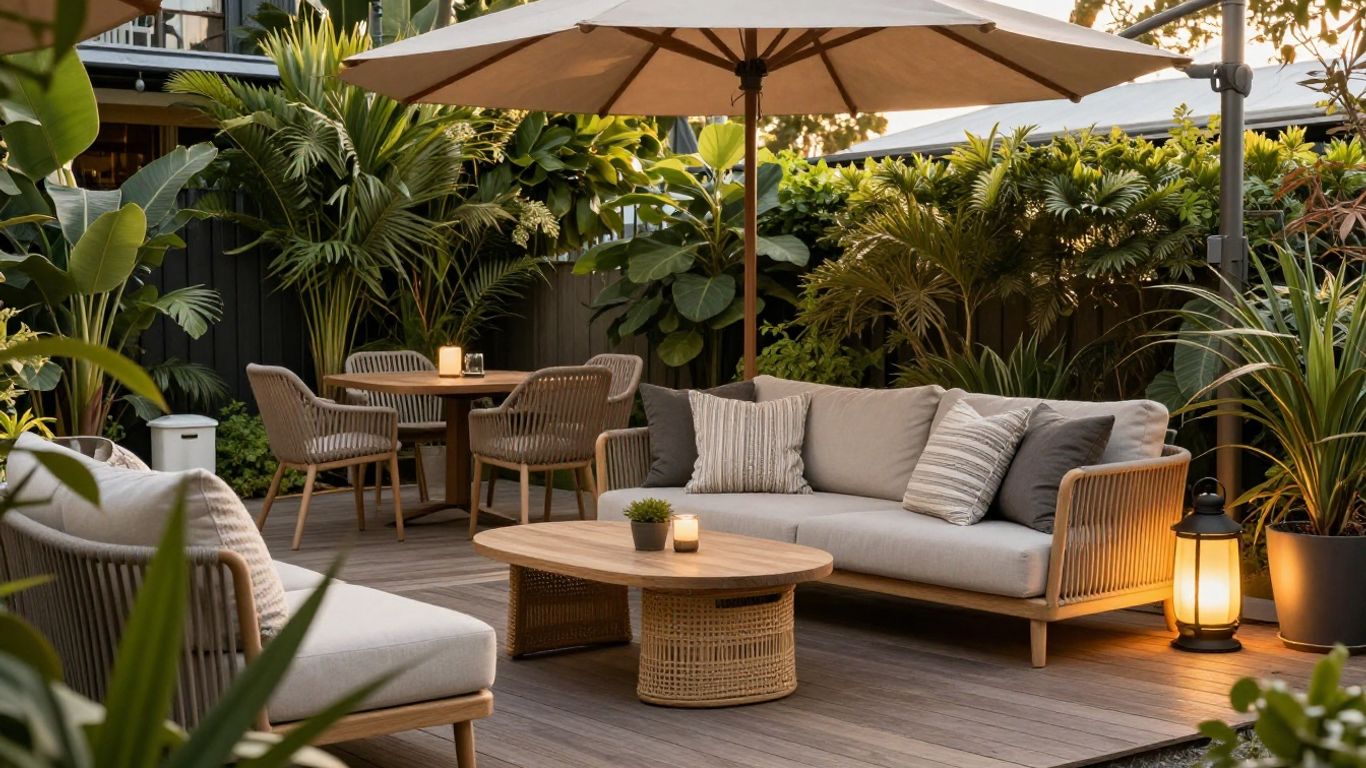
Sit in a sofa or chair long enough to test its posture, seat depth, arm height, and support. Deep seating can feel relaxed, but it may not suit everyone in the household; firmer, more upright chairs can be better for dining and conversation. Check whether cushions stay in place and whether the frame feels steady when you sit down or stand up.
For a larger terrace, modular seating can adapt as your needs change. For a narrow balcony, two comfortable chairs may be more useful than a sofa that consumes the entire footprint. Design Concepts outdoor sofas include options described with UV-resistant outdoor fabrics, quick-drying foam, and rust-proof frames, but you should still check the specifications of the particular piece before purchasing.
Match table size to the number of guests
Choose a table around how you actually host, not only the largest number of people you might invite once a year. A round table can improve conversation and circulation in a compact space, while a rectangular table may make better use of a long deck. Allow space for plates, serving dishes, and comfortable arm movement.
A simple planning guide can help you narrow the options:
| Typical use | Useful table direction | Planning point |
|---|---|---|
| Two to four people | Compact round or square | Preserve walking space |
| Four to six people | Medium round or rectangular | Allow room for serving dishes |
| Six to eight people | Extendable or larger rectangular | Check chair clearance carefully |
| Frequent entertaining | Extendable setting | Plan storage for extra chairs |
The table should support the way you live between gatherings. If it leaves no room for movement on ordinary days, a smaller or extendable design will probably serve you better.
Add cushions and fabrics designed for outdoor use
Outdoor fabrics need to cope with UV exposure, moisture, spills, and repeated handling. Look for removable covers, practical drying characteristics, and care instructions you are willing to follow. Quick-dry or free-draining cushion construction can be especially helpful where rain is common, but it does not mean cushions should remain wet indefinitely.
Colour also affects how often marks are visible and how the setting connects with your home. Neutral upholstery gives you flexibility, while a few replaceable accent cushions can refresh the look without replacing the frames. Store textiles when heavy rain is forecast if your furniture is not fully sheltered.
Include storage, lighting, and heating where needed
Accessories should solve real problems. A storage box can keep cushions close without bringing them indoors every evening; low-glare lighting can extend dinner beyond sunset; and an outdoor fire or heater can make cooler months more inviting where it is safe and permitted. Keep electrical connections, fuel, and heat sources well away from fabrics and enclosed areas.
Design Concepts also offers outdoor-living products including umbrellas and fires, so you can consider shade and warmth as part of the overall arrangement rather than as afterthoughts. Watch this short visual guide for further planning ideas.
Place accessories where they will be used, leaving enough clearance around heat sources and enough open space for safe movement. Practical additions should make the area easier to enjoy, not create another set of objects to manage.
Balance quality, style, and budget
A low purchase price does not always mean low cost, and a premium finish is not automatically right for your space. Compare construction, comfort, care, delivery, warranty terms, and expected use together. This gives you a clearer picture of what you are buying and prevents a sale tag from becoming the main decision.
Compare upfront cost with long-term value
Estimate how often you will use each piece and how difficult it would be to replace. A durable dining setting may justify a higher initial spend if it becomes part of everyday life, while occasional balcony seating may not need the same level of investment. Include covers, cushions, assembly, delivery, and maintenance products in your calculation.
If you are shopping during a promotion, check original pricing, clearance conditions, and warranty coverage rather than assuming every discount represents equal value. A practical outdoor furniture sales guide can help you compare the whole purchase more carefully.
Check construction, joinery, and weight
Look closely at welds, joints, fasteners, frame thickness, leg stability, and the way tabletops are supported. Lift or gently move pieces where possible, but do not mistake extreme heaviness for quality. Good construction should feel considered, with smooth edges, even finishes, and components that align properly.
For timber, inspect joinery and the direction of grain around stressed areas. For metal, check the finish and hardware. For wicker, look for a secure weave and a frame that does not flex excessively. These small observations often tell you more than styling photographs.
Coordinate colours and finishes with your home
Use the exterior of your home as the starting point. Warm timber can connect with brick or planting, while dark metal may complement window frames and modern cladding. You can mix materials successfully when one element repeats elsewhere, such as timber arms echoing a deck or a fabric tone picking up a door colour.
Avoid choosing every item from the same visual family if the result feels flat. A restrained base with texture in the cushions, rug, or planters can look more relaxed and remain easier to update over time.
Identify features that are worth paying more for
Spend more where a feature directly improves daily use or reduces likely replacement. This may include well-made frames, UV- and fade-resistant fabrics, comfortable cushion construction, corrosion-resistant hardware, or a configuration that makes the space substantially more useful.
A five-year fabric warranty is available on applicable Design Concepts products, so read the individual product terms rather than applying that coverage to every item. Product-specific warranties and clear care instructions are useful signs that you can plan for ownership beyond the first season.
Maintain outdoor furniture through the year
Even well-selected furniture lasts longer when you give it simple, regular care. Auckland’s weather can change quickly, so maintenance works best as a routine rather than a once-a-year rescue. Check surfaces, cushions, hardware, and drainage points whenever you rearrange the space.
Clean each material using the right method
Start with the least aggressive approach: remove loose dirt, use mild soapy water where appropriate, rinse thoroughly, and allow everything to dry. Follow the supplier’s instructions for timber oils, powder-coated finishes, woven surfaces, and outdoor fabrics. Avoid harsh abrasives or pressure that could damage a finish or force water into joints.
Deal with spills early, especially on light fabrics and porous timber. If mould or mildew appears, use only a treatment suitable for the material, test it in an inconspicuous area, and avoid mixing cleaning chemicals. Gentle, consistent care is usually safer than infrequent heavy scrubbing.
Protect furniture from Auckland’s wet weather
Covers can help, but they should be breathable, correctly fitted, and removed regularly so trapped moisture can escape. Improve airflow beneath furniture, keep legs out of puddles, and angle pieces so rain does not sit on flat surfaces. If a storm is approaching, secure light furniture and move cushions indoors.
Shelter is helpful without being a complete substitute for maintenance. A covered area still receives humidity and wind-blown moisture, so inspect hidden surfaces and hardware every few weeks during wetter periods.
Store or cover cushions and removable fabrics
Bring cushions inside when heavy rain is expected, or use a dry, ventilated storage solution close to the seating area. Do not pack damp fabric into a sealed box; let it dry fully first. Shake out debris, follow the care label, and check zips and seams before storing cushions for a longer period.
Keeping textiles organised also makes the space quicker to reset. A dedicated storage box or indoor shelf can prevent cushions from being left on the floor, where they are more likely to stay damp or collect dirt.
Repair, refinish, and replace worn components responsibly
Repair small problems before they spread. Tighten loose hardware, touch up a damaged coating with an approved product, replace worn feet, and refinish timber only when the surface needs it. If a cushion cover, strap, or individual component can be replaced, that may be more sensible than discarding the whole setting.
When a piece has reached the end of its useful life, separate materials where local recycling or disposal services allow. Responsible ownership includes choosing durable furniture, caring for it properly, and avoiding unnecessary replacement.
Conclusion
The right outdoor furniture Auckland choice begins with your particular exposure, space, routines, and plans for using the area. Measure carefully, compare materials honestly, prioritise comfort and construction, and add shade, storage, and warmth where they solve genuine needs. With steady care, your outdoor setting can feel like a natural extension of home through changing seasons.
Frequently Asked Questions
What is the best material for outdoor furniture in Auckland?
There is no single best material for every Auckland property. Choose between timber, aluminium, steel, synthetic wicker, recycled materials, and plastic according to exposure, wind, shelter, appearance, budget, and the maintenance you are prepared to provide.
Can outdoor furniture stay outside all year in Auckland?
Many pieces can remain outdoors when they are designed for outdoor use and cared for correctly. Use breathable covers where suitable, improve drainage and airflow, and move or store cushions during prolonged rain or severe weather.
How do you protect outdoor furniture from salt air?
Rinse salt residue from exposed surfaces with clean water, dry the furniture, and inspect fasteners and joints regularly. Coastal homes should pay particular attention to corrosion-resistant finishes and sheltered placement.
How much space should you leave around outdoor dining furniture?
Leave enough room to pull chairs out comfortably, walk behind seated guests, open nearby doors, and carry food or drinks. Marking the footprint with tape before buying can reveal whether the arrangement will feel cramped.
Are outdoor cushions waterproof?
Outdoor cushions are generally designed to resist moisture rather than remain permanently waterproof. Their performance depends on fabric, foam, seams, storage, and exposure, so follow the care instructions and let cushions dry thoroughly after rain.
Should you cover outdoor furniture in winter?
A breathable, well-fitted cover can reduce exposure to rain, dirt, and debris, but it should not trap moisture. Remove it regularly to air the furniture and check for dampness, mould, or surface damage.
How often should outdoor furniture be cleaned?
Light cleaning every few weeks is a sensible starting point, with more frequent attention in exposed or coastal locations. Clean spills promptly and adjust the routine according to weather, shade, dust, pollen, and how often the furniture is used.