

How to choose the right outdoor sofa set for your space
Key Takeaways
Choosing an outdoor sofa set becomes much easier when you treat the purchase as a space, climate, comfort, and value decision rather than a style decision alone.
- Measure the patio, deck, access route, and walking clearances before shopping.
- Match the frame, upholstery, cushions, and finish to your local exposure levels.
- Choose a sofa, sectional, or conversation set based on how you actually host and relax.
- Inspect construction, comfort, warranties, delivery, and replacement costs together.
- Plan simple cleaning, covering, and storage habits before the furniture arrives.
Assess your outdoor space and seating needs
Your outdoor sofa set should suit the way you live, not simply fill an empty corner. Start with the available footprint, then consider circulation, views, weather exposure, and the activities you want to support. A useful outdoor sofa set guide can help you connect those practical decisions with style, climate, and budget. Taking a little time at this stage prevents an attractive purchase from becoming awkward furniture.
Measure the area and account for walkways
Measure the usable area rather than the entire patio or deck. Include doors, steps, railings, planters, outdoor heaters, and any fixed features that reduce the real footprint. You should also measure the delivery route, including gates, narrow passages, lifts, and stairways, because a set that fits outdoors may still be difficult to bring into position.
Aim to leave comfortable space around the seating so you can walk past without turning sideways. Draw the sofa dimensions on the ground with painter’s tape or cardboard; this gives you a quick sense of how the furniture will feel at full scale. Clear circulation matters just as much as the seating footprint.
Choose between a sofa, sectional, and conversation set
A straight sofa is often the simplest choice for a balcony, narrow deck, or compact entertaining area. A sectional gives you more capacity and can define a larger zone, but its shape needs to work with corners, access points, and the direction of the view. A conversation set, usually built around several smaller pieces, can be easier to rearrange as your needs change.
Think about whether you usually host a few people or a larger group. If flexibility is a priority, the Kapiti modular sofa set offers customizable configurations, with several set options designed to suit different spaces and styles. The right arrangement is the one you can use comfortably without constantly moving furniture out of the way.
Plan for dining, lounging, and entertaining
Decide which activity deserves the most room. If you eat outdoors often, leave space for a table and enough clearance to pull chairs back; if the area is mainly for reading and evening drinks, deeper lounge seating may be more useful. You can also divide a larger patio into distinct dining and relaxation zones rather than asking one set to do everything.
Consider the location of the kitchen, grill, pool, and indoor doors. A sofa near the house may support casual conversation, while a farther corner could work better as a quiet retreat. Planning the route between these areas keeps your outdoor living space feeling open rather than crowded.
Consider sun, wind, rain, and exposure levels
Observe the space at different times of day before choosing materials and colors. Strong afternoon sun can affect upholstery and comfort, while wind may make lightweight pieces unstable or encourage you to choose a more sheltered layout. Rain, humidity, salt air, and nearby vegetation also influence how often you will need to clean and protect the set.
Shade from a roof, umbrella, screen, or established tree can make a wider range of furniture practical. If cushions will remain outside, look for construction and covers that suit your willingness to bring them in after wet weather. Your local conditions should guide the specification, not merely the appearance.
Compare outdoor sofa set materials
Materials affect appearance, weight, maintenance, comfort, and service life. No single frame or upholstery choice is perfect for every New Zealand patio, so compare how each option responds to your specific exposure and routine. Look beyond the material name to the finish, hardware, cushion construction, and care instructions.
Evaluate aluminum, steel, and other metal frames
Aluminum is often valued for its lighter weight and clean contemporary look, which can be useful when you need to move furniture or live in a smaller space. Steel can feel substantial and stable, though the finish and protection against moisture deserve close inspection. In either case, examine the coating, drainage, joints, feet, and hardware rather than assuming the base metal tells the whole story.
A frame that is easy to lift may be convenient, but a breezy site may call for greater stability or a sheltered position. Ask how the finish should be cleaned and whether replacement feet or hardware are available. These details affect everyday ownership more than a showroom sample suggests.
Understand the differences between wicker and synthetic resin
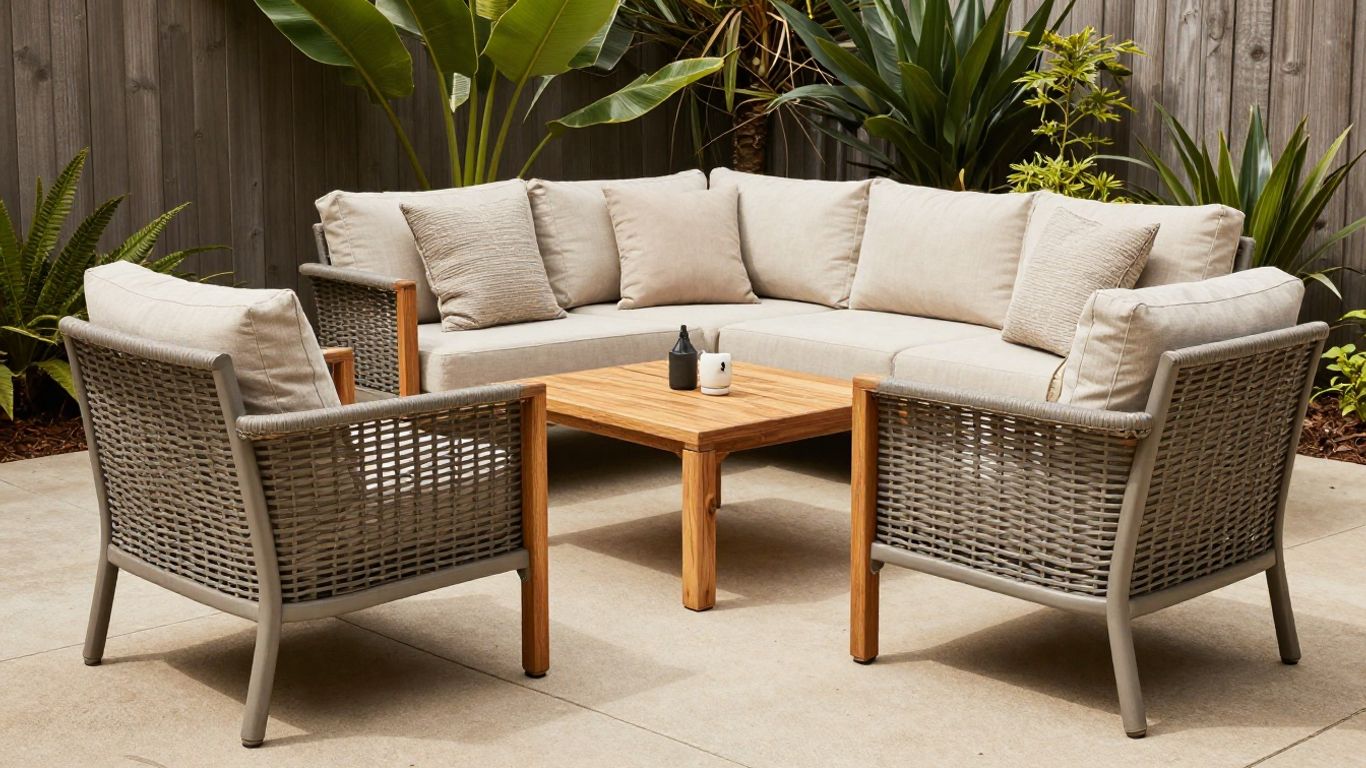
Natural wicker and synthetic resin are not interchangeable terms. Natural woven materials bring texture and warmth but may need more careful protection from prolonged moisture and sun. Synthetic resin or resin wicker is designed to handle outdoor conditions more readily, although its quality depends on the weave, frame beneath it, and the way the strands are secured.
Run your hand over the weave and inspect edges, corners, and underside areas. A consistent finish with no loose strands is a reassuring sign. Also check whether the shape supports your back properly; attractive woven seating can still be uncomfortable if the cushions or frame lack support.
Compare natural wood options such as teak and eucalyptus
Teak and eucalyptus offer a warmer, more organic appearance than painted metal or woven resin. Wood will change over time, and that change may be part of its appeal, but you should understand the recommended cleaning and treatment routine before buying. Look at the grain, joins, slats, feet, and areas where water could collect.
Wood furniture generally benefits from good airflow and sensible placement rather than being pressed against a damp wall. If you prefer a consistent original color, ask what maintenance is required; if you are comfortable with natural weathering, your routine may be simpler. The best choice is the one that matches both your design taste and your patience for upkeep.
Choose cushions and upholstery for outdoor performance
Cushions influence comfort as much as the frame does, so check the filling, thickness, support, seams, and removable covers. Outdoor fabrics should be selected for their resistance to UV exposure, moisture, and everyday spills, but even high-performance upholstery benefits from drying fully after rain. Quick-drying or free-draining construction can be especially helpful where cushions cannot be stored indoors easily.
When comparing options, consider the full care routine rather than just the fabric color. The weather-ready upholstery shown in outdoor sofa collections illustrates why color choice, cleanability, and frame material are best considered together. A pale fabric may look calm and spacious, while a darker one can be more forgiving between cleans.
Select the right size, layout, and style
A well-chosen outdoor sofa set should make the area feel intentional without making it difficult to move through. Start with the largest piece, then add tables, chairs, ottomans, and accessories around the paths people will use. Proportion matters: a deep sectional may overwhelm a small deck, while a tiny sofa can look lost on a broad terrace.
Match sofa dimensions to your patio or deck
Compare the sofa’s overall width, depth, and height with the usable dimensions you measured earlier. Check arm width and cushion projection too, since the listed frame size may not show how much room you need to sit comfortably. Leave enough clearance behind the sofa if people need to pass or if cushions must be removed for storage.
For a small space, a compact sofa or single-seat piece may be more practical than forcing in a full set. The Opito Single Sofa is described for smaller spaces and includes adjustable feet for leveling, along with a handwoven UV-resistant nylon rope design and Sunbrella fabric. Those documented features can be useful reference points when comparing compact seating, without assuming every small sofa offers the same specification.
Create a balanced conversation area
Arrange seating so people can see and hear one another without craning across a large table. A coffee table should be reachable from the main seats, while side tables can fill gaps without blocking knees or walkways. Keep the strongest view open and avoid placing the tallest piece where it cuts across the room’s visual flow.
A balanced layout does not need to be perfectly symmetrical. Repeated materials, similar seat heights, or a shared color can create cohesion even when the shapes differ. Sit in every main position before finalizing the arrangement, because a plan that looks good from above may feel awkward at eye level.
Coordinate colors, shapes, and existing outdoor furniture
Use the home’s exterior, paving, planting, and existing furniture as your palette. You can repeat one color in cushions and accessories, or contrast a neutral frame with a stronger upholstery shade. Rounded pieces often soften a hard-lined terrace, while simple rectangular forms can suit modern architecture.
Avoid matching every item too closely. A coordinated space usually has a dominant finish, a supporting texture, and one or two accents. Before ordering, collect fabric samples or photographs in daylight so the colors are judged beside your actual walls and flooring.
Decide whether modular flexibility is worth the cost
Modular furniture can be rearranged for guests, seasonal changes, or a different view. It may also let you start with fewer pieces and expand later, but flexibility can add cost and may require more connectors, clips, or separate covers. Check whether each configuration remains comfortable and visually balanced, not just technically possible.
Modularity is most useful when you expect your space or habits to change. If you have one fixed layout and limited storage, a well-made fixed sofa may offer better value and less daily fuss. Choose flexibility because you will use it, not because it sounds versatile on a product page.
Check comfort, construction, and durability
A good-looking outdoor sofa set should also feel dependable when you sit on it, move around it, and use it through changing weather. Inspect the furniture in person when possible, or study detailed dimensions and care information online. You are checking for the combination of comfort, stability, drainage, finish quality, and practical support.
Inspect frame joints, supports, and weight capacity
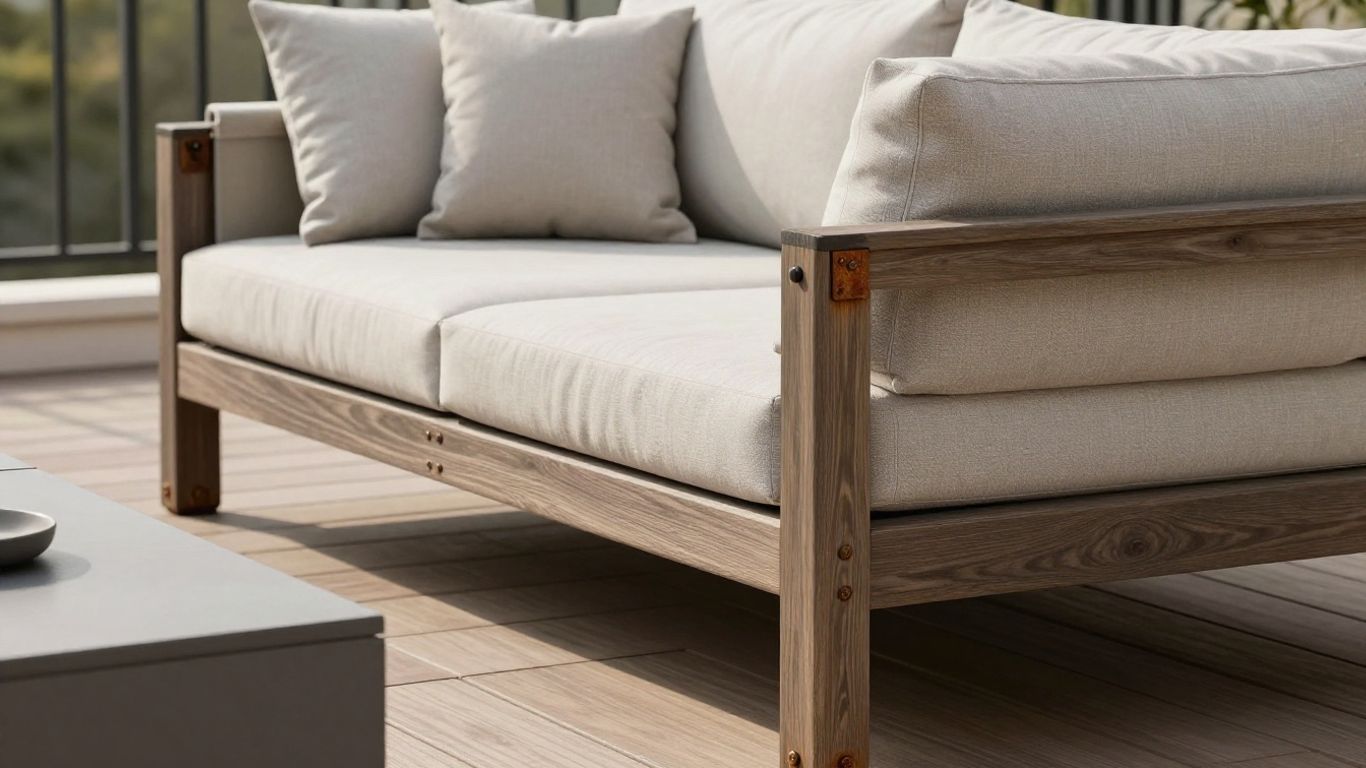
Look closely at corners, welds, fasteners, legs, and the underside of the seat. Joints should feel secure, with no rocking, sharp edges, or unexplained movement. Ask for the stated weight capacity and consider how that capacity applies to the whole sofa rather than one idealized sitting position.
Sit down slowly, shift your weight, and test the front edge and back support. A sturdy frame should not flex excessively or creak with ordinary use. If the set will be moved often, check whether the feet lift cleanly and whether the frame can be carried without stressing a delicate section.
Evaluate cushion thickness, density, and support
Thick cushions are not automatically more comfortable. Pay attention to seat depth, firmness, back angle, rebound, and whether the filling stays supportive after you sit for several minutes. Removable covers, breathable construction, and quick drying can matter just as much as softness in an outdoor setting.
Try the seat with your feet flat on the ground and your back supported. Deep seating may suit relaxed lounging, while a more upright seat can work better for meals and conversation. If people of different heights will use the set, choose a compromise that does not force shorter guests to perch at the edge.
Look for weather-resistant finishes and hardware
Inspect powder coating, paint, protective treatments, screws, hinges, and drainage points. The finish should be even, with no bubbling, exposed metal, or rough transitions at the joins. Hardware that resists corrosion is especially valuable in damp or coastal conditions, but placement still matters: sheltered furniture usually lasts longer than furniture left in standing water.
Read the care instructions before purchase. A finish that needs occasional washing may be perfectly practical, while one requiring specialist treatment may not suit your routine. Product details about rust resistance, UV performance, and moisture handling should be specific enough for you to compare options fairly.
Identify quality indicators in tables and accent pieces
Tables and side pieces need the same scrutiny as the sofa because they receive frequent contact, spills, and movement. Check whether the top stays stable, whether edges are comfortable, and whether the height works with the seating. Look underneath for bracing, adjustable feet, drainage, and a finish that reaches less visible surfaces.
Use this quick check when comparing a complete outdoor sofa set:
- Are the sofa and table heights comfortable together?
- Do the pieces remain stable on your actual paving or decking?
- Can rain drain away without collecting in joints or under cushions?
- Are covers, replacement parts, and care instructions clearly explained?
A set that passes these checks is more likely to feel considered in daily use. Small details, such as level feet and a stable tabletop, often determine whether you keep reaching for the furniture or avoid it.
Set a realistic budget and compare value
The purchase price is only one part of the cost of an outdoor sofa set. Frame material, upholstery, cushion construction, size, modular connectors, and included tables can all change the total. Set a comfortable upper limit, then compare what you receive for that amount rather than choosing by price alone.
Understand what affects the price of an outdoor sofa set
Larger dimensions and higher seating capacity generally require more material, while premium finishes and outdoor performance fabrics can add to the cost. Hand-finished details, thicker cushions, adjustable components, and modular designs may also affect the price. Delivery distance, difficult access, and assembly requirements can add practical expense.
Separate features you will use from features that simply sound impressive. If the set will sit under cover and be used occasionally, you may prioritize design and comfort differently than someone furnishing an exposed, heavily used entertaining area. A clear use case makes budget decisions less emotional.
Compare complete sets with individual pieces
A complete set may offer a coordinated look and a better combined price, but it can include pieces you do not need. Buying individual items allows you to create a more precise layout and spread the purchase over time, although matching finishes or fabrics later may be difficult.
Price the arrangement you actually want both ways. Include the sofa, chairs, tables, cushions, and any connectors or covers, then compare the totals. This prevents a seemingly inexpensive base set from becoming costly once the missing essentials are added.
Account for covers, cushions, delivery, and assembly
Ask what is included in the listed price and what arrives separately. Covers, spare cushion covers, protective feet, delivery, assembly, and removal of packaging can all affect the final figure. Nationwide delivery may be useful for shoppers outside major centers, but you should still confirm the delivery method, timing, access requirements, and any additional charges.
A practical budget also allows for seasonal protection. If you do not have indoor storage, a suitable cover or storage box may be a necessary part of the purchase rather than an optional extra. Plan those costs at the beginning so the furniture is protected from its first week outdoors.
Weigh warranties and long-term replacement costs
Read what the warranty covers, how long it lasts, and whether exclusions apply to fading, mildew, rust, accidental damage, or normal weathering. A warranty is more useful when the seller explains the claim process and can supply relevant documentation. Keep receipts, care instructions, and photographs of the furniture when new.
Also consider what happens if one cushion or connector is damaged. Replaceable components can extend the useful life of a set, while a discontinued fabric or unusual size may make repairs difficult. Long-term value is practical value: comfort, support, service, and maintainability should all sit beside the initial price.
Maintain and protect your outdoor sofa set
Outdoor furniture lasts better when care is easy enough to become routine. Most damage builds gradually through dirt, trapped moisture, prolonged sun, and neglect rather than one dramatic weather event. Follow the product’s instructions first, and adapt your routine to the exposure and materials around your home.
Clean frames, cushions, and upholstery correctly
Brush away loose dirt before washing so grit does not spread across the surface. Use a mild cleaning solution where the care instructions allow it, rinse thoroughly, and let cushions dry completely before covering or storing them. Test any cleaner on a hidden area first, particularly on colored fabric or natural wood.
Do not leave damp cushions pressed together or stacked in a closed container. Open zippers and seams need airflow, and removable covers should be washed according to their specific instructions. Gentle, regular cleaning is usually safer than aggressive scrubbing after a long period of neglect.
Use covers and storage to extend product life
Cover furniture when it will not be used for an extended period, but avoid trapping moisture beneath the cover. A breathable, correctly fitted cover is preferable to a loose sheet that flaps in wind or allows water to pool. Bring cushions indoors during prolonged rain, winter conditions, or long absences whenever practical.
Store cushions in a dry, ventilated place rather than directly on a damp garage floor. If the frame remains outside, lift it clear of standing water and keep drainage points unobstructed. These small habits reduce the workload on every material in the set.
Prevent fading, mildew, rust, and moisture damage
Shade can reduce UV exposure, while regular drying and airflow help prevent mildew. Keep leaves, soil, and plant debris from collecting in corners, under cushions, or around feet. For metal furniture, address scratches and early rust spots promptly according to the manufacturer’s guidance rather than waiting for corrosion to spread.
Wind protection matters too. Move lightweight pieces to a sheltered position before severe weather, and avoid placing furniture where roof runoff lands directly. Prevention is usually less expensive and less visible than restoring a neglected finish.
Know when to repair, replace, or refresh components
Inspect the set at the start and end of each season. Tighten approved fasteners, replace worn feet, clean blocked drainage, and look for splits, loose weaving, damaged seams, or unstable joints. A single replacement cushion or cover may refresh a well-built sofa, while a compromised frame may not be worth repairing.
Keep a record of the product name, purchase date, fabric, and care instructions. That information makes it easier to request support or find a compatible component later. Refreshing accessories can also update the appearance without replacing the entire set.
Conclusion
The right outdoor sofa set balances dimensions, climate suitability, comfort, construction, style, budget, and care. Measure first, test the details, compare the complete cost, and choose materials that fit the way you use your space. With a realistic layout and a simple maintenance routine, your outdoor seating can feel as considered and welcoming as any room indoors.
Frequently Asked Questions
How do I measure for an outdoor sofa set?
Measure the usable patio or deck area, then subtract space needed for doors, steps, walkways, planters, and other fixed features. Also measure the route from delivery access to the final position.
What size outdoor sofa set works best for a small patio?
Choose a compact sofa, loveseat, or smaller conversation arrangement that leaves clear circulation around it. Tape the proposed dimensions on the ground before buying to check the scale.
Which outdoor sofa frame material is most durable?
Durability depends on the frame material, protective finish, hardware, construction quality, and exposure. Compare aluminum, steel, wood, and synthetic options alongside their care instructions and your local weather.
Are outdoor cushions waterproof?
Many outdoor cushions resist moisture but are not completely waterproof. Look for quick-drying or free-draining construction, follow the care instructions, and allow cushions to dry fully after rain.
Should I choose a sectional or a standard sofa?
Choose a sectional when you want more capacity or a corner layout and have enough room for circulation. A standard sofa is often simpler for compact spaces or a fixed seating plan.
How can I protect outdoor furniture from winter weather?
Clean and dry the furniture, store cushions indoors where possible, use breathable fitted covers, and move lightweight pieces to a sheltered area. Keep drainage points clear and avoid trapping moisture.
How much should I budget for an outdoor sofa set?
Set a budget based on the arrangement you need, then include tables, cushions, covers, delivery, assembly, and future replacement parts. Compare comfort, construction, warranty terms, and maintenance rather than price alone.