

How to choose the right outdoor sofa set for your space
Key Takeaways
The right outdoor sofa set should suit your space, climate, habits, and budget—not just look good in a photograph.
- Measure the patio, including doorways, steps, and walking routes, before you shop.
- Choose frame, cushion, and upholstery materials that suit your local weather.
- Test comfort and consider whether a fixed, modular, or sectional arrangement fits best.
- Budget for delivery, covers, accessories, maintenance, and eventual replacement parts.
- Protect your furniture with sensible cleaning, ventilation, covers, and prompt repairs.
Assess your outdoor space and seating needs
Before comparing colours and fabrics, understand how your outdoor area works. A balcony, covered deck, and open lawn each place different demands on an outdoor sofa set. Measure carefully, think about how people move through the space, and picture a normal afternoon as well as a full gathering. For more planning ideas, this outdoor lounge furniture guide is a useful companion when you are defining your area and lifestyle.
Measure the available area
Measure the usable floor area rather than the patio’s outside edge. Record the width and depth, then note posts, steps, railings, doors, drains, and any fixed planters that affect placement. Check the furniture’s packaged dimensions too, especially if it needs to pass through a narrow gate or hallway.
Leave room to pull a chair out, walk behind the sofa, and reach a side table. A small space can still feel generous when every piece has a clear purpose, while an oversized set can make a large deck strangely cramped.
Plan for traffic flow and clearance
Map the routes people already use, such as the path from the kitchen to the garden or from the house to the pool. Keep those routes open instead of forcing guests to weave around coffee tables and chair corners. As a starting point, allow comfortable walking space around the main seating and more clearance wherever a door swings outward.
Use masking tape or cardboard to mark the proposed footprint on the ground. Living with that outline for a day often reveals problems that a plan on paper misses, including blocked views and awkward access to storage.
Match seating capacity to how you entertain
Think about your usual group, not the largest party you host once a year. A two- or three-seat sofa may be enough for daily coffee, while frequent family gatherings may call for additional chairs, an ottoman, or a second sofa. Consider whether guests sit for long meals, short conversations, or relaxed evenings with drinks.
It is also worth planning for flexibility. A compact sofa with movable chairs can accommodate changing numbers more gracefully than a large fixed arrangement that dominates the patio every day.
Decide between a sofa set and a sectional
A traditional sofa set gives you separate pieces that can be spread across a room or moved aside when required. A sectional creates a stronger lounge zone and usually makes efficient use of corners, but its footprint and delivery route deserve extra attention. Modular pieces sit between the two, offering more freedom as your needs change.
For a particularly compact setting, the Opito Double Sofa illustrates the appeal of a smaller sofa format, with listed dimensions of 180 cm wide, 80 cm deep, and 70 cm high. Use the same disciplined approach with any product: compare its dimensions with your marked-out space before falling for the styling.
Compare outdoor sofa set materials
Material affects appearance, comfort, care, and how confidently you can leave furniture outside. There is no single best choice for every New Zealand patio, because coastal air, strong sun, damp winters, and sheltered urban decks all behave differently. Look beyond the surface finish and ask how the frame, weave, fabric, and internal cushion construction will work together.
Understand wicker, aluminum, steel, and wood
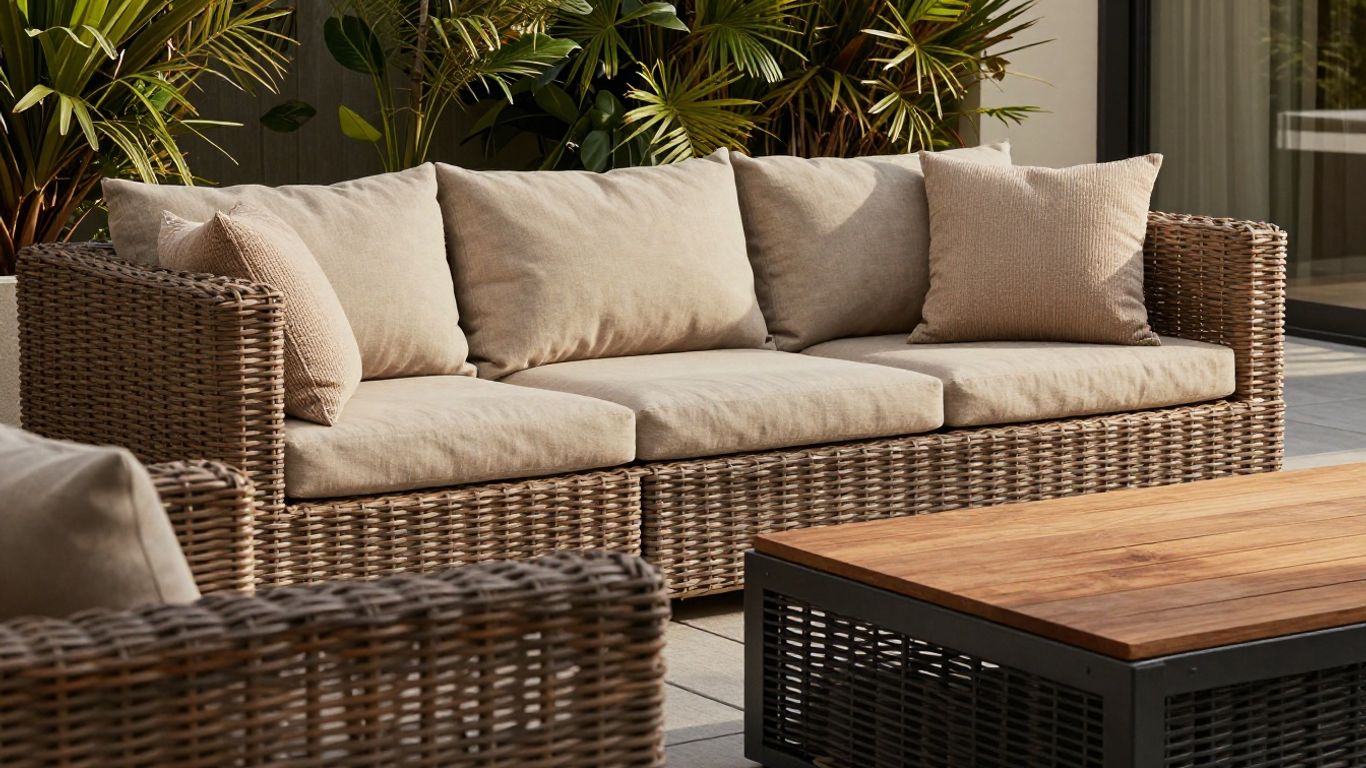
Wicker is a visual style as much as a material category, so check what the weave is made from and what sits beneath it. Aluminum is light and practical, while steel can feel substantial but needs a well-protected finish wherever moisture is present. Wood brings warmth and texture, though it generally asks more of you in terms of cleaning and seasonal care.
A powder-coated or rust-resistant frame can be a sensible choice for exposed settings. Whichever material you prefer, inspect joins, feet, drainage points, and the quality of the finish rather than judging durability by colour alone.
Choose cushions and upholstery for outdoor use
Outdoor cushions should be comfortable without behaving like indoor upholstery after one damp weekend. Look for fabrics designed to resist UV exposure and everyday spills, along with fillings that can drain and dry efficiently. Removable covers make routine cleaning easier, but they do not remove the need for ventilation and sensible placement.
For a product-level example, the Tekapo Single Sofa is described with a rust-proof powder-coated aluminum frame, Quick Dry Foam, high-performance Sunbrella fabric, and a textilene backing for rapid drying. Treat those as specific listed features of that sofa, then compare the equivalent specifications on any other set you are considering.
Consider durability in your local climate
Your location should influence the shortlist. Salt air can be demanding on hardware and finishes, humid areas need good airflow, and strong sun can expose weak fabrics quickly. A covered deck may protect furniture from direct rain, but it does not necessarily protect it from wind-blown moisture or UV rays.
Ask how the set is expected to perform in your particular position, then check the warranty terms and care instructions. A sheltered Auckland balcony and an open coastal deck may need different priorities even when they receive the same amount of use.
Weigh maintenance requirements against appearance
A highly textured weave may give you the relaxed look you want but collect more dust and leaves than a smooth frame. Pale cushions can brighten a patio, yet darker or patterned upholstery may be more forgiving around children and pets. Choose the amount of upkeep you will honestly maintain, not the routine you hope to begin someday.
The best material is often the one you can care for consistently. A simple monthly clean, prompt attention to spills, and good airflow will usually preserve the appearance of outdoor furniture better than an ambitious maintenance plan that is quickly abandoned.
Evaluate comfort, design, and functionality
A sofa can be beautifully made and still feel wrong if the seat is too deep, the back too low, or the cushions shift whenever you sit down. Try to test furniture in person when possible, or read dimensions closely when shopping online. Your outdoor room should feel like an extension of home, with practical details that support how you actually relax.
Check seat depth, height, and cushion support
Sit back and notice whether your feet rest naturally on the floor and whether the back cushion supports you without making you slump. Deep seating can be wonderful for lounging, while a shallower seat may suit upright conversation and easier standing. Check the firmness of the base and back cushions, not just their softness on first contact.
If several people will use the set, look for a middle ground rather than designing around one person’s preferred posture. Arms should be comfortable to rest on, and the seat height should work with the coffee table or side tables you plan to use.
Select a style that complements your home
Match the sofa’s visual weight to the architecture around it. Clean-lined aluminum can suit a contemporary home, while timber tones or woven textures can soften a modern deck. You do not need to match every finish; repeating one colour or material through cushions, planters, and tables is usually enough to make the space feel considered.
Colour samples are especially useful because outdoor light changes throughout the day. View fabric near the wall, paving, and planting that will surround it rather than choosing from a small indoor swatch alone.
Consider modular and movable configurations
Modular furniture gives you options when your household, entertaining style, or patio arrangement changes. You might use an L-shape for everyday lounging, separate the pieces for a larger gathering, or move them under cover during a storm. Check how connectors work and whether the individual modules are manageable for one or two people to move.
The Kapiti modular sofa set is presented as a collection with customizable configurations, including Sofa Set 16 through Sofa Set 29. That kind of range can be helpful when you want to compare layouts, but always confirm the exact module combination, measurements, and availability for the configuration you choose.
Look for useful features such as storage and swivel seating
Small functional details often determine whether you enjoy a set every day. Consider built-in storage for throws, tables with space for drinks, adjustable feet on uneven paving, or chairs that swivel toward different parts of the garden. Make sure each feature solves a real problem rather than adding complexity you will rarely use.
Think about the objects that normally gather beside you: books, sunscreen, cushions, serving trays, and toys. A few well-placed surfaces may be more useful than an elaborate feature list, particularly in a compact outdoor room.
Set a realistic budget
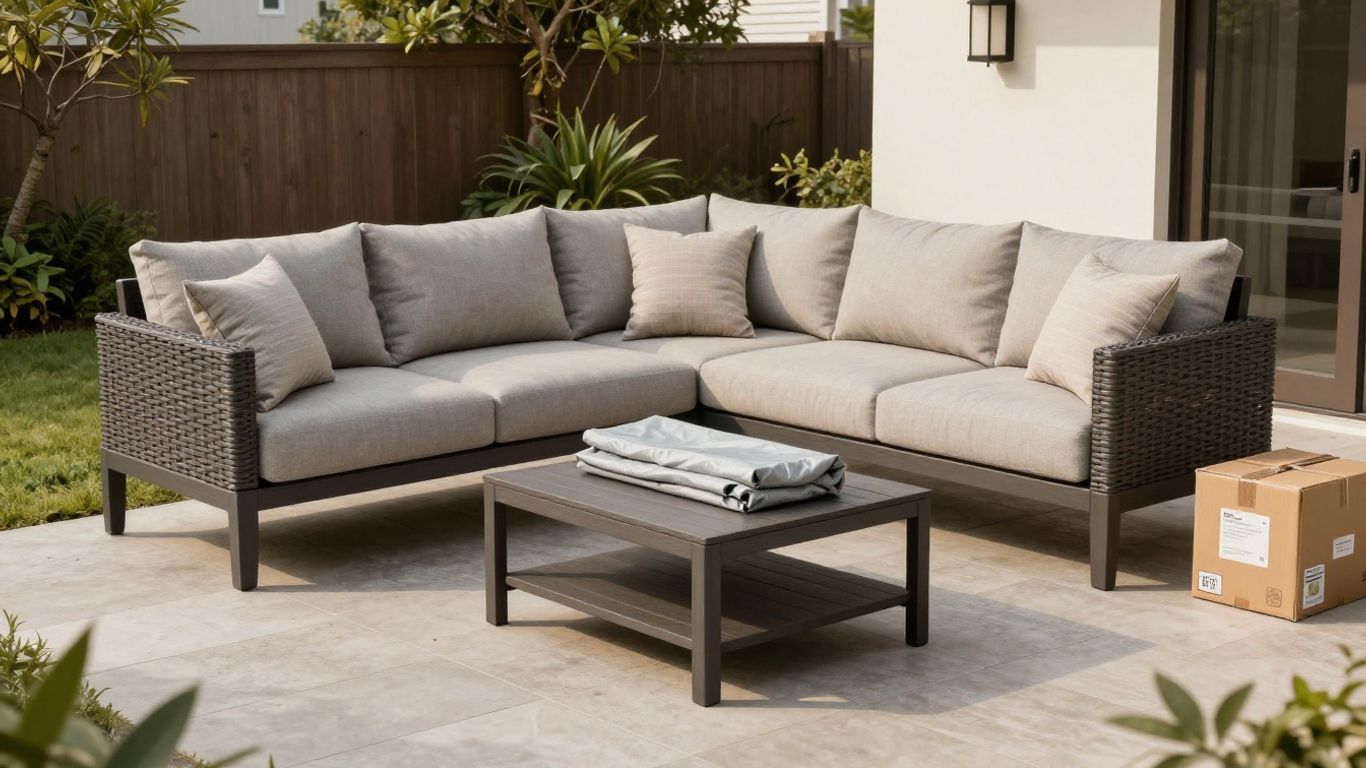
The ticket price is only one part of the cost of an outdoor sofa set. Delivery, assembly, protective covers, cushions, side tables, and replacement components can change the final figure considerably. Set a comfortable ceiling first, then compare what each option includes and how well it fits your space.
Compare entry-level, mid-range, and premium options
Entry-level furniture may suit a sheltered area or a first patio, while mid-range options often offer a broader choice of finishes and more substantial construction. Premium sets can bring stronger fabrics, better-tested ergonomics, modular flexibility, or longer support, but a higher price is not automatically better for your particular setting.
Compare like with like. Check frame material, cushion construction, warranty coverage, dimensions, and included pieces before deciding that one set is cheaper or more expensive than another.
Account for covers, pillows, and replacement cushions
Make a list of the extras you will want from day one. Covers may be worthwhile for an exposed sofa, while additional pillows can improve comfort and colour coordination. Replacement cushion covers or inserts may also matter if the set will receive heavy daily use.
Keep those likely purchases in your original budget rather than treating them as surprises. You may decide that a slightly better fabric is preferable to buying several protective accessories later, or you may value a simpler set that is easy to refresh gradually.
Calculate long-term value and expected lifespan
Value is best judged over the years you expect to use the furniture. Consider how often you will sit on it, how exposed it is, how easy it is to clean, and whether parts can be repaired or replaced. A durable set that remains comfortable and attractive can cost less in frustration than a cheaper option that needs early replacement.
A five-year fabric warranty, when offered on a specific product, is useful reassurance but not a promise that every part of the furniture will last five years. Read what is covered, what care is required, and how claims are handled before using warranty length as a deciding factor.
Watch for shipping, assembly, and seasonal sale costs
Delivery access can affect both price and feasibility. Ask whether the set arrives assembled, how many packages are involved, and whether stairs, narrow drives, or rural delivery zones create extra charges. Seasonal promotions can improve value, but only when the discounted set still meets your size and material requirements.
Write down the full delivered cost and compare it with your budget. This simple step helps you avoid choosing an attractive set that becomes impractical once freight and assembly are added.
Choose the best layout for your patio
Good layout makes an outdoor sofa set feel inviting before anyone sits down. Start with the room’s purpose, then arrange furniture to support conversation, views, shade, and movement. You can create a comfortable zone without filling every available metre.
Create a conversation-friendly arrangement
Angle seats toward one another instead of lining every piece against the boundary. Keep the coffee table close enough to reach but far enough away for knees and walking routes. A sofa, two chairs, and a compact table often create a more sociable setting than a larger row of identical seating.
Before committing, test the arrangement with temporary chairs or boxes. Sit in every position and check whether people can see one another without twisting around a table or looking past a tall planter.
Position the set around focal points
Use the garden, fire, pool, view, or an architectural feature as the reason for the arrangement. Face the best seats toward that focal point, while keeping sightlines from the house open where possible. If the view is shared with a dining zone, avoid turning the lounge into a barrier between indoors and outdoors.
A focal point does not have to be dramatic. A textured wall, favourite tree, or well-lit planting bed can give the seating a clear orientation and make the whole patio feel more intentional.
Balance shade, sunlight, and weather exposure
Notice where the sun falls in the morning and late afternoon, and consider prevailing wind as well as rain. Place frequently used seating where you can add an umbrella or overhead cover, but do not trap cushions in a damp corner with no airflow. A little flexibility in the arrangement can make the set more usable across seasons.
You may need to compromise between the best view and the most protected position. Prioritise the spot that will keep the furniture—and the people using it—comfortable for the greatest part of the day.
Coordinate with dining and lounge areas
When your patio includes both dining and lounging, give each zone a clear footprint. Keep chair backs and table edges from overlapping the sofa’s access route, and use a shared material or accent colour to connect the areas. A nearby bench or occasional chair can provide extra seating without making the lounge feel crowded.
For help planning the second zone, this guide to outdoor dining sets covers walking space, seating capacity, cushions, and material choices. Apply the same circulation test to both areas so the patio works as one room rather than two competing clusters.
Maintain and protect your outdoor sofa set
Outdoor furniture is made for exposure, but it still benefits from thoughtful care. A regular light clean is easier than trying to restore neglected cushions and frames after a full season. Follow the product’s instructions first, since fabrics, finishes, and fillings can respond differently to water and cleaning products.
Clean frames and cushions safely
Brush away loose dirt before washing, and use mild soapy water on compatible frame surfaces. Rinse thoroughly so residue does not attract more grime, then allow cushions to dry fully before stacking or covering them. Avoid aggressive scrubbing and unapproved bleach, especially on coloured upholstery.
Treat spills quickly by blotting rather than rubbing them deeper into the fabric. If removable covers can be washed, follow their care label and make sure they are completely dry before putting them back on.
Prevent fading, mildew, and rust
Good airflow is your first defence against mildew. Leave gaps around furniture, lift cushions after wet weather, and avoid pushing the set tightly against a wall where moisture lingers. Shade can reduce fading, while wiping salt or grime from metal parts helps protect finishes and fasteners.
Inspect the underside of cushions and the feet of the sofa as well as the visible surfaces. Problems often begin in hidden, damp areas and become much harder to address once they spread.
Use furniture covers and seasonal storage
Covers are useful when they are breathable, correctly fitted, and used on clean, dry furniture. Do not seal damp cushions under a cover, and avoid allowing pooled water to sit on the fabric. If you store pieces for a season, choose a dry, ventilated space and do not stack them in a way that strains the frames.
Your local conditions should guide the routine. A covered veranda may only need occasional protection, while an open deck exposed to winter rain may benefit from more regular covering or partial storage.
Inspect hardware and repair wear promptly
Every few months, check screws, connectors, glides, feet, and moving parts. Tighten loose hardware carefully and replace damaged components before they allow a frame to shift. Look for fraying, cracked finishes, standing water, or cushions that no longer drain properly.
Small repairs are easier while the furniture is still sound. Keep product details and purchase records somewhere accessible, particularly if you need care guidance, replacement parts, or warranty support.
Conclusion
Choosing an outdoor sofa set becomes much simpler when you begin with measurements, honest use patterns, climate, and total cost. Once those practical decisions are clear, you can choose the materials, comfort, style, and layout that make your patio feel naturally welcoming. Give the furniture regular care, and it should remain a useful part of outdoor life for years.
Frequently Asked Questions
How do I measure for an outdoor sofa set?
Measure the usable patio area, then account for doors, steps, railings, planters, walking routes, and delivery access. Compare those measurements with the assembled and packaged dimensions of the furniture.
Is a sectional better than a sofa set?
Neither is universally better. A sectional can make excellent use of a corner and create a defined lounge, while separate pieces are easier to move, rearrange, or use in different zones.
What is the best material for outdoor sofas?
The best material depends on your climate, exposure, style, and willingness to maintain it. Compare frame finishes, upholstery, cushion filling, drainage, warranty terms, and care requirements together.
How can I keep outdoor cushions from developing mildew?
Let cushions dry completely, provide airflow around and beneath them, and avoid storing damp cushions under airtight covers. Clean spills and dirt promptly according to the fabric care instructions.
Should outdoor furniture be covered?
Covers can help in exposed locations, provided they fit correctly and allow ventilation. Furniture should be clean and dry before covering, and cushions should not remain trapped in moisture.
How much clearance should I leave around patio seating?
Leave enough room for people to walk comfortably, pull out chairs, open doors, and reach tables. The exact amount depends on the layout, but mapping the footprint with tape is a useful practical test.
How do I choose the right cushion firmness?
Sit on the furniture if possible and assess both immediate comfort and support after several minutes. Consider seat depth, seat height, back angle, and how easily you can stand, not softness alone.