

How to choose the right outdoor fire pit for your backyard
Key Takeaways
Choosing an outdoor fire pit is easier when you treat it as part of your whole outdoor room, not a standalone purchase.
- Measure the space and plan seating before you shop.
- Match the fuel type to your preferred level of convenience.
- Compare dimensions, materials, ignition systems, and accessories.
- Follow local rules and keep generous clearances around the fire.
- Protect and inspect the fire pit regularly through every season.
Assess your space and intended use
The best outdoor fire pit suits the way you already use your backyard. Before comparing finishes or flame styles, consider where the fire will sit, how people will move around it, and whether you want occasional warmth or a permanent gathering point. A little planning now can prevent an expensive unit from feeling cramped later. For broader ideas on arranging an outdoor living area, this outdoor space planning guide can help you think through furniture, weather exposure, and everyday use.
Measure the available patio or yard area
Start with the total footprint, then mark the space the fire pit itself will occupy. Add room for chairs, walking paths, and the clearances stated in the manufacturer’s instructions. A compact courtyard may work best with a small fire table, while a larger lawn can accommodate a sculptural fire feature and more generous seating.
Measure overhead conditions too. Low branches, awnings, umbrellas, and pergolas may affect where you can safely place the unit. Use masking tape or chalk to outline the proposed footprint for a day or two; the visual test often reveals whether the arrangement will interrupt doors, paths, or views.
Check local fire codes and property rules
Rules for outdoor fires vary between councils and may depend on the fuel, season, location, and type of property. Check your local council guidance before buying, particularly if you live in a built-up area or plan to install a fixed gas line. Your body corporate, landlord, or insurer may also have additional conditions.
Do not assume that a small flame is automatically exempt from restrictions. Keep the product manual and installation requirements available, and ask a qualified installer to clarify gas work rather than improvising a connection yourself.
Decide how many people the fire pit should accommodate
Think about your usual group, not only the largest gathering you host once a year. Two to four people may prefer a smaller, intimate arrangement, whereas a broad table or central fire feature can work better for family gatherings. The fire pit should leave enough elbow room for drinks and conversation without forcing chairs too close to the flame.
Your seating does not need to form a perfect circle. Consider whether people will sit on sofas, dining chairs, benches, or movable loungers, and allow enough space to pull each piece out comfortably. A fire pit for smaller patios is a useful example of how a compact design can remain practical without overwhelming a limited footprint.
Consider wind exposure, seating, and nearby structures
Wind affects flame stability, smoke direction, comfort, and the safety of nearby furnishings. Look at how prevailing breezes move across your yard and avoid placing the fire pit where smoke will drift toward doors, neighbours, or a frequently used seating area. Walls can provide shelter, but they can also reduce ventilation and increase heat exposure.
Keep combustible structures, plants, fabrics, and décor well away from the unit. You should also consider whether the location remains comfortable in rain or strong sun, since an exposed fire pit may need a suitable cover and more frequent cleaning.
Compare outdoor fire pit fuel types
Fuel choice shapes the entire experience, from lighting and cleanup to installation and storage. Wood gives you the changing scent and sound of a traditional fire, while gas offers a more controlled routine. Bioethanol is another option for some fire tables, but you should always check the exact fuel and operating instructions for the model you are considering. A detailed outdoor fire pit buying guide can help you compare fuel choices alongside size, legality, and coastal-weather considerations.
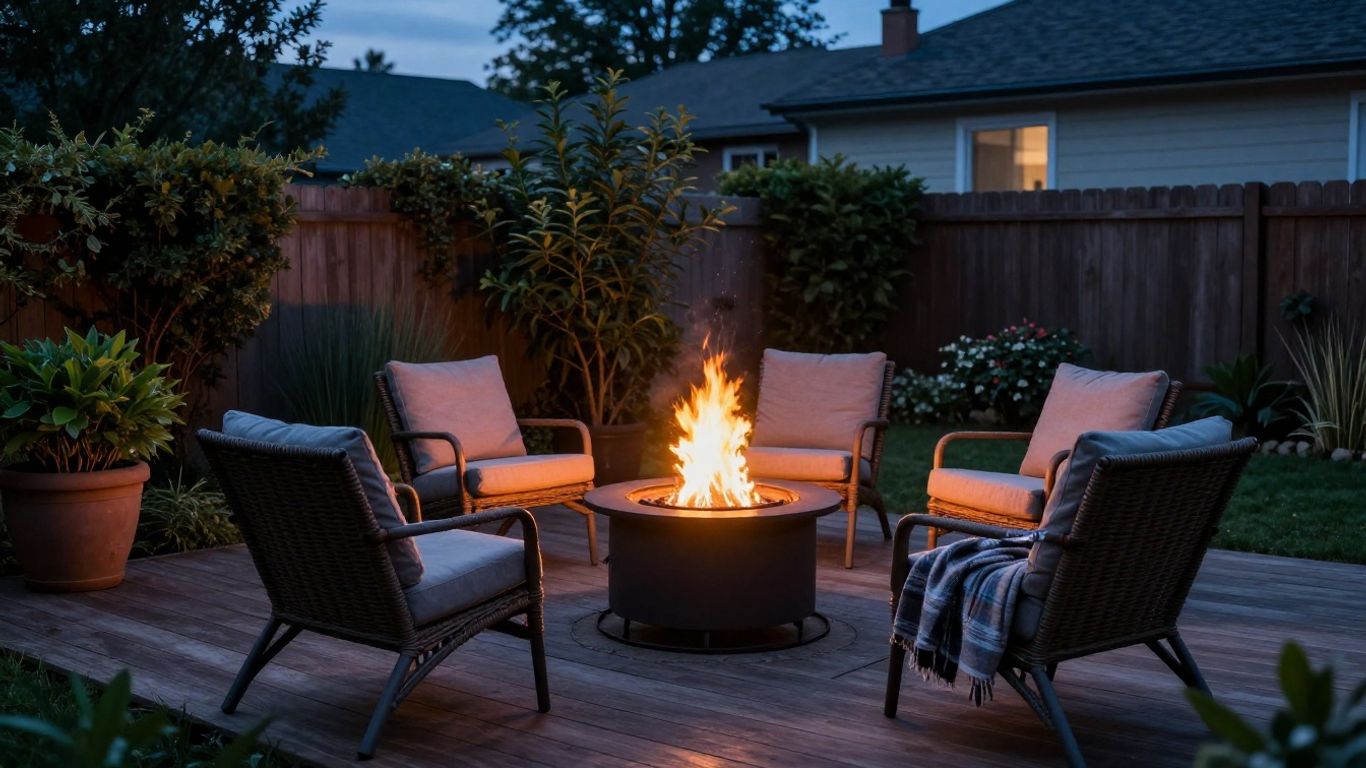
Wood-burning fire pits for traditional flames and heat
Wood-burning models appeal when you want crackling logs, lively flames, and the ritual of building a fire. They require dry, suitable firewood, a safe place to store it, and a plan for ash removal. Smoke, sparks, embers, and local restrictions also need to be part of your decision.
This style can be rewarding for relaxed weekend use, but it is less immediate than turning on a gas burner. Choose a spark screen where appropriate, keep water or another approved extinguishing method close by, and never leave a wood fire unattended.
Propane fire pits for convenient, clean operation
Propane can suit patios without a permanent gas connection and gives you flexibility about placement. You will need to accommodate the cylinder, whether it sits inside the base or in a separate enclosure, and you must follow the connection and storage instructions precisely. Check the cylinder arrangement before assuming a model is easy to move.
The flame is generally simpler to start and stop than a wood fire, with less ash to handle. That convenience is especially useful when you want warmth for an evening rather than a long fire-building session.
Natural gas fire pits for permanent installations
Natural gas is best considered when you want a fixed feature in a frequently used outdoor room. It avoids changing cylinders, but the gas line, fittings, ventilation, and burner requirements need careful planning. Have permanent gas work completed by an appropriately qualified professional.
Because the location is less flexible, decide on the layout before installation. Confirm that the finished fire pit will still work if you later change the seating, add an awning, or redesign the patio.
Smokeless designs and their real-world limitations
“Smokeless” usually describes a design intended to reduce visible smoke under suitable conditions; it does not mean the fire has no heat, embers, fuel requirements, or safety considerations. Performance can depend on dry wood, airflow, loading, and weather. Read the product instructions rather than treating the label as a promise of completely smoke-free operation.
If reducing smoke is a priority, compare construction and cleaning arrangements as well as fuel compatibility. For instance, a smokeless patio fire pit uses a double-wall design and supports standard firewood or wood pellets, but any wood-burning unit still needs responsible operation and regular ash removal.
A simple comparison can keep the choice grounded in how you actually live:
| Fuel type | Main appeal | Planning requirement | Ongoing consideration |
|---|---|---|---|
| Wood | Traditional flame, scent, and sound | Firewood storage and local rules | Smoke, sparks, and ash |
| Propane | Flexible placement and quick control | Cylinder storage and correct connection | Refilling and hose inspection |
| Natural gas | Permanent, convenient fuel supply | Professional fixed-line installation | Less flexibility after installation |
| Bioethanol | Clean-burning fire-table experience | Approved fuel and careful handling | Refilling and flame supervision |
This comparison is only a starting point. The product’s manual, certification, fuel rating, and installation instructions should decide whether a particular option is suitable for your property.
Choose the right size, shape, and style
A fire pit should feel proportionate to the furniture around it. Too small, and it may disappear in a large entertaining area; too large, and it can dominate the room or leave insufficient clearance. Shape also affects conversation, movement, and how easily you can create a balanced arrangement. Think of the fire pit as a functional centrepiece rather than an isolated decorative object.
Matching fire pit dimensions to your seating area
Measure from the centre of the proposed fire pit to the front edge of each seat, then check the manufacturer’s required clearances. A coffee-table-height fire feature works differently from a tall fire column or a dining-height fire table. Consider whether guests will place drinks near the flame and whether the surface remains useful when the fire is off.
For larger settings, a long rectangular form can serve several seats without making everyone face inward. In a smaller area, a compact round or square unit may preserve better circulation.
Round, square, and rectangular designs
Round fire pits encourage an informal, conversational arrangement and avoid sharp corners in busy paths. Square models often suit modern patios and can align neatly with paving or sectional furniture. Rectangular designs are useful when your seating is linear or when you want the fire feature to define a long lounge zone.
Look beyond appearance. The shape should leave access to controls, allow covers to fit properly, and avoid creating awkward corners where people regularly walk.
Portable models versus built-in fire features
Portable units give you more freedom to rearrange the backyard, store the fire pit during severe weather, or take it with you when moving home. Built-in features can look highly integrated, but their position, services, drainage, and surrounding materials require more commitment. A portable unit is not automatically light or safe to move, so check its weight and instructions first.
If you are still arranging the rest of the patio, portable may be the more forgiving choice. Once the furniture, paving, and planting are settled, you can decide whether a fixed feature adds enough value to justify the installation work.
Selecting a style that complements your outdoor space
Choose a finish that relates to your existing furniture, paving, and architecture. Concrete composite can create a substantial, contemporary look, while stainless steel feels lighter and more architectural. Natural patina, dark coatings, and neutral tones each age differently, so consider how the piece will look when it is not lit.
A product such as the Manhattan 50 Firepit Table combines concrete composite and stainless steel with a clean-burning bioethanol fire and a coffee-table surface. That kind of dual-purpose format can be especially useful when you want the fire feature to earn its place every day.
Evaluate materials and construction quality
Materials affect appearance, weight, heat management, and maintenance. Outdoor exposure in New Zealand can be demanding, particularly in coastal areas where salt and moisture accelerate wear. Look for clear information about the body, burner, protective finish, drainage, and replacement parts rather than judging quality by photographs alone.
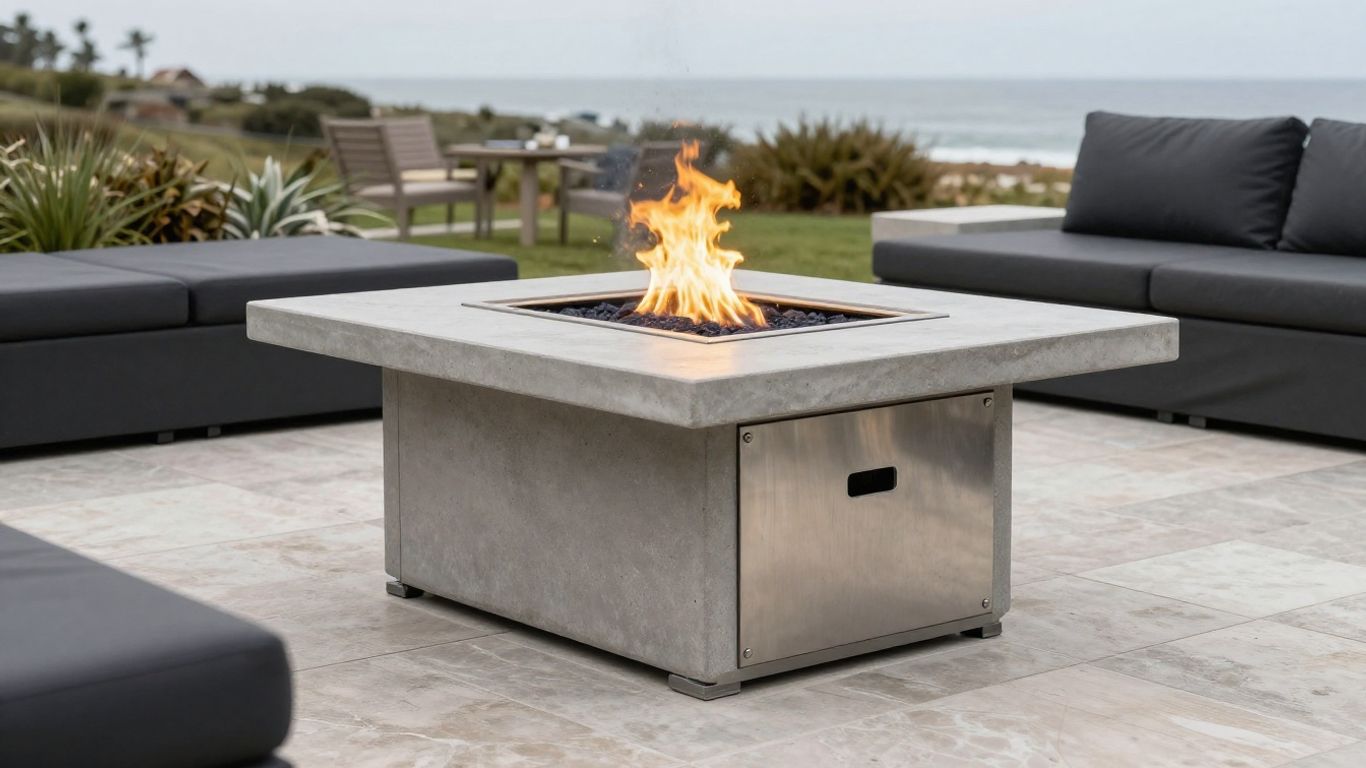
Steel, stainless steel, cast iron, and concrete options
Steel can offer strength and a range of finishes, while stainless steel is often selected for its clean appearance and resistance to corrosion. Cast iron has a substantial feel and retains heat, but it can be heavy and needs appropriate care. Concrete composite creates visual weight and a furniture-like presence, with the exact performance depending on its formulation and finish.
Ask how the material is intended to weather and whether the surface should be covered. The right choice is not simply the heaviest one; it is the material whose care requirements fit your climate and routine.
Heat resistance, weather protection, and durability
Check whether the base is suitable for your proposed surface and whether the unit needs a heat mat, feet, or another protective layer. Weather resistance does not mean maintenance-free. Rain, salt, dust, leaves, and temperature changes can all affect finishes and moving parts over time.
A cover can reduce exposure when the fire pit is not being used, but it should only be fitted as directed and should not trap moisture against a warm or damp unit. Read the care instructions before installation, not after the first season.
Burner quality and ignition systems for gas models
For gas models, inspect the burner layout, control access, ignition method, hose routing, and stated fuel requirements. A dependable ignition system should be straightforward to use, while controls should remain accessible without reaching across the flame. Any unusual smell, damaged hose, or failed ignition deserves attention before the unit is operated again.
The STIX 8 Firepit Table is documented as a Grade 304 stainless steel model supplied with an AB8 Efficiency Ring and specified lighting accessories. You can review the STIX 8 Firepit Table when comparing a stainless-steel fire-table format, but always match the product’s instructions to your own installation.
Covers, spark screens, and included accessories
Accessories can change how practical a fire pit feels from one day to the next. A cover helps protect the unit between uses, while a spark screen can add a barrier around a wood flame. Some fire tables also include lighting tools, media, or fuel containers, so compare what is supplied rather than assuming every listing includes the same package.
A glass screen or cover plate may also affect how you use the surface when the flame is off. The available fire pit accessories include protective covers, glass fire screens, and toughened glass cover plates, making it easier to plan for both safety and everyday functionality.
Plan for safe installation and operation
Safety begins with placement and continues every time you light the fire. Follow the manufacturer’s instructions, local requirements, and any professional installation advice, even if the unit appears simple. Children, pets, guests, clothing, and outdoor fabrics all need to be considered in the layout.
Maintaining proper clearance from combustible materials
Keep the fire pit away from walls, fences, overhanging branches, roofs, umbrellas, cushions, and other combustible items according to the specified clearances. Do not place chairs so close that people can brush against hot surfaces or lean over the flame. Wind can carry sparks and heat farther than expected, so increase caution on exposed sites.
Recheck the area after rearranging furniture. A safe installation can become less safe when you add a shade sail, move a sofa, or place decorative planting nearby.
Using fire-resistant surfaces and stable placement
Set the unit on a level, stable surface suitable for its heat and weight. Avoid uneven ground, loose gravel that can shift, and surfaces that may stain or crack unless the instructions specifically allow them. Timber decks and other combustible surfaces require particular care; never assume that an elevated design removes every risk.
Before lighting, gently test whether the unit rocks or shifts. If it does, stop and correct the placement rather than compensating with improvised packing materials.
Safe fuel storage and connection practices
Fuel should be stored exactly as directed, away from heat, ignition sources, and areas where children can access it. For gas, inspect the cylinder, regulator, hose, and fittings before use, and never use a damaged connection. Natural-gas installation and any required alterations should be handled by a qualified professional.
A short pre-use routine is easy to remember:
- Check the fire pit, burner, hose, and controls for visible damage.
- Clear leaves, cushions, paper, and other combustible debris from the area.
- Confirm that the fuel container or connection is secure and correctly positioned.
- Keep an approved method of extinguishing the fire within reach.
That routine takes only a moment but helps you spot problems before guests arrive. If you smell gas or see a fault, turn the system off if safe to do so and seek qualified advice.
Extinguishing the fire and supervising children and pets
Never leave a lit fire pit unattended, even when the flame looks low. Follow the correct shutdown method for the fuel type, and allow the unit and media to cool completely before covering, cleaning, or moving it. Wood fires need particular attention because embers can remain hot after visible flames disappear.
Children and pets should be supervised around every fire feature. Arrange seating so an adult can see the fire clearly, keep loose clothing away from flames, and explain a simple boundary before the gathering begins.
Maintain your outdoor fire pit year-round
Regular care protects both the appearance and the working parts of your fire pit. Maintenance is easier when it becomes part of your seasonal outdoor routine rather than a rescue job after neglect. Keep receipts, manuals, and warranty information together so you can identify the correct parts or service when needed.
Removing ash, soot, and debris
Allow the fire pit to cool fully before removing ash, charcoal, or debris. Use the tools and cleaning method recommended for the material, since abrasive products can damage coatings and unsuitable cleaners may mark composite or stainless-steel surfaces. Check drain holes and burner openings for leaves or dirt, but never poke into a burner with an improvised object.
A clean fire pit is also easier to inspect. You are more likely to notice corrosion, cracks, blocked openings, or a loose fitting when the surface is free of buildup.
Protecting the fire pit from rain and winter weather
Use a properly fitted cover when the unit is cool and dry. Good airflow beneath the cover can help prevent trapped moisture, while storing removable accessories separately can reduce staining and weather damage. In exposed or coastal locations, rinse salt residue as directed and dry surfaces where possible.
If severe weather is expected, follow the manufacturer’s advice about moving, securing, or storing the fire pit. Never drag a heavy unit across paving or a deck, as this can damage both the product and the surface beneath it.
Inspecting burners, hoses, and fuel connections
Before the first use of each season, inspect gas hoses, regulators, connectors, burner ports, ignition components, and control knobs. Look for cracking, corrosion, loose fittings, or changes in flame behaviour. Do not operate the fire pit if a component appears damaged or if the flame is unexpectedly yellow, weak, or irregular.
For wood-burning models, check the body, grate, spark screen, and handles. Any crack, severe distortion, or unstable support should be assessed before relighting.
Knowing when to repair or replace components
Replace worn parts with approved components rather than adapting pieces from another appliance. A cover, screen, hose, burner, or ignition part may look interchangeable while having different heat or fuel requirements. If you cannot identify the fault confidently, contact the manufacturer or a qualified technician.
Replacement is sensible when the structure is badly cracked, the burner system is unsafe to repair, or corrosion has weakened the unit. Spending a little time on an honest assessment is better than extending the life of a fire pit that no longer operates safely.
Conclusion
The right outdoor fire pit brings together fuel, scale, materials, safety, and the way you want to spend time outside. Measure first, compare the practical details, and choose a design that can handle your climate and maintenance routine. When the fire pit fits the space properly, it becomes a natural part of your backyard rather than an obstacle placed in it.
Frequently Asked Questions
What size outdoor fire pit should you choose?
Choose a size that leaves room for required clearances, comfortable seating, and clear walking paths. The ideal dimensions depend on the number of people you host and whether the fire pit is primarily for warmth, conversation, or serving as a table.
Is wood or gas better for an outdoor fire pit?
Wood suits people who enjoy traditional flames, scent, and sound, while gas is usually easier to start, control, and stop. Your local rules, available connections, storage space, and tolerance for ash and smoke should guide the decision.
Can you put an outdoor fire pit on a deck?
Only if the product instructions and local requirements allow it, and only with the specified protective measures. Combustible decks need careful assessment of heat, stability, clearances, and ventilation before installation.
How far should a fire pit be from the house?
Use the clearances stated by the manufacturer and your local authority rather than relying on a generic distance. Consider every combustible structure, including walls, fences, roofs, branches, umbrellas, and outdoor furnishings.
Do smokeless fire pits produce no smoke?
No fire pit can be treated as completely free of smoke in every condition. Smokeless designs aim to reduce visible smoke through construction and airflow, but fuel quality, loading, weather, and operation still affect performance.
Should you cover an outdoor fire pit?
A suitable cover can reduce exposure to rain, dust, and debris, but the unit should be cool and dry before covering. Follow the manufacturer’s advice so moisture is not trapped against the surface or components.
How often should you inspect a fire pit?
Inspect it before each use for obvious damage and perform a more thorough check at the start and end of the main season. Gas hoses, burners, fittings, screens, grates, and structural surfaces all deserve attention.