

How to Choose Outdoor Furniture NZ Homeowners Can Enjoy for Years
Key Takeaways
A good outdoor setup begins with the way you live, the space you have, and the weather your furniture will face. A little measuring and material research can help you choose pieces that feel right for years.
- Measure the full area, including walkways and door access.
- Choose materials with your local sun, rain, wind, and salt air in mind.
- Plan separate dining and lounging zones where space allows.
- Test seating comfort and check cushions, finishes, and hardware before buying.
- Follow care guidance and protect cushions during extended wet weather.
Start with your space and how you use it
The best outdoor furniture works with your home rather than competing with it. Before you browse, think about the activities you want to make room for, from a quiet morning coffee to dinner with friends. A quick sketch of the area can help you see where furniture will fit and how people will move around it. For a broader guide to planning a New Zealand outdoor space, start with the practical details below.
Measure the patio, deck, or balcony
Measure the usable floor area, not just the distance between the outside walls. Note fixed features such as steps, railings, garden beds, doors, and posts, then mark where those features affect the furniture layout. Leave enough room to pull out dining chairs and walk around a table without squeezing past it. If you are working with a narrow deck or balcony, a smaller table or a pair of separate chairs may feel more natural than a full suite.
Plan for dining, lounging, and entertaining
Consider what you actually do outside most often. If meals are the main attraction, prioritize a table and comfortable chairs; if you tend to stretch out with a book, give lounge seating more of the available floor space. You may be able to create both zones, even in a modest backyard, by choosing furniture with clean proportions and keeping the main route between the house and garden open. Design Concepts sells outdoor dining sets, with nationwide delivery available, so you can consider that category while planning a dining area.
Check access, storage, and clearance needs
Furniture needs to make it through the route from the street to its final position, and it should still be practical once it gets there. Before settling on a piece, check door widths, stair turns, lift access, and any tight passageways. A short access checklist can prevent a frustrating delivery day:
- Measure doorways, gates, and narrow passage points.
- Check whether the furniture arrives assembled or in separate pieces.
- Allow clearance to open doors and move chairs in and out.
- Identify a dry place for cushions or folding pieces when they are not in use.
These details can influence the right shape and size as much as the dimensions of the patio itself. If space is tight, prioritize easy movement and storage over filling every available corner.
Choose materials for New Zealand conditions
Outdoor furniture faces different conditions from one home to another, so the right material depends on more than appearance. Consider how much direct sun the area receives, whether rain reaches it, and how close you are to the coast. You will also want to weigh everyday upkeep against the look and feel you prefer. That combination is a useful starting point for choosing furniture that remains enjoyable, not just attractive on the day it arrives.
Compare timber, aluminum, steel, and synthetic wicker
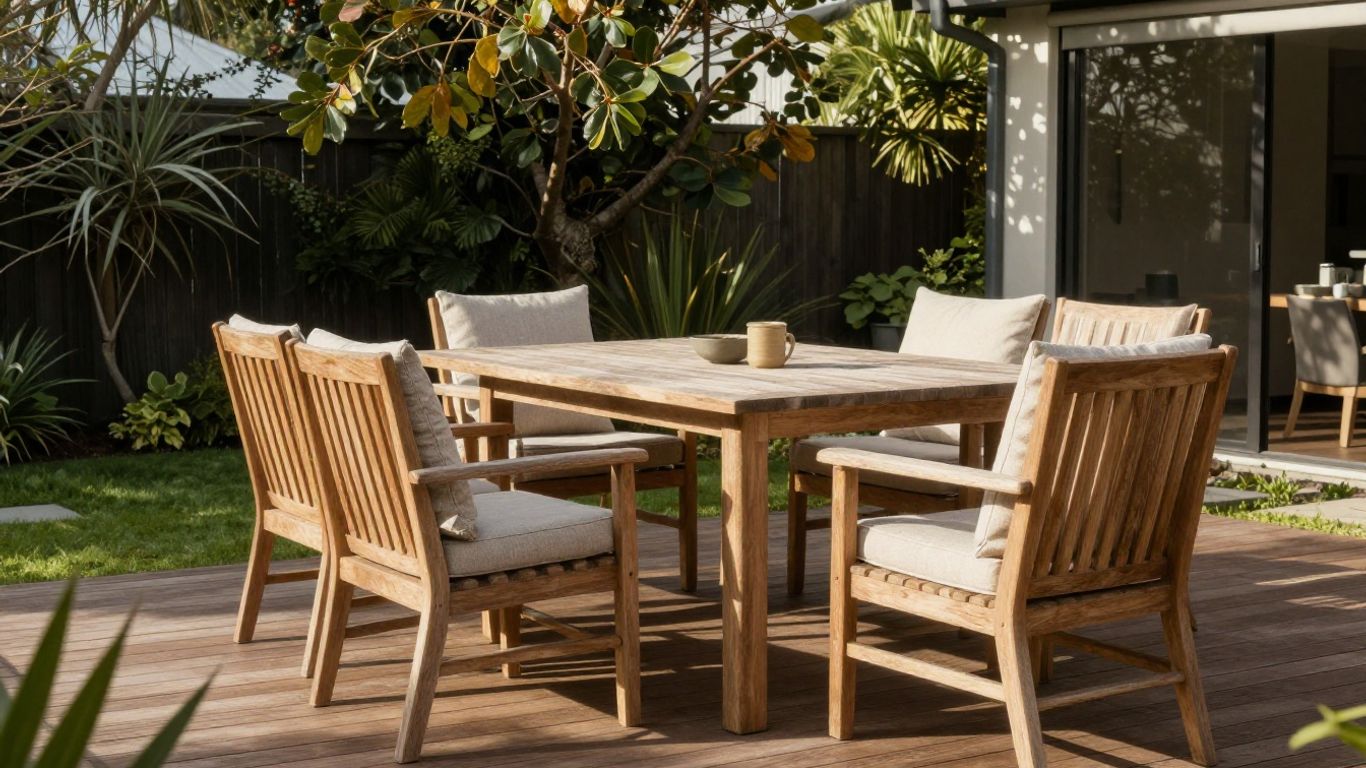
Each material brings a different mix of appearance, weight, and care needs. Timber has a warm, natural look, while aluminum is often valued for being lightweight. Steel can give furniture a substantial feel, and synthetic wicker offers a woven texture for an outdoor setting. Check the product information for the specific finish and care guidance rather than assuming every piece in a material category will perform the same way.
A simple comparison helps you focus on the details that matter for your space:
| Material | What to consider | Useful question |
|---|---|---|
| Timber | Finish and routine care | What maintenance does the maker recommend? |
| Aluminum | Frame finish and overall weight | Will it feel stable in the location? |
| Steel | Protective finish and hardware | How should the frame be cared for? |
| Synthetic wicker | Weave, frame, and cleaning | Can you clean it with simple products? |
Use the comparison as a prompt for questions, not as a substitute for checking an individual product's specifications. Details such as coatings, construction, and recommended care can vary from one piece to another.
Consider coastal air, rain, and strong sun
Salt air, regular rain, and intense sunlight can all affect furniture over time, especially when it is left exposed for long periods. If you live near the coast, look closely at frame finishes and hardware, and ask what protection is recommended. For a sunny area, check whether fabrics are described as UV- or fade-resistant; in a damp spot, look for clear guidance on drying and mildew prevention. Local conditions matter, so consider the exposure at the exact spot where each piece will sit.
Balance durability, weight, and upkeep
A sturdy piece may be right for a sheltered patio, while a lighter option might be easier to shift when you need to clear the deck. Think about who will move the furniture, whether it needs to be stored, and how much maintenance you are willing to do. Care requirements should fit your routine, not become another seasonal chore you keep putting off. Before buying, compare the manufacturer's care instructions with the time and storage you can realistically offer.
Find the right furniture for each outdoor area
The same furniture does not suit every outdoor zone. A generous garden terrace can accommodate a full dining arrangement, while a small balcony may call for a more flexible combination of chairs and a compact table. Treat each area as an extension of the rooms that open onto it, and keep the layout comfortable to use. The goal is not to fill the space but to make it easy to enjoy.
Select dining sets for meals and gatherings
Start with the number of people who usually eat outside, then decide whether you need extra places for occasional guests. A rectangular table can work well in a long area, while a round table may make it easier to move around in a compact space. Check the table dimensions alongside the chairs: the complete arrangement needs room for seating and circulation. For a closer look at outdoor dining set choices, compare size, table shape, and the practicalities of daily use.
Compare lounge seating for relaxing
Think about whether you prefer a sofa-style arrangement, individual chairs, or a combination that can be rearranged. Seat depth and back support affect how inviting the furniture feels, while a modular layout can make it easier to adapt to different occasions. Design Concepts sells outdoor sofas, with shopping available online and in-store. If you want another visual reference for weather-resistant outdoor lounges, look at the shapes and configurations that suit your space rather than choosing by appearance alone.
A lounge area feels more connected when there is a clear place to set down a drink or book, but leave enough open floor space to move around. Measure the full arrangement, including any tables or footstools, before you decide how many seats will fit comfortably.
Make compact balconies more functional
On a balcony, each piece has to earn its place. A small table and two light chairs can create a useful spot for breakfast without blocking the doorway, while stackable or foldable seating can be easier to put away when you need more room. Consider the direction the door swings and the path to the railing before choosing a layout. Keeping the floor visually open can make a compact area feel calmer and more usable.
Match comfort and style to your home
Outdoor furniture should feel like a place you want to linger, not simply a set of pieces that match. Comfort depends on fit as much as cushioning, and finishes look best when they relate to the home and garden around them. You can create a cohesive space without matching every item exactly. Start with one or two colors or materials, then add details that make the area feel personal.
Test seat height, depth, and cushion support
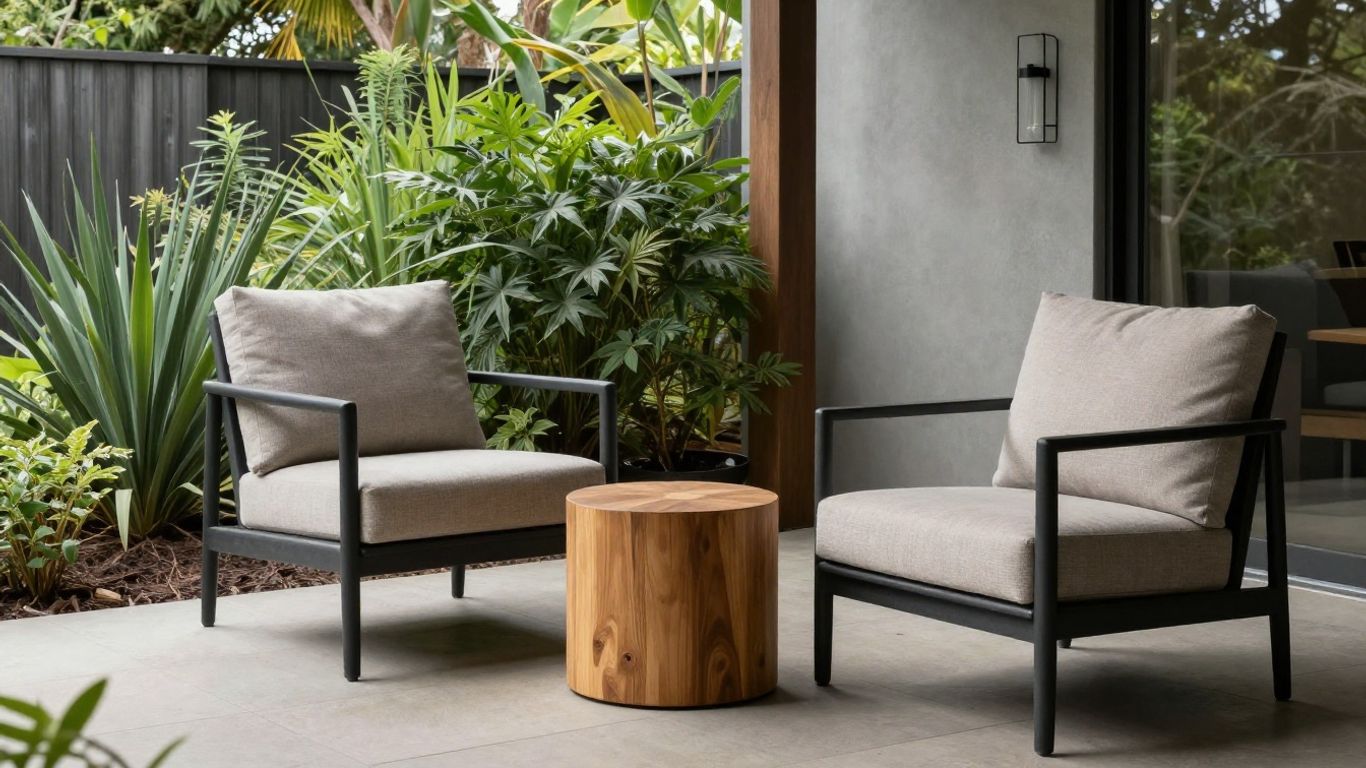
If you can, sit in the furniture before buying and notice whether your feet rest comfortably and your back feels supported. A deep seat can be relaxing for lounging but less convenient for a meal; a more upright position may suit dining better. Check cushion thickness and whether the covers can be removed for cleaning. Small differences in seat height and depth can shape how easily you use the furniture day to day.
Coordinate colors, finishes, and outdoor textiles
Choose a palette that feels at home alongside your exterior materials, plants, and interior furnishings. Neutral frames and cushions can be a flexible base, while a few stronger colors in accessories can bring energy to the space. When comparing textiles, check the product details for fabric performance and cleaning instructions instead of relying on color or texture alone. Repeating one finish or shade in a couple of places is often enough to make the whole area feel considered.
Use shade and accessories to improve comfort
Shade can make a seating area more comfortable in strong sun, and practical accessories help the space work throughout the day. Consider where the sun falls at the times you are most likely to be outside, then decide whether an umbrella or another shade option is suitable. Design Concepts sells outdoor umbrellas, a category to consider when planning shade for a patio or deck. Place accessories where you will use them, while keeping walkways clear and the furniture arrangement easy to maintain.
Compare quality, warranties, and value
Price matters, but it is only one part of the overall value of outdoor furniture. Construction, expected care, replacement options, and the terms of a warranty all help you understand what you are buying. Read product details carefully and ask questions when a specification is unclear. A confident choice comes from understanding both the piece itself and the support available after purchase.
Inspect frames, joints, finishes, and hardware
Look closely at how the frame is joined and whether the furniture feels steady when you sit or lean on it. Check the finish for even coverage and inspect visible screws, hinges, and other hardware. For furniture that will be moved often, consider how easy it is to lift and whether the joints feel secure. Product descriptions can help, but a hands-on check is useful whenever you have the opportunity.
Check cushion fabrics and replacement options
Cushions are exposed to changing weather and regular use, so check fabric details, cleaning advice, and whether replacement covers or cushions are available. If the product information mentions quick-dry foam, free-draining cushions, UV or fade resistance, or mould and mildew resistance, confirm exactly which features apply to that specific item. Also consider whether cushion covers can be removed and how they should be stored during wet weather. Those details can affect both comfort and the effort required to keep the set looking cared for.
Review warranties, delivery, and assembly terms
Read the warranty information for what it covers, how long the coverage lasts, and any care conditions that apply. Delivery details are just as practical: check the expected service, access requirements, and whether assembly is included. When comparing options, consider the full purchase cost and what happens if something needs attention later. A clear understanding of these terms can help you compare value on more than the ticket price.
Care for outdoor furniture throughout the year
Regular, appropriate care can help outdoor furniture stay pleasant to use through changing seasons. The right routine depends on the material and the maker's guidance, so avoid applying a one-size-fits-all cleaner or treatment. Small habits, such as wiping away dirt and keeping cushions dry, are usually easier than tackling a long-neglected setup. Plan care around the way your furniture is exposed and used.
Clean materials with suitable products
Start with the care instructions for each piece, including frame, tabletop, and fabric guidance. A soft cloth and mild cleaning method may be enough for routine surface dirt, but specific materials can need different treatment. Avoid abrasive products unless the manufacturer recommends them, and test an unfamiliar cleaner on an inconspicuous area first. Let items dry fully before putting covers or cushions back in place.
Protect furniture from prolonged exposure
Where possible, position furniture in a sheltered spot or use a suitable cover when it will be left unused for an extended period. Keep covers clean and allow airflow so moisture does not become trapped underneath. In exposed areas, check furniture after windy or stormy weather and follow the product's instructions for securing or storing it. A little attention to placement can reduce the amount of cleaning and maintenance later.
Store or cover cushions during wet weather
Cushions generally last better when they are dry before storage. Follow the care label, and use a ventilated storage space rather than sealing damp fabric away. If you leave cushions outdoors, check whether the manufacturer's advice allows it and use an appropriate cover when rain is expected. Making cushion storage part of your usual routine can keep the seating ready for the next fine day.
Conclusion
Choosing outdoor furniture is easier when you start with the way you use your space, then match materials, comfort, and care to your local conditions. Measure carefully, check the details that matter to you, and leave room for everyday movement; the result can be a welcoming outdoor area that feels at home through many seasons.
Frequently Asked Questions
How do I choose the right size outdoor furniture?
Measure the usable area, including door swings, walkways, and room to pull out chairs. Marking the layout on the ground can help you judge whether the furniture will feel comfortable rather than crowded.
Which outdoor furniture material is easiest to maintain?
Care depends on the specific finish and product, so check the manufacturer's instructions before choosing. Compare the routine each material needs with the maintenance you are willing to do.
What should I look for in outdoor cushions?
Check fabric care instructions, weather-related features stated in the product information, and whether covers or replacement cushions are available. Consider how you will store them during wet weather.
How much space should I leave around an outdoor dining table?
Allow enough room to pull out chairs and walk behind seated guests without obstruction. Measure the full table-and-chair arrangement, not just the tabletop.
Is outdoor furniture suitable for a coastal home?
It can be, but salt air may affect finishes and hardware over time. Look for clear care and material details, and follow guidance for cleaning and protection.
Should I cover outdoor furniture when it rains?
A suitable cover can help protect furniture during extended wet periods, but follow the maker's advice and avoid trapping moisture underneath. Cushions may need to be stored separately in a dry, ventilated place.
How can I make a small balcony more useful?
Choose a compact table and seating that suit the available footprint, and keep the doorway and main walking route clear. Foldable or stackable pieces can give you more flexibility when you need open floor space.