

How to choose outdoor furniture: A practical guide to comfort, durability, and style
Key Takeaways
Choosing outdoor furniture well means balancing the way you live with your space, climate, comfort preferences, and available budget.
- Measure the area, including the room needed for walking and opening chairs.
- Choose materials and finishes that suit your sun, rain, wind, and humidity exposure.
- Inspect frames, joints, cushions, fabrics, and warranties rather than judging by appearance alone.
- Prioritize furniture that supports the way you actually dine, relax, entertain, or store it.
- Compare the full cost of ownership, including covers, maintenance, delivery, and assembly.
Assess your outdoor space and lifestyle
Before you compare colors or browse furniture collections, understand the space you are furnishing. A balcony, covered veranda, poolside terrace, and open lawn each place different demands on furniture. The best choice is the one that feels natural to use and practical to live with through changing weather and seasons.
A useful starting point is this outdoor furniture planning guide, which brings space, lifestyle, weather exposure, and material choices into one decision. Take a few minutes to record your measurements and describe how you want the area to work.
Measure the area and account for movement
Measure the usable floor area, not just the overall footprint. Note doors, steps, railings, planters, drains, grills, and any posts that could limit placement. You also need room to pull out a dining chair, walk around a coffee table, and move safely between the house and garden.
Use masking tape or cardboard to mark the approximate size of each piece on the ground. This simple test often reveals that a generous-looking sofa or dining table will make a narrow patio feel crowded.
Identify sun, wind, rain, and shade exposure
Observe the area at different times of day. Strong afternoon sun can fade fabric and make dark frames uncomfortably hot, while persistent shade may leave cushions damp for longer. Wind matters too: a lightweight chair or umbrella may need sheltered placement, a secure base, or storage when conditions change.
Rainfall, salt air, humidity, and frost all affect material selection. Treat the most exposed part of your outdoor area as the test condition, especially if furniture will remain outside year-round.
Match the furniture to how you use the space
Think in scenes rather than shopping categories. You may need a compact setting for morning coffee, a dining table for family meals, deep seating for long conversations, or flexible pieces for occasional guests. Furniture that looks impressive but rarely suits your routine is poor value, whatever its finish.
If you are mainly creating a relaxed lounge, compare proportions and configurations in this outdoor lounge furniture guide. For frequent entertaining, prioritize surfaces and seating that can be reached easily without squeezing past other people.
Plan for storage and seasonal changes
Decide where cushions, covers, umbrellas, and smaller pieces will go during storms or winter. A covered deck may only need a storage box and breathable covers, while an exposed setting may require furniture that is easy to stack, move, or protect.
Plan the storage route as carefully as the storage location. Measure gates, stairs, lifts, and doorways before ordering large furniture, and consider whether you can move it without help.
Choose materials for your climate
Material affects appearance, weight, maintenance, comfort, and service life. No outdoor material is maintenance-free, and even weather-resistant furniture benefits from sensible placement and regular care. Your climate should guide the shortlist before style becomes the deciding factor.
Look for a combination of suitable frames, durable finishes, outdoor fabrics, and drainage. In a coastal or damp setting, resistance to moisture and corrosion may matter more than a particular color or trend.
Compare wood, metal, wicker, and plastic
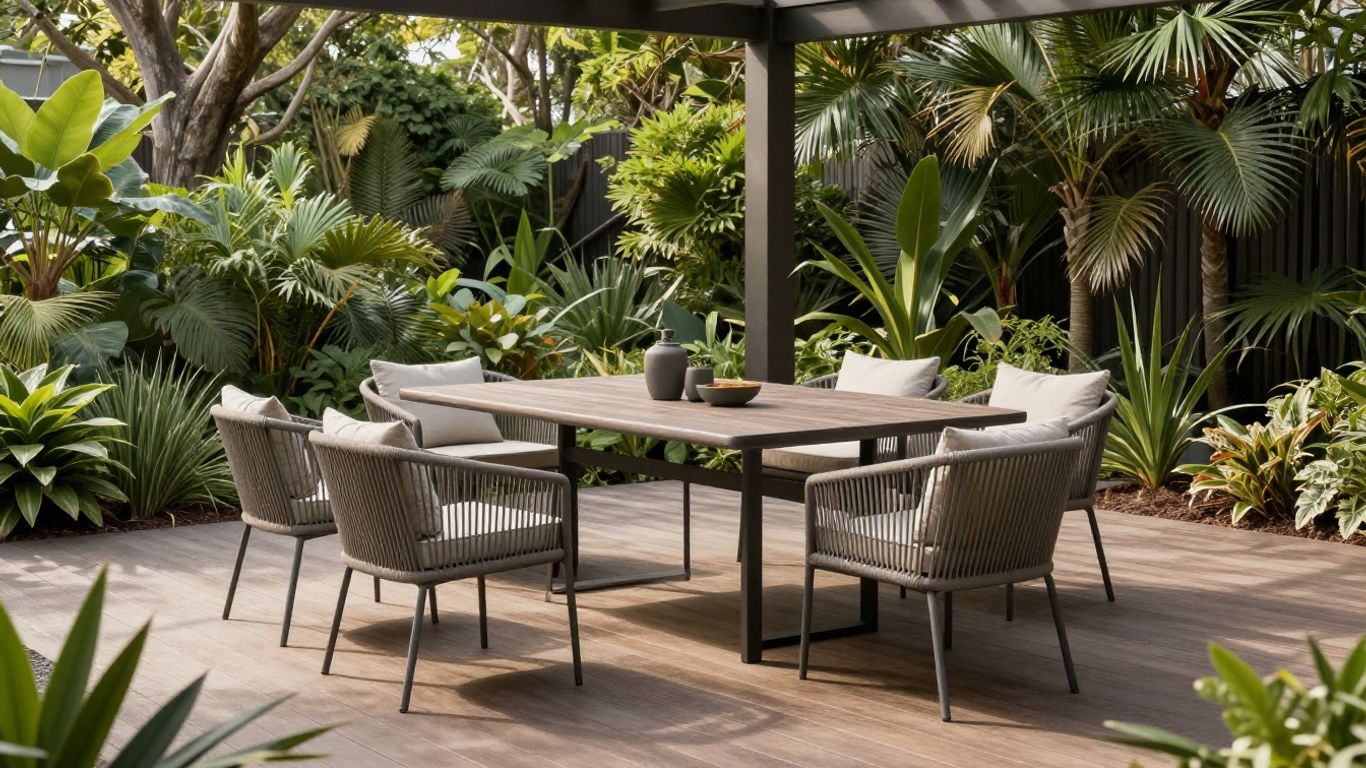
Wood brings warmth and texture but may need more regular care, depending on the species and finish. Metal can provide a clean, sturdy frame, although the coating and hardware deserve as much attention as the metal itself. Wicker-style furniture varies widely; outdoor synthetic versions are generally better suited to exposure than untreated natural fibres. Plastic can be practical and easy to clean, but quality, stability, and resistance to fading vary.
Compare the whole construction rather than choosing by material name alone. A well-finished frame with suitable hardware may perform better for your setting than a fashionable material used without adequate protection.
Select finishes that withstand moisture and sunlight
Ask how the finish handles water, UV exposure, and repeated cleaning. Powder-coated surfaces, rust-resistant frames, and fade-resistant fabrics can reduce everyday concerns, but they do not remove the need to wipe away salt, standing water, or organic debris.
Examine edges, corners, fasteners, and areas where water could collect. Those small details often tell you more about likely upkeep than a broad claim that a piece is suitable for outdoor use.
Consider heat retention and comfort
A material that looks cool in a showroom may become hot in direct sun. Dark surfaces, metal arms, and tightly enclosed cushions can all affect comfort. Shade, breathable fabrics, pale finishes, and cushions with good airflow can make the same setting much more pleasant.
Think about bare legs and arms as well as the seat itself. If the furniture will sit in full sun, test or imagine every surface you are likely to touch.
Weigh sustainability and material sourcing
Durability is one of the most practical sustainability decisions you can make: furniture that stays useful for longer is less likely to be replaced quickly. Also ask whether timber is responsibly sourced, whether components can be repaired, and how the retailer handles packaging or replacement parts.
Design Concepts is a New Zealand-owned and operated boutique retailer that describes its collections as ethically sourced and intended for New Zealand conditions. That positioning may be useful if you want design-led pieces without losing sight of material responsibility and local climate demands.
Evaluate construction and durability
A convincing product photograph cannot show whether a chair wobbles, a joint flexes, or water drains properly. Durability comes from the relationship between frame, fabric, foam, fasteners, and finish. Inspect each part as though you will be the person cleaning and moving it.
When comparing options, use the Frame, Fabric, and Foam guide as a practical reminder to assess the main systems together. A strong frame will not compensate for cushions that stay wet, and attractive upholstery will not fix poor structural support.
Inspect frames, joints, and hardware
Look underneath tables and chairs, where possible. Check whether legs sit evenly, joints appear secure, welds are neat, and screws or bolts are appropriate for outdoor exposure. Lift a piece to judge its weight, but do not assume heavy automatically means better; construction quality and stability matter more than bulk.
Open and close moving parts several times. Extendable tables, reclining mechanisms, and folding furniture should operate smoothly without excessive play or pinching points.
Check cushions, fabrics, and water resistance
Outdoor cushions should feel supportive rather than simply thick. Ask how the cover resists fading, mould, and mildew, and whether the filling allows water to drain or dry efficiently. Removable covers are useful, but only if zips, seams, and replacement options are also sensible.
Look for information about cleaning and drying rather than relying on the phrase “weather-resistant.” A cushion that can be aired quickly is easier to live with than one that must be hidden after every shower.
Look for stability in windy conditions
Test chairs by applying gentle pressure to the back and sides. Tables should have a broad, balanced base, while tall umbrellas need a properly weighted stand and a plan for closing them when wind rises. Modular furniture may need connectors so separate units do not drift apart.
If your property is exposed, favor a stable arrangement and avoid leaving lightweight accessories loose. Wind can damage furniture through repeated movement even when a single gust does not overturn it.
Understand warranties and expected lifespan
Read what a warranty covers, how long it lasts, and whether fabric, frame, foam, and finish have different terms. Also check the care obligations: some warranties may depend on following cleaning, covering, or storage instructions.
A warranty is helpful, but it should not replace careful inspection. Ask about spare covers, replacement cushions, repair support, and delivery damage procedures before you commit.
Prioritize comfort and functionality
Outdoor furniture should invite you to stay, not merely fill an attractive photograph. Comfort depends on dimensions, support, cushion construction, shade, and how easily you can use nearby tables. Sit down whenever possible, and imagine the piece after an hour rather than after a quick trial.
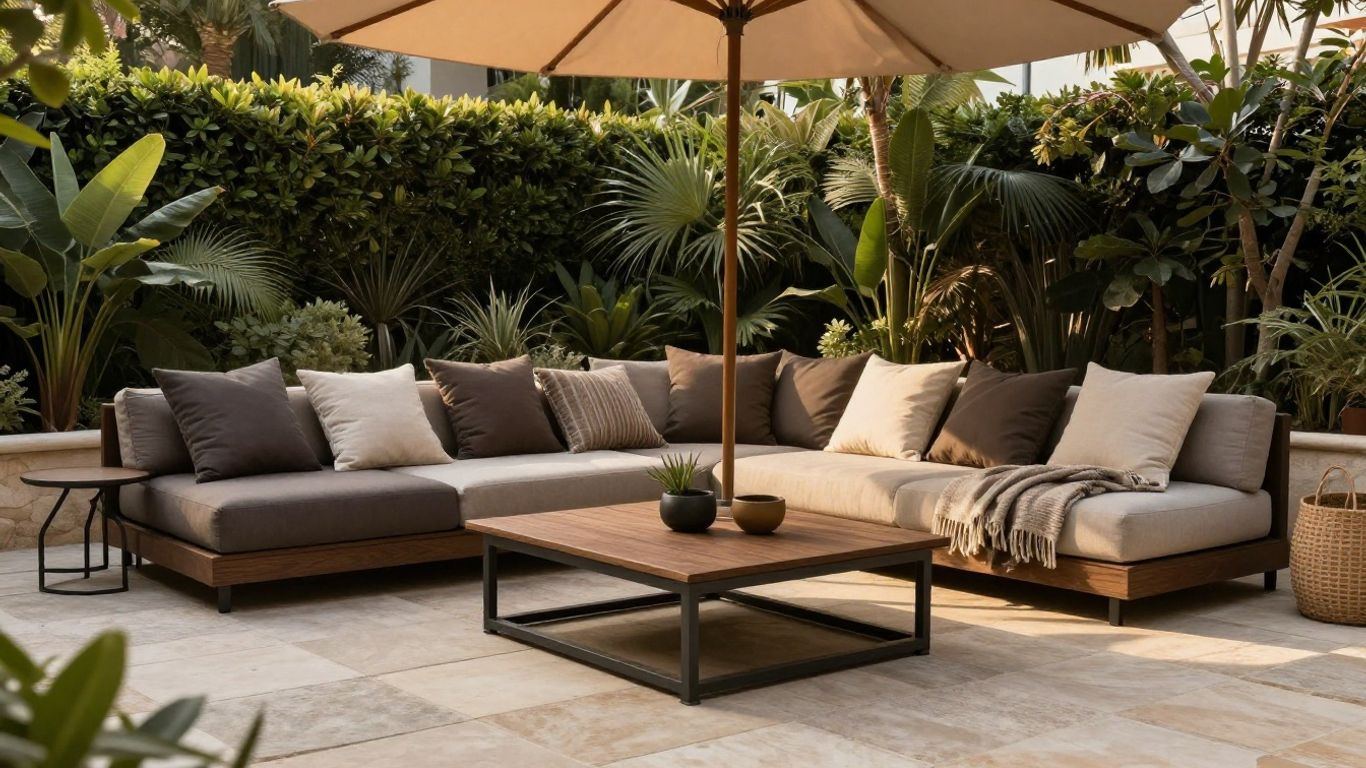
You can also compare the proportions and cushion considerations in these outdoor sofa options, where documented features include Sunbrella® fabrics, Urecel Quick-Dry foam, and marine-grade frames. Match any product feature to your own exposure and care routine rather than assuming one solution suits every setting.
Test seat height, depth, and support
Your feet should rest comfortably on the ground, and you should be able to stand without pushing hard against the arms. Deep lounge seating can feel luxurious, but it may not suit shorter users or people who prefer an upright posture. Check the angle of the back and whether lumbar support feels adequate.
For dining furniture, compare the seat height with the table height and allow enough room for knees. A beautiful table becomes frustrating if its apron limits legroom.
Choose cushions suited to outdoor use
Consider cushion thickness, firmness, removable covers, drying time, and storage. Quick-drying or free-draining construction can be especially useful where rain and humidity are common, but cushions still need airflow and occasional airing.
Choose colors you will be happy to maintain. Pale fabrics may show dirt sooner, while very dark fabrics can reveal fading; both can work when the care instructions fit your habits.
Add shade with umbrellas, pergolas, or canopies
Shade protects people and can reduce stress on furniture, especially during the brightest part of the day. An umbrella is flexible and relatively simple to reposition, while a pergola or canopy creates a more permanent architectural element.
Check the shade structure against the furniture layout, not separately. The canopy should cover the seats and table at the times you expect to use them, and its fixing method should suit local wind conditions.
Combine dining, lounging, and multifunctional pieces
You do not need a separate furniture set for every activity. A bench can serve everyday meals and extra seating, an ottoman can support feet or drinks, and a small side table can move between a reading chair and a lounge group.
Before buying a multifunctional piece, confirm that it is comfortable and stable in each role. Versatility is valuable only when it makes the space easier to use.
Create a balanced furniture layout
A good layout feels open without looking empty. Start with the largest functional piece, then add tables, chairs, lighting, rugs, and accessories around the paths people naturally take. Leave enough visual breathing room for the furniture to look intentional.
Your layout can also create zones: dining near the kitchen, lounging toward a view, and quieter seating in a sheltered corner. Keep the arrangement flexible enough to adapt when guests arrive.
Leave enough space for walking and pulling out chairs
Map the movement routes before finalizing the arrangement. You need clear access to doors, gates, grills, and steps, as well as space behind dining chairs when someone stands up. A narrow passage that works on paper may feel uncomfortable once people, serving dishes, and bags are present.
Use temporary marks on the floor and walk through the arrangement carrying a tray. That practical test is more revealing than simply checking whether each item technically fits.
Choose furniture proportions that fit the setting
Match the scale of the furniture to the architecture and the available area. Low, streamlined pieces can make a compact deck feel more spacious, while a larger garden may need substantial seating to avoid looking disconnected. Pay attention to table diameter, sofa depth, and the height of surrounding walls or planting.
For dining areas, table shape can help: round tables encourage conversation and soften corners, while rectangular tables often use a long, narrow space efficiently.
Arrange pieces around conversation and focal points
Face lounge seating toward one another rather than lining every chair against a wall. A view, fireplace, garden feature, or outdoor kitchen can become the focal point, but make sure the arrangement still supports eye contact and easy access to drinks.
A small central table helps anchor conversation, while side tables prevent people from reaching across others. Keep the center useful, not overloaded.
Coordinate colors, shapes, and design styles
Choose one or two anchor colors, then repeat them through cushions, rugs, planters, or nearby planting. Mixing materials can add interest, but a shared tone or shape keeps the result coherent. Natural timber, textured upholstery, and simple metal details often work well together when their proportions are balanced.
Aim for continuity with your home rather than a perfectly matched set. Outdoor furniture should feel connected to the rooms it extends, while still responding to the garden or landscape.
Set a realistic budget
A sensible budget includes more than the price shown on the product page. Think about how often you will use the furniture, how difficult it would be to replace, and whether a better frame or cushion system could reduce future frustration. The cheapest option is not always the least expensive over its useful life.
Set a total before you shop, then divide it between essential seating, a practical table, shade, protection, and finishing pieces. This prevents accessories from consuming the money needed for the furniture you will use every day.
Compare upfront price with long-term value
Compare construction, materials, warranty coverage, and expected care alongside the purchase price. A more expensive piece may be sensible when it offers better support, repairability, or resistance to the conditions it will face. The right comparison is not simply one price against another; it is cost measured against years of useful service.
Long-term value matters most for pieces that receive daily use or are difficult to store. For occasional seating, a simpler option may be perfectly reasonable if it remains stable and comfortable.
Account for cushions, covers, delivery, and assembly
Add every likely extra to your working budget. Covers, weighted umbrella bases, cushion storage, delivery charges, assembly, and replacement parts can change the final figure. Large furniture may also require special access arrangements or additional help on delivery day.
Ask for a complete quote and check what assembly includes. A lower advertised price is less attractive if the item arrives flat-packed when you expected it to be ready for use.
Decide which pieces deserve a higher investment
Spend more on the items that carry the most weight in your routine. That might be a sofa used every evening, a dining table that hosts family meals, or an umbrella that protects the whole seating area. Save on decorative accents that can be changed later.
A useful test is to imagine removing each item from the plan. If its absence would change how you use the space, it deserves closer attention than a purely decorative addition.
Recognize warning signs of low-quality furniture
Be cautious when specifications are vague, dimensions are missing, finishes are not described, or the warranty is difficult to locate. Wobbly frames, rough edges, thin cushions, weak hardware, and strong chemical odors also deserve investigation. Reviews can reveal patterns, but they should support—not replace—your own checks.
The quality outdoor furniture guide is useful when you want to compare budget, materials, comfort, and warranties together. If a deal seems unusually cheap, ask which component has been simplified or omitted.
Plan maintenance and make the final choice
Maintenance should fit your actual schedule. Every outdoor setting needs some care, but the amount varies with exposure, material, fabric, and whether furniture is covered or stored. Choose a routine you can keep rather than promising yourself a level of upkeep you will quickly abandon.
A short weekly check can prevent small problems from becoming expensive ones. Clear leaves, wipe spills, air cushions, and look for water sitting in joints or beneath covers.
Match care requirements to your available time
If you want a low-effort setting, favor easy-clean surfaces, removable covers, and furniture that can stay protected in place. If you enjoy seasonal upkeep, you may be comfortable with materials that develop character but need oiling, refinishing, or more careful storage.
Be honest about your household. A care-intensive choice is not a good choice if nobody has time to maintain it.
Compare cleaning, covering, and storage needs
Read the cleaning instructions before purchase, especially for upholstery and timber. Covers should allow ventilation rather than trapping dampness, and cushions should be stored dry. During severe weather, close umbrellas and move loose accessories indoors or into a protected area.
For a practical routine covering dust, mildew, cushions, teak, and aluminium, consult this outdoor furniture maintenance guide. Apply the advice to the specific care instructions supplied with your furniture.
Review product measurements and return policies
Recheck width, depth, height, weight, access dimensions, and the space required when chairs are pulled out or tables are extended. Compare those figures with the marks you made in your outdoor area. Then read delivery conditions, return timeframes, exclusions, and who pays for collection if the furniture is unsuitable.
Keep product details and order confirmations together. Clear records make it easier to resolve a measurement or delivery issue promptly.
Use a final checklist before buying
Do one final review before you place the order. A compact checklist helps separate excitement from a sound decision:
- Does every piece fit the measured space and movement paths?
- Are the materials and finishes suitable for your local exposure?
- Do the seat, table, cushion, and shade dimensions feel comfortable?
- Have you included delivery, assembly, covers, and storage in the budget?
- Do the warranty and care instructions match your expectations?
If each answer is clear, you are ready to choose with confidence. If one answer is uncertain, pause and ask for the missing information rather than relying on an attractive image.
Conclusion
The best way to learn how to choose outdoor furniture is to begin with your real space and routines, then work outward to materials, construction, comfort, layout, budget, and care. When those practical decisions are right, style becomes easier—and your outdoor area is far more likely to remain welcoming season after season.
Frequently Asked Questions
What should you consider first when choosing outdoor furniture?
Start with the space and how you plan to use it. Measure the area, identify movement routes, and note exposure to sun, rain, wind, shade, humidity, or salt air before comparing materials and styles.
Which outdoor furniture material lasts the longest?
There is no single best material for every climate. Longevity depends on the material, finish, construction, exposure, and maintenance, so compare the complete product rather than relying on the frame material alone.
How much space should you leave around outdoor furniture?
Leave enough room to walk comfortably, open doors, pull out dining chairs, and reach tables. Marking furniture footprints on the ground is a useful way to test circulation before buying.
Are outdoor cushions waterproof?
Many outdoor cushions are water-resistant rather than fully waterproof. Check the fabric, filling, seams, drying instructions, and storage requirements, and avoid leaving cushions damp under an unventilated cover.
How can you protect outdoor furniture from strong wind?
Choose stable frames and broad bases, secure or close umbrellas, and move lightweight pieces into shelter when conditions worsen. Connect modular pieces if the design allows it, and store loose accessories.
Is expensive outdoor furniture always better?
Not automatically. Compare construction quality, comfort, weather suitability, warranty, maintenance, and expected use. A higher price is worthwhile when it delivers benefits that matter to your setting and routine.
How often should outdoor furniture be cleaned?
Dust and wipe furniture regularly, remove spills promptly, and follow deeper cleaning instructions for each material. Increase the frequency when furniture is exposed to coastal air, heavy rain, tree debris, or high humidity.