

10 best outdoor furniture for coastal weather
Key Takeaways
Coastal furniture has to handle salt, sun, moisture, and wind, but the right choice also depends on how you use your space. Compare materials with your local exposure and your appetite for upkeep in mind.
- Teak can weather naturally, while occasional care helps preserve its original appearance.
- Powder-coated aluminum is light and easy to move; inspect its finish and hardware.
- Synthetic materials vary, so check UV resistance, drainage, and how pieces are constructed.
- Heavy concrete can suit exposed areas, while cushions and fabrics need their own weather plan.
- Quick-dry cushions and modular layouts can make everyday outdoor lounging more practical.
1. Teak patio furniture
Teak brings warmth and a natural grain to a coastal deck, and its dense timber is a familiar choice for outdoor furniture. Salt air and damp weather still call for sensible care: rinse away grime, let the wood dry, and check joints and fittings from time to time. If you like the silvery patina that develops outdoors, you can allow the surface to change rather than trying to keep it looking freshly finished.
Your decision is partly about the look you want over time. Leaving teak untreated generally changes its appearance, while cleaning and applying suitable teak products can help maintain a more golden tone. Follow the maker’s care instructions, and avoid assuming that every piece has the same finish or maintenance needs. A covered spot can reduce direct exposure, but it is not a substitute for checking the furniture regularly.
Before buying, consider construction as carefully as timber type: sturdy joints, smooth edges, and stable legs all matter when a chair is moved across a deck. Think about whether the piece will sit in full sun or near frequent spray, and whether you are willing to clean it as needed. For a wider comparison of coastal furniture choices, look at how material, construction, and local conditions work together rather than choosing by appearance alone.
2. Powder-coated aluminum furniture
Powder-coated aluminum can be a practical choice when you want a frame that is relatively easy to move around a patio. In coastal settings, the finish and the details beneath it deserve attention: look for even coverage, tidy joins, and hardware appropriate for outdoor use. Rinse off salt and dirt periodically, and check for chips that could leave the underlying metal exposed.
A simple comparison helps you see how frame materials may suit different priorities. These are broad tendencies, not guarantees; the design and care instructions for the individual piece still matter.
| Material | What to consider | Useful care habit |
|---|---|---|
| Powder-coated aluminum | Finish quality and stable construction | Rinse salt and inspect for chips |
| Teak | Natural grain and changing surface color | Clean as needed and follow care guidance |
| Synthetic wicker | Weave quality and UV suitability | Brush away debris and check the frame |
| Concrete | Weight and space requirements | Keep surfaces clean and check for damage |
Use that comparison as a starting point, then match the frame to your setting and routine. Design Concepts offers outdoor sofas, dining sets, umbrellas, and outdoor fireplaces, so you can think about the function of a space as well as its materials. Whatever you choose, check the product-specific details instead of treating one material label as a promise of maintenance-free performance.
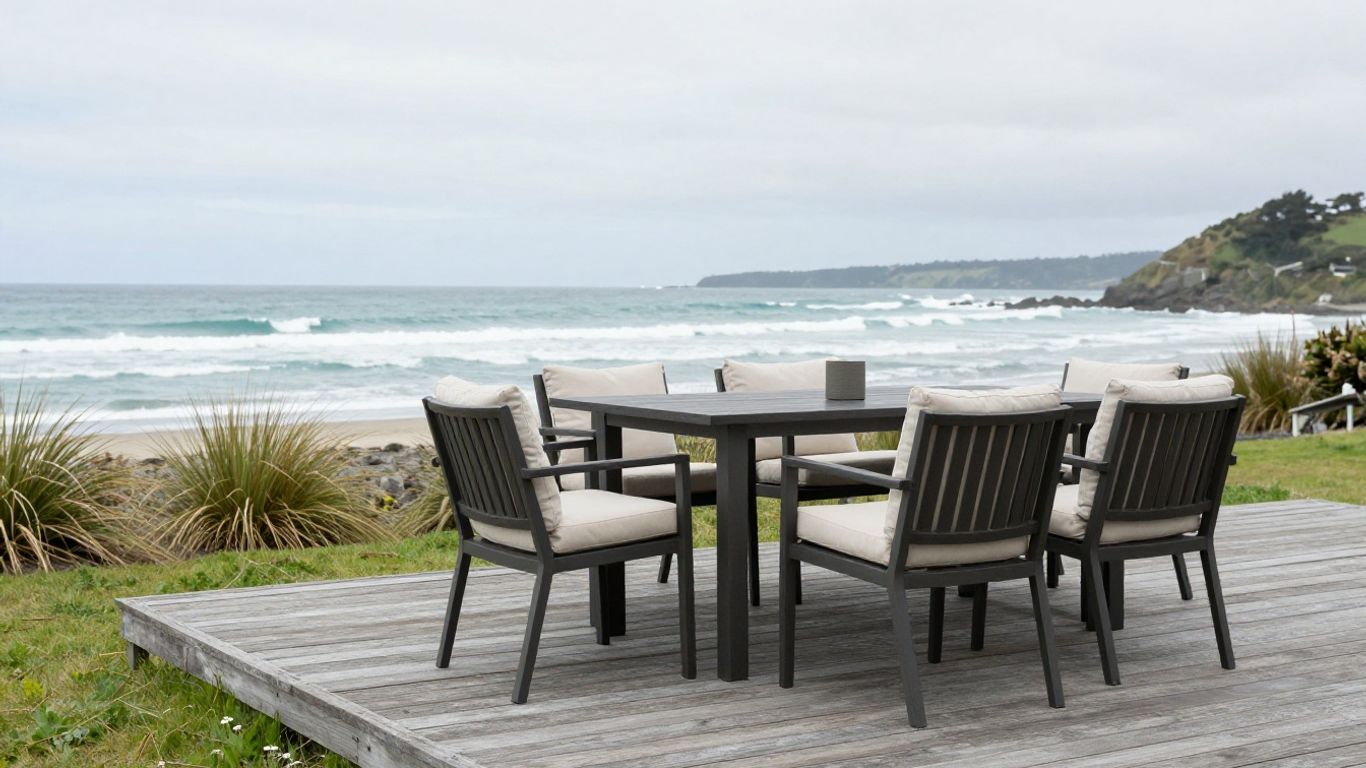
3. High-density polyethylene furniture
High-density polyethylene, often shortened to HDPE, is used in outdoor furniture because it does not absorb water in the way untreated timber does. That can make it worth considering for a damp, salt-exposed location, though the quality of the product and its construction still count. Ask what care the maker recommends and whether the piece is intended to remain outdoors through your local seasons.
Think about the shape and weight of the furniture as well as the material. A chair that is easy to wipe clean may suit a busy deck, while a dining set needs a stable base and enough room for people to move around it. If strong winds are common at your home, check how securely the pieces sit and whether you can move or store them when needed.
Color and finish are also part of the decision. Prolonged sun can affect outdoor surfaces, so check whether the maker provides specific information about UV resistance rather than assuming all HDPE performs alike. Weather-resistant does not mean immune to the elements; occasional cleaning and a quick inspection can help you spot wear before it becomes a bigger issue.
4. Marine-grade polymer furniture
Marine-grade polymer is another option to consider where salt and moisture are regular parts of outdoor life. The label alone does not tell you everything about a piece: review its stated care requirements, construction, and any information about exposure to sunlight. Compare those details with the exact conditions on your deck, balcony, or poolside area.
Because polymer furniture can come in different shapes and finishes, look beyond the material name to how it will work day to day. A table needs a steady surface, and seating should feel comfortable at the height you expect to use it. Check for drainage and cleanable surfaces, particularly if the furniture sits where rain collects or spray reaches it.
Also consider what the furniture will sit beside. A polymer dining chair can look at home next to timber, metal, or stone, but the scale and color should make sense with the rest of your setting. Use manufacturer guidance for cleaning, and avoid abrasive methods unless they are specifically recommended. A little routine care is still part of keeping outdoor furniture presentable.
5. Synthetic wicker furniture
Synthetic wicker offers the woven look of traditional wicker in a material intended for outdoor use. Coastal conditions make the quality of the weave and its supporting frame especially worth checking. Look for a tight, even finish and ask whether the material is rated for sun exposure; wicker appearance by itself does not tell you how a particular product will weather.
Some outdoor pieces pair woven materials with other features, so read the product description rather than judging by photographs alone. Design Concepts lists outdoor bar stools made with UV-resistant Olefin Rope and German weather fade-resistant wicker, alongside quick-dry foam cushions and A-grade fine-sanded teak. Those are details for that listed product, not a guarantee that every wicker seat has the same specification.
For any woven chair, check that the seat feels supportive and that the frame is stable when you lean back or shift your weight. Brush away sand and leaves before they settle into the weave, and follow the maker’s cleaning guidance. If the stools or chairs are exposed to regular salt spray, rinsing them occasionally is a simple habit that helps keep surfaces clear.
6. Marine-grade stainless steel furniture
Stainless steel can provide a clean, contemporary look, but coastal exposure makes grade and maintenance important considerations. “Marine-grade” is a useful description to investigate, not a reason to stop checking the product details. Ask what grade is specified, how the frame is finished, and what care is recommended for the conditions where you live.
Pay close attention to the small parts: fasteners, welds, and joins can affect how a frame holds up over time. Rinse off salt deposits and dry surfaces when practical, especially in sheltered corners where moisture lingers. If you see marks or discoloration, follow the manufacturer’s cleaning advice rather than reaching for a harsh product that could damage the finish.
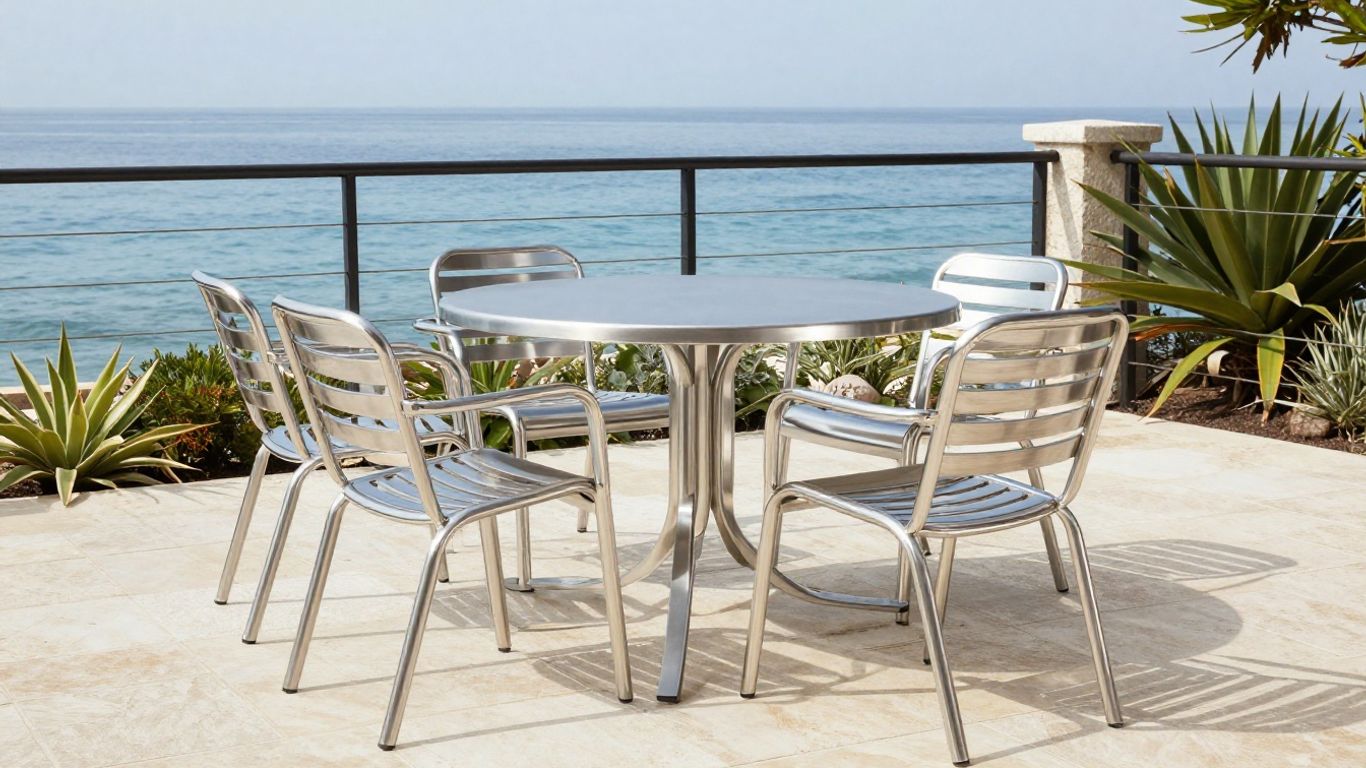
Stainless steel can be heavy enough to feel settled, but weight and stability depend on the design. Before purchasing, check whether the furniture is comfortable to move and whether it suits your deck’s layout. A neat finish, sensible care, and regular checks make a better basis for a coastal choice than the material name alone.
7. Sling-style outdoor seating
Sling seating keeps the design visually light and can be comfortable when the fabric is properly tensioned and the frame suits your body. Near the coast, you will want to check what the sling is made from and whether the maker describes it as suitable for outdoor UV exposure. Fabric quality varies, so compare the specification rather than relying on a generic label.
A few practical checks can help you decide whether a sling chair fits your routine. Try to assess the following before you commit:
- Check that the seat supports you without sagging uncomfortably.
- Look for fabric described as suitable for outdoor sun exposure.
- Inspect the frame finish, joins, and replaceable parts.
- Consider whether the seat can be rinsed or cleaned easily.
Those checks matter because the fabric and frame face different kinds of wear. A well-chosen sling can be easy to live with, but salt, grit, and long spells of sun still call for occasional attention. Follow the maker’s care instructions and let the fabric dry fully if it gets wet before you fold or store the chair.
8. Recycled plastic furniture
Recycled plastic furniture can be appealing if you want a straightforward surface that is easy to wipe down. Products differ in material composition, weight, finish, and construction, so ask what is used and how the maker recommends caring for it. For coastal use, check any specific statements about UV exposure and salt rather than assuming every recycled-plastic piece behaves the same way.
Comfort and proportions deserve the same attention as durability. Sit in the chair if you can, or check its dimensions against furniture you already find comfortable. For a table, consider whether the top gives you enough space without making the area feel crowded. A practical material will not rescue a layout that makes it awkward to move around.
Color, texture, and stability affect how well the furniture suits your home. Lighter pieces may be convenient to rearrange, but a wind-exposed patio may call for a design that sits more securely. Wipe away salt and dirt as needed, and store or secure furniture during severe weather according to the manufacturer’s advice.
9. Concrete outdoor furniture
Concrete furniture brings a solid, sculptural feel to an outdoor space and its weight can be useful where lighter pieces might shift. It needs enough room and a suitable surface beneath it, so check dimensions and placement before bringing a table or bench home. If you have a balcony or raised deck, confirm that the structure can support the load rather than guessing from appearance.
Concrete is not automatically carefree. Inspect the surface and follow the maker’s advice about sealing, cleaning, and protecting it from staining. Salt and moisture can settle on outdoor furniture, and a regular rinse or wipe can help prevent grime from building up. Avoid applying a sealant unless it is appropriate for the particular product.
Because concrete is visually substantial, it often works best when balanced with softer elements such as outdoor cushions, timber accents, or greenery. Keep the route around it clear, especially near doors and steps. When you plan the arrangement, consider how you will clean underneath and whether the piece can remain where it is or needs occasional repositioning.
10. Quick-dry modular lounge furniture
Quick-dry lounge furniture can make a coastal seating area more usable after a passing shower, but check exactly what “quick-dry” refers to in the product description. Cushion filling, cover fabric, and the frame all play a part in how a set handles wet weather. Look for drainage-friendly construction and follow any guidance about removing cushions or allowing them to air out.
Modular seating gives you room to adapt a layout as your needs change. Measure the available area, leave a clear path to doors, and check how separate sections connect or stay in place. The outdoor lounge planning guide offers more ways to think through traffic flow, frame materials, and cushion choices before you settle on a configuration.
The Outdoor Daybeds listed by Design Concepts use quick-dry foam and Sunbrella Lead Chine fabric, with six recline positions and built-in wheels. Those product details may suit someone looking for a flexible place to lounge, though a daybed is not the same thing as a modular sectional. For any lounge setup, check the specific cushion and fabric care instructions and plan where pieces can dry after wet weather.
Conclusion
The best outdoor furniture for coastal weather is the furniture that fits your exposure, space, comfort needs, and willingness to care for it. Compare product-specific materials and construction, plan for salt and sun, and choose a layout you will genuinely enjoy using through the seasons.
Frequently Asked Questions
What materials work well for outdoor furniture near the coast?
Teak, coated aluminum, HDPE, marine-grade polymer, synthetic wicker, stainless steel, recycled plastic, and concrete are all options to compare. Their performance depends on construction, finish, exposure, and care, so check the specifications for each piece.
Does coastal furniture need regular maintenance?
Yes. Even weather-resistant furniture benefits from routine cleaning and inspection. Rinse away salt and dirt when needed, check finishes and joins, and follow the maker’s care instructions.
Is teak a good choice for a coastal patio?
Teak is a popular outdoor timber, and it can be left to weather naturally or cared for to maintain a different appearance. Check the product’s guidance and decide whether its changing color and upkeep suit your preferences.
Is powder-coated aluminum suitable for salty air?
It can be a practical frame option, but the coating, hardware, and construction matter. Inspect for chips, clean away salt deposits, and follow the manufacturer’s recommendations.
How can I protect patio furniture from salt spray?
Rinse or wipe exposed surfaces periodically, keep furniture clean, and use covers or sheltered storage when appropriate. Regularly inspect fittings and finishes for signs of wear.
Are quick-dry cushions waterproof?
Not necessarily. Quick-dry describes how a product is intended to dry, while water resistance depends on its specific materials and construction. Check the product details and care instructions.
What should I consider for a windy coastal deck?
Consider furniture stability, weight, and the layout of the space. Make sure there is room to move safely, and have a plan to secure or store lighter pieces when strong winds are expected.