

10 best outdoor furniture for NZ weather: Durable choices for every outdoor space
Key Takeaways
New Zealand weather asks a little more of your outdoor furniture than a sunny afternoon does. The best choice balances material, location, comfort, and the amount of care you are realistically willing to provide.
- Choose materials according to sun, rain, salt air, and wind exposure.
- Prioritize rust-resistant frames, UV-stable finishes, and quick-dry cushions.
- Use heavy, stable designs in exposed or elevated outdoor areas.
- Measure carefully before choosing furniture for balconies and compact decks.
- Protect and clean your furniture regularly to extend its useful life.
1. Powder-coated aluminium furniture
Powder-coated aluminium is one of the easiest materials to live with outdoors. It is light enough to move when you want to rearrange a deck, yet it does not bring the same rust concerns as ordinary steel. A quality powder-coated finish also gives you plenty of scope to choose a clean, modern look.
When you compare options, inspect the frame, joins, feet, and finish rather than judging the material by name alone. Aluminium dining tables work well where you want generous legroom and easy cleaning, while slim chairs and benches can keep a smaller patio feeling open. For a broader look at choosing furniture for local conditions, this outdoor furniture buying guide is a useful companion.
A simple comparison can help you match the material to your setting:
| Feature | Why it matters outdoors | What to check |
|---|---|---|
| Powder-coated finish | Adds a protective, even surface | Look for a consistent coating without chips |
| Aluminium frame | Keeps weight manageable | Check frame thickness and construction |
| Adjustable feet | Helps on uneven paving or decking | Confirm that feet are stable and durable |
| Slatted surfaces | Allow water to drain away | Make sure gaps are practical and easy to clean |
The table is a starting point, not a substitute for looking at the whole piece. In a sheltered courtyard, almost any well-made aluminium design may perform comfortably; on a coastal deck, you should pay closer attention to fasteners, drainage, and cleaning access.
2. Teak outdoor furniture
Teak has a naturally warm appearance that suits gardens, decks, and outdoor dining areas. Its dense timber makes it a long-standing choice for furniture exposed to changing weather, though it still benefits from sensible placement and care. You can allow it to weather to a softer silver-gray, or maintain more of its golden tone with suitable products.
The character of teak is part of its appeal, but do not treat it as maintenance-free. Clear leaves and standing water, wash away grime with an appropriate cleaner, and follow the maker’s advice before applying oil or protectant. If you want a coordinated surface for drinks and serving dishes, browse these modern outdoor coffee tables alongside your seating.
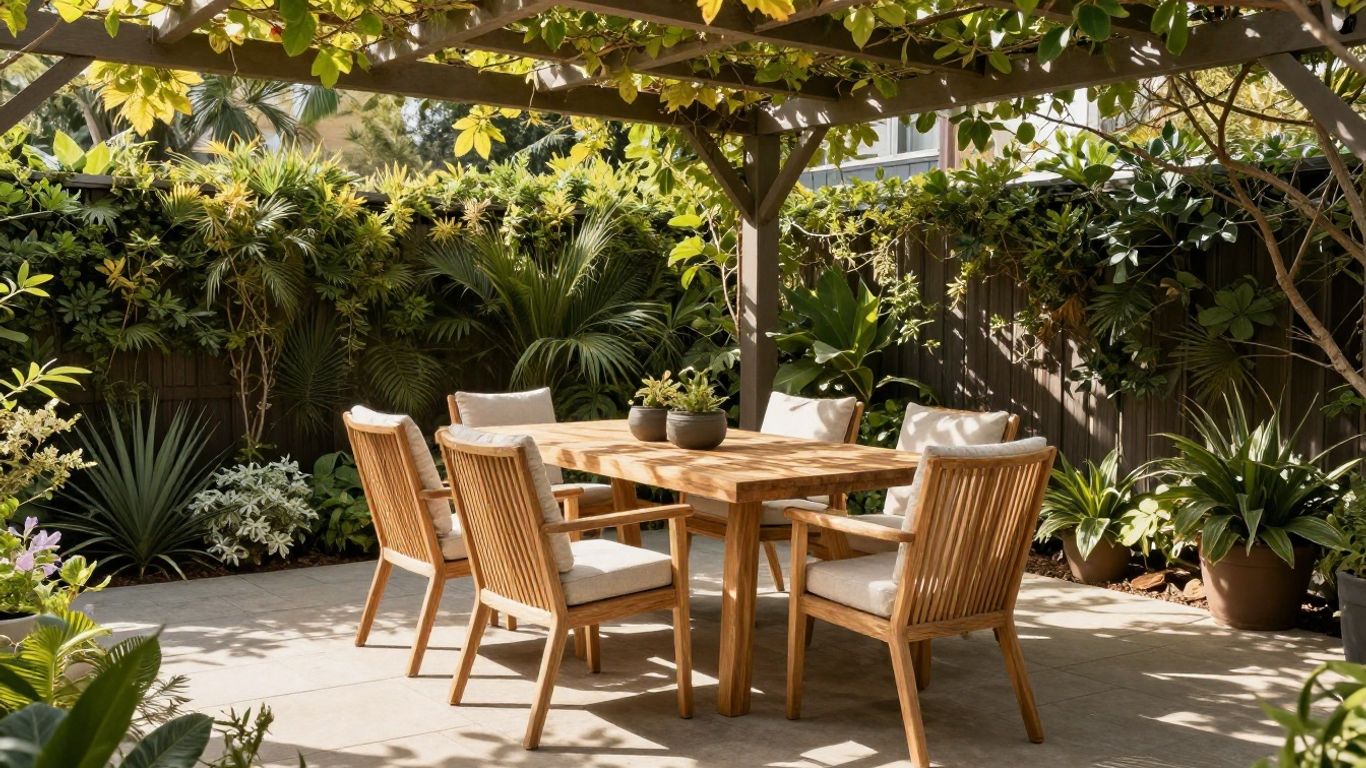
A teak table can anchor an outdoor room without making it feel overly formal. Pair it with breathable cushions, woven chairs, or simple benches, and leave enough room around the edges for people to pull chairs out comfortably. The result feels relaxed, but the proportions still need to work for everyday use.
3. Outdoor furniture made from recycled plastic
Recycled plastic furniture appeals when low fuss and practical durability are high on your list. It can handle damp conditions without absorbing water like untreated timber, and many pieces are easy to wipe clean after meals or muddy shoes. The material also works well for colorful, casual, and family-friendly settings.
Weight and construction vary considerably, so check whether a chair or table feels stable before you buy. Hollow sections may be easier to move but less reassuring in wind, while solid boards can feel substantial and resist everyday knocks. You should also look for drainage details around seats and textured areas where dirt could collect.
This material is particularly useful around pools, play areas, and outdoor dining zones where spills are inevitable. Keep the surface clear of abrasive grit, use mild soapy water for routine cleaning, and avoid harsh tools that could mark the finish. With the right proportions, recycled plastic can look considered rather than purely utilitarian.
4. All-weather wicker furniture
All-weather wicker brings a softer, more residential feel to an outdoor setting. Its woven texture adds visual warmth to a hard deck or paved terrace, while synthetic strands are designed for outdoor use rather than the rapid deterioration associated with indoor wicker. It is a natural fit for lounge chairs, dining chairs, and relaxed sofa settings.
Look closely at the weave and frame beneath it. Even spacing, a well-finished edge, and a frame that does not flex excessively are encouraging signs. In a wet climate, cushions should be removable and the base should allow air to circulate instead of trapping moisture against the fabric.
Wicker is not a reason to ignore the elements altogether. Brush away leaves, rinse salt or grime from exposed furniture, and give cushions time to dry fully after rain. A covered position or breathable furniture cover can reduce weathering while preserving the comfortable, textured look that makes all-weather wicker popular.
5. Stainless steel outdoor furniture
Stainless steel gives outdoor furniture a crisp, architectural quality. It is especially attractive for contemporary dining settings where you want a slim profile and a strong visual contrast with timber, stone, or woven materials. The finish can be polished, brushed, or paired with another surface for a less industrial appearance.
Not all outdoor locations make equal demands on metal. If your home is close to the sea or exposed to salt spray, choose furniture intended for that environment and keep up with rinsing and cleaning. Pay attention to welds, fixings, and any points where water may sit, because small details often influence long-term appearance.
Stainless steel can also feel cooler and harder than other materials, so balance it with cushions, timber accents, or a textured outdoor rug. Check the table height against your chairs and consider how much direct sun the surface receives. A beautiful metal setting works best when it is comfortable enough for long lunches, not only admired from a distance.
6. Concrete and stone outdoor tables
Concrete and stone tables provide visual weight and a grounded focal point. They suit open patios, landscaped gardens, and large entertaining areas where a substantial table can define the space. Their natural variation also brings a more tactile quality than a uniformly manufactured surface.
Before choosing one, think about access as well as appearance. Delivery routes, stairs, narrow gates, and the strength of the deck all matter when a table is exceptionally heavy. Rounded corners may be kinder in busy family areas, while a textured finish can disguise small marks from everyday use.
For a complete outdoor arrangement, consider how the table relates to surrounding chairs and serving pieces. These outdoor coffee tables can help you continue the same material conversation in a lounge zone. Sealers and cleaning instructions vary, so follow the product guidance and remove spills before they have time to stain a porous surface.
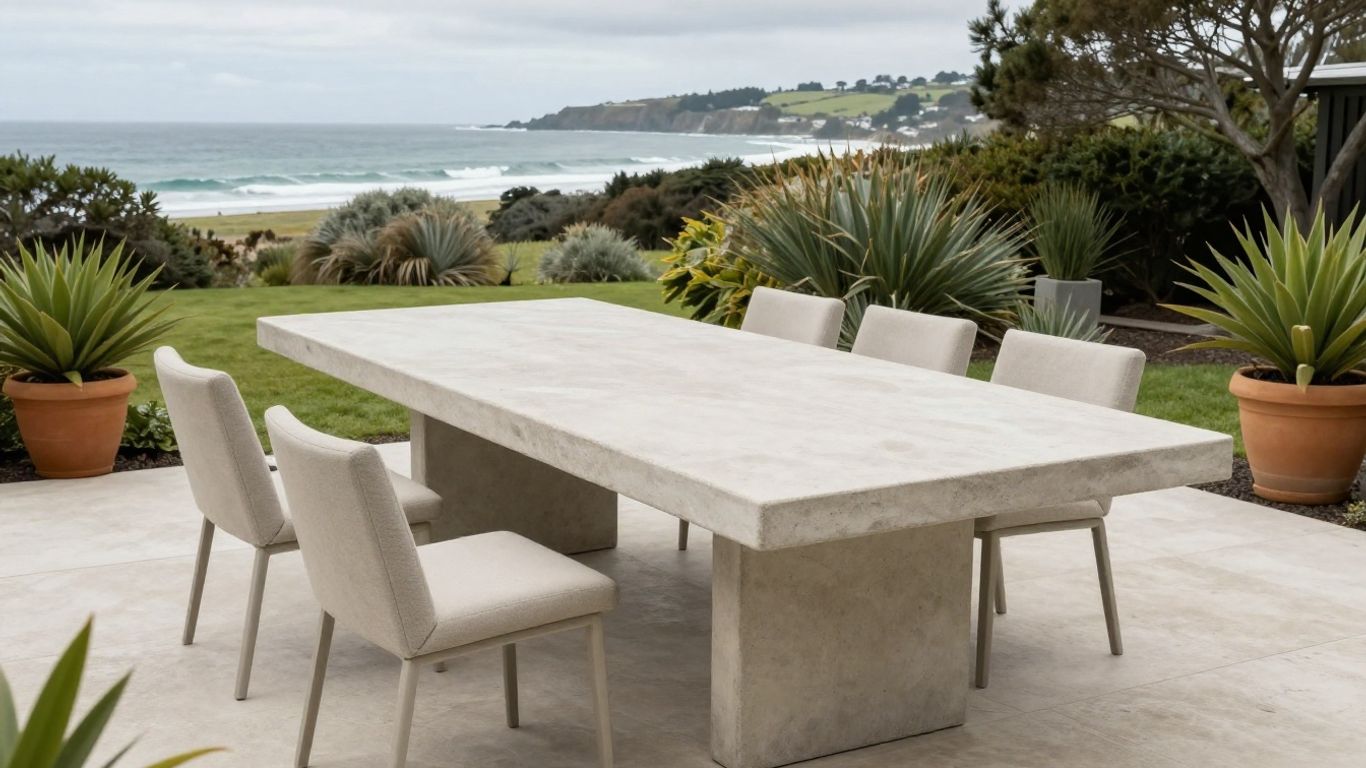
A stone or concrete table does not need to dominate the whole deck. Give it breathing room, soften it with timber or fabric, and make sure there is enough clearance for chairs to move naturally. Its strength is most useful when it also supports an easy, welcoming layout.
7. Weather-resistant outdoor sofas
An outdoor sofa should feel inviting on the first sit, but its hidden construction matters just as much as its silhouette. Look for frames suited to outdoor exposure, cushions that can release moisture, and fabrics designed to cope with strong sunlight. Removable covers make routine cleaning far less awkward.
Quick-dry foam and free-draining cushion construction can make a meaningful difference after a wet day. You still want to angle cushions or store them during prolonged poor weather, but water should not remain trapped inside the seat. Think about airflow underneath and behind the sofa too, especially when it sits close to a wall.
Design Concepts offers the Pauanui Alu Double Sofa, which uses a rust-free marine-grade aluminium frame, Sunbrella fabric cushions with Quick Dry Foam, adjustable feet, and no required covers. Those features suit a buyer who wants a minimalist sofa with low-maintenance, year-round convenience, but you should still check the exact care guidance for your setting.
8. Heavy outdoor furniture for windy areas
Wind changes the buying decision more than many people expect. A light chair can scrape across paving, an umbrella can become hazardous, and loose cushions can travel well beyond the deck. If your outdoor area is elevated, coastal, or exposed between buildings, start with stability rather than styling.
Several practical details help reduce movement and clutter during gusty weather:
- Choose broad bases and frames with a low center of gravity.
- Position tables where walls, planting, or screens provide some shelter.
- Select chairs that stack or store easily before a forecasted storm.
- Use tie-downs or suitable anchors where the furniture design allows them.
These measures work best together, not as a replacement for good placement. A heavy table may stay put while its chairs and cushions do not, so consider every loose component. This guide to heavy outdoor furniture offers another useful perspective when wind is a regular part of your local conditions.
You can also create a calmer outdoor room by grouping furniture instead of scattering individual pieces. Keep walkways clear, avoid placing lightweight objects at the edge of a balcony, and store anything that could catch a gust. Stability should make the space easier to use, not make it impossible to rearrange.
9. Compact furniture for balconies and small decks
Small outdoor areas reward restraint. A two-seat setting, a narrow dining table, or a bench may give you more daily value than a crowded full suite. Measure the usable floor area, account for door swings, and leave a clear route so the balcony remains comfortable rather than merely furnished.
Design Concepts describes outdoor collections for Auckland conditions that include compact options for urban balconies, with materials such as marine-grade aluminium, A-grade teak, and high-performance fabrics. The same thinking applies elsewhere: choose durable pieces that fit the footprint, then use vertical planting or a slim side table to add function without consuming the floor.
Folding, stackable, and dual-purpose furniture can make a small deck more adaptable. A bench can serve dining and casual seating, while a compact coffee table can double as a perch for plants or drinks. Keep colors and materials coordinated, because visual simplicity helps a small space feel larger.
10. Modular outdoor furniture for changing needs
Modular furniture lets you change the arrangement as your household and hosting habits shift. You might begin with a compact corner, add an ottoman later, or separate seats when guests arrive. This flexibility is particularly helpful when one outdoor area needs to support morning coffee, family meals, and evening conversation.
Check how the modules connect, whether each piece sits securely on its own, and whether replacement or additional components are available. Cushions should keep their shape across different layouts, while the frame should remain comfortable when a piece becomes an end seat. A flexible design is only useful when it is simple to move and reconfigure.
The modular outdoor sofas collection from Design Concepts features Sunbrella fabrics, Urecel Quick-Dry foam, rust-proof frames, and flexible modular designs. Use those documented features as a checklist when comparing options, then judge the scale against your deck and the level of exposure it receives.
Conclusion
The best outdoor furniture for NZ weather is not one universal style but the material and construction that suit your space, exposure, comfort needs, and maintenance habits. Choose deliberately, measure twice, and treat cleaning and storage as part of the purchase so your outdoor setting remains useful through more than one season.
Frequently Asked Questions
What is the best material for outdoor furniture in New Zealand?
The right material depends on your exposure and priorities. Aluminium, teak, stainless steel, recycled plastic, and synthetic wicker can all work well when construction, finish, drainage, and care instructions suit the location.
Can outdoor furniture stay outside all year?
Many pieces can remain outdoors, but year-round exposure still accelerates dirt, fading, and wear. Use breathable covers where appropriate, store cushions during prolonged bad weather, and follow the maker’s cleaning guidance.
Is teak outdoor furniture easy to maintain?
Teak is relatively practical, but it is not maintenance-free. Clean it appropriately, remove standing water and debris, and decide whether you prefer its natural silver-gray weathered appearance or a maintained golden tone.
How do you protect outdoor furniture from strong sun?
Choose UV-resistant materials and fabrics, add shade where possible, and rotate cushions so wear is more even. Regular cleaning also helps prevent grime from becoming embedded in fabric or textured surfaces.
What outdoor furniture is best for windy areas?
Look for broad bases, low profiles, substantial frames, and designs that can be secured or stored. Remember that cushions, umbrellas, and lightweight chairs may need separate protection even when the main table is heavy.
How much space should you leave around outdoor furniture?
Leave enough clearance for chairs to pull out, doors to open, and people to pass without squeezing through. The exact amount depends on the furniture and layout, but measuring the movement around each piece is more useful than measuring the piece alone.
How can you make a small balcony feel comfortable?
Use a compact two-seat setting, slimline table, bench, or folding pieces that preserve circulation. Keep the palette simple and add vertical greenery or wall-mounted lighting instead of filling the limited floor area.