

Outdoor umbrellas NZ: how to choose the right shade for your space
Key Takeaways
Choosing an umbrella is easier when you start with how you use your outdoor area, then check the practical details that affect fit and care.
- Match the umbrella style to your table, patio, balcony, or open seating area.
- Measure the shade zone and allow space for furniture and movement.
- Check UV protection, wind guidance, and the conditions where you live.
- Compare fabric, frame, joints, and the availability of replacement parts.
- Select a compatible base or mounting method, then follow care instructions.
1. Match the umbrella style to your outdoor area
The right umbrella should suit the way you arrange your outdoor space, not just the shape of the canopy. Think about where people sit, how they move through the area, and whether you want a pole in the middle of the shade. For outdoor umbrellas NZ shoppers are considering, those everyday details help narrow the options before you compare colors or finishes.
Center-pole umbrellas for tables and compact patios
A center-pole umbrella can work well when your table has a hole for the pole and the seating is arranged around it. This familiar layout gives you a clear starting point for measuring, and it can be a tidy fit on a compact patio. As a product example, the Umbrosa Spectra is available with a single 3 m canopy or Duo 2.5 m canopies; the listing also describes 360° rotation and a fully tiltable design.
The basic differences between styles are easiest to see when you relate them to how the area is used:
| Style | Often suits | Consider before choosing |
|---|---|---|
| Center-pole | A table arranged around a central opening | Check table-hole fit and seating clearance |
| Cantilever | Open seating or a table without a center hole | Check the base, reach, and movement needed |
| Wall-mounted | A balcony or narrow area beside a suitable wall | Confirm mounting surface and installation needs |
Use the table as a first filter, rather than a substitute for measuring your own layout. If you regularly shift chairs or use the area for more than dining, the open space beneath a different style may matter more than a neat fit around a table.
Cantilever umbrellas for flexible, open shade
A cantilever design places its support to the side, leaving the area beneath the canopy more open. That can be useful when you want shade over loungers or seating without a pole interrupting the middle of the arrangement. Before choosing one, consider how far the canopy needs to reach and whether you have room to position its base without narrowing a walkway.
Wall-mounted models for balconies and narrow spaces
A wall-mounted umbrella can be worth considering when floor space is limited and there is a suitable place to attach it. It avoids having a freestanding base occupy the ground, but the wall and installation requirements become part of the decision. The wall-mounted Umbrosa umbrellas page covers space-saving shade and guidance on sizing, installation, and care for New Zealand conditions.
2. Choose the right size and coverage
A canopy that looks generous in a product photo may shade less than you expect once the sun moves and people sit down. Start by measuring the area where you actually want shade, then factor in furniture, paths, and how the umbrella opens. Thinking through those points together helps you avoid choosing a canopy that fits the patio but not the way you use it.
Measure the area you want to shade
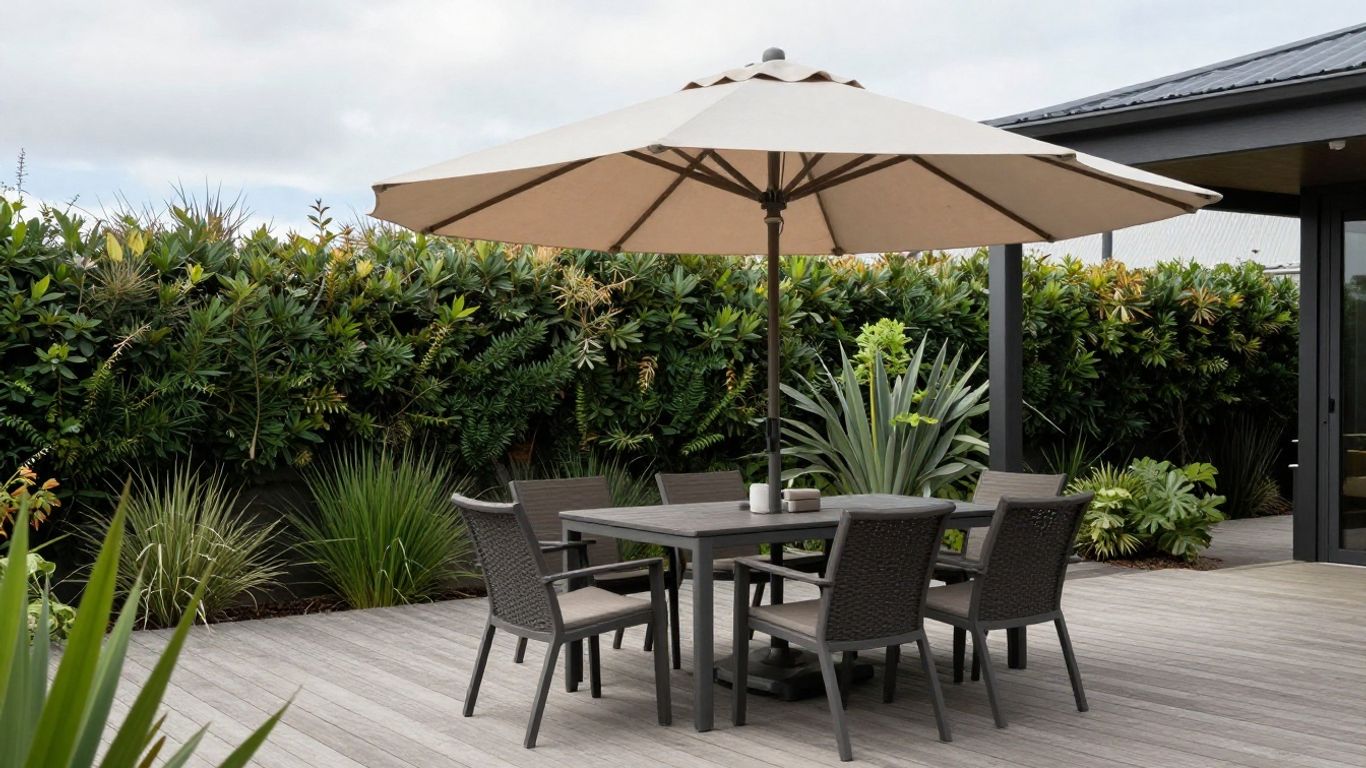
Measure the footprint of the table or seating group, but also consider when you use it and where the sun comes from at those times. A canopy’s reach is not the same as the area that will stay shaded all day, since the sun’s angle changes. If you are planning a full outdoor layout, advice on measuring outdoor spaces can help you think about furniture zones as well as the umbrella itself.
Allow room for chairs, walkways, and umbrella movement
Allow chairs to slide back without catching the base, and keep a comfortable route through the space. With a cantilever umbrella, include the area needed to rotate or tilt the canopy if those movements are part of the design. A little extra clearance on paper can make the finished space feel much less crowded.
Check the canopy dimensions and clearance requirements
Product dimensions can describe the canopy, the overall height, or the space required for operation, so check which measurement is being given. Compare the canopy size with the area you marked out, then confirm that doors, eaves, railings, and nearby trees will not interfere. A quick sketch with the umbrella’s position and the furniture around it can reveal awkward overlaps before you buy.
3. Consider New Zealand weather and exposure
Sun, wind, rain, and salt exposure can vary greatly from one outdoor area to another. A sheltered city patio and an exposed coastal deck may need different choices and routines, even if they are similar in size. Check product guidance alongside the conditions at your home, and plan to close or store an umbrella when conditions call for it.
Look for UV protection and fade-resistant fabric
Look for clear information about UV protection and how the canopy fabric is intended to handle prolonged sun exposure. Colorfastness matters too: a fabric that holds its color can help the umbrella keep its appearance through regular outdoor use. The Malibu umbrella listing specifies water-resistant Sunbrella fabric with UPF 50+ protection, a rotating canopy, and marine-grade aluminum.
Check wind guidance and safe-use recommendations
Wind can place force on a canopy and its frame, so use the manufacturer’s guidance rather than assuming that a heavy base makes an umbrella safe in every breeze. Before buying, check the instructions for opening, closing, and securing the specific design. It is also useful to have a simple routine for changing conditions:
- Close the umbrella when it is not in use, especially if wind is picking up.
- Follow the product’s stated wind and safe-use recommendations.
- Check that the canopy is properly secured before leaving the area.
- Avoid using the umbrella in conditions the manufacturer says are unsuitable.
Those habits are practical safeguards, not a replacement for product instructions. If the forecast is unsettled or the location is exposed, err on the side of closing the umbrella and securing it as directed.
Factor in coastal conditions, rain, and seasonal storage
Salt air, damp weather, and long periods of strong sun can all influence how quickly outdoor materials show wear. If you live near the coast, check care guidance for the frame and fittings, and rinse or clean them as directed. For rainy or cooler periods, let the canopy dry before storing it; a fitted cover may also help protect an umbrella between uses.
4. Compare canopy and frame materials
Materials affect appearance, maintenance, and how an umbrella stands up to outdoor exposure. It is useful to compare the fabric and frame together rather than focusing on one impressive-sounding specification. Look for clear product details on the canopy, frame, and smaller components you may need to inspect or care for over time.
Understand fabric differences in colorfastness and maintenance
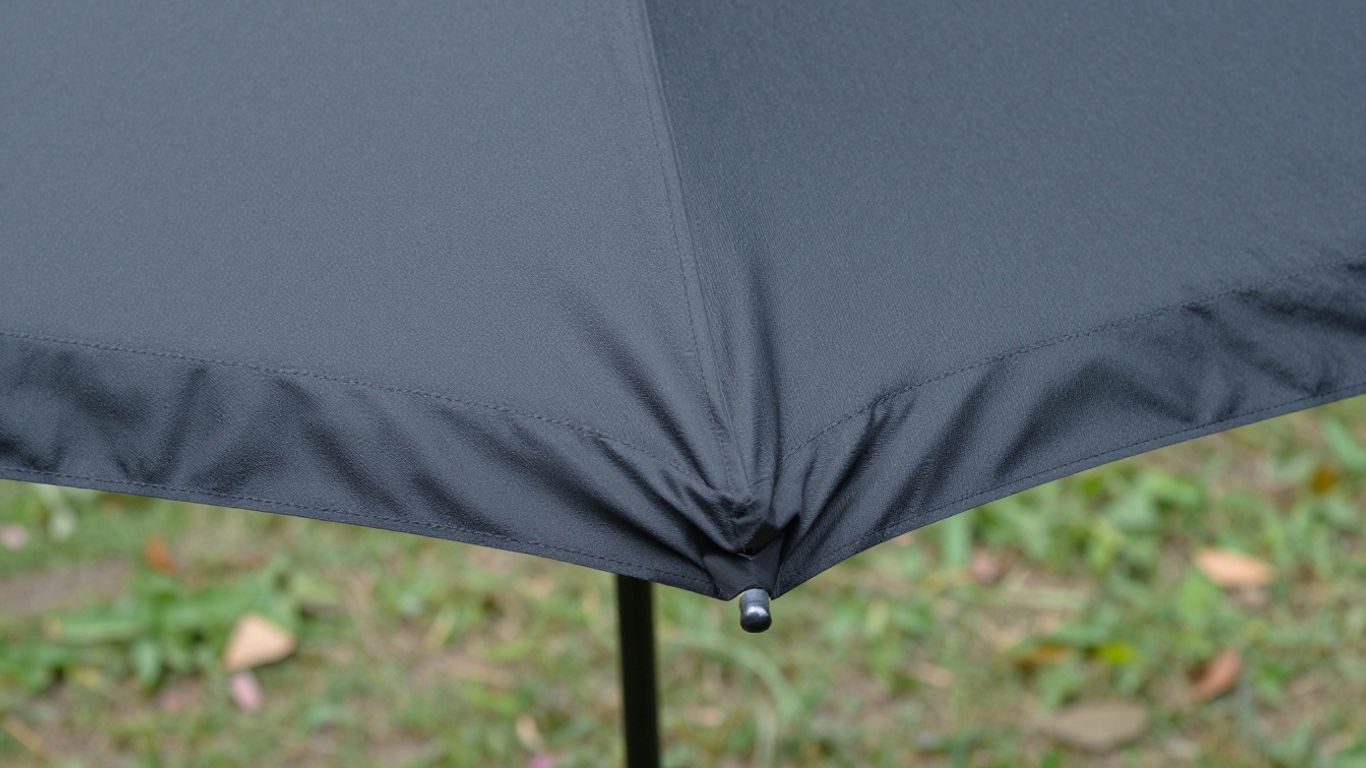
Canopy fabrics vary in their composition, colorfastness, and cleaning requirements, so check the product information for specifics. UV-resistant or solution-dyed fabric may be described in a product listing, but care instructions still matter if you want to keep the canopy looking its best. For broader advice on sun exposure and fabric care, read about UV-resistant outdoor fabrics.
Compare aluminum, steel, and timber frames
Aluminum, steel, and timber each have a different look and may call for different care. Compare the details provided for the particular umbrella, including the finish and any care guidance, rather than assuming all frames of one material perform the same way. In coastal or damp locations, give extra attention to instructions for cleaning and checking metal fittings.
Inspect joints, ribs, stitching, and replaceable parts
The small construction details are easy to overlook when you are focused on the canopy color. Look at how the ribs connect, whether the joints feel considered, and whether the canopy stitching appears even. Before you commit, it can help to check a short list of details that affect ownership later:
- Are the frame joints and ribs described clearly?
- Is the canopy attached with neat, even stitching?
- Are replacement parts available for the model?
- Does the care guidance explain how to protect the materials?
A clear answer to these questions gives you a better sense of what maintenance may involve. If a listing does not explain a detail you care about, ask before purchase rather than relying on appearance alone.
5. Select a suitable base and installation method
The base or mounting method is part of the umbrella choice, not an accessory to figure out afterward. A suitable setup depends on the umbrella design, the surface, and any instructions from the manufacturer. Confirm compatibility before ordering so the umbrella can be installed and used as intended.
Match the base weight to the umbrella design
Base requirements vary with the umbrella’s size and construction, so check the stated recommendations for the exact model. A base that seems substantial may still be unsuitable if it is not designed for that umbrella or for the way it will be used. Make sure you also understand whether the base is included or needs to be purchased separately.
Check table-hole and mounting compatibility
For a center-pole model, compare the pole diameter with the table opening and check whether the table has a suitable support arrangement. For a wall-mounted option, confirm that the mounting surface and hardware meet the installation requirements. A careful check here can save you from discovering an incompatibility after delivery.
Secure the umbrella according to the manufacturer’s instructions
Follow the supplied instructions for assembling, positioning, and securing the umbrella. The installation method should suit the surface and the product, and any additional fixings should be appropriate for that use. If you are unsure whether a wall or ground surface is suitable, get qualified advice before installing it.
6. Compare features, warranties, and ongoing care
Once the style, size, and materials are right, compare the details that shape everyday use and long-term ownership. Opening mechanisms, tilt options, warranty terms, and parts availability can make one umbrella a better fit for your routine than another. Read the product information carefully and keep the care instructions somewhere easy to find.
Evaluate opening mechanisms and tilt options
Consider who will open and close the umbrella, and how often you expect to adjust it. A mechanism that feels straightforward in the showroom or is clearly explained in the product details can be easier to live with day to day. Tilt and rotation options are useful only when they suit the space and you can operate them as instructed.
Review warranty coverage and replacement-part availability
Read the warranty terms for the specific umbrella, including what is covered, how long coverage lasts, and any conditions for care or use. Do not assume that a general retailer policy applies to every product or component. It is also sensible to ask whether parts can be replaced if a rib, fitting, or other component needs attention later.
Clean, dry, and store the umbrella to extend its lifespan
Regular, gentle care is usually easier than dealing with a neglected canopy or frame. Follow the product’s cleaning instructions and let fabric dry fully before storing it. When you are comparing options, consider the care routine you can realistically maintain; easy, consistent care is more useful than an ambitious plan you will not follow.
Conclusion
The best outdoor umbrella for your space is one that fits the way you live outdoors, gives useful coverage, and can be safely installed and cared for in your local conditions. Measure first, compare materials and product guidance, then choose a style and base that work together. A little planning makes it easier to create shade that feels considered rather than squeezed into the space.
Frequently Asked Questions
How do I choose the right size outdoor umbrella?
Measure the area you want to shade, then account for furniture, walkways, and the space needed to open or adjust the umbrella. Check the product’s canopy dimensions and clearance requirements before deciding.
Which umbrella style works best for a small patio?
A center-pole design may suit a compact patio with a table opening, while a wall-mounted model may help preserve floor space if the wall and installation are suitable. Compare the layout and mounting requirements before choosing.
Are cantilever umbrellas a good option for dining areas?
They can be useful when you want open space beneath the canopy without a central pole. Check that the canopy can reach the dining area and that the base can sit without obstructing movement.
What should I check before using an umbrella in windy weather?
Follow the manufacturer’s wind guidance and safe-use instructions. Close and secure the umbrella when conditions require it, and do not use it beyond the stated recommendations.
What should I look for in umbrella canopy fabric?
Check product information for UV protection, colorfastness, water resistance, and care instructions. The exact properties vary by fabric and model, so rely on the specific product details.
How do I care for an outdoor umbrella after rain?
Follow the manufacturer’s cleaning and drying instructions. Allow the canopy to dry fully before covering or storing it to help avoid trapping moisture.
Do I need to buy a separate umbrella base?
That depends on the product listing. Check whether a base is included, what type is recommended, and whether its weight and fittings are compatible with the umbrella you choose.