

Outdoor furniture New Zealand: how to choose pieces for your space and climate
Key Takeaways
A well-planned outdoor area should suit your routines as much as it suits the weather. Start with measurements, then weigh comfort, care, and value before you buy.
- Measure the space and access routes before choosing furniture.
- Match materials and fabrics to your local weather exposure.
- Choose pieces around how you dine, lounge, and entertain.
- Check comfort, care needs, delivery, and warranty details.
- Cover or store furniture and cushions when conditions call for it.
Start with your outdoor space and how you use it
The best outdoor furniture New Zealand has to offer is not necessarily the largest set or the most fashionable one. It is the furniture that works with your available space, your local conditions, and the way you actually spend time outside. Before browsing, notice where people enter, walk, sit, and gather. A little planning now can save you from awkward clearances or pieces that rarely get used.
Measure the area, access routes, and clearances
Measure the usable floor area, not just the outer dimensions of the deck or patio. Note fixed features such as doors, steps, drains, planters, and railings, then check the route from the street or garage to the space so large items can get through. Leave room to pull chairs back and walk around them; a layout that fits on paper can feel cramped once people are seated. This space and climate guide offers a useful starting point for thinking through layout alongside local conditions.
Match furniture to dining, lounging, or entertaining
Think about a typical week, rather than furnishing for a rare occasion. If you often eat outdoors, give the table and chairs the clearest, most accessible spot; if you mainly read or unwind, a smaller lounge arrangement may make better use of the area. For regular gatherings, consider whether people will need flexible seats or a place to set down drinks and plates. A simple priority list can help you keep the layout focused:
- Decide which activity matters most in the space.
- Estimate how many people usually use it at once.
- Identify where food, drinks, or books will be set down.
- Leave a clear route between the house and seating.
Once those priorities are clear, it becomes easier to choose a few useful pieces rather than filling every open corner. A compact setting that supports everyday use often feels more inviting than a larger arrangement that blocks movement.
Plan for sun, shade, wind, and privacy
Spend time in the area at different hours and notice how sun, wind, and nearby sightlines change. A sunny lunch spot may need shade, while a breezy balcony can call for furniture that feels stable and a layout that does not catch every gust. Think about privacy, too: a screen, umbrella, or planting may make an exposed seat more comfortable without closing off the whole space. These observations will help you decide where each piece belongs and what accessories are worth considering.
Choose materials that suit New Zealand conditions
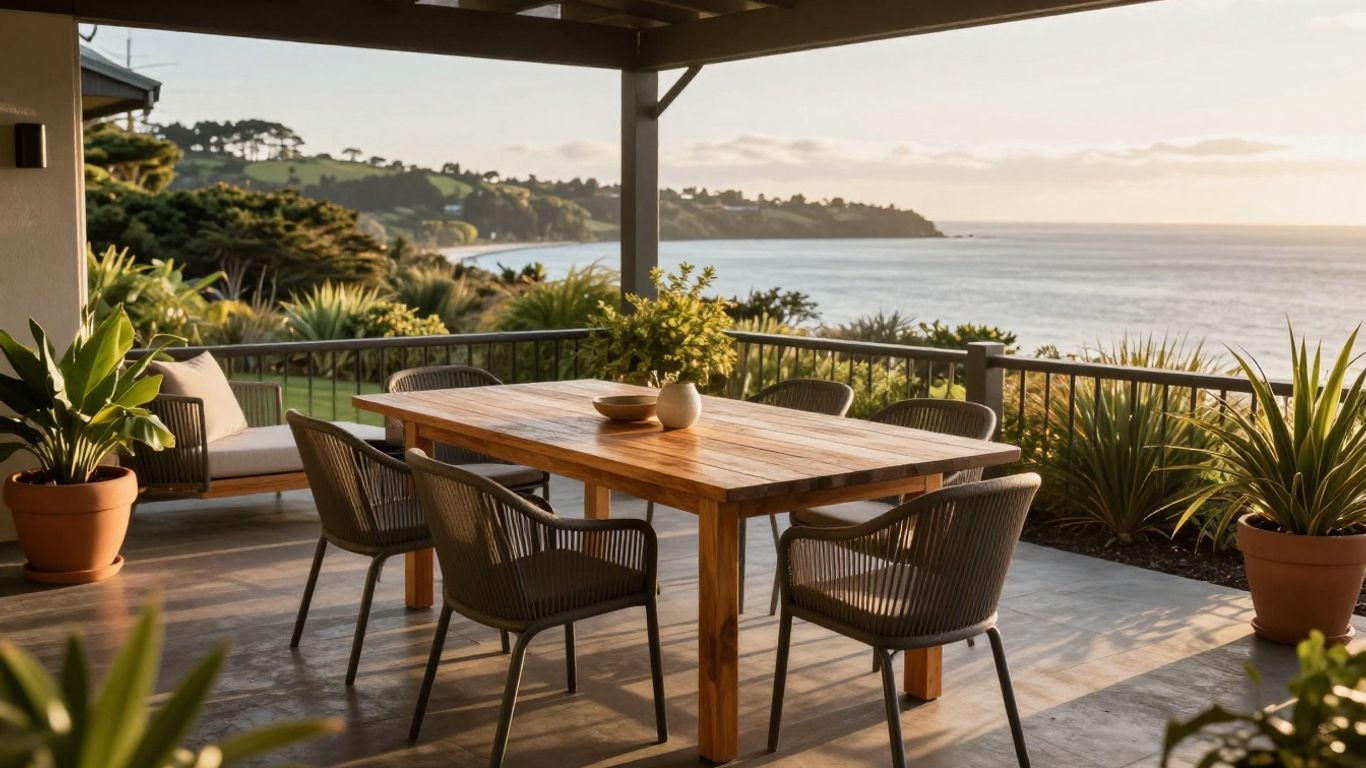
Outdoor furniture faces more than occasional rain; the mix of sun, moisture, wind, and salt in the air varies from one home to another. Consider how much shelter your furniture will have and how much maintenance you are realistically willing to do. At Design Concepts, outdoor furniture collections are described as designed to withstand New Zealand’s climate, but the right choice still depends on the product details and conditions at your home. Use specifications as a starting point, then think about how the materials will look and feel in everyday use.
Compare timber, aluminium, and steel frames
Timber brings natural warmth, while metal frames can give an outdoor setting a cleaner, more streamlined look. The specific finish and care instructions matter, so check how a frame should be cleaned and protected before making a decision. The table below offers a broad comparison to help you identify what to check on an individual product listing.
| Material | Visual character | What to check |
|---|---|---|
| Timber | Natural grain and warmth | Care instructions and finish |
| Aluminium | Light, clean-lined appearance | Frame finish and stability |
| Steel | Solid, substantial feel | Coating and rust-care guidance |
| Woven materials | Textured, relaxed look | Weave construction and cleaning guidance |
These descriptions are general rather than guarantees of performance. Compare the finish and maintenance guidance for the actual piece, especially if it will sit in an exposed or coastal location.
Assess synthetic wicker and other woven materials
Woven furniture can soften the look of a deck or courtyard, but the weave and frame deserve a close look. Check whether the product is intended for outdoor use, how its surfaces should be cleaned, and whether the construction feels secure when you sit down. A woven look can also be paired with different cushions and tables, so consider the whole arrangement rather than judging one chair on its own. Clear care guidance is a useful sign that you understand what ownership will involve.
Check fabrics for UV resistance and moisture performance
Outdoor fabric takes direct sun, damp conditions, and regular handling, so ask what the material is designed to manage. Check the product description for details such as UV and fade resistance, mould and mildew resistance, and how quickly cushions dry or drain. Design Concepts outdoor sofas include styles featuring durable Sunbrella fabrics; check the specific listing for the fabric and care details that apply to the model you are considering. If cushions will be exposed to rain, make sure you know whether they should be brought inside or covered.
Consider coastal air and regional weather exposure
A sheltered courtyard and a coastal deck have different demands, even if they are similar in size. Salt in the air, strong sun, frequent rain, and wind can all affect the way finishes and fabrics look over time. Look for clear material and care information, and ask whether a product is suitable for the conditions where you live. Thinking about your own microclimate is more useful than relying on a broad label such as “all weather.”
Find the right furniture for your setup
Once the space and likely exposure are clear, choose pieces that support the way you use the area. A dining set, sofa, umbrella, or storage unit can each solve a different practical problem, but none needs to be added just to complete a matching set. Start with the main activity and build around it, leaving room for people to move. A wider outdoor furniture overview can also help you compare common categories such as seating, dining, loungers, and accessories.
Choose a dining set that fits your guests and patio
Choose a table size based on the number of people who usually eat outside, then make sure chairs can slide back without meeting a wall or railing. Round tables can suit a smaller gathering, while rectangular formats may work better where you have a longer footprint or host more people. Design Concepts lists aluminium outdoor dining tables in round and rectangular designs, so compare the dimensions and seating needs of the specific option before deciding. A comfortable route around the table matters as much as the number of places set at it.
Compare sofas, modular seating, and lounge chairs
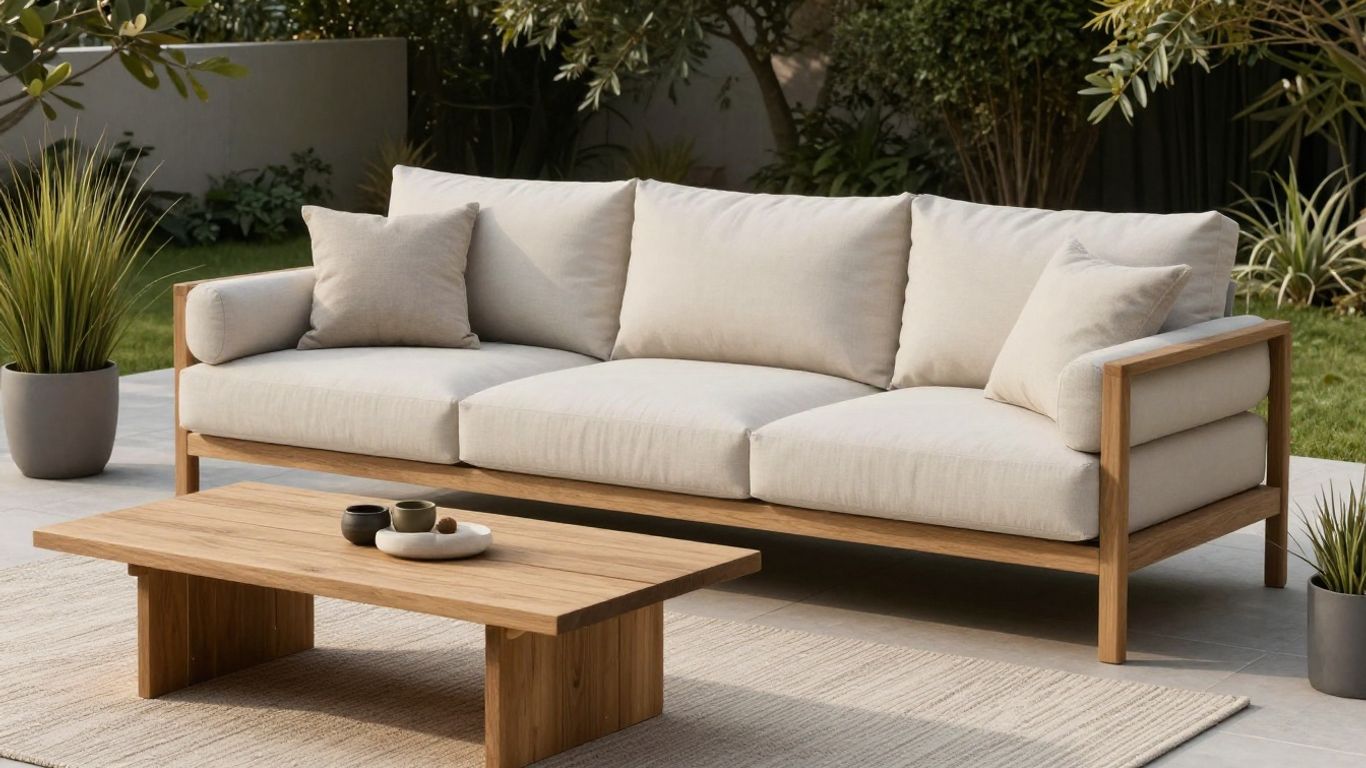
A fixed sofa gives a lounge area a clear anchor, while separate chairs can be easier to place in a smaller or more changeable space. Modular seating offers another option if you want to rearrange the layout for different occasions. Consider where people will face, how many seats you need, and whether a coffee table or side table will fit within reach. Design Concepts also describes flexible modular outdoor sofa designs, but check the dimensions and configuration of the individual model to see whether it suits your layout.
Add shade with umbrellas, awnings, or pergolas
Shade can make a sunny area more comfortable and help protect furniture from direct exposure. Before choosing an umbrella or fixed structure, note the sun’s path, the space available for a base or supports, and whether wind makes a freestanding option impractical. These details are easier to compare as a short site check:
- Observe which part of the space gets the strongest afternoon sun.
- Check for walls, eaves, or trees that already provide shade.
- Confirm that an umbrella base or structure will fit securely.
- Consider whether the shade can be adjusted as the sun moves.
The right solution depends on the space and how often you want to reposition it. If you can, test the proposed shade footprint before buying so it does not crowd the dining or lounge area.
Use outdoor storage to protect cushions and accessories
Storage keeps cushions and smaller accessories close at hand while giving you somewhere to put them away when conditions turn wet. Check the unit’s capacity against the size of your cushions and whether there is a convenient place for it near the seating area. If you do not have room for a storage box, a simple routine of bringing cushions indoors may be more practical. Choose the option you are most likely to use consistently.
Balance comfort, style, and practical details
A good-looking set should also feel comfortable after more than a few minutes of sitting. Try to test furniture in person when possible, or compare dimensions and construction details carefully if you are shopping online. The materials, proportions, and colours should make sense beside your home, but practical details such as stability and ease of movement also shape daily use. Keep comfort in everyday use at the centre of the decision rather than treating it as a finishing touch.
Test seat depth, support, and cushion quality
Seat depth and back support can change how a chair or sofa feels, particularly if you plan to linger after a meal. Sit down if you can, and notice whether your feet rest comfortably and the back supports you without forcing an awkward posture. For cushions, look for specific information about fabric, filling, and care rather than relying on appearance alone. A cushion that suits your routine is one you will be glad to use often.
Coordinate colours and finishes with your home
Furniture does not have to match your exterior exactly to feel at home beside it. Pick up colours already present in the house, deck, paving, or garden, then decide whether you want the furniture to blend in or provide contrast. Natural finishes can soften a contemporary setting, while a simpler palette can let planting and textiles bring in colour. Order samples or compare product images in different light if you are unsure about a finish.
Check stability, weight, and ease of rearranging
Think about how often the layout will change and whether you will need to move pieces to clean or store them. Lightweight furniture can be easier to rearrange, while a heavier piece may feel more settled in a breezy spot; the best balance depends on your site. Check the product dimensions and any assembly information, and make sure the frame feels steady on your surface. These small practical details can make the furniture much easier to live with.
Shop for outdoor furniture in New Zealand with confidence
A product page should help you understand what you are buying before it arrives at your door. Compare the overall value, including materials, care needs, delivery, and any extra assembly costs, rather than looking at the ticket price alone. Design Concepts offers nationwide delivery, but check the current delivery information for your location and the item you want. A short set of questions can help you compare options on an equal basis.
Compare prices, warranties, and product specifications
Read the specifications alongside the price: dimensions, frame material, fabric details, and care requirements all affect how a piece fits your plans. Check the warranty terms for the exact product and note what they cover, since terms can differ by material or item. If a price seems attractive, consider the expected upkeep and whether the features match your needs. Clear comparisons help you focus on long-term usefulness, not just the initial cost.
Check delivery, assembly, and return conditions
Before placing an order, confirm delivery coverage, timing, access requirements, and whether assembly is included. Measure doorways and gates again if a large item needs to pass through them, and ask how packaging will be handled. Read the return conditions while you still have time to make a considered choice. For online orders, those checks can prevent a frustrating mismatch between the furniture and your space.
Ask about replacement cushions and spare parts
Ask whether replacement cushions, covers, or other parts are available for the model you are considering. If a component needs attention later, knowing what support may be available can help you judge the purchase more realistically. Keep product details and care instructions somewhere easy to find after delivery. It is a small habit that makes future maintenance simpler.
Maintain furniture through the seasons
Even furniture designed for outdoor use benefits from sensible care. A quick routine suited to the materials can help keep the space looking ready for use, while covers and storage are useful when weather is unsettled. Follow the product’s care instructions first, since a cleaner that suits one surface may not suit another. A little attention before and after the busiest months can also help you spot loose fittings or worn finishes early.
Clean each material with suitable products
Start with the care guidance supplied with the item, and avoid assuming that a strong cleaner is better. For routine cleaning, remove loose dirt and use only products and methods recommended for the material or finish. Clean spills before they settle, and let surfaces dry as directed before adding cushions back. Regular, gentle care is usually easier than trying to restore a neglected piece all at once.
Protect surfaces from strong sun and heavy rain
Where possible, use shade or covers to limit long periods of direct exposure and protect furniture during heavy rain. Allow airflow around covered pieces so moisture does not remain trapped, and follow any instructions about whether the furniture should be moved or left uncovered. If your area gets strong wind, secure or store accessories that might shift. Tailor the routine to the actual shelter and weather at your home.
Store or cover cushions during wet weather
Cushions are often easier to protect than the furniture frames themselves. Bring them indoors or use suitable storage when rain is expected, and make sure they are fully dry before putting them away. If you use covers, choose a fit that keeps out weather without trapping dampness. A convenient storage spot makes this routine more likely to stick.
Inspect fittings and finishes before peak-use months
Before you start using the space more often, check that fittings are secure and that finishes have no obvious damage. Look over table legs, chair joints, umbrella parts, and cushion seams, and follow the product guidance if anything needs repair. Addressing a small issue early is often easier than dealing with it in the middle of a gathering. With basic care, your outdoor area can feel comfortable and ready for the season.
Conclusion
Choosing outdoor furniture is a balance of space, climate, comfort, and care. Measure first, check the details on each product, and choose pieces that suit the way you live outside; then give them the straightforward maintenance they need to keep earning their place.
Frequently Asked Questions
What should I measure before buying outdoor furniture?
Measure the usable area, access routes, and clearances around doors, steps, and other fixed features. Allow room to move chairs and walk comfortably once people are seated.
Which outdoor furniture materials suit New Zealand conditions?
There is no single best material for every home. Consider your local sun, rain, wind, and coastal exposure, then compare product finishes and care instructions.
How do I choose the right size outdoor dining set?
Start with the number of people who usually eat outside and check that chairs can move back without blocking circulation. Compare table dimensions with the usable patio or deck area.
Is modular outdoor seating a good choice for a small space?
It can be useful if you want to rearrange seating for different occasions, but check the dimensions and configuration carefully. A few separate chairs may be easier to place in a particularly compact area.
How can I protect outdoor cushions from rain?
Bring cushions indoors or place them in suitable storage when wet weather is expected. If you cover them, follow care guidance and allow enough airflow to prevent dampness being trapped.
Do outdoor furniture warranties cover every part?
Warranty coverage varies by product and component. Read the terms for the specific item and ask what is covered before you buy.
How often should I clean outdoor furniture?
Follow the care instructions for each material and clean as needed, especially after spills or prolonged exposure to dirt. A light routine and seasonal inspection can help you catch problems early.