

Outdoor dining furniture: How to choose a durable, comfortable setup for your patio
Key Takeaways
A well-planned outdoor dining area should feel as easy to use as an indoor room, while standing up to sun, rain, wind, and everyday spills.
- Measure for chairs, walkways, and comfortable movement before you shop.
- Choose materials according to your local exposure to sun, moisture, wind, and salt air.
- Match the table shape and size to your household and entertaining habits.
- Give equal attention to seating comfort, storage, maintenance, and shade.
- Compare the complete cost, including accessories, delivery, care, and warranty support.
Assess your space and dining needs
Before you fall for a particular finish or shape, look carefully at how your patio works. Note where people enter, where the sun moves during a meal, and whether wind or rain reaches the area. Your best outdoor dining furniture choice will fit the space you have and the way you actually use it, rather than simply looking good in a product photograph. For a broader planning perspective, this outdoor space and climate guide is a useful companion.
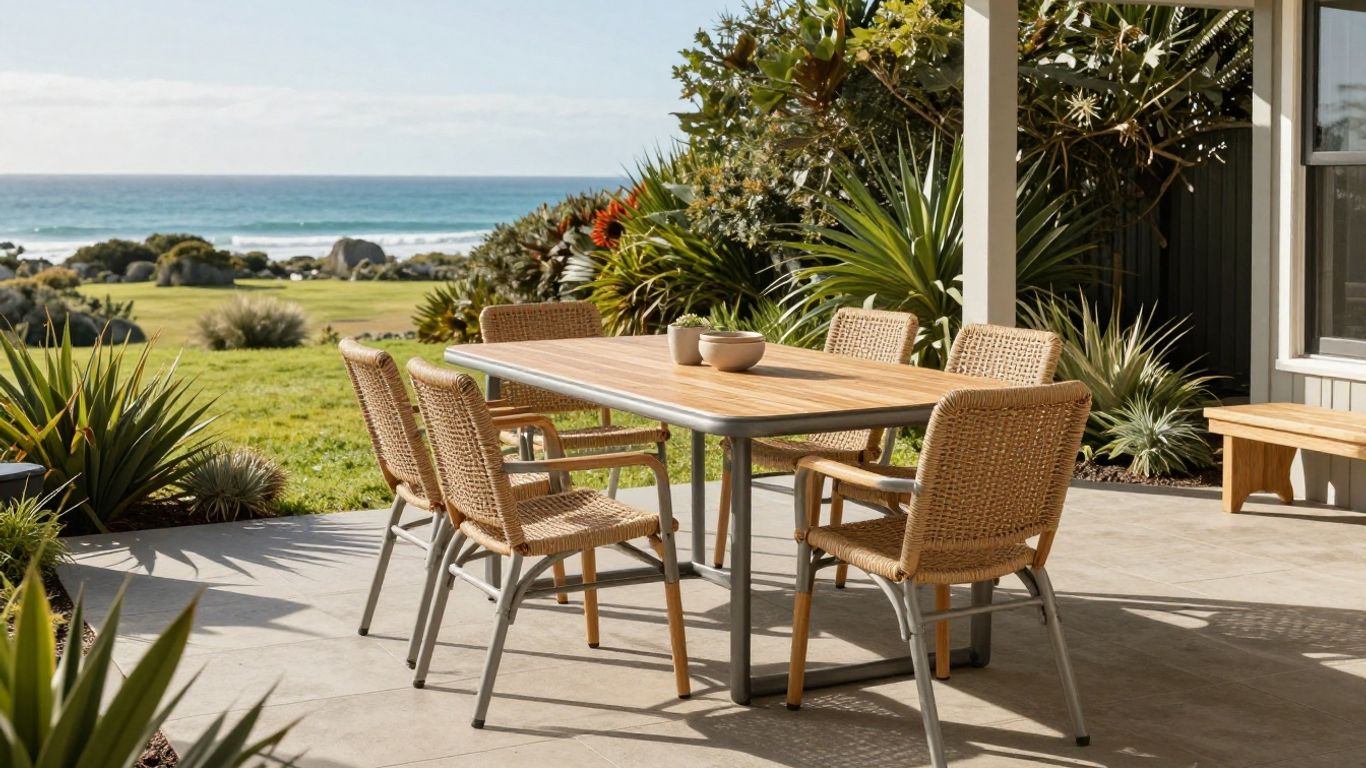
Measure the area for comfortable movement
Measure the usable floor area, not just the full patio footprint. Allow room to pull chairs back from the table and leave a clear route around the set, especially near doors, steps, grills, and garden beds. A compact balcony may suit a small round table, while a generous deck can accommodate a longer arrangement without making movement feel awkward.
Use masking tape or chalk to mark the table and chair footprint before ordering. Open and close nearby doors, walk around the outline, and check the view from inside your home. This simple test often reveals that a slightly smaller table creates a much more relaxed dining experience.
Match the table size to your household
Start with the number of people who eat outside most often, then think about your entertaining pattern. A two- or four-seat setting may be enough for everyday meals, but an extendable table can make occasional gatherings easier without taking over the patio every day. Also check the table’s leg position: broad corner legs can interfere with chairs, while a central base may offer more flexible seating.
Think about what needs to sit on the surface at mealtimes. Plates, serving bowls, glasses, and candles need more room than a quick morning coffee. If you regularly host friends, leave enough elbow room that extra seats do not turn dinner into a squeeze.
Plan for shade, traffic flow, and storage
A table placed in full afternoon sun may be uncomfortable even when the furniture itself is well made. Consider an umbrella, covered roof, retractable awning, or nearby shade tree, and check whether the chosen table can accommodate the shade solution safely. Keep storage in mind too: cushions and lightweight chairs need a dry, accessible home when the weather changes.
A practical patio plan usually accounts for four everyday details:
- A clear path between the house and the dining area.
- Enough clearance to pull out every chair.
- Shade that covers the table during your usual meal times.
- Storage for cushions, covers, and smaller accessories.
Once these points are mapped out, you can shop with much more confidence. The goal is not to fill every available metre, but to make the whole area easy to enter, use, and put away.
Choose materials that suit your climate
Outdoor materials behave differently under strong UV exposure, persistent damp, coastal air, and wind. New Zealand conditions can vary widely, so consider your particular location rather than relying on a label such as “all weather.” Look at the frame, finish, fasteners, tabletop, and cushions as a complete system. Good material choices reduce maintenance, but they do not remove the need for sensible care.
Compare aluminum, steel, and wrought iron
Aluminum is light, naturally resistant to rust, and easy to move when you need to reconfigure the patio. A quality powder-coated finish can add colour stability and another layer of protection, though scratches should still be dealt with promptly. Steel can feel solid and substantial, but it needs a well-maintained protective finish, particularly in damp or coastal areas.
Wrought iron has a traditional, weighty appearance and can be a good choice where wind is a concern. Its weight makes it less convenient to relocate, and any damaged coating should be repaired before moisture reaches the metal underneath. Check welds, joins, feet, and hardware rather than judging a frame by its finish alone.
Weigh teak, eucalyptus, and other wood options
Wood brings natural warmth and works especially well when your patio connects visually with a garden. Teak contains natural oils that help it cope with outdoor use, while eucalyptus and other hardwoods can also perform well when properly finished and maintained. The colour may change over time, so decide whether you like a weathered silver appearance or want to preserve a warmer tone.
Ask how the timber should be cleaned, whether it needs oil or another finish, and how it should be stored during extended wet periods. Keep wood raised from standing water and allow air to circulate around it. That small amount of attention helps prevent avoidable staining and uneven weathering.
Understand wicker, resin, and composite materials
Synthetic wicker and resin can provide a softer, woven appearance without the same routine as natural cane. Look for UV-stable fibres, a strong underlying frame, and drainage that allows moisture to escape. Composite and recycled-plastic materials are often practical for busy households because they can be wiped clean and do not require the same refinishing as timber.
The surface still matters. A textured material may hide small marks, while a smooth tabletop is usually quicker to wipe after meals. If you live near the coast or in a particularly windy location, prioritise stable construction, corrosion-resistant hardware, and enough weight for the setting.
A material comparison is helpful, but it should support—not replace—checking the actual construction. The finish, drainage, joinery, and care instructions often make as much difference as the material name.
Select the right outdoor dining table
The table anchors the entire dining arrangement, so choose it before buying a collection of chairs that may not fit. Consider the shape of the room, the number of people you seat, and how often you need flexibility. A table should feel stable when someone leans on it, leave legroom for everyone, and have a surface that suits the way you serve meals.
Choose a shape for your layout
Rectangular tables are efficient for larger groups and can sit neatly against a wall when needed. Round tables encourage conversation and work well where corners would interrupt movement, while square tables suit compact, balanced layouts. An oval design can offer some of the social ease of a round table with a little more length.
Your patio architecture should guide the decision. Match long tables to long decks, use round forms to soften a boxy courtyard, and avoid forcing a rectangular table into a narrow passage. You can compare proportions and legroom in these Aluminium Outdoor Dining Tables, which include round and rectangular options designed for outdoor dining and bar settings.
Compare fixed, extendable, and folding tables
A fixed table is usually the simplest option: it is ready whenever you need it and often feels particularly solid. Extendable designs are useful if your household is small but your guest list changes, provided you have enough surrounding space when the leaves are open. Folding tables are convenient for occasional use and storage, although their hinges and locking points deserve careful inspection.
Before choosing an extendable or folding design, measure both its everyday and expanded footprint. Check where the extension is stored, how easily one person can operate it, and whether the opened surface remains level. Flexibility is valuable only when it is practical to use.
Check stability, surface durability, and maintenance needs
Run your hand over the tabletop and inspect the underside, edges, joints, and feet. Look for a stable base, adjustable levellers where appropriate, and a surface that will not trap water around its joins. Ask whether hot dishes, food spills, and regular wiping require special precautions.
A table that is easy to care for is more likely to stay in regular use. Confirm the recommended cleaner, whether covers are suitable, and whether the finish can be touched up if it is scratched. Those details are easy to overlook in a showroom but matter after months of outdoor meals.
Find seating that combines comfort and support
Chairs determine whether people linger after dinner or quietly retreat indoors. Look beyond the pattern and colour to the back angle, seat depth, arm height, and relationship between the chair and tabletop. Your seating should feel supportive for a short lunch and a long evening alike, while remaining manageable when the weather turns.
Compare dining chairs, armchairs, and benches
Armless dining chairs make it easier to squeeze an extra seat around the table and can usually be pushed fully underneath. Armchairs feel more generous and supportive, but need additional clearance at the table ends or along the sides. Benches are efficient for families and casual entertaining, especially when you want flexible seating for children.
A bench can also soften the visual rhythm of a large table, though it may offer less individual back support. At Design Concepts, Outdoor Benches are presented as seating for both everyday outdoor settings and larger gatherings, with options intended to pair with dining tables. Consider mixing a bench on one side with chairs on the other if that suits your layout.
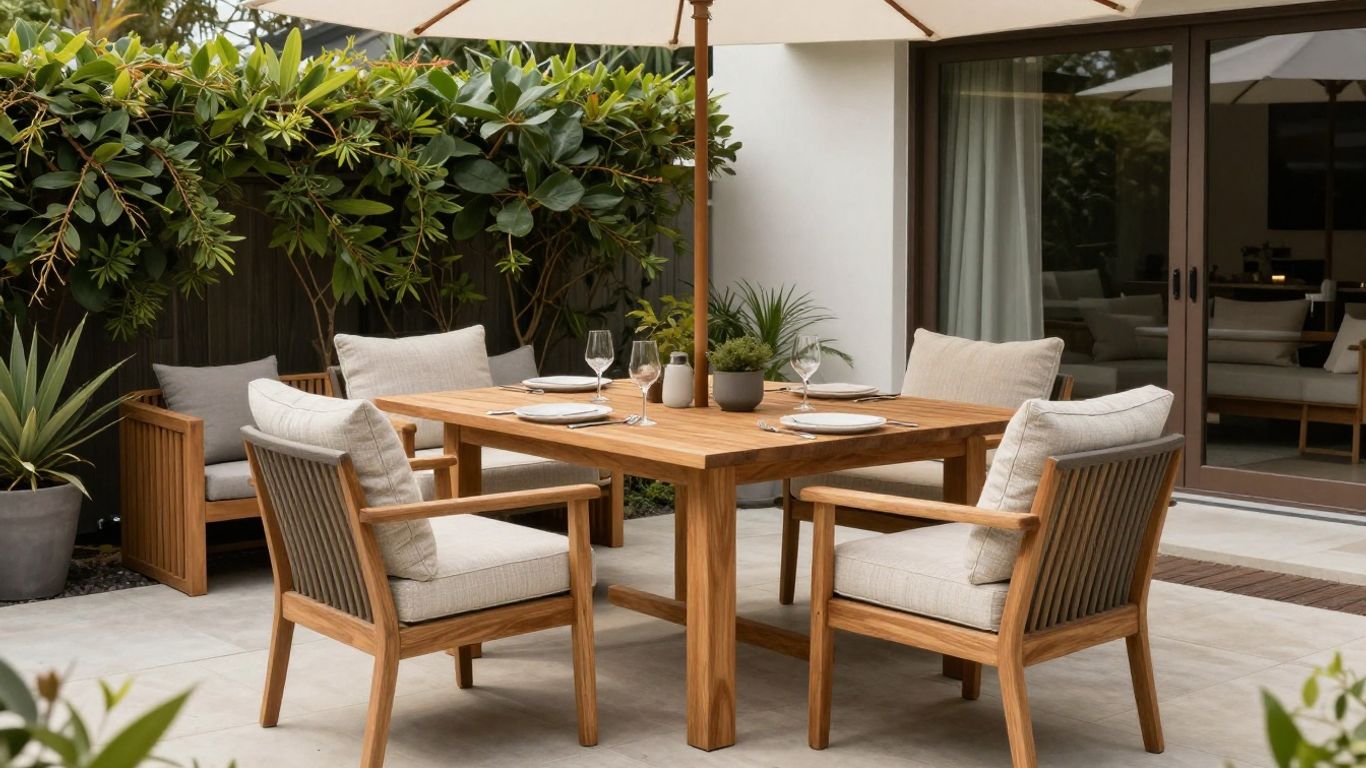
Evaluate ergonomics, cushions, and seat height
Sit in a chair before committing whenever possible. Your feet should rest comfortably on the ground, your knees should not press into the table apron, and the back should support an upright but relaxed posture. Check the seat height against the tabletop rather than assuming all dining furniture is standard.
Cushions add softness, but their construction is just as important as their appearance. Look for removable covers, breathable materials, free drainage, and quick-dry foam where the set will be exposed to rain. Comfort is a daily feature, so it deserves the same attention as the frame finish.
Consider stackable and easy-to-store designs
Stackable chairs are useful when you need to clear the patio for gardening, parties, or severe weather. Make sure the stack is stable, not excessively heavy, and easy for one person to move. Folding chairs can save more space, but check the locking mechanism and whether the folded shape fits your storage area.
If you are furnishing a bar-height setting, choose seating made for that height rather than adapting standard dining chairs. For example, Outdoor Bar Stools at Design Concepts are described with UV-resistant Olefin Rope, weather fade-resistant wicker, quick-dry foam cushions, and fine-sanded teak. Match the stool height to the counter and allow enough room for knees and movement.
Create a cohesive outdoor dining style
A successful outdoor dining area does not have to come from one matching range. It needs a few connecting decisions—perhaps a shared frame colour, similar timber tone, or repeated texture—so that different pieces feel intentional. Start with the house exterior and surrounding planting, then add furniture that complements rather than competes with them.
Coordinate colors, finishes, and textures
Choose one primary finish and one or two supporting tones. For instance, a dark frame can sit comfortably with warm timber and muted cushions, while pale upholstery may brighten a shaded courtyard. Texture keeps a restrained palette from feeling flat: woven panels, smooth tabletops, soft fabric, and natural planting can work together without excessive decoration.
Test samples outdoors if you can. Colours look different in direct sun, under an umbrella, and beside your home’s exterior cladding. A finish that appears neutral indoors may be much stronger in bright daylight.
Mix furniture without making the space look mismatched
Mixing works best when you repeat at least one visual quality across the arrangement. Use the same cushion tone on different chair styles, repeat a timber detail, or choose frames with related proportions. Varying everything at once can make the area feel accidental, while a little contrast gives it character.
Think about scale as well as colour. A delicate chair beside a heavy table may look unbalanced even if both pieces share a finish. Keep seat heights, table proportions, and visual weight reasonably compatible so the set feels comfortable as a whole.
Add lighting, umbrellas, and accessories
Shade and lighting extend the hours in which you can use the area. Choose an umbrella that covers the table without blocking a walkway, and add warm, low-glare lighting around—not directly in front of—seated guests. Lanterns, serving trolleys, planters, and an outdoor rug can make the arrangement feel finished, provided they do not create trip hazards.
Treat accessories as working parts of the layout. Leave space to open the umbrella, move a serving dish, and walk around the table. A beautiful patio is more successful when it remains easy to use.
Protect your furniture from weather and wear
Durable outdoor furniture still benefits from a simple protection plan. Rain, dust, food residue, bird droppings, salt, and strong sunlight all build up gradually. Covers, airflow, shade, and regular cleaning can preserve finishes and reduce the chance that small problems become expensive repairs.
Use covers, cushions, and seasonal storage
Choose breathable covers that fit without trapping moisture underneath. Do not cover wet cushions or furniture and then leave them sealed for days; allow everything to dry first. Store cushions in a dry, ventilated place when heavy weather is expected, and avoid stacking items where water can pool.
Covers are most useful when they are easy to remove and replace. If putting them on feels like a chore, you are less likely to use them consistently. Keep storage close enough to the dining area that protecting the furniture becomes part of your normal routine.
Build a cleaning routine for each material
Dust furniture regularly with a soft brush, then follow the maker’s instructions for deeper cleaning. Use mild products where recommended, rinse thoroughly, and dry surfaces rather than allowing dirty water to sit in joints or weave. Cushions need attention too: deal with spills quickly and check whether covers can be machine washed.
Schedule a more thorough clean at the start and end of the main outdoor season. Coastal homes may need more frequent rinsing to remove salt, while shaded, damp areas benefit from extra attention to mould and mildew. Avoid harsh tools that can damage a protective coating or fabric.
Identify when repairs or refinishing are needed
Inspect fasteners, welds, timber joints, feet, and fabric seams before each busy season. Tighten loose hardware, replace damaged glides, and address chips or rust spots early. Timber may need sanding or refinishing when its surface becomes rough, dry, or unevenly coloured.
If a frame has become unstable or a cushion core stays damp, stop using it until the cause is clear. Repairing one weak point is usually simpler than replacing an entire set after a preventable failure.
Set a realistic budget and compare value
The price on a table is only one part of the purchase. A complete outdoor dining setup may include chairs, cushions, shade, covers, delivery, storage, and care products. Build the budget around how often you will use the space and how difficult it would be to replace or maintain lower-cost pieces later.
Calculate the total cost of a complete dining set
Write down the full arrangement before comparing prices. Include the number of seats you need, whether cushions are included, and any accessories required to make the set comfortable. Delivery can also affect the final cost, particularly for large tables or addresses outside major centres.
It helps to divide purchases into essentials and later additions. A well-made table and comfortable chairs may come first, while lighting, extra stools, or decorative pieces can wait until you understand how the area is used. This approach keeps the initial decision focused.
Balance upfront price with long-term durability
A cheaper item may be good value if it suits your exposure and receives the right care, while an expensive finish is not automatically a better choice. Compare frame construction, coatings, hardware, fabric, foam, drainage, and replacement options. Read the care instructions before buying so you know what the furniture will ask of you.
A useful comparison looks beyond the first season. Consider how often you will eat outside, how much time you can spend maintaining the set, and whether the design can adapt if your household changes. In many cases, long-term value comes from fit, not simply from the highest price.
Check warranties, delivery, and return policies
Read the warranty terms for the frame, finish, fabric, and cushions separately where applicable. Check what is excluded, how a claim is made, and whether you are expected to follow particular care instructions. Also confirm delivery access, assembly requirements, lead times, and the return process before placing an order.
If you are comparing several options, keep those details in one place. The outdoor dining furniture collections page is a helpful way to compare features such as extendable and stackable designs alongside different shapes and materials. Clear information makes the final choice feel less risky and helps you plan the patio properly.
Conclusion
Choose your outdoor dining furniture by starting with real measurements, everyday habits, local weather, and the care you are willing to provide. When the table, seating, shade, storage, and budget work together, your patio becomes a comfortable place for ordinary meals as well as memorable gatherings.
Frequently Asked Questions
What is the most durable material for outdoor dining furniture?
There is no single best material for every patio. Aluminum, well-protected steel, teak, synthetic wicker, resin, and composite materials can all work well when their construction and finish suit your local exposure and maintenance routine.
How much space should you leave around an outdoor dining table?
Leave enough room to pull chairs out and walk behind seated guests, with extra clearance near doors, steps, and cooking areas. Marking the footprint with tape before buying is an easy way to test the arrangement.
Is a round or rectangular outdoor table better?
Round tables suit compact or conversational layouts, while rectangular tables generally seat more people and use long spaces efficiently. Choose the shape that matches your traffic flow and usual number of diners.
Are cushions suitable for rainy climates?
Yes, if they are designed for outdoor use and can drain and dry effectively. Store them in a ventilated, dry place during prolonged wet weather, and do not seal them under covers while damp.
How often should outdoor dining furniture be cleaned?
Dust and wipe furniture as needed, clean spills promptly, and plan a deeper clean at least seasonally. Coastal, shaded, or particularly damp locations may require more frequent attention.
Are extendable outdoor tables worth buying?
They can be worthwhile when you need a compact everyday footprint but host larger groups occasionally. Measure the table both closed and extended to make sure the expanded arrangement still leaves comfortable clearance.
Should outdoor furniture be covered in winter?
Covers can help during extended periods of poor weather, provided they fit properly and allow ventilation. Furniture should be clean and completely dry before covering, with cushions stored separately when possible.