

How to choose weather resistant outdoor furniture that lasts
Key Takeaways
Choose outdoor furniture by the weather it will actually face, not by a broad “all-weather” label. A close look at materials, construction, cushions and care can help you buy for comfort that lasts.
- Match frames, finishes and fabrics to your local sun, rain, wind and salt exposure.
- Check joints, fasteners, drainage and stability—not just the material name.
- Choose cushions with outdoor-suitable fabric and practical ways for moisture to escape.
- Consider where furniture and cushions will go during long spells of bad weather.
- Follow care instructions and keep an eye on finishes, seams and other wear points.
What weather resistance means
Weather resistance is not one feature; it is how well a piece copes with the conditions in your yard or on your deck. Rain, strong sun, gusts, temperature changes and salty air can each affect different parts of a chair or table. To choose lasting outdoor comfort, consider the frame, finish, cushions and upkeep together.
Protection from rain and moisture
Rain tests more than whether a frame can get wet. Water that pools on a seat or remains trapped in a joint can lead to staining, mildew or deterioration, depending on the material and finish. Look for surfaces that let water run off and check care guidance for drying or storing cushions after a downpour.
A sheltered spot may still get damp air and splashback, so think about where water collects after rain. If you cannot bring cushions inside each time, prioritize designs with drainage and covers that can dry thoroughly. Even furniture made for outdoor use benefits from a little breathing room between pieces and walls.
Resistance to sun and UV damage
Long exposure to sunlight can fade fabrics and change the appearance of some finishes. Check whether the product information describes UV or fade resistance, and ask what care is recommended for the material. A shaded position can reduce direct exposure, but reflected sun and heat may still affect furniture over time.
Colour and comfort matter too: dark surfaces may feel hot in direct sun, while lighter fabrics can show marks more easily. If you use the space through the brightest part of the day, consider shade as part of the furniture plan rather than an afterthought.
Performance in wind, temperature swings, and salty air
Wind can move light chairs, lift cushions and put stress on loose fittings. Temperature changes may also affect materials differently, while salt carried in coastal air can be hard on exposed metal and finishes. Check the manufacturer’s guidance for the conditions the particular piece is designed to handle.
Think about your site as well as your region: an exposed hilltop deck has different demands from a sheltered courtyard. For a broader climate and space guide, consider how exposure, layout and material choices work together before you shop.
Compare materials for your climate
Each material has strengths, but none makes every piece maintenance-free. Compare how a frame handles moisture and sun, what its finish needs, and whether its weight suits the spot. Design Concepts is a New Zealand-owned retailer that curates design-led outdoor furniture collections intended for New Zealand’s climate; as you browse, still check the details for each individual product.
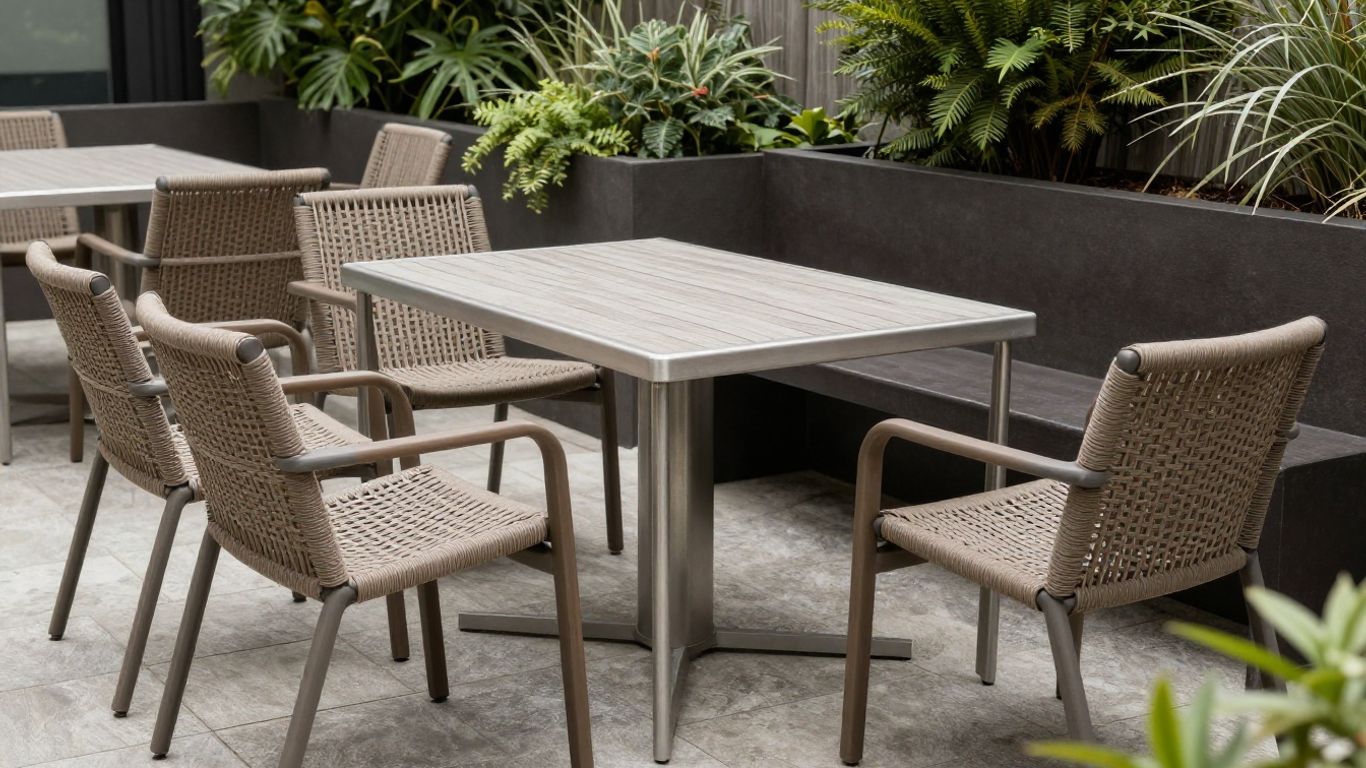
Teak and other naturally durable woods
Outdoor-rated woods can bring warmth and natural texture to a patio, but their look may change as they weather. Read the product’s care instructions before applying oil or sealant, since treatments are not interchangeable across wood types and finishes. Also check how the furniture is assembled and whether the wood is intended for the exposure it will receive.
If you prefer a more consistent appearance, consider whether you are willing to clean and maintain the surface periodically. If you are happy with natural variation, the changing tone can be part of the material’s character rather than a sign that something has gone wrong.
Aluminum and stainless steel
Aluminum is a light option for moving furniture around, while stainless steel can suit designs where you want a substantial metal frame. In either case, the whole construction matters: fasteners, joints and finish can influence how a piece copes with moisture and everyday use. Coastal exposure is a good reason to check the product’s specific care and suitability information.
This quick comparison can help you frame questions while shopping, but it is not a substitute for the maker’s care instructions or product specifications.
| Material | What to consider | Useful check |
|---|---|---|
| Aluminum | Low weight and ease of moving | Inspect joins and finish |
| Stainless steel | Metal grade and coastal exposure | Ask about care near salt air |
| Outdoor-rated wood | Natural surface changes and upkeep | Follow the stated treatment guidance |
| Synthetic resin | Sun exposure and construction quality | Check the frame and weave |
A material name alone cannot tell you how a particular piece will perform. Use the table to narrow your questions, then verify the finish, hardware and recommended conditions for the actual item you are considering.
Resin wicker and high-density polyethylene
Synthetic wicker can offer a woven look without the same upkeep as natural wicker, but inspect the weave and the frame beneath it. High-density polyethylene (HDPE) is another option to compare for outdoor use; construction quality and exposure still matter. Look for clear information about UV performance and cleaning rather than relying on a broad “weather-resistant” label.
Pay attention to edges and contact points, where wear may become visible first. If you are weighing layout and use as well as materials, patio space-planning advice can help you think through how furniture fits the way you gather outdoors.
Steel and wrought iron
Steel and wrought iron can feel reassuringly solid, particularly in a windy setting, but the finish needs attention. If a coating chips, the exposed area may be more vulnerable to corrosion, so check the frame periodically and follow the recommended touch-up process. Confirm that the weight is manageable if you expect to move the furniture into storage.
A sturdy frame is not automatically the right choice for every patio. Balance stability against the practicalities of lifting, rearranging and protecting the piece through the seasons.
Evaluate construction and design
Two pieces made from similar materials can differ greatly in how they are put together. Look beyond the finish and ask how joints, hardware, drainage and stability will perform in your space. Design Concepts offers a range of outdoor furniture, including dining sets; when comparing any set, inspect the construction details listed for that specific product.
Check joints, fasteners, and frame strength
Look closely at where legs meet seats, where rails connect and how table frames are braced. Fittings should feel secure, and the overall frame should not wobble during normal use. If the product listing does not explain the hardware or construction, ask before buying rather than assuming all frames are built alike.
Check how the furniture behaves when you sit down or lean on an arm. A small amount of movement may be normal for some designs, but loose connections or uneven contact with the ground deserve a closer look.
Look for drainage and ventilated surfaces
Water needs a way out. Slatted or open surfaces can allow air to move and reduce the chance of moisture sitting on a seat, while tightly enclosed areas may need more attention after rain. Cushions should also be considered as part of the design: look for guidance on drainage and drying, not simply a fabric label.
A few simple checks help you judge whether a design will suit a damp outdoor setting:
- Notice whether seat surfaces allow water to drain away.
- Check for enclosed corners or joints where water could linger.
- Look for airflow around cushions and beneath the furniture.
- Ask how the item should be dried after heavy rain.
These details are especially useful if furniture will sit outside between showers. They can help you compare designs based on how you will actually care for them, rather than appearance alone.
Consider weight, stability, and wind exposure
A lightweight chair is convenient to move, but it may need to be secured or stored when strong winds are forecast. Heavier furniture can stay put more readily, though it may be difficult to shift when you want to clean or rearrange the area. Think about where loose cushions, umbrellas and accessories will go when the weather turns.
Measure the space and leave room to walk around the furniture without crowding doorways or paths. For more ideas on arranging a usable outdoor area, the patio space-planning advice can help you think through furniture placement and everyday use.
Inspect finishes and protective coatings
A finish is part of the furniture’s protection, so inspect it for even coverage and ask how to care for it. Coated metal may need prompt attention if scratched, while wood treatments should follow the maker’s instructions. Look for clear guidance on cleaning products and any routine checks the finish requires.
Do not assume that a product’s appearance tells the whole story. A glossy coating, for example, is not proof of suitability for every climate; use the published specifications and warranty terms to understand what is covered.
Choose cushions and fabrics that can handle the outdoors
Cushions often need more hands-on care than the frame, especially in a yard exposed to rain or strong sun. Compare fabric performance, inner construction and how easily covers can be removed or stored. Design Concepts offers outdoor furniture options with features such as UV and fade resistance, mould and mildew resistance, quick-dry foam and free-draining cushions; check the individual product details to see which features apply.
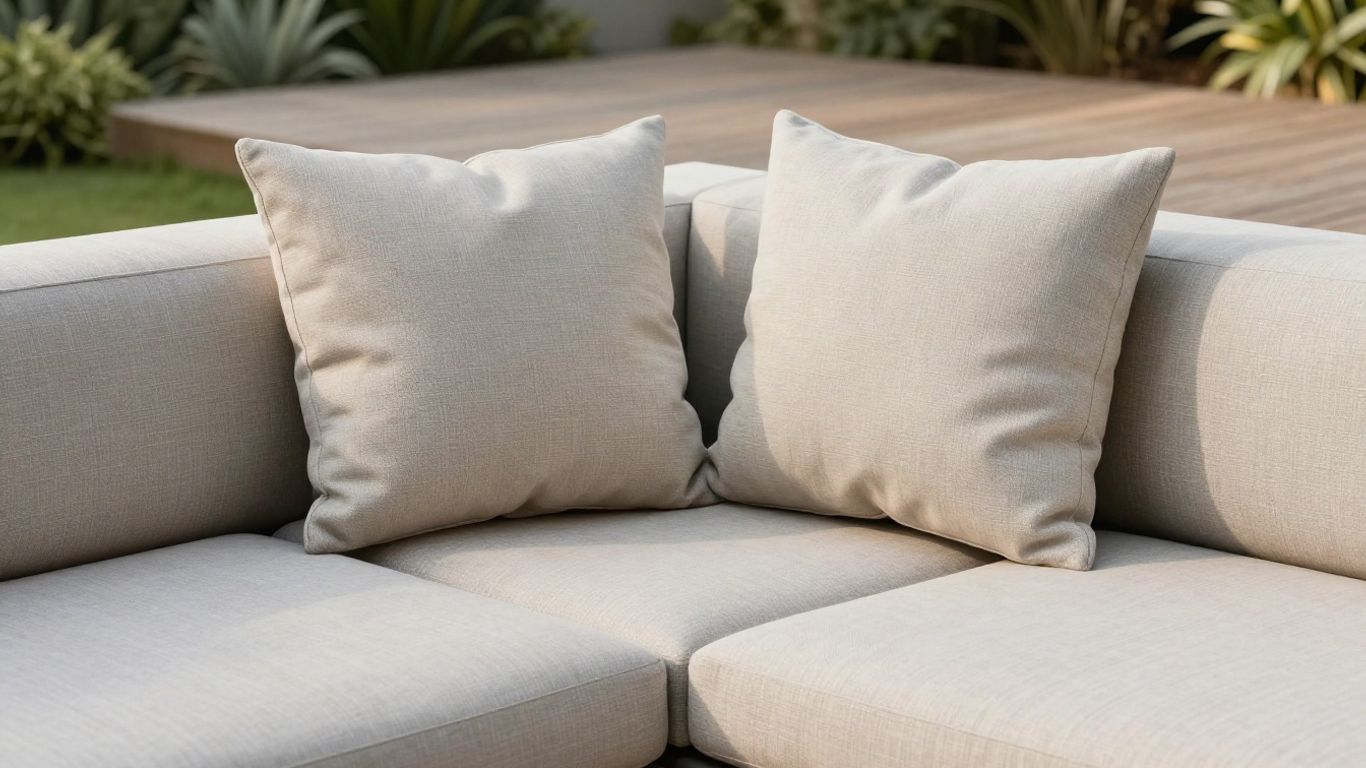
Compare solution-dyed acrylic and polyester
Solution-dyed acrylic and polyester are both used in outdoor fabrics, but the exact performance depends on the fabric and finish. Check product details for UV and fade resistance, cleaning guidance and any stated resistance to mould or mildew. Ask how the fabric should be dried and whether harsh cleaners or prolonged dampness should be avoided.
Feel and colour are important, but they are only part of the decision. Consider how the fabric will look after regular use and whether its care requirements fit your routine.
Check foam, seams, and water drainage
The cushion filling and the cover work as a system. Quick-dry foam and free-draining construction can help moisture escape, but cushions still need time and airflow to dry fully. Inspect seams and zips for neat finishing, and check whether the cushion should be turned, stood on edge or stored after wet weather.
If cushions stay outside most of the time, compare the product-specific details before choosing. A fabric described as suitable for outdoor use does not by itself tell you how the cushion’s inner materials handle repeated wetting.
Decide whether removable covers are practical
Removable covers can make cleaning easier, but only if the care instructions and your routine make removal realistic. Check whether covers are washable, whether they need special treatment and how long they may take to dry. If you have limited indoor storage, think about where damp covers or cushions can air out.
A simple routine can prevent a small task from becoming a nuisance. Before buying, picture what you will do with the cushions after a week of unsettled weather, not just on a sunny afternoon.
Match furniture to your local conditions
Your local conditions are more specific than a regional forecast. A covered balcony, a sunny deck and a salt-exposed coastal terrace may all need different choices, even in the same town. Design Concepts is a New Zealand-owned and operated retailer with nationwide delivery; whichever way you shop, use your own site’s exposure to guide the final choice.
Plan for intense sun and heat
If your furniture receives hours of direct sun, check for UV and fade resistance in both the frame finish and the fabric. Plan for shade where possible, and consider whether cushions can be brought inside during the hottest part of the day. Surface colour and comfort matter: a seat that becomes uncomfortably hot is less likely to be used.
A little observation can help. Notice when the sun reaches the seating area and whether nearby walls or paving reflect additional heat before choosing colours and placement.
Account for frequent rain, humidity, or snow
Where wet weather is common, prioritize drainage, airflow and clear care instructions. Humidity can slow drying, so cushions may need to be stored or stood on edge between showers. If snow or frost is part of your local conditions, check the manufacturer’s stated guidance rather than assuming a material can be left exposed indefinitely.
Shelter helps, but it does not eliminate moisture. Allow space around furniture for air to circulate, and have a practical plan for moving cushions or smaller pieces when a prolonged spell of poor weather arrives.
Factor in coastal salt and strong winds
Near the coast, salt air makes it sensible to check metal finishes and cleaning guidance more carefully. In exposed locations, consider how a table or chair will stay stable and where you will secure lighter pieces and accessories. Look for product information that explicitly addresses coastal or windy conditions rather than relying on material assumptions.
A sheltered position can reduce exposure, though wind can still funnel between buildings or across open decks. If you are unsure, ask the retailer or manufacturer about the exact piece and the conditions at your home.
Protect and maintain your furniture
Good care is usually simple, but it should suit the material rather than follow a one-size-fits-all routine. Regular checks help you catch dirt, standing water or small finish defects before they become harder to address. Follow the maker’s instructions first, especially for coated surfaces and outdoor fabrics.
Clean materials with suitable products
Start with the gentlest cleaning method recommended for the material. Avoid assuming that a strong household cleaner is safe for every fabric, finish or timber surface. Rinse away residue where directed and let pieces dry fully before covering or storing them.
A modest routine is easier to keep up with when you know what each material needs:
- Brush away loose dirt before it settles into seams or weave.
- Use only cleaners recommended for the specific material.
- Rinse and dry surfaces as directed after cleaning.
- Check joints, seams and finishes while the furniture is clean.
Those quick checks make it easier to spot a loose fitting or a small chip early. Keep the care instructions somewhere accessible so that anyone looking after the furniture can follow the same guidance.
Use covers and storage strategically
Covers can reduce exposure to rain and debris, but they should not trap moisture against furniture. Use a cover that fits as intended and allow items to dry before covering them. If cushions are removable, storing them during long wet periods can make drying and cleaning easier.
Storage does not have to mean moving everything indoors all season. Even a dry, sheltered place for cushions and lighter accessories can make the furniture simpler to care for and more comfortable to use when the weather clears.
Refresh finishes and replace worn components
Inspect finishes, fasteners, seams and cushion covers at the start and end of the main outdoor season. Address small chips or loosened fittings using the recommended repair method, and replace components when wear affects safe or comfortable use. Keep receipts and product documentation so you can check care and warranty details when needed.
For products where it applies, Design Concepts offers a five-year fabric warranty; confirm the specific product’s warranty terms before purchase. A warranty is useful context, but routine care and the exact conditions of coverage still matter.
Conclusion
The best weather resistant outdoor furniture for your home is the furniture suited to your actual exposure, habits and willingness to maintain it. Compare complete designs—not just material names—and check the details on drainage, finishes, cushions and care. With a realistic plan for shade, storage and seasonal checks, you can make an outdoor space that feels inviting and remains practical through changing weather.
Frequently Asked Questions
What is the most weather-resistant material for outdoor furniture?
There is no single best material for every climate or design. Compare the frame, finish, construction and care instructions together, then match them to your local exposure.
Can outdoor furniture stay outside all year?
Some furniture is designed for outdoor conditions, but year-round exposure still varies by product and climate. Follow the manufacturer’s guidance, and consider storing cushions or covering pieces during prolonged poor weather.
How do I protect outdoor cushions from rain?
Choose cushions with clear drainage and drying guidance, and give them time and airflow to dry after wet weather. If rain is frequent, removable cushions can be stored in a dry place between showers.
Does sunlight damage outdoor furniture?
Prolonged sun can fade fabrics and affect some finishes. Check for stated UV or fade resistance, use shade where practical and follow the recommended care instructions.
What should I check before buying coastal outdoor furniture?
Look for product-specific guidance on salt exposure, frame materials, finishes and cleaning. Also consider wind exposure, since light furniture and loose cushions may need to be secured or stored.
Are metal frames suitable for outdoor furniture?
Metal frames can work well outdoors when the material, finish and construction suit the conditions. Check the product’s care guidance and inspect coated surfaces for scratches or chips over time.
How often should I maintain outdoor furniture?
The right schedule depends on the material and how exposed the furniture is. Clean it as directed, check fittings and finishes periodically, and give cushions a chance to dry after rain.