

How to choose the right outdoor dining set for your patio
Key Takeaways
The right outdoor dining set should suit your space, household, climate, and habits rather than simply match a showroom photograph.
- Measure the area and leave comfortable room for chairs and circulation.
- Choose materials and finishes that suit your sun, rain, humidity, and storage options.
- Match the table shape and seating to everyday meals as well as larger gatherings.
- Test comfort, proportions, construction quality, and maintenance requirements before buying.
- Plan shade, lighting, décor, and seasonal protection as part of the complete setup.
Assess your space and dining needs
Start with the space you actually have, not the number of seats you hope to fit. A compact balcony may need a small round table, while a broad deck can accommodate a longer arrangement with room to move around it. Your usual meals, number of guests, and storage habits all affect the best choice.
A useful outdoor dining furniture guide can help you think through measurements, table shapes, materials, and layout before you shop. Take a few minutes to sketch the area and mark doors, steps, railings, and views you want to keep open.
Measure the patio, deck, or balcony
Measure the usable floor area in several places, since walls, posts, planters, and railings can reduce the practical footprint. Record the narrowest width as well as the overall length, and check the route from your home to the outdoor area so delivery and assembly will be manageable.
For a balcony, pay attention to the door swing and any changes in floor level. On a patio or deck, note where the afternoon sun falls and whether an umbrella base or other heavy accessory will take up valuable space.
Plan for seating and walking clearance
A table can fit on paper and still feel awkward when chairs are pulled out. Allow space behind occupied chairs for someone to pass, and leave a clear route between the dining area, the house, and any barbecue or outdoor kitchen. If you often serve food from one side, preserve extra clearance there.
Keep the layout flexible enough for ordinary use. Comfortable circulation matters more than squeezing in one additional chair that makes every meal feel cramped.
Match the table size to your household
Choose a size based on the people who will sit down most often, then consider how frequently you host. A smaller table may be more inviting for two or four people, while an extendable design can make occasional gatherings easier without dominating the space every day.
Think about place settings, serving dishes, and elbow room rather than counting chairs alone. If you like lingering over meals, a little extra tabletop depth can make a noticeable difference.
Consider how often you entertain
Your entertaining pattern should guide both capacity and flexibility. A couple who hosts a large lunch twice a year may prefer a compact set with spare folding chairs, while a family that eats outdoors most nights will benefit from a permanent, easy-to-use arrangement.
List your typical occasions before comparing products:
- Weeknight meals with the household
- Weekend lunches with a few friends
- Larger family gatherings
- Drinks or dessert after dinner
This simple list keeps you from paying for capacity you rarely use or choosing a set that cannot handle your regular occasions. It also helps you decide whether stackable chairs, benches, or an extendable table will be genuinely useful.
Choose the best outdoor dining set material
Material affects appearance, weight, comfort, maintenance, and how confidently you can leave furniture outdoors. No single option is best for every New Zealand setting, so compare the frame, tabletop, finish, fasteners, and cushions together. A beautiful material that demands more care may still be right if you enjoy maintaining it.
Look closely at how the material will age in your particular position. Coastal air, strong sun, damp corners, and exposed wind can each change the practical decision.
Compare aluminum, steel, and wrought iron
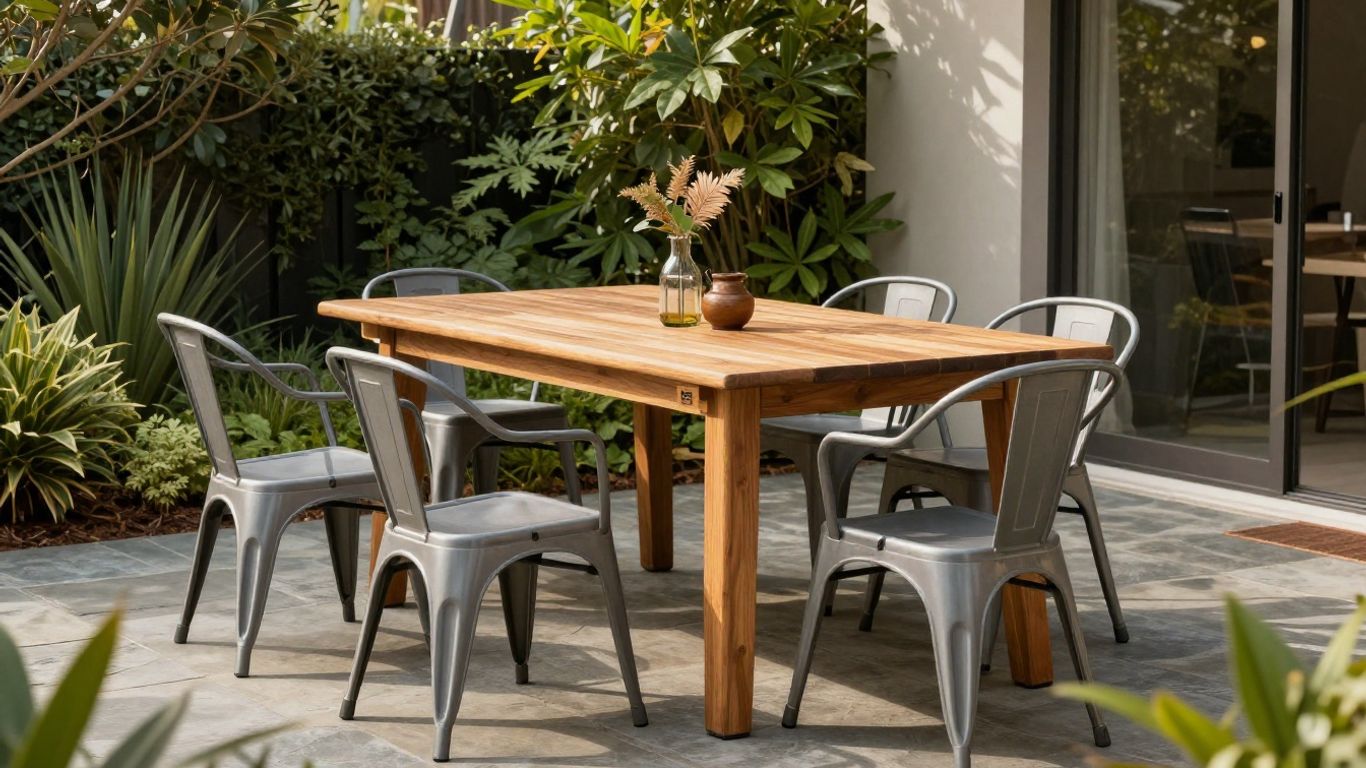
Aluminum is often easy to move and suits clean, contemporary designs, including the Aluminium Outdoor Dining Tables available from Design Concepts. Steel can feel substantial and stable, while wrought iron brings a traditional, weighty appearance that may work well in a sheltered garden setting.
Ask about the finish as well as the underlying metal. Powder coating, sealed joints, and suitable hardware can affect how a frame handles regular outdoor exposure, and a lighter table may need a thoughtful position in windy areas.
Evaluate wood species and maintenance
Wood adds warmth and visual texture, but it usually asks more of you than a low-maintenance synthetic surface. Check whether the timber should be oiled, sealed, or simply cleaned, and find out how often that care is recommended in your climate.
Look at the grain, joins, and underside of the tabletop. Water that cannot drain or dry properly may create problems over time, especially where the table sits close to a damp wall or receives little sunlight.
Understand the benefits of recycled plastic
Recycled plastic can offer a practical wood-like appearance without the same splintering, staining, or refinishing routine associated with some timber furniture. It is worth checking the product’s construction, color stability, weight, and drainage rather than judging the material from a sample alone.
This choice can suit busy households that want to wipe the table clean and spend less time on seasonal upkeep. It may feel less natural than timber, so compare samples in the light and against your home’s exterior finishes.
Weigh durability against appearance
Durability is not only about a material’s name. It also depends on thickness, joinery, coating quality, drainage, hardware, and whether the furniture is used and stored as recommended. A set that looks striking but needs constant protection may be a poor fit for your routine.
Make a short comparison before deciding. Consider the look you want, the cleaning you will actually do, the weight you can move, and the likely exposure to sun and moisture. The best balance is the one you can live with comfortably.
Select a table shape and seating configuration
Shape changes how people talk, serve food, and move around the table. Seating configuration affects flexibility, storage, and the visual balance of your patio. Start with the footprint and your usual group size, then choose the form that makes those everyday moments feel natural.
You can also use a patio style and furniture guide for ideas about combining dining furniture with smaller bistro pieces or nearby lounging areas. Keep the dining zone visually clear so it does not become a passageway or a storage spot.
Compare round, square, rectangular, and oval tables
Round tables encourage conversation and can be easier to walk around in a compact area. Square tables suit balanced layouts, rectangular tables make efficient use of longer patios, and oval tables soften the visual line while offering useful seating length.
Pay attention to the corners in relation to doors and walkways. A rounded edge may be friendlier in a narrow route, while a rectangular table can provide more practical serving space for larger meals.
Decide between chairs, benches, and mixed seating
Chairs give each person a defined place and are usually easier to move individually. Benches can fit more people along one side and create a relaxed look; the Aluminium Outdoor Benches collection from Design Concepts is one option to consider when you want flexible open-air seating.
Mixed seating can be especially useful for families. Pairing chairs on the ends with a bench along one side gives you a more casual arrangement without losing the support and personal space many diners prefer.
Choose between folding, stacking, and fixed designs
Folding furniture is helpful when you need to clear the area quickly, while stacking chairs can make seasonal storage simpler. Fixed designs often feel more substantial and may be the better choice when the set stays in one place for most of the year.
Think about where the pieces will go when they are not in use. Measure that storage location too, and check whether you can carry the stacked or folded furniture without scraping walls or steps.
Account for umbrellas and other accessories
Shade should be planned before the table arrives. Check whether the tabletop has an umbrella opening, whether the base will fit under or beside it, and whether the umbrella can open without striking a wall, roofline, or nearby branches.
Leave room for lighting, serving trolleys, planters, and outdoor heaters only if you will use them. Accessories should support the dining experience rather than fill every remaining patch of floor.
Evaluate comfort and ergonomic design
A dining set can look polished and still be uncomfortable after twenty minutes. Seat height, table clearance, back support, armrests, cushion behavior, and the ease of getting in and out all matter. If you can visit a showroom, sit as you normally would and imagine a full meal rather than a quick test.
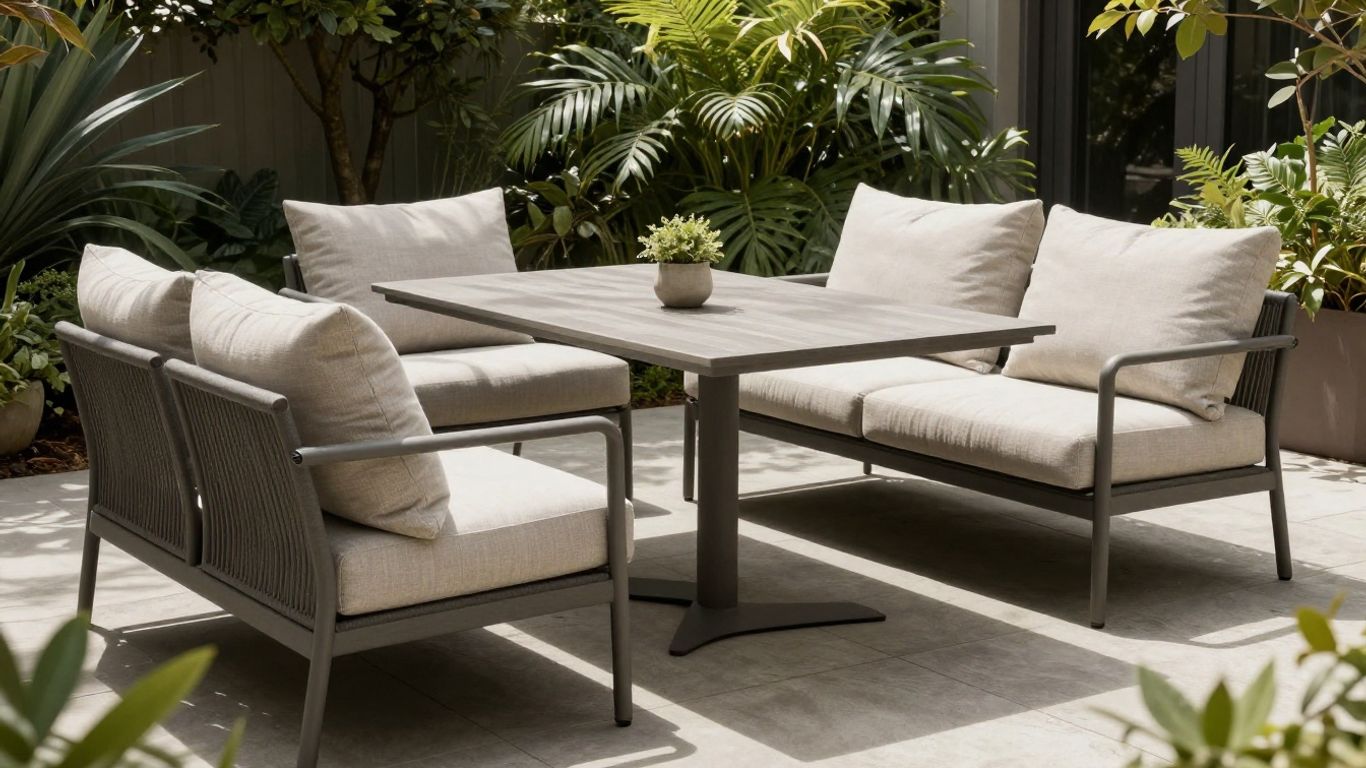
Online, study dimensions carefully and compare them with a chair and table you already find comfortable. For more seating ideas, outdoor casual chairs from Design Concepts include options with Sunbrella fabric and Quick Dry Foam, features that may be relevant when comfort and weather exposure are both priorities.
Check seat height and table proportions
Your knees should fit comfortably beneath the tabletop, with enough room to shift position without hitting a support rail. A seat that is too low can make the table feel awkward, while a very thick cushion may change the effective height once someone sits down.
Compare seat width, depth, and table height as a set. Small differences can affect posture, especially when you spend several hours dining, talking, or playing games outdoors.
Look for supportive chair backs and armrests
A supportive back should meet you at a comfortable point without forcing your shoulders forward. Armrests can make long meals more relaxing, but check that they slide beneath the table or allow chairs to sit close enough when not in use.
Consider who will use the chairs most. Older guests, children, and anyone with limited mobility may value stable arms and an easy-to-manage seat more than an ultra-minimal silhouette.
Consider cushions, fabrics, and quick-drying materials
Outdoor cushions should feel supportive without staying damp after a shower. Look for removable covers, practical drainage, and fabrics suited to UV exposure, then check the care instructions before assuming the cushions can remain outside year-round.
Color and texture matter too, but maintenance should come first. A cushion that dries quickly and can be cleaned easily is more likely to remain inviting through a busy season.
Test how easy the set is to use and rearrange
Pull each chair out, turn it, and return it to the table. Notice whether it catches on the paving, whether the table shifts, and whether the chairs are light enough for the person who will rearrange them most often.
If possible, test the set with plates or serving bowls on the table. Real movement reveals awkward leg positions and tight clearances that a showroom glance can miss.
Match the set to your climate
New Zealand conditions vary widely, and even one property can have several microclimates. A covered deck, a sunny lawn, and a windy balcony place different demands on furniture. Choose for the exposure you actually have, not only for the general weather in your region.
Sun, rain, salt air, frost, and humidity all influence finishes and fabrics. Good placement and sensible storage can extend the useful life of almost any outdoor dining set, but they cannot fully compensate for a material that is unsuitable for its setting.
Choose finishes for sun exposure
Strong sun can fade fabrics and alter the appearance of some painted or stained surfaces. Look for UV-resistant materials and finishes, and consider how much shade the table receives during the hottest part of the day.
An umbrella, pergola, or covered position can reduce exposure, but do not treat shade as a complete substitute for suitable outdoor construction. Rotate cushions when practical and follow the care guidance for the finish.
Prevent damage from rain and humidity
Rain needs somewhere to go. Tables and chairs with sensible drainage, raised feet, and surfaces that dry readily are easier to live with in damp conditions. Avoid trapping wet cushions beneath covers, since restricted airflow can leave them musty.
Place the set where water does not pool around the legs. A breathable protective cover can help between uses, provided the furniture is dry before you cover it.
Prepare for snow, frost, and freezing temperatures
If your area experiences frost or freezing weather, plan where cushions and lighter components will go during the coldest months. Water that enters small cracks or porous materials can expand as it freezes, so keeping furniture dry and following seasonal care instructions is worthwhile.
Even when the frame stays outside, removable cushions and accessories may benefit from indoor storage. Check the manufacturer’s guidance rather than assuming every material handles freezing conditions in the same way.
Look for rust-resistant hardware and protective coatings
Hardware is easy to overlook, yet bolts, hinges, and fasteners are exposed to the same moisture as the frame. Check for rust-resistant components and inspect coating coverage around joints, edges, and connection points.
This is particularly useful near the coast or anywhere with persistent humidity. Rinse off salt or grime when recommended, and replace damaged hardware promptly instead of waiting for movement or staining to spread.
Compare quality, maintenance, and value
Price is only one part of value. A well-made set may cost more initially but require fewer repairs, feel better in daily use, and remain attractive for longer. Compare construction and care requirements alongside the design, delivery arrangements, warranty, and replacement options.
Read product information carefully and ask questions when dimensions, materials, or maintenance instructions are unclear. A reliable purchase is one you understand before it arrives, not one you justify after a problem appears.
Inspect construction, joints, and hardware
Look for even joins, stable legs, clean welds or fastenings, and a tabletop that does not flex excessively. Check whether chairs feel balanced on the floor and whether the frame remains steady when you shift your weight.
For assembled furniture, confirm what is included and whether specialist tools are needed. Small details such as adjustable feet or protected connection points can make the set easier to level and maintain.
Review care requirements and replacement parts
Find out how to clean the frame, tabletop, fabric, and cushions before you buy. Also ask whether covers, slats, feet, fasteners, and cushion components can be replaced if they are damaged or worn.
A simple care routine is more sustainable for your household than an elaborate one you will avoid. Keep the instructions somewhere accessible and deal with stains, standing water, and loose hardware early.
Understand warranties and expected lifespan
A warranty can clarify what the maker expects from the product and how defects are handled. Read its duration, exclusions, care conditions, and process for making a claim rather than treating the headline period as a guarantee of every type of damage.
Also consider practical support. Clear product information, accessible customer service, and delivery options can matter just as much as the written warranty when you are furnishing a large or difficult-to-reach space.
Calculate the total cost over time
Compare the purchase price with cushions, covers, umbrella bases, delivery, assembly, cleaning products, and likely replacement parts. A set that appears inexpensive may become less attractive if it needs frequent refinishing or special storage.
Use this simple comparison to keep the decision grounded:
| Cost factor | Questions to ask | Why it matters |
|---|---|---|
| Initial price | What is included in the set? | Prevents surprises at checkout |
| Delivery and assembly | Are access or setup fees possible? | Reflects the real arrival cost |
| Ongoing care | What cleaning or treatment is needed? | Shows the time and maintenance commitment |
| Replacement items | Are covers, cushions, or parts available? | Supports longer use |
The most useful figure is the cost of owning the set comfortably over several seasons. If the furniture suits your routine and remains easy to care for, value is not limited to the lowest ticket price.
Style and set up your outdoor dining area
Once the practical decisions are settled, styling becomes much easier. Aim for a space that feels connected to your home while still working for meals, conversation, and changing weather. Repetition in color, material, or shape can create cohesion without making every piece identical.
Treat the dining set as the anchor rather than filling the area all at once. Leave visual and physical breathing room so the patio feels usable on an ordinary day.
Coordinate colors and finishes with your home
Use exterior paint, paving, cladding, planting, and indoor views as cues for the palette. A warm timber tone can soften a modern surface, while powder-coated metal may echo window frames or darker architectural details.
Bring samples outside if possible. Colors can look very different in strong sun, shade, and evening light, so judge them where the furniture will actually live.
Add lighting, shade, and weather protection
Layer practical lighting so you can see plates and faces without creating glare. Wall lights, pendant-style fixtures, lanterns, or low garden lighting can each work, provided cables and fittings are suitable for outdoor use.
Add shade where the sun is strongest and weather protection where wind-driven rain reaches the table. These measures can make the space more useful without crowding it with unnecessary furniture.
Arrange décor without crowding the table
A low centerpiece, a few planters, or a textured outdoor rug can make the dining zone feel finished. Keep décor low enough for conversation and light enough to move when you need more serving space.
Choose pieces that tolerate the conditions or can be brought inside quickly. The table should remain ready for food, not become a permanent display surface that needs clearing before every meal.
Store and protect the set between uses
Decide where cushions, covers, folding chairs, and seasonal accessories will go before you place the furniture. Dry cushions thoroughly, allow airflow around covered pieces, and avoid dragging frames across surfaces that can scratch or loosen feet.
A little routine protection is easier when storage is close and convenient. Once the layout, materials, and care habits fit your life, your outdoor dining set can feel like a natural extension of the home rather than another chore.
Conclusion
Choosing an outdoor dining set becomes simpler when you begin with measurements and daily habits, then weigh materials, comfort, climate, construction, and long-term care. Take your time with the practical details, and you can create a dining area that looks considered, feels welcoming, and works well through changing seasons.
Frequently Asked Questions
How much space should you leave around an outdoor dining set?
Leave enough room to pull chairs out and let people pass behind them, with additional clearance on the side used for serving. Measure the occupied chair depth, not just the table dimensions.
Which outdoor dining table shape is best for a small patio?
Round or compact square tables often work well because they have no sharp corners and can make circulation easier. The best choice still depends on door swings, furniture placement, and the number of regular diners.
Is aluminum a good material for outdoor dining furniture?
Aluminum is lightweight, easy to move, and available in many contemporary designs. Check the frame construction, finish, hardware, and wind exposure so the complete set suits your location.
How do you protect outdoor dining furniture from rain?
Choose furniture with good drainage, keep cushions dry, and avoid covering damp pieces without airflow. Position the set away from pooling water and follow the maker’s care instructions.
Are benches comfortable for outdoor dining?
Benches can be comfortable when their height, depth, and back support suit the table. They are useful for flexible seating, though individual chairs may be easier for guests who need armrests or more personal space.
What should you check before buying outdoor cushions?
Review the fabric’s outdoor suitability, cushion filling, drainage, removable covers, cleaning instructions, and storage needs. Quick-drying construction can be especially helpful in damp or changeable weather.
How can you make an outdoor dining area feel more inviting?
Coordinate the furniture with your home, add practical lighting and shade, and use a small amount of weather-appropriate décor. Keep pathways clear and leave enough tabletop space for real meals and serving dishes.