

How to choose the best outdoor furniture for coastal conditions
Key Takeaways
Coastal furniture needs to cope with salt, sun, moisture, and wind, while still feeling comfortable and right for your space. Focus on materials and care that suit your particular exposure.
- Choose frames and fasteners suited to salty, damp conditions.
- Check fabric, cushion construction, and drying needs alongside frame materials.
- Match furniture weight and layout to your wind exposure and storage options.
- Compare expected care, warranty terms, and upfront cost before buying.
- Rinse off salt and debris, and secure or store furniture ahead of severe weather.
Understand the challenges of coastal weather
Coastal conditions can be hard on outdoor furniture, but the exact mix of challenges depends on your home and its setting. Salt carried in the air, bright sun, humidity, and wind can all affect how materials look and perform over time. Knowing what reaches your patio most often gives you a more useful starting point than shopping by style alone.
How salt air affects furniture materials
Salt particles can settle on furniture and hardware, where moisture may help corrosion develop. Metal finishes and fasteners deserve particular attention: check how they are protected and whether the care instructions call for regular rinsing. Wood and woven materials also benefit from being kept clean and allowed to dry, especially in sheltered spots where dampness lingers.
A quick rinse can make a practical difference because salt residue and trapped moisture are easier to address before they build up. When comparing options, look beyond the main frame material to the screws, joins, and smaller fittings that hold the piece together.
What sun exposure, humidity, and wind can do
Strong sun can fade fabrics and finishes, while persistent humidity can slow drying and encourage mildew on cushions left damp. Wind may move lightweight pieces or drive grit against surfaces. These pressures often arrive together: a sunny deck can also be exposed to salty breezes, and a covered patio can hold humid air after rain.
Think about how your furniture will be used between showers and on breezy days, not only when the weather is calm. This coastal furniture guide offers another perspective on choosing materials and construction for salt air, UV exposure, wind, and sand.
Why coastal conditions vary by location
A home close to open water may face more direct salt spray and wind than a sheltered courtyard a little farther inland. The direction your patio faces, nearby buildings, trees, and roof cover all change how much sun, rain, and air movement reach a piece. Even within one property, a balcony and a protected garden nook can call for different choices.
Before you shop, spend time noticing where water collects, where the sun falls during the day, and which corners catch gusts. For a wider comparison of materials and care considerations, see these coastal furniture options, then narrow your shortlist to the conditions around your own home.
Choose frames that resist corrosion and moisture
The frame affects both the look and the long-term upkeep of outdoor furniture. No material is entirely maintenance-free in a coastal setting, so compare how it responds to moisture and what care it needs. The best outdoor furniture for coastal conditions is the furniture whose materials and construction suit the exposure you actually have.
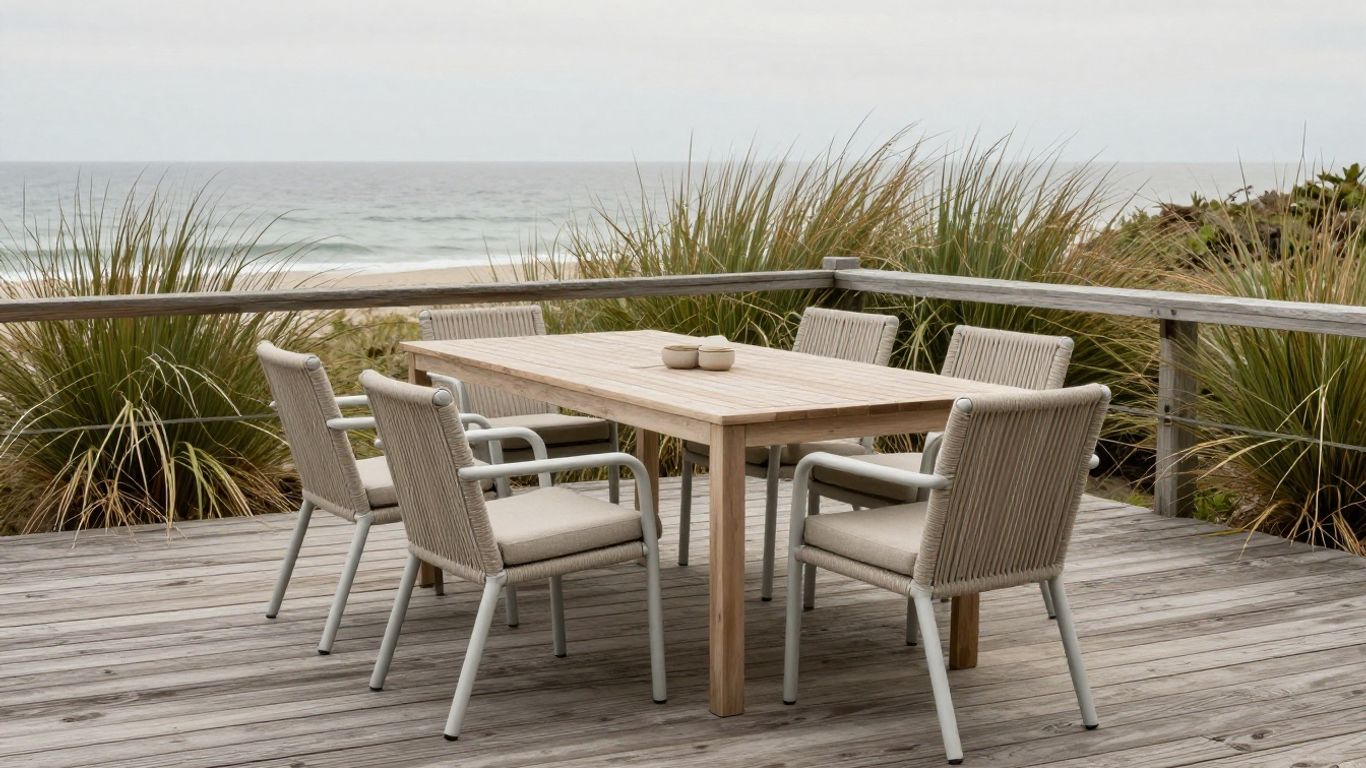
Compare aluminum, stainless steel, and teak
Aluminum is relatively light and does not rust in the same way as iron-based metals, though finishes and joints still need care. Stainless steel is often chosen for hardware where corrosion resistance matters, but grades and coatings vary, so check product details rather than relying on the name alone. Teak has a naturally warm appearance and is commonly used outdoors; its colour and finish will change with exposure unless you follow a suitable care routine.
A simple comparison can help you focus on the trade-offs rather than a single “best” material. Treat it as a starting point, then check the specific construction and maintenance guidance for each item.
| Material | What to consider | Care question |
|---|---|---|
| Aluminum | Light weight and a finished surface | How should the finish be cleaned and inspected? |
| Stainless steel | Hardware grade and any protective coating | Does the maker specify coastal use or rinsing? |
| Teak | Natural appearance and changing finish | Do you want to let it weather or maintain its colour? |
| Recycled plastic | Weight, design, and surface cleaning | How does the piece handle wind and sun exposure? |
The table cannot replace product specifications, but it helps you ask useful questions before comparing prices. Inspect the whole frame, not just the part that catches your eye in a product photograph.
Know when resin wicker and recycled plastic make sense
Resin wicker can bring a woven look without relying on natural cane, but the quality of the weave and its supporting frame still matter. Look for even construction and ask how the material should be cleaned after exposure to salt and grit. Recycled plastic can be practical where easy cleaning is a priority, though different products vary in weight, finish, and design.
Design Concepts offers outdoor dining sets, and its collections are selected or made for New Zealand’s climate. As with any furniture, check the details of the particular set—including its frame, fixings, and care instructions—against the exposure at your home.
Check hardware, welds, and protective finishes
Small construction details can affect whether a frame stays secure and presentable. Look for neat welds, stable joins, and hardware that is described clearly; vague terms such as “weather-resistant” are less useful than specific care or material information. Ask whether finishes need periodic attention and whether the warranty describes coastal exposure.
It can help to view a piece from more than one angle, especially around the legs, corners, and underside of a tabletop. Those less visible areas often reveal how carefully the furniture has been assembled.
Select cushions and fabrics built for the outdoors
Comfort outdoors depends on more than a soft seat. Fabric, seams, filling, and drainage all affect how cushions cope with sun and damp air, and how quickly you can use them again after a shower. Compare these parts together so your choice fits both your climate and your routine.
Look for UV-resistant, solution-dyed fabrics
Outdoor fabrics are often described as UV-resistant or solution-dyed, but those terms do not remove the need to check the product information. Ask how the fabric is expected to handle sun exposure, whether it resists fading, and what cleaners are recommended. Colour also matters in practice: a fabric that looks beautiful in a sample should suit the brightness and shade patterns where you plan to sit.
Design Concepts sells outdoor loungers as part of its outdoor-living range, and the retailer describes its collections as intended for New Zealand’s climate. For a particular lounger, confirm the fabric details and warranty rather than assuming every option has identical features.
Compare quick-drying foam and water-resistant cushion construction
Cushions that drain and dry efficiently can be more convenient in a damp or changeable climate. Look for information about the foam, seams, and construction, including whether water can drain away rather than remain trapped inside. A water-resistant cover can help with light exposure, but it is not necessarily a substitute for bringing cushions in during prolonged rain.
Consider how you will use the space: if cushions stay outside most of the time, drying and drainage may matter more than plushness alone. If you can store them easily, you may have more flexibility in the balance between comfort and weather protection.
Decide whether removable covers fit your climate
Removable covers can make cleaning easier, provided the care instructions suit how you plan to maintain them. Check whether the covers can be washed, how they should be dried, and whether replacement covers are available. In a sheltered spot, removable covers may be convenient; in a fully exposed area, you may still prefer to store or protect cushions during wet spells.
Try sitting on the furniture if possible, and consider how easily covers can be removed without wrestling with the cushion. A simple routine is more likely to be followed, which matters when the weather changes quickly.
Evaluate furniture design for wind and stability
A piece can have suitable materials and still be a poor fit if it shifts in gusts or blocks the way through your outdoor area. Consider the weight, shape, and placement of each item along with the practicalities of moving it. A little planning helps you keep the space inviting without making it difficult to secure when conditions turn.
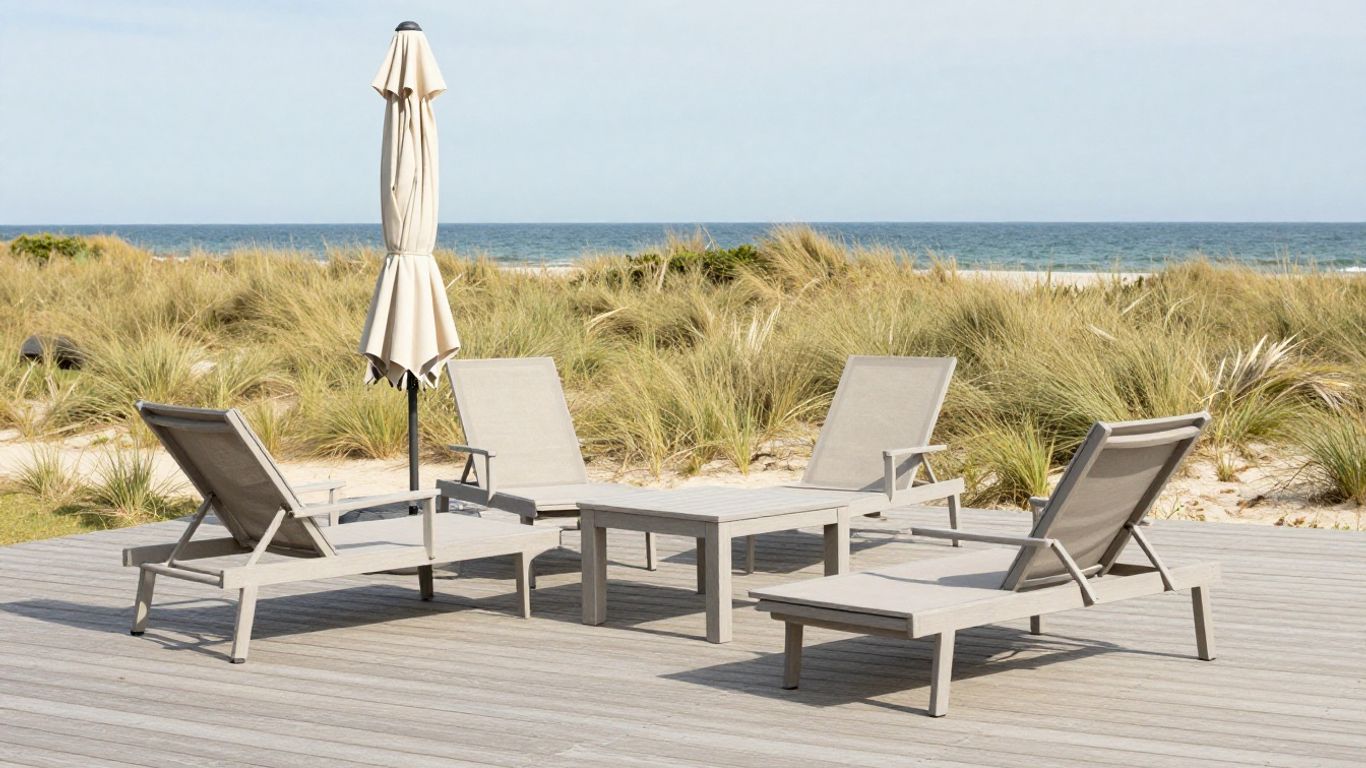
Match weight and shape to your exposure
Lightweight furniture is easier to move, but may need to be brought in or secured when wind picks up. Heavier pieces can feel steadier in exposed places, though they are less convenient to relocate for cleaning or storage. Broad tabletops and tall-backed chairs can catch more wind than lower, more compact designs.
Map the most exposed parts of your patio before choosing a layout. A protected corner may suit lighter seating, while the open edge of a deck may call for a more stable arrangement and a plan for strong winds.
Check anchoring options for decks and patios
If furniture will sit in a consistently windy spot, find out whether it can be secured safely and whether the surface allows for that. Decking, paving, and balconies have different limitations, so avoid improvising fixings that could damage the structure. Even where anchoring is not suitable, a plan to move or store loose pieces can reduce the chance of them shifting.
The right approach should be practical for your home and easy to use before bad weather arrives. Keep access routes clear so you can move chairs, umbrellas, or cushions without having to rearrange the whole space.
Choose layouts that allow airflow and easy storage
A crowded arrangement can make it harder to clean under furniture and to move pieces when the weather changes. Leave room for air to circulate around seating, and consider where cushions or smaller items will go when not in use. If the patio is compact, furniture that can be repositioned or nested may make everyday care less of a chore.
When comparing layouts, a few questions can clarify whether the space will work in ordinary use and during unsettled weather:
- Can you move each piece without blocking a door or path?
- Is there a sheltered place to store cushions and smaller items?
- Will furniture sit securely in the area that gets the strongest gusts?
- Can you clean beneath and around the arrangement easily?
A layout that answers these questions well can feel relaxed without becoming difficult to manage. Give yourself enough room to use the furniture and to carry out the simple tasks that protect it.
Balance durability, comfort, and budget
A low purchase price is only one part of value, particularly when furniture will be exposed to salt and changing weather. Consider how often you will use each piece, what upkeep it needs, and whether its comfort makes you more likely to enjoy the space. A considered shortlist can help you spend where the difference matters most.
Compare upfront cost with expected lifespan
Compare pieces with similar functions and look at the details behind the price: frame materials, fabric, construction, and care requirements. A less expensive option may suit a sheltered patio or occasional use, while a more durable build may be worth considering for a heavily used, exposed area. There is no single lifespan that applies to every setting, so treat product guidance as more useful than broad promises.
Design Concepts is a New Zealand-owned and operated retailer with online and in-store shopping and nationwide delivery. Its range includes outdoor sofas; when comparing a specific option, weigh its comfort and stated materials against the weather it will face and the price you are prepared to pay.
Review warranties and coastal-use exclusions
Read warranty terms before buying, paying particular attention to what is covered and what is excluded. Exposure to salt air, care requirements, fading, and damage caused by severe weather may be addressed differently from one product to another. Keep receipts and product-care information together so you can refer to them later.
If a warranty is unclear, ask the retailer to explain the relevant terms for the exact item you are considering. That conversation can reveal whether the product is a sensible fit for your location and how you intend to use it.
Prioritize pieces based on how you use the space
Start with the activities that matter most: dining with family, relaxing with a book, or creating flexible seating for guests. Then allocate your budget to the pieces that will be used most often, rather than trying to furnish every corner at once. Comfort is personal, so test seat depth and support where possible and leave room for additions later.
You may find that a well-chosen table and a few comfortable chairs serve you better than a larger set that crowds the patio. Let the way you live outdoors guide the order of your purchases.
Protect coastal furniture with practical maintenance
A simple care routine can help keep outdoor furniture clean and make small issues easier to spot. The right schedule depends on how close you are to the water, how exposed the space is, and what the maker recommends. Regular attention is usually easier than waiting until salt or grime has built up.
Rinse away salt and debris on a regular schedule
Rinsing can remove salt, dust, and grit before they settle into joints or fabric. The frequency depends on exposure: a breezy, open deck may need attention more often than a sheltered courtyard. Use the product guidance as your baseline, then adjust when you notice residue collecting sooner.
A steady routine can be straightforward if you tie it to other outdoor upkeep. For example, you might check furniture after a run of windy days and rinse surfaces when you see salt or debris.
Clean materials with appropriate products
Different surfaces can need different cleaning methods, so check the manufacturer’s instructions before using a detergent, brush, or pressure washer. Harsh products may affect finishes or fabrics, while abrasive tools can mark a surface. Test an unfamiliar cleaner on a small, inconspicuous area if the care guidance allows it.
For routine upkeep, a few habits keep the job manageable:
- Brush or rinse loose grit away before wiping a surface.
- Use cleaning products only when the material’s care instructions allow them.
- Let cushions and frames dry thoroughly after cleaning.
- Check seams, joints, and hardware as you clean.
These small steps help you notice wear as well as remove dirt. If you find a loose fitting or damaged finish, consult the product guidance before attempting a repair.
Cover, store, or secure furniture during severe weather
Before a storm or a spell of strong wind, bring in cushions and light accessories where possible. Secure or relocate loose furniture, and use covers only as directed; a poorly fitted cover can move in the wind or hold moisture against a surface. If you store furniture, choose a dry place with enough airflow for pieces to dry fully first.
Make a quick weather plan before the forecast becomes urgent. Knowing which items move indoors, which need securing, and where everything goes makes the routine easier when conditions deteriorate.
Conclusion
Choosing outdoor furniture for a coastal home is a matter of matching materials, comfort, and care to the weather your space actually experiences. Check the less obvious details—hardware, seams, storage, and warranty terms—and keep up a simple routine of rinsing, cleaning, and securing pieces. With those choices made thoughtfully, your outdoor area can stay practical and welcoming through changing seasons.
Frequently Asked Questions
What material is best for outdoor furniture near the sea?
There is no single best material for every coastal home. Compare frame materials, finishes, hardware, and care instructions, then match them to how exposed your patio is to salt, moisture, and wind.
Does aluminum rust in coastal conditions?
Aluminum does not rust in the same way as iron-based metals, but finishes and joints can still be affected by exposure and wear. Check the product’s construction and care instructions, and rinse away salt when needed.
Is teak a good choice for coastal furniture?
Teak is commonly used outdoors and has a distinctive natural appearance. Its finish and colour can change with exposure, so consider whether you are comfortable with that or want to follow a maintenance routine recommended for the product.
How often should I clean coastal outdoor furniture?
The right schedule depends on how much salt, grit, and moisture reach your furniture. Check it regularly, rinse when residue appears, and follow the maker’s guidance for the specific materials.
Are removable cushion covers useful near the coast?
They can make cleaning and storage easier, but check how they should be washed and dried. Removable covers do not necessarily make cushions suitable for prolonged exposure to rain.
How can I stop outdoor furniture blowing over?
Choose a stable design suited to the exposure, and make a plan to secure or move loose pieces before strong winds. Check that any anchoring method is appropriate for your deck, patio, or balcony.
Should I cover outdoor furniture during winter or storms?
Covering or storing furniture can help protect it, but use covers as directed and avoid trapping moisture. During severe weather, bring in cushions and secure or relocate lightweight items where practical.