

How to choose outdoor loungers NZ homeowners can enjoy for years
Key Takeaways
Choose a lounger around the way you relax and the conditions it will face. A little measuring and material checking can make it easier to enjoy your choice season after season.
- Match the lounger style to how you plan to use it.
- Choose materials and finishes with your local weather in mind.
- Test the recline, seat support, and cushion feel where possible.
- Measure the area, including space for movement and storage.
- Compare construction, care needs, warranty, and total cost before buying.
1. Compare the main types of outdoor loungers
Outdoor loungers NZ homeowners choose can range from a simple poolside chaise to a padded daybed made for slow afternoons. Think first about whether you want to sit upright, stretch out, or share the space. The shape and mechanism affect how a lounger feels, but also how easily it fits your routine and outdoor layout. Design Concepts offers loungers as part of its outdoor-furniture range.
Sun loungers for poolside relaxation
A sun lounger is designed for stretching out, often with a long seat and an adjustable backrest. It suits pool edges, sunny decks, and gardens where you have room to recline without blocking a walkway. If the lounger will sit beside water, consider how its frame and surface handle regular splashes, and whether you can move it out of strong sun when it is not in use.
Reclining chairs for adjustable comfort
Reclining chairs tend to have a smaller footprint than a full-length chaise and can work well when you like switching between reading upright and putting your feet up. Check how the backrest moves and whether you can adjust it while seated. A mechanism that feels smooth in the showroom should still be easy to manage when you are relaxed, not something that requires awkward lifting or a lot of force.
Daybeds and double loungers for shared spaces
A daybed or double lounger gives you more room to sprawl or share, though it will need a larger, relatively level space. The comparison below can help you narrow down a style before you start looking at individual dimensions.
| Lounger style | Often suits | Check before buying |
|---|---|---|
| Sun lounger | Poolside or sunny deck | Length, recline, and exposure to splashes |
| Reclining chair | Smaller patio or flexible seating | Adjustment mechanism and foot support |
| Daybed or double lounger | Shared or spacious areas | Overall footprint and cushion storage |
Think about the way you actually spend time outside, rather than choosing solely for appearance. A generously sized daybed can feel inviting, but a reclining chair may be a better everyday fit if space is limited.
2. Choose materials suited to New Zealand conditions
Sun, rain, wind, and salt air can all influence how outdoor furniture ages. Your local conditions matter as much as the material name: a sheltered deck and an exposed coastal patio put different demands on a frame and its finish. Design Concepts curates design-led outdoor collections intended for New Zealand’s climate. For a closer look at the trade-offs, this weather-resistant furniture guide covers matching materials and care to local exposure.
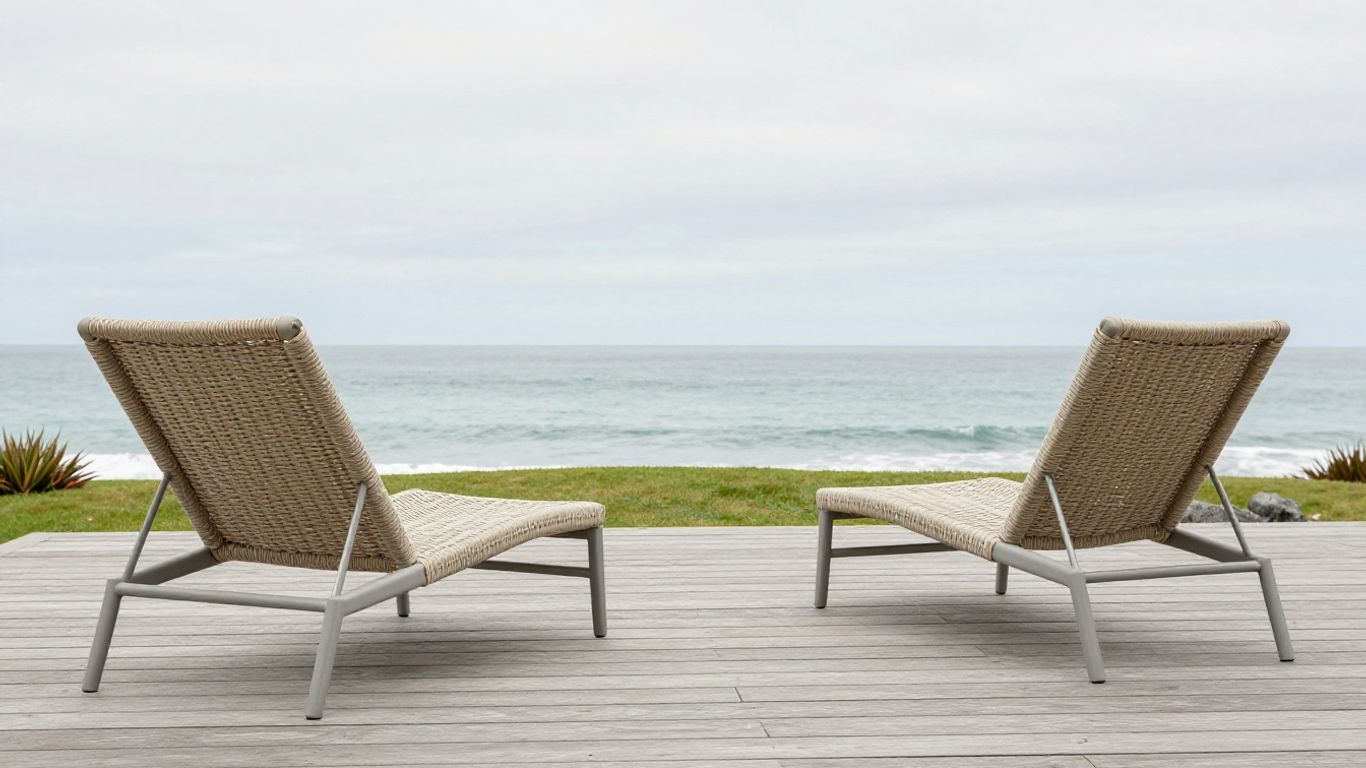
Aluminum and steel frames in coastal or damp areas
Aluminum is light enough to move around more easily, while steel can feel substantial and sturdy. With either material, inspect the finish and joins, and ask how the frame is intended to cope with moisture and salt exposure. A protective coating can help, but no finish makes routine rinsing and drying unnecessary in a harsh spot. Check for chips or damage before they become a maintenance problem.
Timber options and their upkeep requirements
Timber brings natural color and grain to a deck or garden, and its appearance can soften as it weathers. Different species and finishes have different care needs, so ask what cleaning or treatment the specific lounger calls for. If you like timber’s character but prefer a lower-maintenance routine, weigh the upkeep honestly against the look you want; a quick showroom impression does not tell you how you will feel about periodic care.
Woven and synthetic materials for weather resistance
Woven surfaces can add texture and a relaxed feel, while synthetic materials are often chosen for outdoor use. Their performance still depends on the particular weave, frame, and construction. Look closely at edges and attachment points, and consider whether water can drain away rather than sitting in crevices. A material described as weather-resistant is not a reason to leave cushions exposed indefinitely.
3. Assess comfort and adjustability
A lounger can look inviting and still feel wrong after ten minutes. Comfort depends on how the seat supports your body, whether the backrest works for your preferred positions, and how the cushions behave in everyday weather. If you can, try the lounger in person and spend enough time in it to notice pressure points. Small differences in angle and seat depth can matter more than extra padding alone.
Check recline positions and ease of adjustment
Move the backrest through each position and see whether it locks securely. Some people want a nearly upright setting for reading; others mainly want a deep recline. Try adjusting the mechanism while seated and check whether the release is easy to reach. If more than one person will use the lounger, confirm that each of you can operate it comfortably.
Compare seat depth, support, and cushion thickness
Sit back with your feet supported, then shift position as you might during a long afternoon. A seat that is too deep can leave shorter users without comfortable back support, while a shallow seat may not feel relaxing when you recline. Cushion thickness is only one part of the picture; density, shape, and how the fabric feels against your skin also count. The right kind of support should feel comfortable without requiring you to keep readjusting.
Consider how easily cushions dry after rain
Cushions make a lounger more comfortable, but they also need a practical place to dry and a way to be stored. Ask about the cover and filling, and check whether cushions are removable. Quick-drying or free-draining construction can be useful where showers are frequent, but you should still follow the maker’s care instructions and bring cushions under cover when conditions call for it.
A short video can help you see how different lounger shapes and recline settings look in use, though it cannot replace trying the seat yourself.
4. Match the lounger to your outdoor space
Before settling on a style, picture the lounger in its actual setting, not an open showroom. A patio, balcony, deck, or lawn each has different boundaries and traffic patterns. Consider where people walk, where doors open, and how the lounger will relate to other furniture. A good fit feels intentional without making the rest of the space harder to use.
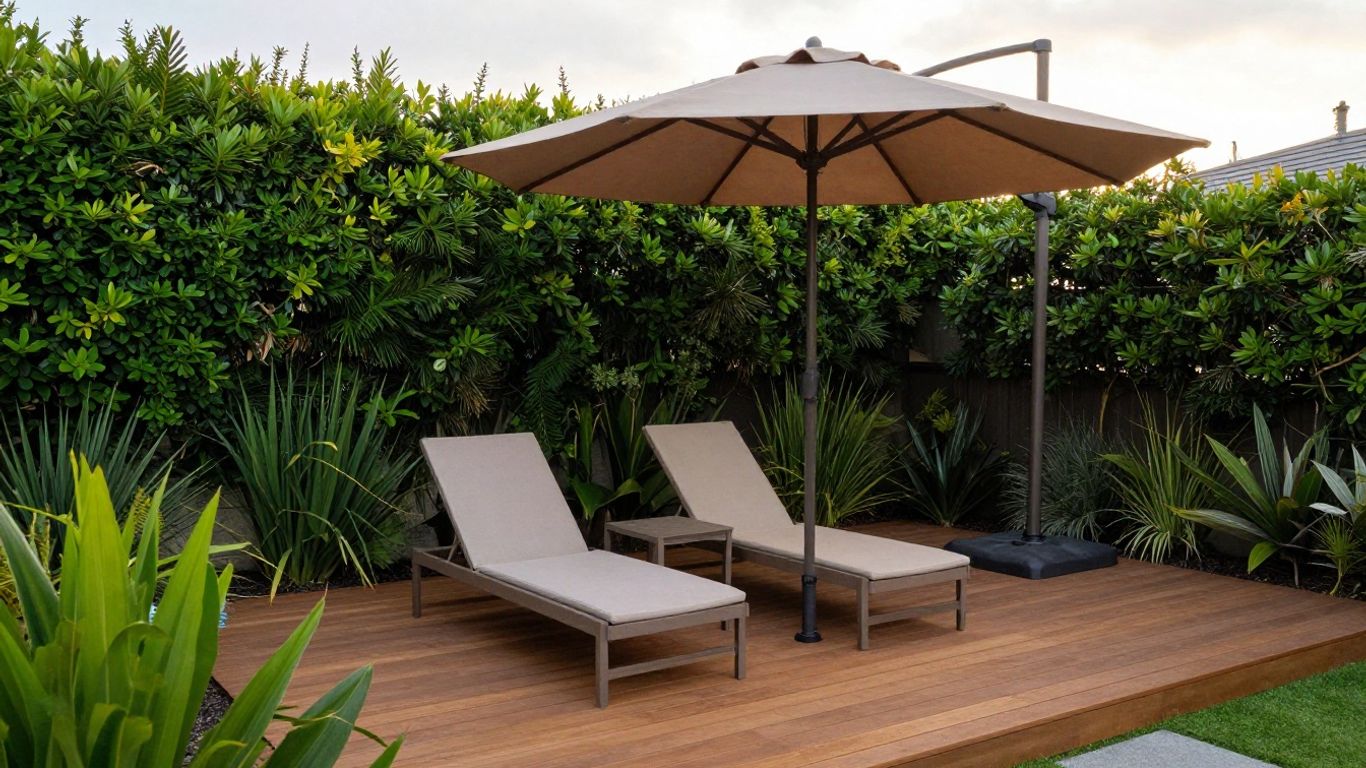
Measure the area and allow room to move around
Measure the available floor area and compare it with the lounger’s full dimensions, including its reclined position. Leave enough clearance to walk past, reach a side table, and open nearby doors. A simple measuring routine can prevent the common mistake of buying a piece that technically fits but feels cramped once it is in place:
- Measure the intended space and note nearby doors or steps.
- Mark the lounger’s full footprint, including its reclined length.
- Check the path people will use to walk around it.
- Include room for a table, planter, or other essential item.
Use the marked outline to imagine the area in daily use, not just when the lounger is empty. If access feels tight on paper, it is unlikely to feel more generous once cushions and people are there.
Select a style that suits your patio, deck, or garden
Let existing materials guide the finish: timber decking, concrete paving, planting, and outdoor fabrics all contribute to the overall feel. A streamlined frame can suit a contemporary patio, while woven details may sit more naturally in a lush garden. You do not need to match every piece exactly. Repeating one color or material is often enough to make the area feel considered.
Plan for shade, sun exposure, and storage
Notice how the sun moves across the area and whether the lounger will be exposed during the hottest part of the day. Shade can make a seat more usable, while a sheltered storage spot helps you put cushions away between uses. If space is limited, think about where a folded or stacked lounger could go during winter or when you need more floor space.
5. Look for practical features and construction quality
A closer inspection can tell you plenty about whether a lounger is suited to everyday use. Check how it sits on the ground, whether the moving parts feel controlled, and whether the finish is even. Ask for the stated weight capacity rather than guessing from appearance. These details are easy to overlook when the design catches your eye, but they shape how confidently you can use the furniture over time.
Check frame stability, joints, and weight capacity
Give the frame a gentle push from different sides and notice whether it rocks or flexes more than you expect. Inspect joints and connection points for neat, secure construction, and look for sharp edges or uneven finishes. Ask about the weight capacity and whether the manufacturer has guidance for regular maintenance. A sturdy feel is useful, but it should be backed by clear product information.
Compare wheels, folding designs, and stackability
Wheels can make a heavier lounger easier to reposition, particularly if you follow the sun or need to clear the deck. Folding or stackable designs may be useful where storage space is limited. Try the moving parts before buying: they should operate smoothly and feel secure once set up. Consider how often you will move the piece, since a feature you rarely use may not be worth compromising on comfort or appearance.
Review cushion covers, fastenings, and replacement options
Look at zippers, ties, and other fastenings, and ask whether the covers can be removed for cleaning. Find out whether replacement cushions or covers are available if a part wears out or gets damaged. Before you choose, compare the product details that are easiest to assess in person or by checking the listing:
| Detail | What to check | Why it matters |
|---|---|---|
| Cover | Removable, washable, or spot-clean only | Helps you plan routine care |
| Fastenings | Secure ties, zippers, or attachments | Keeps cushions in place |
| Replacement parts | Availability of covers or cushions | Can extend useful life |
| Product information | Care directions and capacity | Clarifies use and upkeep |
Clear care instructions and replaceable parts can make ownership simpler. If those details are not listed, ask before buying rather than assuming that a cushion or fitting will be easy to replace later.
6. Set a budget and plan for long-term care
The purchase price is only one part of the cost of owning an outdoor lounger. Think about the expected upkeep, any accessories you need, and how well the piece suits your space and routine. A lower-priced option may be a good fit if its materials and construction meet your needs; a higher price alone is not proof of a longer service life. Compare the details and make room in your budget for practical care.
Compare upfront cost with expected lifespan
Compare like with like: frame material, finish, cushion quality, and warranty terms all affect the value of an option. Consider how exposed the lounger will be and whether you are willing to cover or store it regularly. If you expect to use it often, comfort and repairability may matter more than a small saving at checkout. Design Concepts offers nationwide delivery, so check the delivery terms alongside the price when comparing options.
Check delivery, warranty, and return terms
Read the product-specific warranty and return information before placing an order, including any conditions for outdoor exposure or care. Check delivery costs, access requirements, and estimated timing, especially if the lounger is large or your property has stairs or a narrow entrance. Design Concepts sells online and in-store, giving you options for researching a piece and seeing furniture in person.
Clean and store loungers to extend their service life
Follow the care guidance for the frame, surface, and cushions rather than using one cleaning method on every material. Brush away dirt, wipe spills promptly, and let surfaces dry before covering or storing them. During extended wet or windy periods, protect cushions and secure or move lightweight furniture. Regular, simple care can help your lounger stay inviting without turning maintenance into a major job.
Conclusion
The best lounger for your home is the one that feels comfortable, suits your space, and matches the weather it will face. Compare styles and materials, test the details that matter to you, and check care and delivery terms before committing. With a thoughtful choice and straightforward upkeep, you can make outdoor relaxation part of your everyday routine.
Frequently Asked Questions
What type of outdoor lounger is best for a small patio?
A reclining chair or compact sun lounger may suit a smaller patio better than a daybed. Measure the full reclined footprint and leave room to move around before deciding.
Which materials are suitable for outdoor loungers in New Zealand?
The right choice depends on your local exposure to sun, rain, wind, and salt air. Compare frame finish, surface construction, and care instructions for the specific lounger rather than relying on the material name alone.
How much space should you leave around a lounger?
Allow enough clearance to walk past, access nearby doors, and use any side table. Also measure the lounger at its longest recline, since its footprint can change when the backrest moves.
Are cushions okay to leave outside in the rain?
That depends on their fabric and filling, so check the care information for your specific cushions. Removable cushions are easier to bring under cover and let dry after wet weather.
Is a reclining lounger worth choosing over a fixed design?
It can be worthwhile if you want to change positions for reading, resting, or sunbathing. Try the adjustment mechanism and make sure its available angles suit the way you plan to use it.
How can you tell whether an outdoor lounger is well made?
Check frame stability, joints, finish, moving parts, and the stated weight capacity. Clear product details and care guidance also help you understand what to expect from regular use.
How should you care for an outdoor lounger?
Follow the maker’s cleaning directions, remove dirt and spills, and allow the piece to dry before covering it. Store or protect cushions during extended wet weather, and inspect the frame and fastenings periodically.