

How to choose outdoor furniture in Auckland for your space and lifestyle
Key Takeaways
Choosing outdoor furniture is easier when you begin with the space you have and the way you want to use it.
- Measure the area, access points, and routes around doors before you shop.
- Consider Auckland’s rain, humidity, sun, and coastal exposure when comparing materials.
- Choose dining, lounging, or flexible pieces to suit your usual routine.
- Compare care needs, warranties, delivery costs, and dimensions—not just the ticket price.
- Layer comfort and greenery into your layout while leaving room for upkeep.
Assess your outdoor space
A little planning before you browse can help you avoid furniture that feels cramped or awkward once it arrives. Think about the space as it is, including the doors, steps, and everyday routes you need to keep clear. If you’re comparing layouts, this Auckland outdoor furniture guide offers further ideas for matching measurements and materials to your space.
Measure the area and note access points
Measure the usable floor area, then note the position and swing of doors, gates, and windows. Include any steps or narrow passages between the street and the spot where the furniture will sit. These details matter twice: they determine what fits in the space and what can be carried through to reach it.
A simple checklist can keep the measurements useful when you start comparing pieces:
- Measure the full length and width of the area.
- Note door swings, steps, gates, and narrow entrances.
- Record fixed features such as posts, railings, and planters.
- Check the route from the delivery access point to the space.
Use those notes to rule out awkward shapes early. A table that fits on paper may still make a doorway difficult to use.
Map sunlight, shade, and wind exposure
Notice where the sun falls at different times of day, and where wind tends to gather or funnel through. A sheltered corner might suit cushions and long, relaxed seating, while a sunnier area may call for a spot to add shade. Check these patterns on more than one day if you can; a quick observation at lunchtime won’t tell you how the space feels in the morning or evening.
Plan clear paths around doors and seating
Leave enough room to walk comfortably between the house, seating, and any steps or gates. Check that chairs can be pulled back from the table without blocking a main route. If you have a sliding or hinged door, test the route with its usual opening before settling on a layout.
Match furniture scale to balconies, decks, or gardens
A compact balcony often works best with a small table and a few chairs, while a wider deck can accommodate distinct dining and lounging areas. In a garden, consider how the furniture relates to the surrounding space rather than filling every open patch. Keep the overall arrangement in proportion so it feels welcoming, not crowded.
Choose furniture for Auckland’s climate
Outdoor furniture in Auckland needs to suit more than a sunny afternoon. Rain, humidity, and, in coastal areas, salt-laden air can all influence how materials and finishes hold up over time. Look for clear information about the intended conditions and care for each piece, rather than assuming every item labeled “outdoor” has the same level of weather resistance.
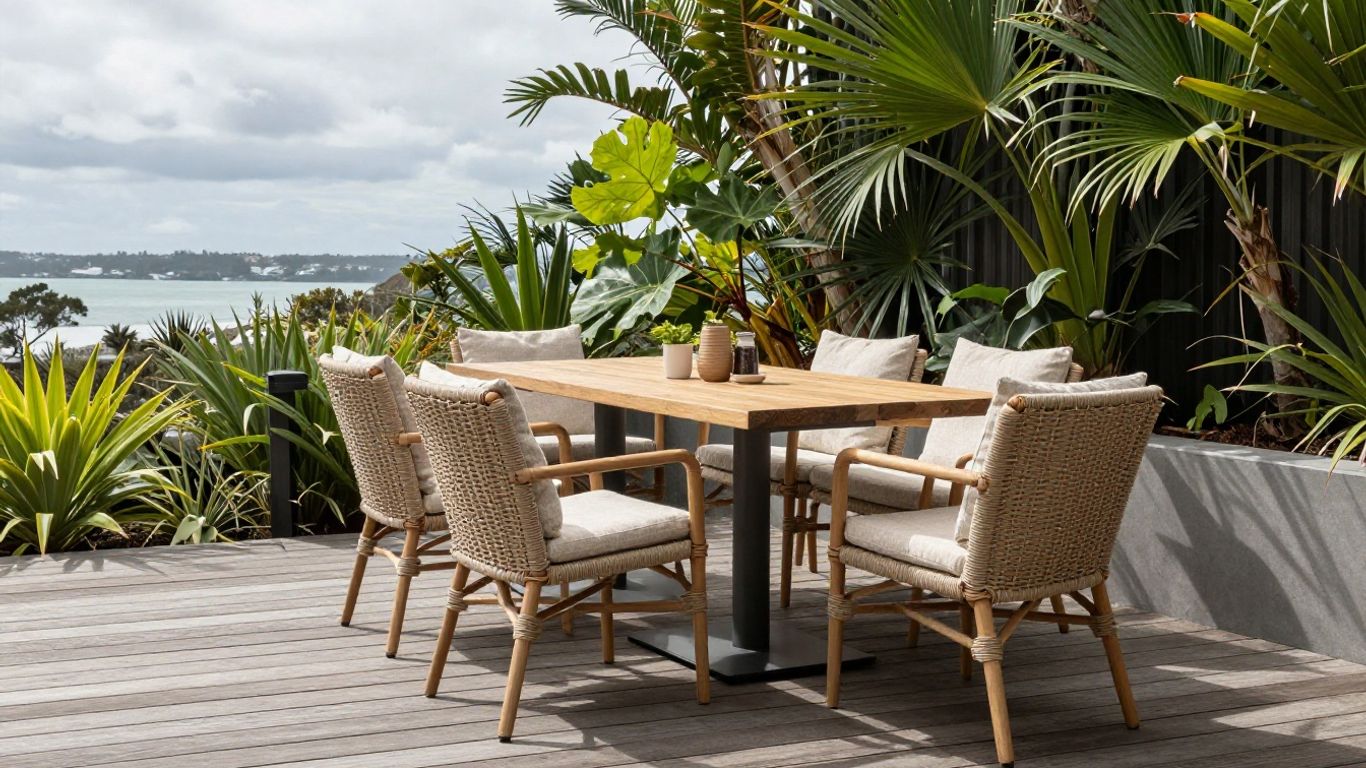
Consider rain, humidity, and coastal conditions
Think about where rain collects and how quickly the area dries after a shower. A covered balcony may offer useful shelter, but humid air can still linger, and a coastal property may have additional salt exposure. When those conditions apply, check the care guidance and whether the furniture is intended for the exposure you expect.
Compare weather-resistant materials
Different materials suit different priorities: some are light and easy to move, while others offer a more substantial look. Compare the frame, finish, and any woven or upholstered parts as a complete set of choices. For a broader look at available styles, you can browse furniture types and accessories while keeping your own space and conditions in mind.
Design Concepts offers outdoor sofas, dining sets, loungers, and umbrellas, with collections intended for New Zealand’s climate. That range of furniture types can help you consider a coordinated setup, but check the specific product details before deciding whether an individual piece suits your conditions.
Check cushions and fabrics for outdoor use
Ask how cushions are designed to handle exposure, and whether they should be covered or stored when not in use. Look for care instructions that explain cleaning and drying, not just the fabric name. If a set includes removable covers, check how they fasten and whether replacements or additional covers are available.
Look for sturdy construction and reliable finishes
Inspect joints, fixings, and contact points for a solid, even finish. For metal frames, check how the surface is treated and whether the care information addresses scratches or wear. A piece that will be moved often may also need a different balance of weight and stability than furniture that stays in one sheltered place.
Select furniture for how you’ll use it
The right arrangement depends on the moments you want to make room for. Perhaps you eat most meals outside, host friends on weekends, or mainly want a quiet spot to read. Start with your routine, then choose the furniture and accessories that support it without demanding more space than you have.
Decide between dining, lounging, and mixed-use setups
A dining setup gives meals a natural home, while lounge seating makes it easier to stretch out and stay awhile. If you want both but have limited room, a compact dining set with comfortable chairs may work harder than two separate groupings. Consider which activity you do most often, then make that the center of the layout.
Choose seating for everyday use and entertaining
Try to picture how the seats will feel during an ordinary day, not only when guests arrive. Chair height, back support, and the space between seats all affect comfort. Design Concepts offers outdoor sofas and dining sets among its product categories, giving you distinct starting points for a lounge-focused or meal-focused area; compare the dimensions and features of individual pieces before choosing.
Add shade for comfort on sunny days
Shade can make a sunny seating area more comfortable and extend the hours you want to spend outside. Consider where an umbrella could stand without blocking a doorway or taking up a main path. The best position will depend on the sun’s movement and the shape of your space, so check those patterns before selecting the size and placement.
Make small spaces more flexible with modular pieces
In a small area, furniture that can be moved or rearranged may serve several purposes over the week. A side table can shift beside a chair or lounge, while light chairs can be brought together for guests and tucked away afterward. Leave enough room to make those changes easily, or flexibility can become another daily chore.
Compare materials and maintenance needs
The material that looks best in a showroom may not be the one that feels easiest to live with at home. Think about exposure, the time you want to spend on care, and the way you like furniture to age. A quick comparison can help you focus on practical differences before you narrow down specific products.
Weigh the benefits of teak and other hardwoods
Hardwoods bring natural grain and a substantial feel, which can work well in relaxed or more formal settings. Their appearance can change as they weather, and care preferences vary: some owners like a more natural, aged look, while others prefer to maintain a particular finish. Check the maker’s instructions for the exact wood and finish rather than relying on a general rule.
Compare aluminum, steel, and synthetic wicker
Frame materials and woven finishes have different weights, appearances, and care needs. Use this table as a starting point for questions to ask; the construction and finish of a specific piece still matter.
| Material | What to consider | Useful question |
|---|---|---|
| Aluminum | Often chosen for a lighter-feeling frame | How should the finish be cleaned and cared for? |
| Steel | Can feel substantial and sturdy | What protection is specified for the frame? |
| Synthetic wicker | Adds woven texture to a setting | How should it be cleaned, and where should it be stored? |
| Hardwood | Shows natural grain and may change with weathering | What finish and maintenance routine does the maker recommend? |
Use the answers to compare whole products, not just material labels. A well-considered finish and clear care guidance can be as relevant to your choice as the material itself.
Understand care requirements for outdoor fabrics
Check whether the care instructions call for regular cleaning, quick drying, or protection when the furniture is unused. Think about how easy it will be to remove cushions or covers when the weather turns. The simpler the routine is to follow, the more likely you are to keep the space comfortable and ready to use.
Consider how materials age over time
Some surfaces develop a different appearance as they weather, while others are intended to retain a more consistent look with suitable care. Neither approach is automatically better; it depends on what you enjoy seeing in your outdoor space. Ask how the material is expected to change and whether its care needs fit your habits.
Set a budget and compare options
A budget is most useful when it accounts for the whole setup rather than one headline price. Start by identifying the furniture you need now and the items that can wait. Then compare product details, delivery, assembly, and warranty information so you can judge value in context.
Prioritize the pieces you need most
Choose the main purpose for the space before adding accessories. If you plan to eat outside regularly, begin with a suitable table and chairs; if lounging is the priority, start with seating that fits your layout. Once the essential pieces are settled, you can add shade or smaller finishing touches without losing track of the total.
Compare quality, warranties, and expected lifespan
Read product descriptions for construction details, care guidance, and the terms of any warranty. Make sure you understand what is covered and for how long, since coverage can differ between products and components. Compare those details alongside how often you expect to use the furniture and what conditions it will face.
Account for delivery and assembly costs
Check whether delivery, carrying the furniture to your outdoor area, or assembly adds to the cost. Ask how the item is packaged and what access is needed on delivery day. A little preparation can help you avoid a surprise when the furniture arrives.
Check dimensions and stock before visiting a retailer
Review the listed dimensions against your measurements, and confirm whether the product is available before making a trip. If you’re unsure about fit, ask the retailer for further measurements or a layout suggestion. Having your notes and access details to hand makes those conversations more useful.
Style a comfortable outdoor area
A comfortable outdoor area should feel connected to your home while still working for everyday life. Color, texture, and greenery can soften a functional layout, but you don’t need to add everything at once. Begin with the larger pieces, then add details that make the space feel like somewhere you want to spend time.
Coordinate furniture with your home’s exterior
Look at the colors and materials already present on your home, deck, or balcony. Furniture that picks up one of those tones can help the whole area feel considered without matching every surface exactly. If the exterior is visually busy, simpler furniture may create a calmer balance.
Layer in cushions, rugs, and lighting
Soft furnishings can make seating feel more inviting, and a rug can help define a lounge or dining zone. Choose items that suit outdoor use and are manageable to move or clean. Add lighting where you need it for evening use, while keeping cords and fixtures suitable for the location.
Use planters to add privacy and greenery
Planters can soften a railing or create a gentle boundary around a seating area. Consider their mature size and how much room they will take up once filled, especially on a balcony. A few well-placed plants often feel more comfortable than a crowded row that narrows the path.
Leave room for upkeep and seasonal changes
Keep enough space to sweep, move chairs, and reach drains or storage areas. If you bring cushions inside or cover furniture during certain weather, make sure there is a convenient place to do so. A layout that allows for these small routines is easier to enjoy throughout the year.
Conclusion
When you choose outdoor furniture in Auckland, let your space, local conditions, and everyday habits guide the decision. Measure first, compare care needs and costs, and build the setup around the way you want to spend time outside. With a little planning, your outdoor area can feel comfortable, practical, and distinctly your own.
Frequently Asked Questions
How do I measure an outdoor area for furniture?
Measure the usable length and width, then note doors, steps, fixed features, and the routes you need to keep clear. Compare those measurements with the full dimensions of each piece, including room to pull chairs back.
What should I consider when choosing outdoor furniture in Auckland?
Consider rain, humidity, sun, and coastal exposure if relevant to your home. Also think about the space available, your preferred activities, and the care routine you can comfortably maintain.
Which outdoor furniture materials need the least upkeep?
Care needs depend on the product’s construction, finish, and exposure, so there is no single answer for every piece. Check the maker’s guidance for cleaning, protection, and storage before comparing options.
How much space should I leave around an outdoor table?
Leave enough room to sit down, pull chairs out, and walk around the table without blocking a main route. The exact amount depends on the chair and table dimensions and the layout of your space.
Is it better to choose dining furniture or lounge furniture?
Choose based on how you expect to use the area most often. Dining furniture suits regular outdoor meals, while lounge seating is designed for relaxing; a mixed-use setup can work if you have enough room.
Do outdoor cushions need to be stored when it rains?
Follow the care instructions for the specific fabric and cushion construction. Depending on their design and your local conditions, you may need to cover or store them during wet weather and allow them to dry properly.
How can I make a small balcony feel comfortable?
Choose pieces that fit without blocking the doorway or main path, and consider furniture that can be moved or rearranged. A small table, a few suitable seats, and a planter or two may be enough to make the space feel complete.