

How to Choose Outdoor Furniture: A Practical Guide to Materials, Comfort, and Fit
Key Takeaways
A good outdoor setup fits your space, weather, routines, and budget—not just your preferred look. Use these points to narrow the choices before you shop.
- Measure the usable area and leave room for doors, walkways, and pulled-out chairs.
- Choose materials and finishes that suit your local weather and care routine.
- Test seating for comfort and consider how you’ll use the space day to day.
- Build a cohesive look with a few colors and textures that complement your home.
- Compare the total cost of ownership, including maintenance and storage needs.
1. Measure your outdoor space and plan the layout
A comfortable outdoor area starts with the space you actually have, rather than the furniture set you spotted first. Measure the area and think about how people will move through it, from the house to the garden or around a dining table. A simple plan can help you map a patio layout before comparing pieces. If you are learning how to choose outdoor furniture, start with the dimensions and daily flow.
Map the usable area, including doors and walkways
Measure the parts of the patio, deck, or balcony where furniture can sit without blocking doors, gates, steps, or essential access. Note fixed features such as railings, planters, outdoor taps, and posts, too. A sketch with measurements gives you a clearer sense of what will fit than a quick glance from indoors. Keep the route between the home and seating area open, especially if you carry meals outside.
Allow enough room to move chairs in and out
A table can fit on paper but still feel cramped once someone pulls out a chair. Include the space needed to sit down, stand up, and walk behind seated guests. On a narrow balcony, a smaller table or fewer chairs may make the space more useful than squeezing in a full set. Try marking the furniture footprint with tape before you buy; it’s a simple way to test whether the layout feels workable.
Match furniture scale to balconies, patios, and yards
The scale of a piece affects how the whole area feels. A deep sofa may overwhelm a compact deck, while a few small chairs can look lost in a large yard. Think in terms of visual weight as well as measurements: open frames and slim legs can feel lighter, while wide arms and thick cushions take up more visual space. Leave breathing room around larger pieces so the layout feels inviting rather than crowded.
Decide how many people the space needs to seat
Plan for the people who use the space most often, then decide whether you need extra seats for occasional guests. It can help to write down the main activity and seating needs before shopping:
- Everyday meals with your household
- Casual drinks or conversation with a few guests
- Lounging, reading, or taking a quiet break
- Larger gatherings that call for flexible extra seating
This short list helps you focus on the furniture that earns its place. A small dining area may need only a table and chairs, while a separate lounge zone can wait until you know how much room remains.
2. Choose materials that suit your climate
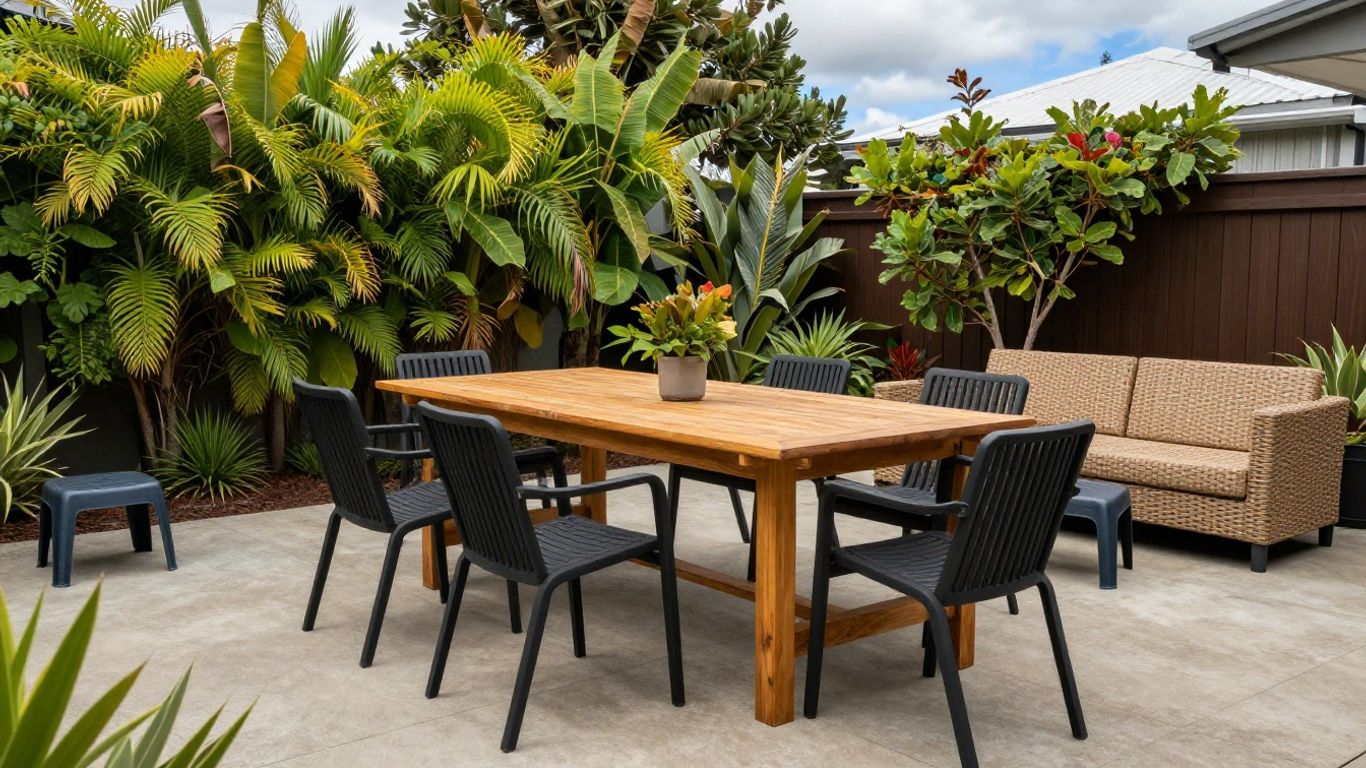
Outdoor furniture faces different conditions depending on whether it sits under cover, in full sun, or near the coast. Think about rain, humidity, strong sun, and wind where you live, then consider how much care you’re willing to provide. For a wider look at outdoor furniture materials, compare both the material and its finish. Design Concepts offers outdoor furniture collections selected or made for New Zealand’s climate, according to its brand information.
Compare wood, metal, wicker, and plastic
Each material has a distinct look and feel, and the details of construction matter as much as the broad category. Wood brings natural warmth, metal can create a clean, structured look, and woven styles add texture. Plastic is another option to consider, especially when ease of cleaning is a priority. This comparison is a starting point; product specifications and care instructions will tell you more about the particular piece.
| Material | What to consider | Care question |
|---|---|---|
| Wood | Grain, construction, and finish | Does it need regular treatment? |
| Metal | Frame design and protective coating | How should the finish be cleaned or checked? |
| Wicker or woven styles | Weave material and exposure to weather | Is the piece suited to your uncovered area? |
| Plastic | Weight, shape, and surface quality | Can it be cleaned easily and stored as needed? |
Use the table to narrow the field, then check how each item is built and what its maker recommends. The right choice depends on the combination of local conditions, where the furniture will sit, and the level of upkeep that feels realistic to you.
Consider how sun, rain, and humidity affect each material
Direct sun can make color and surface quality a concern, while frequent rain and humidity can leave furniture damp for longer. A covered porch offers more protection than an exposed deck, so the same material may suit one location better than another. In a coastal or windy spot, also consider whether the furniture feels stable and whether salt or blowing debris will make regular cleaning necessary. Match the material to the actual spot, not just the general climate in your region.
Check for weather-resistant finishes and construction
Look beyond a product’s headline material and inspect the finish, joins, and practical details. Check whether the maker describes the frame or fabric as suited to outdoor use, and look for guidance on drainage or drying where relevant. Review care instructions before purchasing so you know what protection the piece needs. Weather-resistant does not necessarily mean maintenance-free, so a little detail-checking now can prevent surprises later.
Match material upkeep to the time you can spend on care
Be honest about the care routine you’ll keep. If you prefer occasional cleaning, choose pieces with straightforward instructions and plan for covers or sheltered storage where appropriate. If you enjoy maintaining natural materials, that may open up more options, provided you’re comfortable with the upkeep. A durable choice is one that fits both your outdoor conditions and your real routine.
3. Select furniture for comfort and everyday use
Furniture can look right in a photo and still be uncomfortable after a few minutes. Think about whether you’ll mostly eat, lounge, read, or host friends, because each activity calls for a different seat and table arrangement. Comfort includes the frame, cushions, and ease of getting in and out—not just softness. Design Concepts offers outdoor dining sets for shoppers considering a dedicated place to eat outside.
Test seat depth, height, and back support
If you can, sit in the furniture before deciding. Check that your feet rest comfortably, the seat supports your thighs, and the back feels suitable for the way you plan to use it. Dining chairs generally call for a more upright position, while lounge seating may feel deeper and more relaxed. If you’re shopping online, study the listed dimensions and compare them with a chair you already find comfortable.
Choose cushions that balance comfort with quick drying
A cushion should feel pleasant to sit on but also suit outdoor conditions. Check the product information for fabric and filling details, and consider whether the covers can be removed or cleaned according to the care instructions. Where available, features such as free-draining cushions or quick-dry foam can be helpful after rain. Store cushions when the furniture is not in use if that is what the maker recommends.
Consider how often you’ll dine, lounge, or entertain outdoors
A realistic picture of your usual week can keep your purchase focused. If outdoor meals are a regular habit, make table size and chair comfort a priority. If you tend to sit outside with a book, a lounge chair may be more useful than several dining seats. Design Concepts also offers loungers for people looking to create a dedicated spot to relax outdoors.
Look for practical features such as adjustable backs or stackable chairs
Small functional details can make outdoor furniture easier to live with. Think about whether you’ll need to store chairs between seasons, shift pieces to follow the sun, or rearrange seating when guests come over. Features such as stackable chairs or adjustable backs can be useful when they suit your space and routine. Check how the mechanism works in person or read the product details carefully before buying.
4. Find a style that works with your home
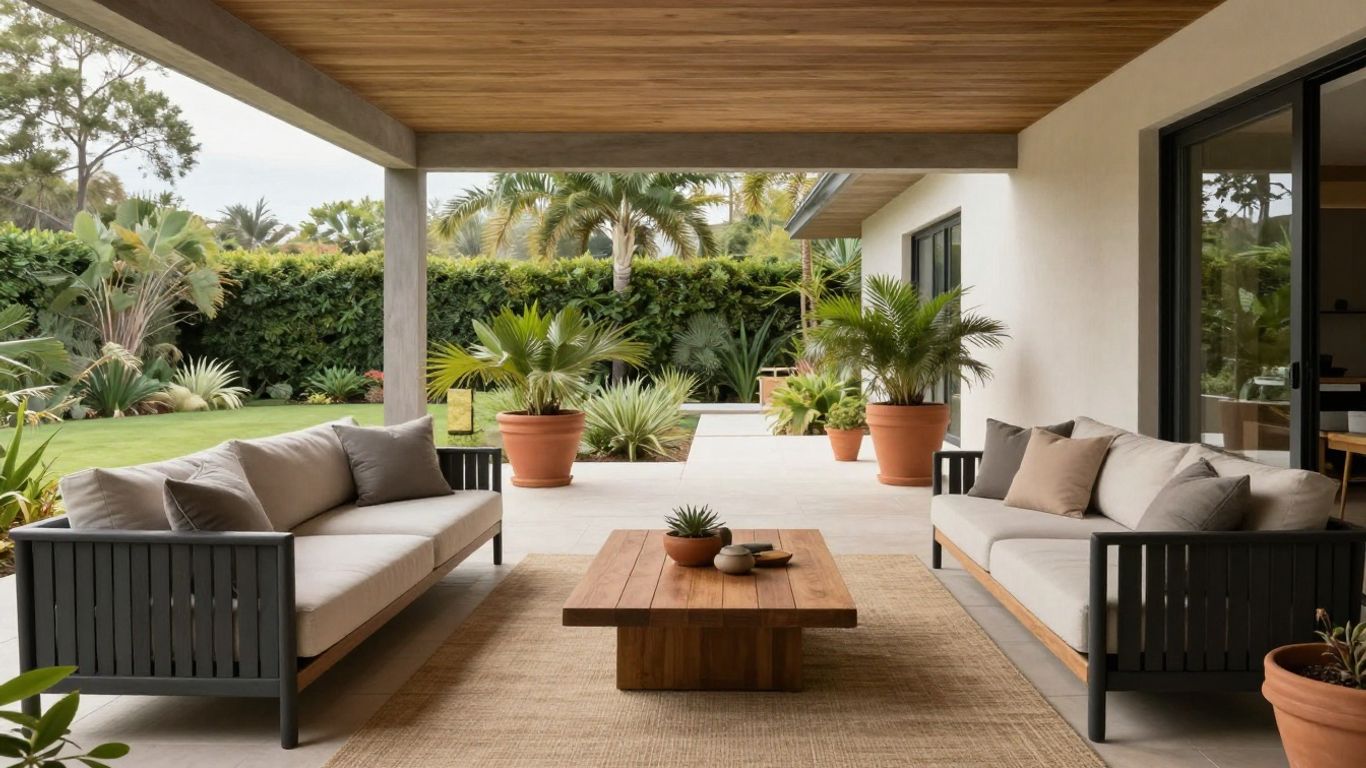
Outdoor furniture is part of the view from inside your home, so it helps when the materials and shapes feel at home with the exterior. You don’t need a perfectly matched set; a few repeating colors or forms can give the space a sense of connection. Start with what is already there, including cladding, paving, planting, and the colors you see through nearby windows. Then use textiles and smaller accessories to add personality without making the area feel busy.
Coordinate colors and shapes with your exterior
Look at the architecture and existing finishes before settling on a color scheme. A crisp, simple exterior might pair naturally with clean-lined frames, while timber details or a cottage garden can work well with softer shapes and natural textures. You can repeat one color from a door, planter, or garden feature to connect the furniture to its setting. Consider how the palette looks in daylight as well as from inside the house.
Mix materials and textures without making the space feel busy
Combining materials can add depth, but too many competing finishes can make a small space feel cluttered. Choose one or two dominant materials and let other textures play a supporting role. For example, a woven surface, smooth table, and soft cushion fabric can work together when their colors relate. A consistent shape or repeated finish helps different pieces feel intentional as a group.
Use cushions and accessories to add color
Cushions, planters, and outdoor rugs are an easy way to bring color into the setting without committing to a bold frame or table. Start with a restrained base, then add one or two accent shades that suit the home or garden. Think about how the accessories will handle outdoor use and how easily you can bring them inside when needed. A few well-chosen details often feel more settled than a collection of unrelated patterns.
Balance trend-led details with timeless pieces
A striking color or sculptural shape can make a space feel current, but it’s worth considering whether you’ll still enjoy it in a few seasons. Keep the larger, more expensive pieces fairly versatile, then use cushions or small accessories to experiment with trends. That gives you room to refresh the look without replacing the whole arrangement. Choose what feels like your home rather than following a style simply because it is popular.
5. Set a budget and assess long-term value
Set a spending limit before you browse, and decide which pieces matter most to your everyday comfort. The lowest upfront price may not be the best value if the furniture needs frequent care or replacement, while a premium option is only worthwhile if its construction and use justify the cost. Include any accessories, covers, or storage needs in your estimate. A clear budget makes it easier to compare like with like.
Prioritize the pieces you’ll use most
Begin with the item that will make the biggest difference to how you use the space. That might be a comfortable dining set for regular meals, or a pair of lounge chairs for quiet afternoons. Add secondary pieces once you know the layout and what the budget allows. Buying fewer useful pieces can be a better fit than filling every corner at once.
Compare price with expected lifespan and maintenance costs
Consider the total cost over time, not just the price on the tag. Ask what routine care is required, whether covers or storage are needed, and whether the finish may need attention. Compare products with similar functions and specifications, and use care guidance to understand what ownership involves. A modest purchase can be a good choice when it suits your needs, while paying more can make sense when the construction and expected use support it.
Check warranties, replacement parts, and return policies
Before you commit, read the warranty terms and note what they cover, how long coverage lasts, and any care conditions. Check whether replacement parts or cushion covers are available if that matters to you. If shopping online, review delivery details and the return policy, including any conditions on packaging or assembly. These practical details are part of the buying decision, not fine print to leave until later.
Decide when premium construction is worth the investment
Paying more may be worthwhile if a piece will see frequent use, faces challenging weather, or is central to the way you use the space. Look for clear product information about materials, construction, and care rather than relying on price alone. If a premium feature won’t change your comfort or the furniture’s suitability for your setting, it may not be a priority. Value is personal: the right choice is the one that serves your needs over time.
6. Protect and maintain your outdoor furniture
A little regular care can help keep outdoor furniture comfortable and looking its best. The right routine depends on material, finish, and how exposed the pieces are, so follow the maker’s instructions rather than assuming every item can be cleaned the same way. Covers and seasonal storage can reduce exposure, but they are not substitutes for basic checks. Make maintenance manageable by tying it to the start and end of each season.
Follow care instructions for each material
Use the cleaning products and methods recommended for the particular material and finish. A gentle wipe-down may be appropriate for some pieces, while others may require specific care to avoid damaging their surface. Check labels or product information before using a new cleaner. Regular light cleaning is often easier than waiting until grime has built up.
Use covers to reduce sun and weather exposure
A well-fitting cover can help reduce exposure to sun, rain, and debris when furniture is not being used. Choose one that fits the piece and follow its instructions, including any guidance about ventilation or drying. If furniture is damp, allow it to dry as recommended before covering it. Covers can be especially useful when moving everything indoors is not practical.
Store cushions and seasonal pieces properly
When cushions or seasonal items are not needed, store them in a clean, dry place as directed by the manufacturer. Make sure cushions are dry before putting them away, and avoid compressing them in a way that changes their shape. For chairs or smaller accessories, consider whether stacking or sheltered storage will keep them in good condition. A simple storage plan can make it easier to prepare the area for changing weather.
Check joints, finishes, and hardware for wear before each season
Before you start using the furniture regularly, look over joints, screws, hinges, and other hardware for signs of wear. Check that the frame feels stable and note any changes to the finish or weave. Follow the care guidance for repairs, and avoid using a piece if a loose connection affects its stability. Catching small issues early can help you decide whether maintenance or a replacement part is needed.
Conclusion
Choosing outdoor furniture is a matter of matching your space, climate, comfort needs, style, and budget. Measure first, check materials and care details, and choose pieces that suit the way you genuinely spend time outside. With a thoughtful layout and a manageable maintenance routine, your outdoor area can feel like a natural extension of home.
Frequently Asked Questions
How do I measure my patio for outdoor furniture?
Measure the usable floor area and note doors, steps, railings, and other fixed features. Allow extra space for chair movement and clear walkways, then test your plan with tape on the ground if possible.
Which outdoor furniture material lasts the longest?
There is no single material that lasts longest in every setting. Durability depends on the construction, finish, weather exposure, and how consistently you follow the care instructions.
Is wood or metal better for outdoor furniture?
Both can work well, depending on your climate, design preference, and willingness to maintain them. Compare the finish and care guidance for the specific pieces you are considering.
How much space should I leave around an outdoor dining table?
Leave enough room for people to pull out chairs, sit down, and move behind one another without blocking a main route. The clearance needed depends on the table and the shape of the surrounding space.
What should I look for in outdoor cushions?
Check the fabric, filling, cleaning instructions, and any information about drying or drainage. Choose cushions that feel comfortable and fit the exposure and storage routine of your outdoor area.
Can I leave outdoor furniture uncovered all year?
That depends on the material, finish, climate, and product care instructions. Covers or sheltered storage may reduce exposure, but they should be used as recommended and furniture should be dry when covered.
How can I make a small balcony feel comfortable?
Choose fewer, appropriately scaled pieces and keep the route to the door clear. Compact seating, a small table, and a restrained color palette can make a balcony feel usable without crowding it.