

How to choose outdoor dining sets NZ homeowners will love
Key Takeaways
A good outdoor dining set should feel right in your space and work with the weather, your routines, and the way you like to host. Start with measurements, then compare the details you’ll live with every day.
- Measure the table area and allow space for chairs and walkways.
- Choose a table shape and size that suit your household and guests.
- Match materials and finishes to local weather and your upkeep preferences.
- Test seating for comfort, fit, and practical storage.
- Compare the full cost, including delivery, care, and protection.
Measure your space and plan the layout
Before browsing outdoor dining sets NZ, take a careful look at how you use your patio, deck, or garden. Measure the available area and consider how people move between the house, table, and garden. For more ideas on planning your dining area, think about everyday meals as well as the occasional gathering. A little planning now can help prevent a set from feeling cramped later.
Allow room to pull out chairs
A table can fit neatly on a floor plan and still feel awkward once chairs are in use. Allow enough space to pull a chair back, sit down, and stand up without bumping into a wall, railing, or nearby furniture. Try marking the table and chair positions with tape or using boxes as a rough guide. This gives you a more realistic sense of the usable footprint.
Check walkways and access points
Consider the routes people take through the space, especially the path from the kitchen to the table. Keep gates, doors, and steps clear, and check whether the furniture can pass through the access points when it is delivered. It helps to think through a typical meal rather than just the empty layout. A clear walkway makes the area easier to use when everyone is gathered around the table.
Match table dimensions to your patio or deck
Measure the usable floor area, not just the overall length and width of the patio. Take note of built-in features such as planters, posts, and barbecue stations that may reduce the space around the table. If your outdoor area is narrow, a table with a slimmer footprint may leave more room to move. Once you have measurements, compare them with the dimensions listed for each set.
Consider shade, wind, and nearby doors
Notice where the sun falls during the hours you expect to eat outside, and consider whether an umbrella or other shade will fit safely. Wind can make lightweight furniture less practical in exposed spots, while a table placed too close to a door may interrupt everyday access. Nearby walls and fences can also affect how sheltered the dining area feels. These details help you decide where the set will work best before you commit to a layout.
Choose a table shape and size
The shape of a table affects how it fits the space and how people gather around it. Think about the number of people you usually seat, then allow for the occasional extra guest if that matters to you. You can also compare year-round dining planning ideas with your own habits: a compact setting may suit daily meals, while a larger table can make hosting easier. The best choice is one you can use comfortably most of the time.
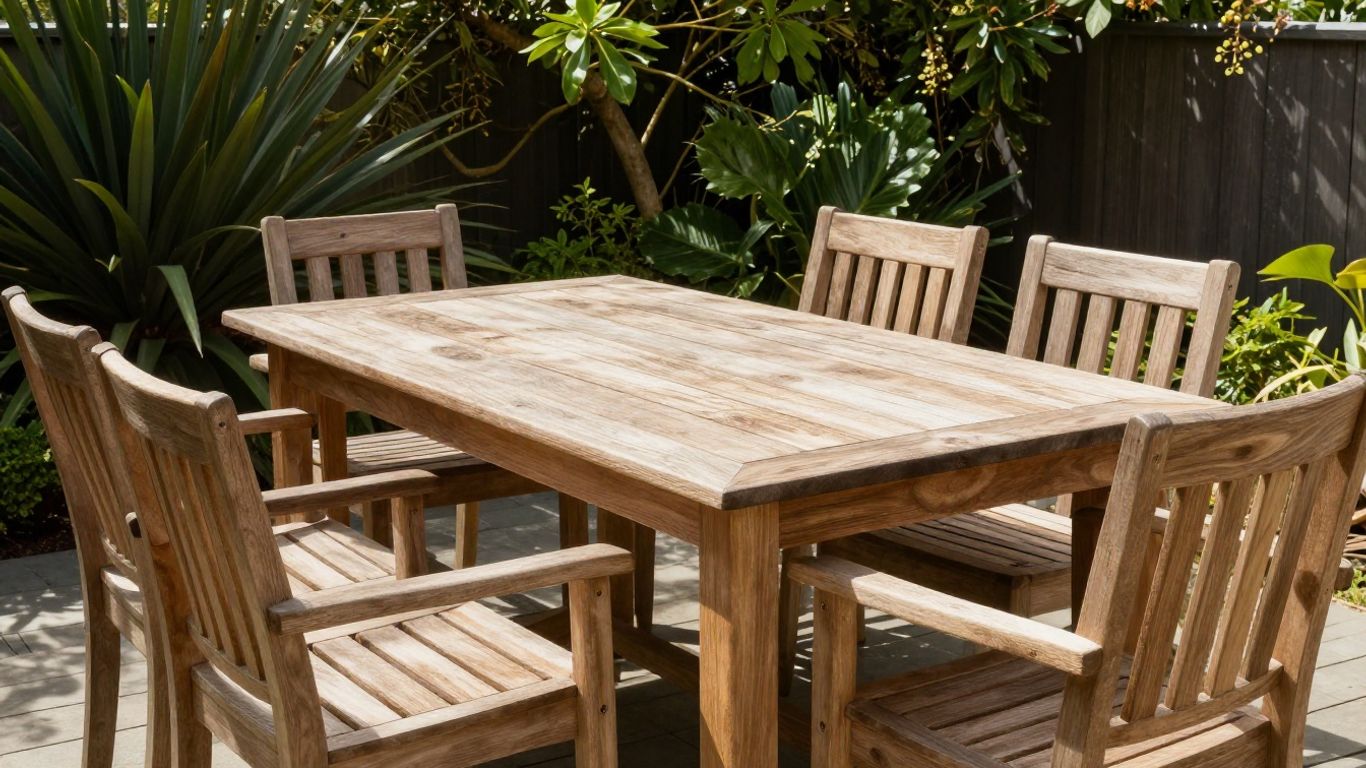
Compare round, rectangular, and square tables
Round tables can make it easier for everyone to see one another and may suit a smaller square area. Rectangular tables often fit long decks well and offer a clear arrangement for larger groups. A square table can work in a compact, balanced layout, especially when it sits in a corner or against a wall. The shape should complement both the space and the way you like to dine.
Estimate how many people you need to seat
Start with the number of people who regularly eat outside, then think about how often you host more. Check the listed seating capacity, but also look at the table’s dimensions and the chair width; capacity can feel different from one design to another. Design Concepts offers aluminium outdoor dining tables in round and rectangular designs, giving you shapes to compare when weighing up the fit. Make sure the chairs can be positioned without blocking the walkways you measured.
Decide whether an extendable table suits your plans
An extendable table can offer flexibility if you often switch between everyday meals and larger gatherings. Before choosing one, check how much room it needs when fully extended and whether you have a place to store any removable leaves. If you rarely host extra guests, a fixed table may be simpler to live with. Let your usual routine—not just an imagined big occasion—guide the decision.
Check the table height against your preferred chairs
Table and chair proportions affect how comfortable a meal feels. Compare the seat height with the clearance beneath the table, including any apron or crossbar that might limit legroom. If you can, try the chairs at the table before buying, or check the product dimensions side by side. A good fit leaves enough room to sit naturally and move your legs.
Compare materials for New Zealand conditions
New Zealand homes experience a range of conditions, from strong sun and rain to coastal air and gusty weather. Your own site matters: a sheltered courtyard has different demands from an exposed deck near the coast. Design Concepts describes its outdoor furniture range as designed for New Zealand’s harsh climate, but it’s still worth checking the details of each particular set. Focus on the material, finish, care guidance, and exposure where you plan to place it.
Weigh the durability of aluminum and steel
Aluminum is relatively light, which can make it easier to move or rearrange, while steel tends to feel heavier and more substantial. For either option, inspect the finish and ask how it should be cared for in your conditions. If the set will sit in a windy area, consider whether its weight and placement will be suitable. Check product information for specific weather-resistance details rather than assuming all metal furniture performs the same way.
Consider the look and upkeep of timber
Timber brings a natural warmth to an outdoor dining area, but different types and finishes can have different care needs. Ask whether the furniture requires periodic oiling or another treatment, and consider whether you are happy to keep up with it. The color and texture may also change with exposure to sun and weather. Choose timber with both its appearance and maintenance routine in mind.
Assess resin and synthetic wicker options
Resin and synthetic wicker can offer a woven look without using natural fibers, but construction and finish vary between products. Look closely at how the weave is finished around corners and edges, and check the care instructions for cleaning. Consider where the set will sit and whether its frame and surfaces suit that location. Product details are a better guide than the material label alone.
Check weather resistance and care requirements
A short comparison can help you focus on the practical differences between materials. Use it as a starting point, then confirm the care instructions and weather-resistance claims for the exact set you are considering.
| Material | What to consider | Care question |
|---|---|---|
| Aluminum | Light weight and easy rearranging | How should the finish be cleaned? |
| Steel | A heavier, substantial feel | What protection does the finish need? |
| Timber | Natural grain and changing appearance | Does it need periodic treatment? |
| Resin or synthetic wicker | Woven texture and varied construction | Which cleaners are suitable? |
Treat these as prompts for questions, not guarantees about every product made from that material. In particular, check how the furniture should be stored or protected in your local conditions. That small bit of research can help you choose a set that matches the care you’re prepared to give it.
Find comfortable, practical seating
Chairs can make a dining set feel inviting—or leave you ready to get up after a short meal. Think about comfort, storage, and how the seating works with your table and the available floor area. If you prefer flexible seating, compare chairs and benches in person when possible. The right arrangement should feel easy to use on an ordinary day, not only when the table is fully set for guests.
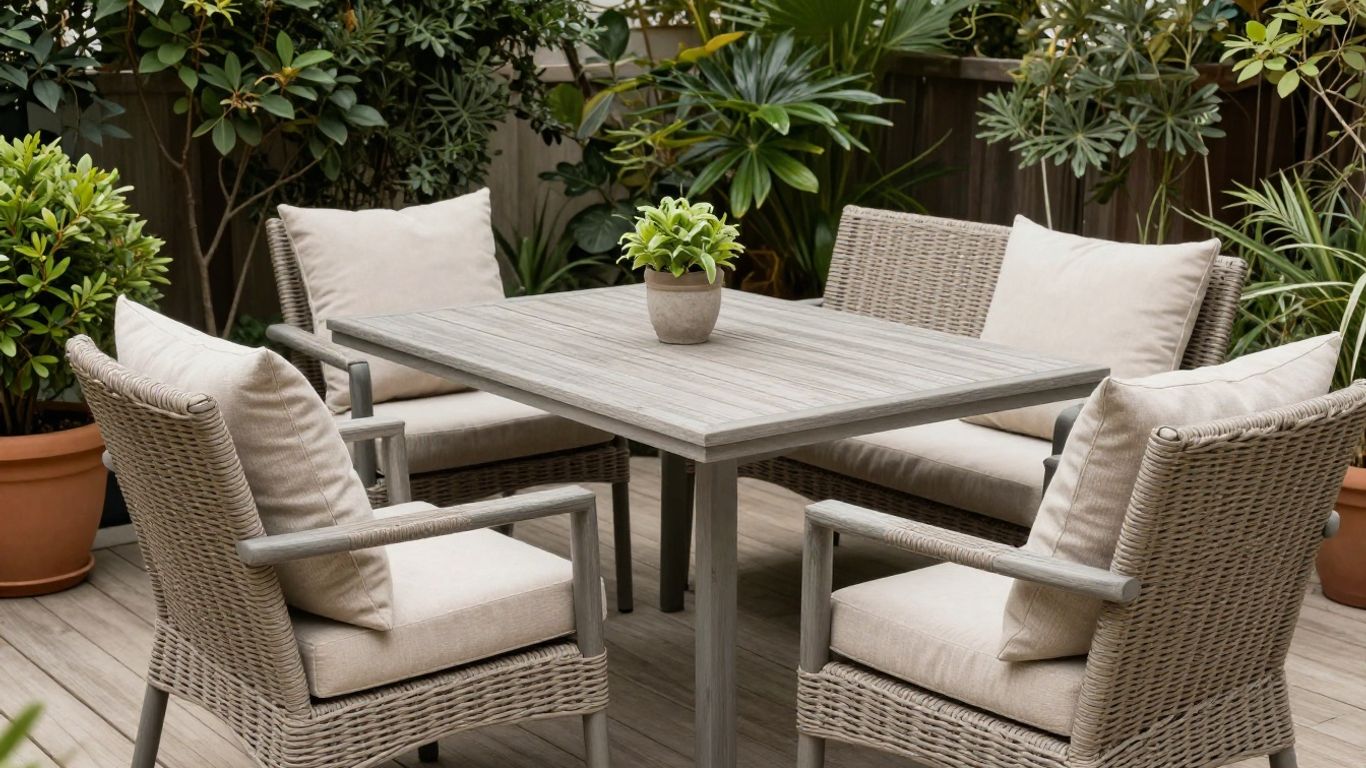
Choose chairs that fit the table and your space
Check chair width and depth along with the table dimensions, then work out how many can fit without crowding one another. Chairs with arms may need more room to slide under a table than armless designs. Remember to leave the clearance you planned for pulling chairs out. A set that fits your floor area on paper should also leave comfortable space for people to move around it.
Compare armchairs, benches, and stackable styles
Different seating styles suit different households, and a mix can be practical if it fits the table. Benches can make use of a long side and may be easier to tuck away, while armchairs offer an individual place to sit. Stackable chairs can help when you need to store seating after a gathering. Design Concepts offers outdoor aluminium benches that can be paired with dining tables, so you can consider a bench as part of the layout.
Look for supportive shapes and suitable seat heights
Pay attention to the seat height, back support, and how the chair feels when you sit for more than a moment. A curved back or supportive shape can make a difference during a long meal, but comfort is personal, so try the chair if you can. Confirm that the seat height works with the table and leaves room for your legs. These checks are useful even when the set looks comfortable in a photograph.
Decide whether cushions are worth the extra care
Cushions can add softness and color, but they need somewhere dry to go when the weather turns. Think about whether you have convenient indoor or covered storage and whether you are comfortable bringing them in regularly. Before buying, look at any care instructions and check whether covers or replacement cushions are available. A simple routine is often easier to maintain when you decide on it in advance:
- Shake off loose dust and debris after use.
- Let damp cushions dry fully before storing them.
- Keep cushions in a dry, ventilated storage spot.
- Follow the care label when cleaning marks or spills.
That routine helps you keep cushions ready for the next meal without leaving them exposed for long periods. If storing them feels like a hassle, consider whether uncovered seating would suit your everyday habits better.
Set a budget and compare value
The price on a set is only one part of the buying decision. Compare what is included, how the furniture will be delivered, and what ongoing care it may need. If you are shopping online, check product dimensions and delivery details before making a final choice. A careful comparison can help you spend on the features you will actually use.
Compare complete sets with separately chosen pieces
A complete set makes it straightforward to match the table and chairs, while choosing pieces separately can give you more control over the arrangement. Compare the total cost of the individual items rather than assuming separate pieces will be cheaper. Check that the styles and proportions work together, especially if you are mixing a table and bench. The right route depends on whether you value a coordinated package or a more tailored fit.
Factor in covers, cushions, and delivery
Look beyond the main furniture price and list any extras you may need, such as cushions, a cover, or extra chairs. Delivery costs and access arrangements can also affect the total. Confirm what is included in the purchase and whether the furniture needs assembly. Adding these details to your comparison gives you a clearer picture of the real cost.
Check warranties and replacement-part availability
Read warranty terms before buying, and check what they cover and for how long. If cushions or parts may need replacing later, ask whether matching replacements are available. Warranty coverage can differ across a set, so avoid assuming the same terms apply to every material or component. Keep the product details and care instructions somewhere you can find them.
Balance upfront cost with expected maintenance
A lower purchase price may be appealing, but it is worth considering the time and care the set will need over the years. Compare the upkeep involved with your budget and the amount of effort you realistically want to put in. A more suitable choice is not always the one with the fewest maintenance steps; it is the one that fits your routine. The details you have gathered about materials, storage, and delivery can help you judge overall value.
Protect your outdoor dining set
A simple care routine helps you keep the dining area ready for regular use. Start with the instructions supplied for your specific furniture, since finishes and materials can call for different products. Think about how much sun, rain, and wind the set receives, then adjust where and how you protect it. A few consistent habits are easier to maintain than a complicated routine.
Clean materials using suitable products
Use the cleaning method recommended for the table and chairs, and avoid harsh products unless the manufacturer specifically advises them. Wipe away food and drink spills promptly, then let surfaces dry before covering them. For woven or textured areas, a soft brush can help lift debris from small gaps. If you are unsure whether a cleaner is suitable, test it on a less visible area first.
Cover or store furniture during harsh weather
A well-fitting cover can help shield furniture when it will be unused, but it should suit the furniture and allow appropriate airflow. In particularly harsh weather, consider moving lighter pieces to a more sheltered location if that is practical. Check the cover occasionally and follow its care instructions too. The best approach depends on the furniture’s materials and how exposed your outdoor area is.
Maintain timber and metal finishes as needed
Follow the care guidance for your finish rather than applying treatments by habit. Timber may need periodic attention, while metal finishes should be checked for marks or damage that could benefit from prompt care. Clean with products suited to the surface, and avoid abrasive tools that may leave scratches. Small, regular checks can help you notice when a finish needs attention.
Store cushions to help prevent moisture damage
Bring cushions into a dry, ventilated place when they are not in use for a while or when wet weather is expected. If a cushion becomes damp, let it dry thoroughly before putting it away. Avoid leaving stored cushions compressed or in a spot where moisture can collect. These small steps can make it easier to keep your seating comfortable and ready to use.
Conclusion
Choosing an outdoor dining set is a balance of space, shape, comfort, materials, and care. Measure first, think honestly about how you host, and compare the full details of the sets that catch your eye. With a practical layout and a maintenance routine that suits you, your outdoor table can become a natural part of everyday life at home.
Frequently Asked Questions
How much space should you leave around an outdoor dining table?
Leave room to pull out chairs and walk behind seated guests, while keeping doors, steps, and main routes clear. Measure the whole arrangement—including the chairs in use—rather than only the tabletop.
Which table shape works best for a small patio?
It depends on the patio’s proportions and where people need to walk. A round or square table may suit a compact, balanced area, while a narrow rectangular table can work well in a longer space.
How do you choose the right outdoor table size?
Start with the number of people who usually dine outside, then consider how often you host extra guests. Check the listed dimensions and seating capacity, and make sure the table and chairs leave enough circulation space.
Are extendable outdoor dining tables worth considering?
They can be useful if you regularly need extra places for guests and have room to extend the table. If your everyday needs are modest and you rarely host, a fixed table may be simpler.
What materials are suitable for outdoor dining furniture in New Zealand?
Aluminum, steel, timber, resin, and synthetic wicker can all be options, depending on the product and its finish. Consider your local exposure to sun, rain, wind, or coastal air, and check the specific care and weather-resistance information.
Should outdoor dining chairs have cushions?
Cushions can make chairs feel softer and add color, but they need cleaning and dry storage. Choose them if you are comfortable bringing them in or have a suitable place to keep them.
How can you protect an outdoor dining set during bad weather?
Follow the manufacturer’s care instructions, use a suitable cover where appropriate, and move furniture to a sheltered spot if practical. Store cushions in a dry, ventilated area and let damp items dry before putting them away.